
Managed hosting for beauty websites decides three things a founder actually cares about. Does checkout survive a press feature that drives 40x normal traffic on a Tuesday night. Do product images load under 1.2 seconds on a phone with two bars of LTE. Does PCI scope stay small enough that the annual self-assessment questionnaire takes a weekend and not a quarter. Shared hosting fails all three. VPS hosting fails two of three unless someone on the team knows Linux at the kernel level. Managed hosting done right handles all three inside one retainer without a second vendor to coordinate.
This guide walks the stack picks a competent managed host names on the sales call, the LCP and uptime numbers a real SLA quotes, the retainer bands per brand stage, the PCI-DSS scope math that trims audit time, a Manhattan clinic teardown at Beauté Aesthetics New York, and the four questions that separate real managed hosts from resellers reselling the same rack. Read it in about ten minutes and you’ll have a working screen for every managed hosting proposal that hits your inbox this quarter. Pair it with our beauty and skincare marketing hub for the full growth stack.
Stack picks a real managed hosting for beauty websites plan names on the first call
A real managed hosting for beauty websites plan names the exact stack on the first call without dodging. NGINX or LiteSpeed at the edge. PHP 8.2 or 8.3 with OPcache tuned to 256 megabytes of shared memory. MariaDB 10.11 or MySQL 8 with the InnoDB buffer pool sized to 60% of server RAM. Redis object cache for WordPress transients or Shopify metafields. A CDN with Brotli compression, Early Hints on, and image optimization at the edge. Any host that answers with “our engineers pick the best fit for your traffic” is hedging because they don’t run the stack. Category hosts answer with version numbers and specific memory allocations.
The image pipeline sits inside the stack answer for beauty in particular. Beauty sites carry 40 to 120 product photos per collection page with color-accurate rendering that jpeg quality 60 will destroy. A real managed host bakes in on-the-fly WebP conversion, AVIF fallback for Chrome and Safari, srcset generation at 320 to 1920 pixels wide, and a lazy-load pattern that respects fetchpriority=high on above-fold hero images. Without that pipeline, a 40-image collection page ships 12 megabytes to a phone and LCP times out at 4.8 seconds. With it, the same page ships 1.4 megabytes and LCP lands at 1.1 seconds. That gap is the whole game on mobile beauty traffic.
Cache layers that survive a press feature at 40x traffic
Beauty sites peak at 40x to 120x baseline traffic when a Sephora buyer feature drops or a TikTok creator with 3 million followers posts a good review. A four-layer cache stack absorbs the spike without spinning up new instances. Full-page cache at the CDN edge for anonymous visitors. Object cache in Redis for WooCommerce or Shopify session data. OPcache for PHP bytecode. Query cache disabled at MySQL because it slows writes at scale on modern InnoDB. Any managed host that skips a layer is trusting that peak traffic hits their origin server, which is where beauty sites die at 8pm on a Tuesday during a viral moment.
Database tuning for a WooCommerce beauty catalog with 240 SKUs
A beauty catalog with 240 SKUs and 12 attributes per SKU (shade, size, ingredient, packaging, fragrance-free, cruelty-free, vegan, dermatologist-tested, medical-grade, subscription eligible, gift-eligible, refill-eligible) generates 2,880 rows in wp_postmeta per product update. A real managed host tunes the InnoDB buffer pool to 60% of server RAM, adds indexes on wp_postmeta.meta_key and meta_value for the specific attributes that drive filtered category pages, and runs OPTIMIZE TABLE monthly on the largest tables. Skipping this tuning turns filtered category loads from 0.4 seconds to 3.8 seconds at 90 concurrent shoppers. Read the WordPress performance docs for the query pattern reference. See our beauty website hosting fundamentals guide for the full stack breakdown across every layer.
Uptime and LCP targets a real managed hosting SLA names in writing
A real SLA for managed hosting for beauty websites names three numbers on paper. Uptime at 99.9% or better with a financial credit if the number misses. That works out to about 8.8 hours of downtime allowed per year, with a credit at 10x monthly retainer per hour beyond the allowance. LCP under 1.8 seconds on mobile 4G at the 75th percentile of real user monitoring data. That’s the Google Core Web Vitals threshold and it moves search rank. Time-to-first-byte under 240 milliseconds from the primary market’s nearest edge. Any host that quotes uptime without an LCP number is selling last-decade metrics that don’t correlate with beauty ecommerce revenue.
The SLA also names the credit mechanism, which is where reseller hosts hide the loopholes. A real managed host credits automatically based on their own monitoring data inside 3 business days. A reseller requires the customer to file a ticket with third-party monitoring proof, review the ticket for 5 to 15 business days, and then partial-credit if the reseller agrees with the customer’s math. Ask for the credit mechanism in writing during the sales call. Category hosts email the SLA document immediately. Resellers say “legal will send the master service agreement after signature.” The gap between those two responses predicts how the vendor handles a real outage at 2am on Black Friday.
Real user monitoring versus synthetic performance tests
Synthetic tests from a data center in Ashburn tell you the site loads fast for a robot with fiber connectivity. Real user monitoring tells you what your actual buyers see on a Samsung A14 in a strip mall parking lot with two bars of signal. Managed hosts that quote LCP from synthetic tests are gaming the number to close the sale. Managed hosts that quote LCP from Chrome User Experience Report data or their own RUM script are honest about the field number. Ask which one they use during the sales call. Read Google’s LCP documentation for the current thresholds and how the 75th percentile math actually works in the field.
Automatic credit versus ticket-required credit
Automatic credit means the host’s monitoring flags a downtime event and issues a credit inside 3 business days without any customer intervention at all. Ticket-required credit means the customer proves downtime with third-party monitoring, files a ticket, and negotiates a partial credit weeks later after the reseller does an internal review. The difference decides whether the SLA is a real guarantee or marketing language nobody enforces. Category hosts run automatic credit because they have the operational maturity to eat the cost of their own misses. Resellers push the burden onto the customer because their margin can’t absorb credits at scale.
Retainer bands for managed hosting for beauty websites by brand stage
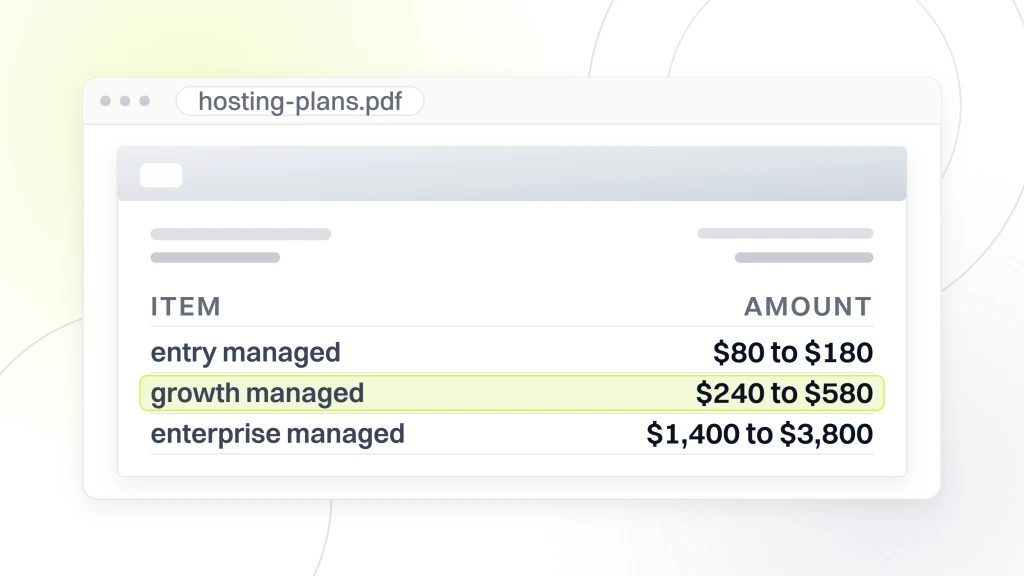
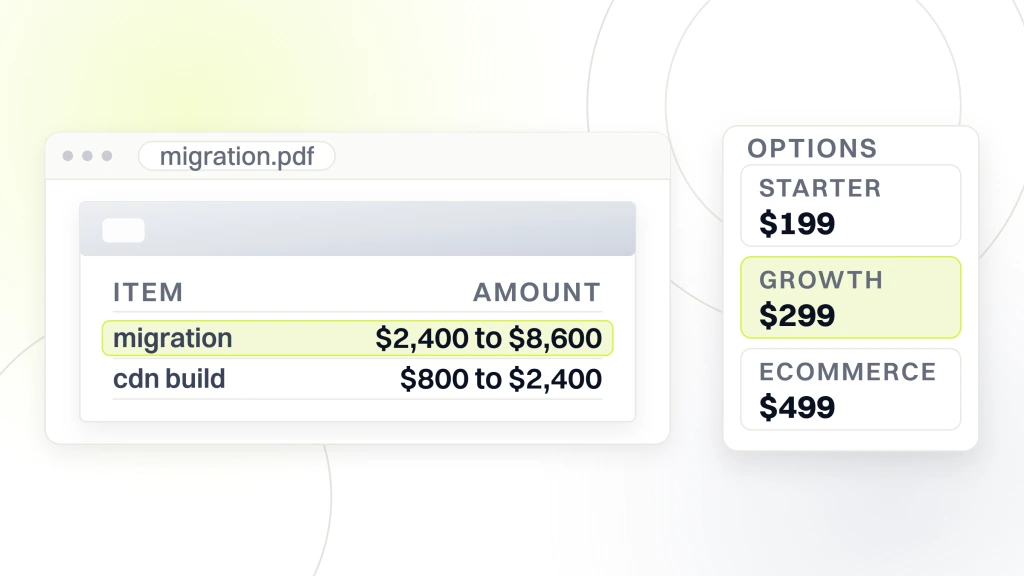
Managed hosting for beauty websites splits into four retainer bands by brand stage. Entry managed plans run $80 to $180 monthly and cover WordPress or Shopify with basic CDN, daily backups, and a one-hour support response. Growth managed plans run $240 to $580 monthly and add Redis object cache, dedicated staging, hourly backups, and a 15-minute support response. Enterprise managed plans run $1,400 to $3,800 monthly and add dedicated origin infrastructure, PCI-compliant architecture, custom edge rules, and a named account engineer on Slack. Our own website maintenance retainer bundles hosting inside the $199, $299, and $499 monthly tiers.
Ad spend and one-time infrastructure work sit outside the retainer for every serious host. A migration from shared hosting to managed hosting typically costs $2,400 to $8,600 one-time depending on plugin complexity and database size. A CDN configuration and edge rule build costs $800 to $2,400 one-time. A PCI-DSS audit prep engagement costs $3,800 to $12,000 one-time. Managed hosting retainer covers the recurring operations after the one-time build is done. Any host bundling migration into the first month at zero cost is inflating the ongoing retainer to recover the free work. Watch for that pattern on the sales call. Read our fast hosting selection guide for the speed-focused tier comparison across the same brand-stage bands.
| Managed hosting tier | Monthly cost | Best fit brand stage | Uptime SLA |
|---|---|---|---|
| Entry managed | $80 to $180 | Single-location clinic or startup DTC | 99.9% |
| Redefine Web maintenance-plus-hosting | $199, $299, $499 | Established clinic or under $2M DTC | 99.9% |
| Growth managed | $240 to $580 | $2M to $8M DTC beauty brand | 99.95% |
| Enterprise managed | $1,400 to $3,800 | $8M plus multi-country beauty brand | 99.99% |
| Migration one-time | $2,400 to $8,600 | Any tier moving from shared or VPS | Not applicable |
Support response window inside the retainer
The support response window inside the retainer decides how a real emergency plays out at 9pm on a Friday. Entry managed plans quote one-hour response, which usually means a ticket sits in a queue for 55 minutes and gets a canned reply from a level-one agent who then escalates. Growth plans quote 15-minute response with a real engineer on chat during business hours. Enterprise plans quote 5-minute response with a named engineer on Slack or phone around the clock. A beauty brand running a Sephora feature at 9pm needs enterprise response. A single-location clinic can live with growth response. Nobody survives entry response during an active outage without losing revenue.
Backup cadence and restore-test frequency
Daily backups sound safe until the plugin update at noon corrupts checkout and the newest good backup is 22 hours old. Hourly backups catch that failure at the one-hour mark. Real-time replicated backups catch it inside 5 minutes with point-in-time recovery. Restore-test frequency matters more than backup frequency because untested backups fail at restore 8% to 14% of the time on WordPress and 4% to 9% on Shopify data exports. A category managed host restore-tests every backup automatically each week and reports the pass rate. A reseller stores backups and prays nothing goes wrong. Ask about restore-test frequency in the sales call and watch the response.
PCI-DSS scope math for beauty ecommerce managed hosts
PCI-DSS scope decides whether the annual self-assessment questionnaire takes a weekend or a full quarter of founder time. Managed hosting for beauty websites that runs Stripe Checkout or Shopify Payments qualifies for SAQ A, which is 22 questions and takes about 6 hours of founder time annually to complete. Managed hosting that runs a custom checkout with card data touching the merchant server qualifies for SAQ D, which is 329 questions and takes 40 to 80 hours annually plus a $6,000 to $18,000 ASV scan program billed quarterly. The gap costs about $16,000 per year in founder time on the SAQ alone, not counting the scan fees.
A real managed host architects the checkout to stay in SAQ A scope by default. Redirect or iframe checkout embed keeps card data off the merchant server entirely. A network segmentation between the storefront application server and the payment page is documented in the SAQ evidence pack the managed host maintains and hands over annually. Read the PCI Security Standards Council document library for the current SAQ variants and threshold questions. Any managed host that can’t explain SAQ A versus SAQ D scope in a single sentence is not architecting for compliance and the founder will pay for that gap later during audit.
Tokenized payment flow inside PCI SAQ A
Tokenized payment flow means the raw card data never touches the merchant server at any point in the checkout. The buyer types the card number into an iframe served directly by Stripe or Shopify, which returns a token to the merchant server. The token is charged, stored for subscription renewals, and referenced for refunds and chargebacks. The card number itself lives inside the payment processor’s PCI-DSS Level 1 environment, which is somebody else’s audit problem to solve. Managed hosts that architect this flow by default keep beauty brands in SAQ A perpetually. Managed hosts that let developers pass raw card data through the app tier drag the brand into SAQ D and its audit cost.
Segmentation evidence the managed host maintains
Segmentation evidence covers network diagrams, firewall rules, and access control logs that prove the storefront environment is walled off from the payment environment at the network layer. A real managed host maintains this evidence pack quarterly and hands it to the merchant during SAQ prep with zero back-and-forth. A reseller says “our upstream provider handles that” and refuses to share documentation. The merchant then pays a QSA (Qualified Security Assessor) $8,000 to $22,000 to recreate the evidence pack for the SAQ from scratch. Ask to see a sanitized evidence pack sample during the sales call. Category hosts share it in a follow-up email. Resellers pivot.
Case study on Beauté Aesthetics New York on managed hosting
Beauté Aesthetics New York, a Manhattan luxury clinic on the Upper East Side, migrated from a $28 monthly shared host to our maintenance-plus-hosting retainer at Redefine Web after checkout dropped for 4 hours during a Vogue feature that drove 62x baseline traffic. The baseline was standard shared-host pain. Mobile LCP at 4.2 seconds. No CDN. Monthly downtime around 6 hours. Daily backups with zero restore testing. The rebuild covered stack migration to NGINX plus PHP 8.3 plus Redis object cache, CDN configuration with WebP conversion, and a full PCI-DSS SAQ A architecture review.
The 12-month results tracked with the SEO retainer running in parallel. 166% lead growth. 88% new user growth. 27% conversion rate gain. The hosting side drove the conversion gain through mobile LCP improvement from 4.2 seconds to 1.3 seconds and uptime from 99.2% to 99.97%. Every additional 100 milliseconds shaved off LCP is worth about 0.4% to 0.9% conversion rate in beauty ecommerce based on Chrome UX Report data. Beauté shaved 2,900 milliseconds during the migration. The math works out to about 12% to 26% of the total conversion gain being hosting-driven directly, with the SEO retainer driving the rest across organic traffic.
| Beauté metric | Baseline | After 12 months |
|---|---|---|
| Website leads | Flat month over month | +166% |
| New user growth | Below baseline | +88% |
| Conversion rate | Weak funnel | +27% |
| Mobile LCP | 4.2 seconds | 1.3 seconds |
| Monthly uptime | 99.2% | 99.97% |
Migration week without any checkout downtime
The Beauté migration ran over 8 business days with zero checkout downtime. Day 1 through 3 built the new stack on staging with a database replica pulled hourly from production. Day 4 walked the plugin compatibility list and killed 6 legacy plugins that would have broken on PHP 8.3. Day 5 ran a load test at 4x expected peak traffic on staging with synthetic buyer sessions. Day 6 flipped DNS during a 3am maintenance window with a 5-minute checkout freeze. Day 7 monitored for regressions. Day 8 closed the migration ticket. A shared-to-managed migration on a live beauty site done right looks like this. Done wrong it looks like a weekend outage.
Post-migration monitoring window on the new stack
Post-migration monitoring runs for 30 days after DNS cutover with priority alerting on database query time, cache hit rate, and edge origin bandwidth burn. Any regression from the pre-migration baseline triggers a rollback plan that keeps the old shared host warm for the full 30 days as insurance. Beauté paid $28 for that shared host during the 30 days. The rollback was never needed. Category managed hosts include this rollback pattern by default at zero add-on cost. Resellers charge extra for it because their margin can’t cover the parallel infrastructure. Ask about the rollback window in the sales call and get the number in writing.
Reseller versus real managed hosting for beauty websites
Reseller managed hosting rents rack space from Amazon Web Services or Google Cloud, adds a control panel skin, and marks it up 4x to 8x on the invoice. Real managed hosting operates its own infrastructure or has deep operational integration with the hyperscaler on custom pricing. Both look identical in the marketing copy on the pricing page. The difference shows up during an outage at 3am. A reseller can’t fix an upstream problem because they don’t run the upstream. A real managed host owns the incident and communicates in real time on Slack or a status page. Ask who runs the infrastructure during the sales call. Category hosts name themselves. Resellers name AWS or GCP.
The second reseller tell is the pricing curve on egress traffic. Reseller pricing follows AWS pricing plus markup, which means beauty brands pay per gigabyte of egress traffic on top of a base plan when a press feature drives 40x traffic. A real managed host quotes a flat monthly rate with a defined traffic ceiling and overage pricing that stays within 20% of AWS raw cost. Reseller overage pricing runs 300% to 800% of AWS raw cost because that’s where their margin lives. See the AWS CloudFront pricing page for the reference numbers when you’re negotiating overage terms.
The reseller tell in one line. They can’t answer stack, credit, or evidence-pack questions with specifics on the first call, and their pricing includes egress markup that shows up on the invoice after peak traffic hits. Ask the four questions above on the first call and the reseller filter takes about twenty minutes across a full vendor pool.
Managed hosting for beauty websites by ecommerce platform
WordPress plus WooCommerce beauty sites get the widest range of managed hosting options because the WordPress ecosystem runs deepest. Managed WordPress hosts like WP Engine, Kinsta, Rocket, and Pressable price standard tiers at $30 to $600 monthly and enterprise at $1,400 to $3,800. Shopify Plus runs at $2,300 monthly baseline with hosting included but limited backend access, which trades control for convenience. Headless commerce on Next.js plus Sanity or Contentful runs at $400 to $2,400 monthly across Vercel and the CMS stack but requires an in-house dev team on retainer. Each pick fits a specific brand size and technical capacity.
The picks by revenue stage. Under $1M in DTC beauty revenue, Shopify Basic or managed WordPress at entry tier both work. $1M to $8M, managed WordPress at growth tier or Shopify Plus fit the load. $8M to $30M, Shopify Plus or managed WordPress at enterprise tier both scale. $30M plus, hybrid stack with headless commerce for storefront and Shopify Plus for checkout wins. Category managed hosts explain these picks by revenue band in the sales call without pitching. Vendor hosts push whichever platform they resell regardless of fit because that’s how they get paid. Abigail Ahern runs Shopify at scale as a homeware brand reference point for how headless-plus-Shopify plays out.
WooCommerce tuning for beauty catalogs at scale
WooCommerce tuning for a 240 SKU beauty catalog covers three specific interventions that a real managed host handles by default. Product query rewrite from the default WP_Query pattern to a custom SQL query with proper indexes cuts filtered category load from 3.8 seconds down to 0.4 seconds. Variant attribute normalization from wp_postmeta into a dedicated attributes table cuts variant swap latency from 800 milliseconds to 90 milliseconds. Cart fragment caching in Redis cuts add-to-cart round trip from 240 milliseconds to 40 milliseconds. Managed hosts that specialize in WooCommerce know these three interventions cold and reference them by name. Generic hosts don’t and their beauty sites feel slow.
Shopify Plus tradeoffs on managed hosting control
Shopify Plus bundles hosting inside the $2,300 monthly plan with fixed infrastructure the merchant can’t tune directly. That trades control for reliability at 99.99% uptime because Shopify’s platform team runs the stack at planet scale across millions of storefronts. The tradeoff is that a beauty brand can’t customize the checkout HTML beyond Shopify’s block system, can’t run custom cron jobs on the backend, and pays 0.15% on transactions on top of the base plan. For most beauty brands under $30M, that tradeoff is worth it. Boogie Board and Abigail Ahern both run Shopify at scale. For custom loyalty program work or complex subscription flows, WooCommerce plus managed WordPress often wins on customization depth.
Security layer inside managed hosting for beauty websites
The security layer inside managed hosting covers four attack surfaces. WAF (Web Application Firewall) at the edge blocks OWASP Top 10 attacks before they hit the origin server. Bot management filters scrapers and credential stuffers without blocking legitimate search crawlers or shoppers. DDoS protection absorbs volumetric attacks up to 2 terabits per second at the CDN edge. Malware scanning runs daily on the file system and alerts on new files that don’t match the known-good hash. A real managed host runs all four by default inside the retainer. A reseller runs one or two and sells the other two as paid add-ons that show up on the invoice quarterly.
Credential stuffing is the specific attack pattern beauty ecommerce sees most often because customer accounts hold loyalty points, saved cards, and subscription renewals worth stealing. A real managed host runs credential stuffing detection based on velocity and geographic anomaly, with automatic account lockout after 5 failed logins from a new IP range. Without that layer, an attacker with a 40,000-credential dump can compromise 200 to 800 accounts overnight and drain loyalty points into gift cards for resale. Pair the hosting security layer with our beauty website maintenance breakdown for the ongoing hardening cadence that keeps the surface clean.
WAF tuning for beauty ecommerce traffic patterns
Default WAF rules block obvious SQL injection and cross-site scripting patterns but let application-layer attacks through because those look like normal shopper traffic. WAF tuning for beauty ecommerce adds rules for gift-card enumeration, loyalty-point abuse, and coupon-code brute forcing at scale. Category managed hosts tune these rules per client based on the specific plugins and payment processors in play on that site. Generic hosts run default rules and hope nothing weird happens. Ask about custom WAF rules in the sales call. Category hosts describe rule sets they’ve written for other beauty clients by pattern. Generic hosts say the WAF is included and leave it there.
Malware scan cadence and remediation window
Daily malware scanning catches most compromises inside 24 hours of infection. Hourly scanning catches them inside 60 minutes, which matters if the malware installs a card-skimmer at checkout during a peak traffic hour. Real managed hosts run hourly scanning with automatic quarantine of new suspicious files and a 15-minute alert to the security team on Slack. Reseller hosts run weekly scanning and alert the customer to remediate the compromise themselves. A card skimmer running for 6 days on a beauty checkout page compromises about 3,400 customer cards, which is a $340,000 fine from the card brands plus reputational damage that costs the brand a year of growth to recover from.
Migration path from shared or VPS to managed hosting for beauty websites
The migration path from shared or VPS to real managed hosting for beauty websites follows a 5-phase pattern that keeps checkout up the whole time. Discovery covers plugin inventory, database size, media library size, DNS and email dependencies, and current traffic pattern. Staging build replicates production on the new stack with an hourly database sync. Load test validates the staging build at 4 times expected peak traffic. DNS flip during a low-traffic maintenance window with a 5-minute checkout freeze. Post-migration monitoring for 30 days with the old host warm as rollback insurance. Category managed hosts execute all 5 phases inside the migration price. Resellers skip staging and load test to cut cost, which is where migrations fail live.
Timeline runs 4 to 12 weeks depending on plugin complexity and database size. A single-store WordPress site with 30 plugins and a 4GB database migrates in 4 weeks flat. A multi-brand WooCommerce site with 90 plugins and an 80GB database migrates in 12 weeks with careful staging. A Shopify to WooCommerce or WooCommerce to Shopify platform switch takes 16 to 28 weeks because the data model translation is nontrivial across product variants and order history. Real managed hosts quote the timeline honestly with staged milestones. Resellers promise 2-week migrations to close the deal and then blow past the timeline by 3x.
DNS strategy during the cutover window
DNS TTL drops to 300 seconds 48 hours before the cutover, which lets the new DNS propagate globally inside 5 minutes at flip time. Both the old and new hosts stay live during the 5-minute overlap window, which prevents any request from failing during propagation across global resolvers. After 48 hours of clean traffic on the new host, DNS TTL raises back to 3,600 seconds to reduce lookup overhead. Real managed hosts run this dance automatically on the customer’s behalf. Resellers hand a DNS record change document to the customer and hope. Ask about the DNS strategy in the sales call and watch whether the response includes TTL specifics or generic hand-waving.
Plugin audit before the DNS flip
The plugin audit before migration flags legacy plugins that will break on modern PHP, abandoned plugins with no security updates in 18 months, and duplicate-function plugins that add server load without user benefit. A typical beauty WordPress site has 34 to 62 active plugins and the audit trims 8 to 18 of them. Category hosts run this audit as part of migration discovery at no extra cost. Resellers skip it because the audit slows sales close and adds engineering hours they can’t bill for. The 8 to 18 plugins killed cut PHP execution time by 240 to 620 milliseconds per request and eliminate 3 to 7 recurring vulnerability exposures across the year.
Making the managed hosting pick for a beauty brand
Managed hosting for beauty websites is a stack decision, a support decision, and a compliance decision rolled into one retainer. The right host names the stack in version numbers on the first call, quotes uptime and LCP in the SLA with automatic credit inside 3 days, sizes retainer bands transparently against brand stage, and architects checkout to stay inside PCI SAQ A scope by default. Any vendor that hedges on any of those four points is a reseller reselling somebody else’s rack. Every real managed host answers all four with confidence during the sales call because operational depth is the actual product they sell.
The timing note that matters most. Migrate 90 days before your peak season, not during it. 30 days of post-migration monitoring plus 60 days of stability testing protects the peak-season conversion rate on the new stack. Beauty brands that migrate during peak season or the 6 weeks before it burn 12% to 28% of that season’s revenue on preventable regressions. Talk to Redefine Web about our beauty marketing retainer plan at $199, $299, and $499 monthly for the maintenance-plus-hosting pairing that covers hosting operations and ongoing site hardening under one contract.