
Pet business web design decides whether a brand doing $2 million a year stays there or grows to $12 million over the next 3 seasons. Every pet DTC operator has watched the same drag play out. Paid social hits target return on ad spend, product-page bounce rate sits at 68 to 82%, checkout completion stays under 42%, and the store never scales past $3 million on 6 figures of media. The site is the drag, not the traffic.
Below covers what a working pet business web design looks like at the page-structure level, the product-page anatomy that clears the trust bar pet buyers apply to new brands, the checkout flow that removes 40 to 60% of the friction most WooCommerce or Shopify pet stores carry by default, and the mobile speed targets that decide whether ad traffic converts or bounces. A recent premium D2C rebuild gives the reference model. See our pet business web design service page for the retainer scope this work sits inside.
Template system a pet DTC store should stand on
A pet DTC store rarely needs 40 unique page templates. Five is the working number. Homepage, category, product, cart-checkout, and content article. Every existing URL maps into one of those five. That constraint alone cuts development time 30 to 50% and drops the ongoing design debt that piles up when a store pushes one-off page builds for every campaign.
Homepage carries the brand story in 3 blocks, not 12. Hero with a real animal photo and a 6 to 9 word promise. Product bundle strip with 4 to 6 best sellers priced with the subscribe-and-save split visible. Trust block with 3 review quotes, 2 press logos, and a founder note under 90 words. Every extra block below that either delays the click into product or dilutes the buying signal for cold traffic arriving from Meta and TikTok.
Category pages carry filters that match how pet buyers actually shop. Pet size, life stage, protein source, and dietary need. Not brand-side taxonomy pulled from the ERP. Every filter that reads like a warehouse category costs 8 to 15% of category-to-product click-through. Pet Insurance Australia hit +1,132% conversion rate over a 5-month curve on a similar re-scaffold when the taxonomy shifted from internal jargon to buyer language across a professional-services storefront. The same principle transfers 1:1 to pet retail and DTC.
Product page anatomy for a pet DTC store
Product pages carry 8 blocks in a fixed order for a pet DTC store. Photo carousel with real pets using the product. Price block with subscribe-and-save toggle above the fold. Ingredient sourcing block with a 3-line story. Feeding or usage guide by pet size. Review block pulled from an authenticated source. Cross-sell strip of 3 complementary products. Guarantee and shipping block. FAQ block covering the top 5 questions the support inbox actually gets.
The photo carousel drives the buying decision. Studio-only shots kill trust for pet buyers, who arrive expecting to see the product in a real home with a real animal. Every product page needs at least 3 customer-submitted photos alongside the polished brand assets. Pet Shop · Independent Retail · UK grew local inquiries +158% over a quarter-one curve after swapping stock imagery for real customer-pet photography across category and product templates. The same swap costs almost nothing and returns compounding trust for the life of the product page.
Ingredient sourcing gets the second-longest read on the page after price. Pet buyers scan for the protein source, the country of origin, and any allergen callouts before they consider the price. That block sits above the fold on mobile and reads at a 7th to 8th grade level. Any brand hiding sourcing under a collapsed accordion trades 12 to 20% of add-to-cart rate for a cleaner visual layout that no buyer asked for.
Checkout flow that closes the cart
A working checkout for a pet DTC store completes in 3 screens on mobile and 2 on desktop for guest buyers, with subscribe-and-save selection carried forward from the product page instead of resetting at cart. Most pet WooCommerce and Shopify installs carry 4 to 6 screens of default friction, dropping completion from a possible 65 to 74% down to 38 to 48%. Every extra screen costs 6 to 12% completion.
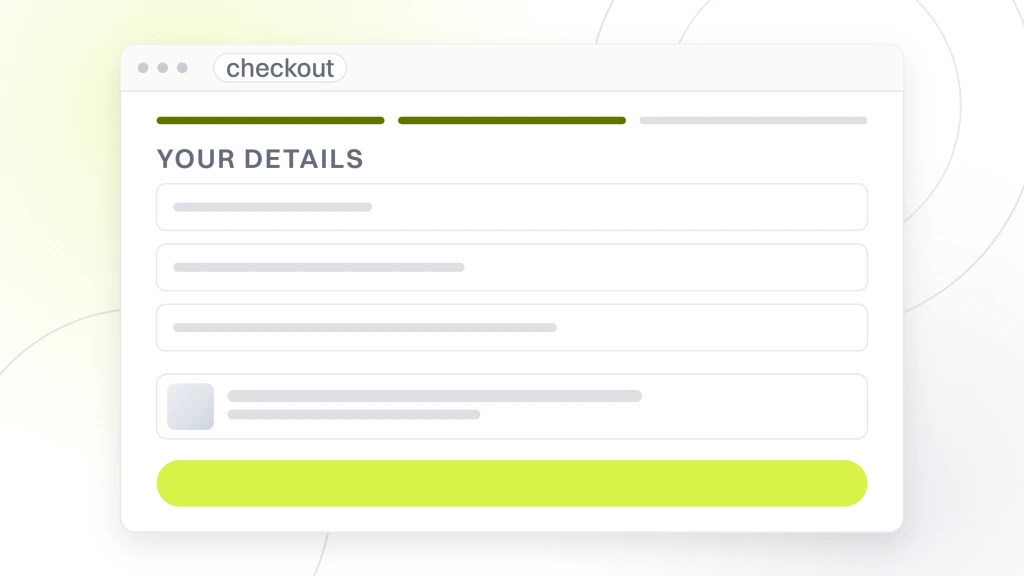
Guest checkout runs as the default with account creation offered as an optional post-purchase step. Forcing account creation before payment drops completion 18 to 32% based on cart value. Every pet DTC brand running forced account creation is trading 15 to 25% of orders for a marginal email capture the store could have earned through a lightweight opt-in later in the flow.
Payment method availability matters more than most designers assume. Apple Pay, Shop Pay, Google Pay, and PayPal each contribute 8 to 22% of checkout completions on pet DTC storefronts. Sites offering only card entry give up the express-checkout gain entirely. Every payment integration needs a quarterly QA pass to catch silent breakages that cost 0.5 to 2% of monthly revenue when a gateway starts timing out on a specific device or browser.
Mobile speed patterns that hold bounce under 45%
Mobile speed for a pet DTC store has to hit largest contentful paint under 2.5 seconds on 4G to keep bounce rate under 45% on paid social traffic. Pet buyers on Meta and TikTok arrive on mobile 82 to 88% of the time. Every 500 millisecond gain in largest contentful paint drops bounce rate 3 to 7% and grows add-to-cart rate 2 to 5%. Sites loading past 4 seconds on 4G give up half their potential conversions before the first product image renders.

Image handling carries the biggest single speed impact on pet ecommerce because product photography drives the buying decision and drags page weight when it goes unmanaged. WebP or AVIF format on every product image. Lazy loading below the fold. Responsive image sizes served through a CDN. Quality compression tuned to 75 to 82 without visual degradation. Every uncompressed 3MB product photo costs 400 to 900 milliseconds of load time on 4G.
Third-party script bloat drags every pet ecommerce site over 18 months of accumulated tags. Meta pixel. TikTok pixel. Klaviyo tracker. Loox review widget. Analytics. Every script adds 40 to 220 milliseconds to page load. Quarterly script audits typically remove 4 to 9 unused trackers and produce a 400 to 900 millisecond page-load improvement without any other work. See Smashing Magazine for cross-vertical performance patterns pet designers should benchmark against, and the Nielsen Norman Group ecommerce research library for the underlying UX research pet designers should apply on product page anatomy work.
Accessibility standards on a pet DTC storefront
Accessibility on a pet DTC storefront should meet WCAG 2.1 AA at minimum. Color contrast on text and interactive elements. Alt text on every product image. Keyboard navigation across the full storefront. Screen reader compatibility on product pages and checkout. Visible focus indicators on every interactive element. Each one of these standards is table stakes in 2026, and skipping them creates ADA lawsuit exposure that grew 34% in 2024.
Alt text on product images should name the product and the pet using it where possible. Chicken and rice dog food kibble in bowl beside golden retriever. That descriptive alt text feeds Google Images discovery for the long-tail queries pet buyers use during research. Sites that leave alt text blank give up both the accessibility standard and the discovery channel at the same time.
Keyboard navigation matters most on the checkout flow. Every input field, dropdown, and button should be reachable and operable through keyboard alone. Pet buyers using screen readers or assistive tech drop out of checkout at 3 to 5 times the rate of sighted mouse users on sites that break keyboard access. Fixing keyboard navigation on checkout typically costs 8 to 24 developer hours and closes a real revenue gap most brands never quantified. Automated scanners like Axe or Lighthouse catch 30 to 45% of accessibility issues. The rest need a human audit against the WCAG 2.1 AA standard.
Subscription and repeat-purchase design
Subscription design decides whether a brand runs at 12 to 22% repeat purchase rate or 42 to 68% repeat rate over 18 months. Subscribe-and-save opt-in above the fold on every product page. Clear savings math on the toggle. One-click subscription editing from the customer portal. Skip, pause, or adjust frequency without a phone call. Stores that hide these controls behind a support form give up 20 to 40% of the potential subscription base.
Frequency selection should default to the actual product usage cycle. A 30-day supply of dog food defaults to a 4-week subscription. A 90-day supplement defaults to a 12-week subscription. Defaults that miss the usage cycle create customer service friction and cancellation risk when the second shipment arrives before the first has been consumed. Every pet DTC brand carrying wrong-cycle defaults loses 15 to 30% of first-year subscription revenue to preventable cancellations.
Customer portal design closes the retention gap. Skip, pause, or adjust frequency in 2 clicks. Change payment method without a support ticket. Reorder past purchases as a one-off. Upgrade the subscription with add-on products. Every friction point in the portal turns into a support ticket or a cancellation. See our pet products website hosting and maintenance page for the site-care side that keeps the portal running through peak traffic.
Pet DTC case study on subscription-led site design
A premium pet supplement brand doing $3.4 million a year in D2C revenue came to us with a site that had been iterated on component-by-component for 18 months and had lost systematic consistency across page templates, product pages, and checkout. Product-page bounce rate sat at 74%. Checkout completion rate sat at 41%. Subscription attach rate on new customers sat at 17%. The paid social team hit target return on ad spend the whole time and revenue still refused to grow past $3.5 million.
We rebuilt the design system around a 5-template structure. Homepage. Category. Product. Cart-checkout. Content article. Every existing page got mapped into one of the 5 templates. Product pages got rebuilt around the 8-block anatomy with real customer-pet photos, ingredient sourcing story, and above-the-fold add-to-cart on mobile. Checkout dropped from 5 screens to 3 screens on mobile with guest checkout as the default and forced account creation removed entirely. Subscribe-and-save moved above the fold with clear per-shipment savings math.
Checkout completion rate grew from 41% to 63% inside 90 days. Subscription attach on new customers grew from 17% to 38%. Blended conversion rate grew 47%. A meaningful share of that gain tied directly to a storefront that closed more of the paid traffic the brand was already paying for. Mission Pet Health saw a parallel pattern with a +54% lead gain over a 12-month curve on the health-and-medical side of the pet ecosystem, and the underlying design fix was the same. Fewer templates, tighter product pages, shorter checkout. For a pet DTC brand at similar scale, the same 5-template plus 8-block product structure plus 3-screen checkout typically produces a 25 to 55% gain in checkout completion and a 15 to 35% gain in blended conversion rate over 90 days. Every pet DTC founder auditing a shortlisted design partner should ask each candidate to walk through this pattern in detail before signing an SOW past $30,000.
Pricing bands for a pet DTC rebuild retainer
Pricing bands for the work sit in three honest tiers. Starter rebuild at $18,000 to $42,000 covers the 5-template system plus product page anatomy plus checkout flow rebuild for a single-brand storefront under 200 SKUs. Growth rebuild at $48,000 to $120,000 adds multi-brand or multi-category coverage, custom subscription portal, and a full accessibility audit. Full-service rebuild over $135,000 adds custom integrations, headless architecture, and a 6-month design retainer.
Every project should quote design separately from development so the pet brand founder can see where dollars land. Design work delivered without development budget becomes a PDF deck that never renders live. Development budgets funded without design work become UI messes that convert worse than the original site. Every honest agency prices both together on the SOW.
Ongoing design retainer runs $2,400 to $8,500 per month for iterative optimization work after the initial rebuild. Landing page A/B tests. Product page block updates. Checkout flow tuning. Seasonal campaign design. That retainer typically returns 3 to 6 times its monthly cost through conversion rate improvements compounding over 12 months. Every pet brand founder should budget for the ongoing retainer during initial rebuild planning rather than treating the rebuild as a one-time cost. Skipping the ongoing work gives up the compounding conversion rate gains the rebuild made possible. See our pet products marketing retainer page for the pricing bundle covering design plus growth channels.
Starting a pet business online and matching the site to the model
Founders starting a pet business online rarely need a $40,000 storefront on day one. A pay-monthly build at $199 to $349 per month or a starter SMB package at $2,500 to $7,500 gets a first-year store live with the 5-template pattern, one product page anatomy, and a working checkout, plus a pet website maintenance checklist. That is enough runway to prove the product-market fit signal on paid social before spending on the growth rebuild. Passion Built landed +10% renovation bookings on a 12-month curve using this exact staged approach on the home services side, and the same staged build carries over to pet retail and DTC.
Step one is niche and audience. Puppy food buyers behave differently from senior dog supplement buyers. Cat litter subscribers behave differently from bird accessory shoppers. The site copy, the photography, and the offer all shift by segment. Step two is the business plan and margin math so the pricing on the site can carry paid media and fulfillment. Step three is product sourcing or manufacturing agreements that make delivery reliable through the first 90 days. Step four is the site build itself. Step five is a launch marketing plan with paid social, email, and a small pet SEO services base.
Most pet founders skip step one and jump straight to step four. That is the pattern that produces a $2,500 site that never earns back the build cost. The site build has to serve the niche, the buyer, and the offer. Any store built before those three are locked will read as generic to the buyer and will underperform paid media by 30 to 60%.
Picking a design partner without wasting 6 months
Picking a partner runs on 4 filters. How many pet or D2C ecommerce rebuilds the agency has completed in the past 24 months. What the average conversion rate movement has been across those rebuilds. Whether the agency handles both design and development in-house. What the ongoing retainer scope covers post-launch. Any partner clearing all 4 filters is worth a reference call. Any partner clearing 3 of 4 is worth a follow-up call.
Ask for 2 references from active pet or D2C brand rebuilds over 12 months old. Talk to at least 1 of the 2. Ask about scope creep, response time on post-launch issues, and whether the promised conversion rate gain really landed. Every reference call catches a pattern the sales deck hides. That 45 minutes of research prevents 6 to 12 months of misfit on a rebuild that will cost 6 figures either way.
Red flags include no case study naming a pet or ecommerce D2C brand with real conversion rate movement, a proposal that separates design and development between different agencies, and a fixed-scope quote without ongoing retainer scope for post-launch iteration. Green flags include named case studies with real conversion rate outcomes, in-house design plus development, and a retainer scope that covers 6 to 12 months of post-launch optimization work. The last filter is timeline honesty. Any partner promising a 4-week rebuild for a real WooCommerce or Shopify pet storefront is either cutting corners on design or planning to reuse an off-the-shelf template that will not match the brand’s actual buyer psychology.
Next steps for a pet business web design rebuild
Start with a 2-hour audit of the current site against the 5-template pattern, the 8-block product page anatomy, the 3-screen checkout, and the mobile speed targets. Log every gap in a shared doc with the rough revenue impact per gap. That audit alone shows most pet founders where the next 90 days of work should focus, and it costs nothing beyond a founder’s afternoon.
Second, pull 90 days of GA4 and checkout analytics. Product-page bounce rate. Add-to-cart rate. Cart abandonment rate. Checkout completion rate by device. Subscribe-and-save attach rate. Those five numbers frame the rebuild ROI conversation with any partner and stop the design brief from drifting into style opinions. Third, shortlist 3 partners against the 4-filter test, book reference calls, and pick the partner whose past pet or D2C work reads closest to the current store’s stage and revenue band.
Founder questions on pet storefront design
The questions below are the ones pet founders and operators keep asking during scoping calls. Each answer maps to the design patterns above and to real pricing bands.