Invisalign marketing for dentists looks like general new-patient marketing on the surface, and the numbers tell a different story. Aligner shoppers are older on average, research for weeks, price-shop three or four practices, and expect a consult that treats a $4,500 to $8,500 decision with respect. Practices running Invisalign campaigns off the same template as $99 exam offers pay two to three times the cost per booked consult, and case value drops with it. That gap is where most aligner ad budgets get burned.
This guide walks through what actually books cases. You get the SEO structure that ranks for clear aligner queries, the paid mix that keeps cost per consult in a healthy band, the funnel design that walks a curious visitor into a signed case, and real numbers we see across aligner ad programs at Redefine Web. If a practice is adding aligners, wants better fit patients, or is losing them to a corporate DSO down the block, the same principles apply. The channels shift with the market. The standards hold.
Why Invisalign marketing for dentists is a different game
Aligner patients do their homework before they pick up the phone. They watch TikTok reviews, compare Invisalign to Byte, read Google reviews, and sit with the decision for three to eight weeks. The aligner funnel has to meet that longer consideration window with content and retargeting that general dental funnels usually skip. Miss the window and the shopper books somewhere else.
That behavior does not match the emergency exam patient who dials the first office that answers a Google Ad. The whole funnel design bends around the extended consideration window. Skip any part of that and the top-of-funnel budget flows straight to the DSO with a fast landing page and a Meta pixel. The rest of this section covers the specific reasons the general dentistry playbook underperforms on aligners, and the numbers that make new benchmarks worth the switch. North County Dental Care grew patient volume 1,000% from 2021 to 2024 by replacing scattered agencies with one plan, not by pouring more spend into every channel.
Case values reset the acquisition math. A single Invisalign case averages $4,500 to $6,500 in most independent practices, with complex adult cases reaching $8,500. That case value gives aligner marketing a lot more headroom per consult than a $175 new-patient exam. Paying $180 for a booked consult on Meta looks expensive against an exam. It’s cheap against an $8,000 case that brings in hygiene, whitening, and a decade of restorative work.
Demographic mix shifts too. Adult aligner patients weight between 24 and 55, with a heavy female skew and a household income band that overlaps with cosmetic treatment shoppers. That population searches, saves, and shares on Instagram and TikTok in a way that emergency-exam patients do not. Ad creative that ignores the platform gets scrolled past inside two seconds. Match the platform grammar and cost per booked consult drops 20 to 35% inside the first two months.
Pro tip on invisalign consult marketing. Aligner shoppers rarely book on the first ad click. Set up a 30-day retargeting window on Meta with three creative angles (before-and-after case, financing math, provider credentials) and watch invisalign patient marketing cost per consult drop 25 to 40% inside the second month. The seed audience for invisalign practice ads should be booked consults, not raw form fills, or the lookalike model learns the wrong signal.
SEO for Invisalign aligner practices
Search owns the top of the aligner funnel. Roughly 62% of aligner shoppers start with a search query before they ever load a practice site, and half of those queries carry a local qualifier. That means the ranking work has to cover treatment content, comparison content, cost content, and city or neighborhood pages that Google’s local pack takes seriously. Content that skips any of those tiers loses share to Byte and SmileDirect at the top of the funnel.
The Google Search Central docs on entity signals flag the same pattern. High-intent local health queries reward practices with deep condition-and-treatment pages plus a fully built Google Business Profile. Ignoring either half caps the whole program.
- Treatment page for Invisalign. Covers process, timeline, cost range, financing, and provider bio with real photos.
- Comparison pages. Invisalign vs Byte, Invisalign vs SmileDirect, Invisalign vs traditional braces, clear aligners vs metal braces.
- Cost pages. Real ranges and financing options, not a form gate.
- Before-and-after gallery. Consented cases filtered by case type (crowding, spacing, bite).
- City or neighborhood pages. Local content, not copy-pasted boilerplate.
- FAQ-style short pages. Answer “how much do Invisalign trays cost”, “is Invisalign covered by insurance”, “how long does Invisalign take”.
Aligner search intent breaks into three buckets. Research (how does Invisalign work), comparison (Invisalign vs Byte), and local (Invisalign near me). A working aligner program builds pages for all three, with internal links pointing back to the consult booking flow. That link structure is what turns organic traffic into booked cases instead of pretty ranking charts. Practices that skip the linking step often rank fine and still book nobody.
Google Ads that fit aligner campaigns
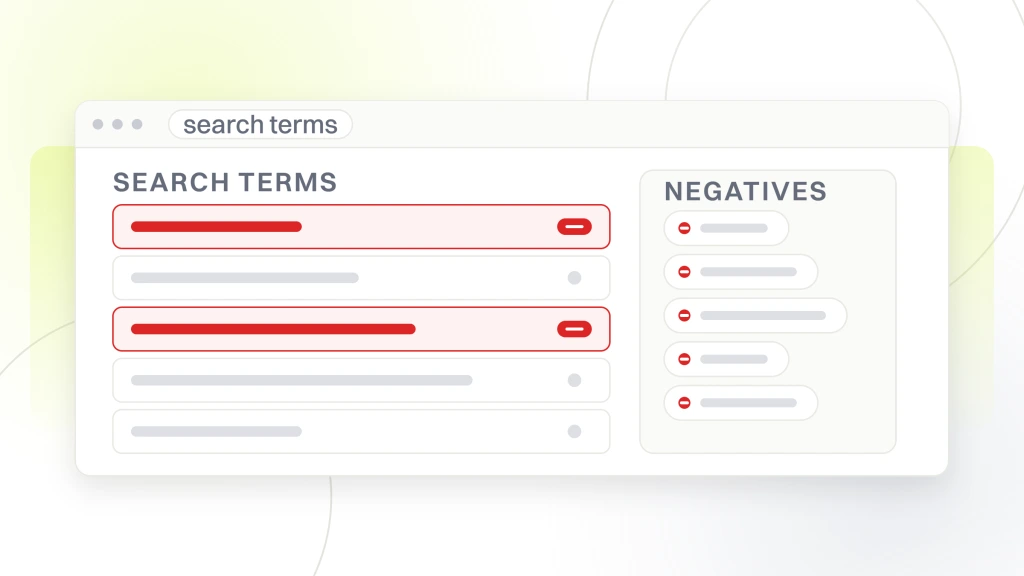
Google Ads for aligners need a tighter campaign structure than general dental PPC. Broad match on “Invisalign” alone burns a $3,000 monthly budget in nine days, most of it on curiosity clicks that never book. The winning structure runs three campaign types side by side, each one gated by a different intent signal. That separation is what protects the budget from cheap clicks.
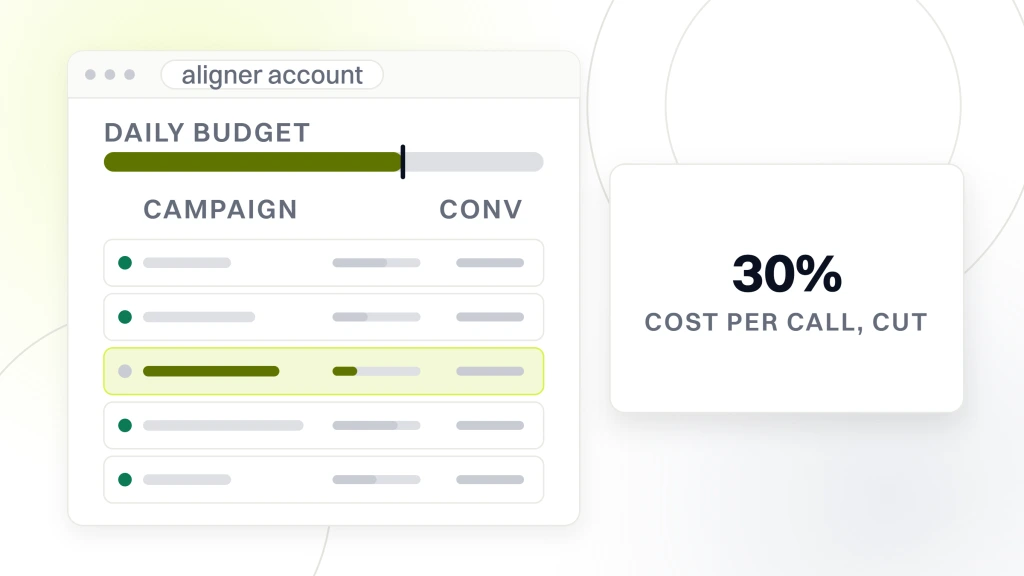
Smile Design Dentistry cut cost per call 30% over 12 months across a 50-plus location DSO by restructuring PPC accounts along that pattern and stopping the broad-match bleed. The same restructure works at a solo practice, just at a smaller budget. Structure matters more than budget once the campaign is running.
- Branded and near-branded campaign. Catches “Invisalign near me” and city-plus-Invisalign queries. Highest intent, lowest CPC.
- Provider intent campaign. Targets “Invisalign provider”, “Invisalign dentist”, and platinum provider queries when the practice qualifies.
- Comparison intent campaign. Captures “Invisalign vs Byte”, “Invisalign vs braces”, “clear aligner cost”.
- Local pack management. Paired with a Google Business Profile fully built and posting weekly.
- Call and form conversion tracking. In Google Ads plus CallRail, tied to booked consult in the practice management system.
The mistake that ruins most Invisalign PPC accounts is running one Performance Max campaign against “dental” as the seed query and expecting the algorithm to find aligner intent. It does not. Performance Max works for aligners only after the branded and search campaigns have produced three months of clean conversion data for the algorithm to model against. The Google Ads Performance Max guide covers the ramp requirement in detail.
Meta ads for Invisalign lead generation
Meta is where aligner marketing gets an edge over general dental marketing. Adult aligner shoppers scroll Instagram, save Reels, share screenshots of before-and-after cases, and click into landing pages with real photos and a clear price band. Meta lead generation on aligners returns cost per booked consult between $110 and $220 in most US markets when the creative and targeting hold. Practices running static square ads to a homepage see cost per consult north of $500 and blame the platform.
The winning Meta play uses short-form video creative that shows real patients, real trays, and a real result. Static images work as retargeting supports, not as primary creative. The landing page has to load in under two seconds on mobile, show a price band without hiding it behind a form, and offer both a booking button and a chat option. Any drop-off there costs 30% of the leads generated by the ad.
Targeting works best on interest stacks (Invisalign, clear aligners, teeth straightening, cosmetic dentistry) plus a broad audience for the algorithm to model against. Lookalike audiences built off booked consults (not just form fills) hit healthy scale after 500 to 800 seed events, which most independent practices reach inside 90 days at a $2,500 to $5,000 monthly ad budget. Creative fatigue kicks in around week six, so a working Meta program refreshes three to five new video assets every month or watches cost per consult climb 20%.
Landing page design for aligner ads
The landing page decides whether ad spend books consults or bounces sessions. Aligner shoppers arrive with a specific mental checklist. Cost, timeline, provider credibility, before-and-after proof, and one clear next step. The page has 6 to 8 seconds to answer all five before they scroll back to Instagram or the SERP. Pages that stack a hero photo, a form, and a wall of paragraph text do not book.
- Above-the-fold answer. “Invisalign in {city} from $3,995. Free consult with 3D scan.” Clear, specific, honest.
- Before-and-after gallery. Visible in the first scroll, with case type filters (crowding, gaps, bite).
- Cost and financing panel. Lists monthly payment ranges, not just “we offer financing”.
- Provider bio. Credentials, provider-level tier for Invisalign (Silver, Gold, Platinum), and case count.
- Real review carousel. Pulled from Google reviews with links back to the source.
- Two booking paths. Online booking widget plus a phone number with call tracking.
- Sticky CTA. Follows the scroll on mobile without covering content.
Landing pages that hit these seven items book 5 to 9% of ad traffic. Pages that miss two or more sit under 2%, which triples cost per consult. That’s not a design opinion, and it holds up across dozens of aligner campaigns. Practices that argue the point usually keep paying the higher cost per booked case, quarter after quarter, without a clear reason to change the layout.
Speed matters as much as content. A page that renders in 1.8 seconds on mobile converts 30% higher than the same page at 3.2 seconds, per Google Search Central page experience data. Practices that skip the speed work lose leads before the first paragraph even loads.
Case values and cost benchmarks
The cost per booked case for aligner ads sits between $180 and $420 depending on market, channel, and provider tier. Cost per signed case runs 2 to 3 times the booked consult cost, since roughly one in three consults signs on the day. That math looks a lot healthier than it does for general dentistry PPC, since case value carries it.
The table below tracks what we see across active dental accounts at Redefine Web. Numbers change quarter over quarter with auction pressure and creative fatigue, but the shape holds. Independent practices sit in the middle band. Corporate DSOs sit at the low end since their creative production budget is higher. Very small markets sit at the low end too since auction pressure is lower.
| Channel mix | Cost per booked consult | Consult-to-case rate | Cost per signed case | Case value average |
|---|---|---|---|---|
| Search only | $210 to $340 | 28% to 34% | $680 to $1,120 | $4,500 to $6,500 |
| Search plus Meta | $180 to $280 | 30% to 38% | $540 to $860 | $4,800 to $6,800 |
| Full stack (SEO + Search + Meta + retargeting) | $140 to $220 | 34% to 42% | $400 to $620 | $5,200 to $7,200 |
| Undermanaged / broad match | $420 to $780 | 18% to 24% | $1,900 to $3,400 | $4,200 to $6,000 |
Practices that hit the full-stack row are running the program as a compounding one, not a single-channel push. That’s where the retainer math starts working. $2,500 to $4,000 a month in ad spend against $18,000 to $32,000 in signed case value, month over month, twelve months a year. Anything less than that mix leaves consults on the table. VP Dental doubled new monthly patients over 12 months by holding to that stack instead of switching channels every quarter.
Funnel nurture for Invisalign shoppers
Aligner shoppers sit with the decision for three to eight weeks. That means the practice that captures the lead but doesn’t nurture the lead loses it to whoever emails, texts, or retargets during that window. Nurture is where a lot of aligner programs quietly lose 30 to 50% of their potential case volume.
The nurture stack that works at independent practices covers three channels running in parallel. Email covers the education and social-proof side. SMS handles appointment reminders and the fast follow-ups. Retargeting ads keep the practice in front of the shopper on Instagram and Facebook without spamming the same static creative for weeks. Cross-channel consistency matters more than any single message.
- Day 0 email. Welcome, what to expect at the consult, a real patient story, financing overview.
- Day 2 SMS. Friendly reminder with a booking link and a live phone number.
- Day 4 retargeting ad on Instagram showing a before-and-after case relevant to the lead’s stated concern.
- Day 7 email. Cost breakdown, financing calculator, provider credential highlight.
- Day 14 SMS. Last-minute reminder, chat option, no pressure.
- Day 21 email. Patient testimonial video, timeline visual, one clear CTA.
- Day 30 retargeting. Seasonal offer or a scheduling nudge, then drop the frequency.
Practices that run this sequence book 18 to 24% of the aligner leads that would otherwise go cold. Practices that skip it book 6 to 9%. The difference isn’t a magic subject line. It’s showing up during the decision window with clear information the shopper needs.
How aligner marketing integrates with general dental marketing
Aligner marketing doesn’t replace general new-patient marketing. It layers on top. The two funnels share the same website, the same Google Business Profile, and the same review base, but they use different creative, different landing pages, and different measurement. Practices that try to run one blended campaign for both lose share on aligners since the creative and copy dilute.
The integration model that works at growing practices runs a base new-patient program (SEO, Google Ads for exam intent, local SEO, review generation) as the foundation. Aligner marketing runs as a specialty layer on top, with its own Meta campaigns, retargeting stack, and landing pages. Both feed the same booking system, and reporting separates aligner cases from general cases so the practice can see which channel drives which revenue line.
Attribution matters here. Aligner shoppers touch 4 to 7 marketing surfaces before booking a consult. Last-click attribution credits Meta, first-touch attribution credits organic search, and neither model tells the whole story. A GA4 setup with UTMs plus call tracking plus a source field in the practice management system is the minimum to run aligner marketing responsibly. Anything less and the practice will cut the channel that actually drove the case value. That’s where a lot of Invisalign programs quietly get shut down and blamed on the wrong channel.
The reporting cadence that works is weekly ad-spend review, monthly booked-consult review, and quarterly signed-case review by source. Any less and the practice sees only the ad dashboard number, which is the least useful of the three for a treatment category with an $18,000 to $32,000 monthly revenue line.
Pricing bands for Invisalign marketing programs
What a working Invisalign marketing program costs depends on the practice size, target case volume, and current channel mix. The retainer covers strategy, creative production, landing page work, campaign management, tracking setup, and monthly reporting on booked cases. Ad spend runs on top of the retainer, direct to Google and Meta. Any agency that mixes ad spend into the retainer is hiding margin, which doesn’t survive a real audit conversation.
Solo practices with 3 to 6 aligner cases a month sit at the low end. Growing single-location practices targeting 10 to 20 cases a month sit in the middle. Multi-location groups and DSOs run at the top. The dental marketing retainer outlines the bundled program. Practices that need a specialist channel focus can start with either dental PPC or dental SEO services as a first-90-days sprint.
The most common pricing mistake is under-funding creative and over-funding ad spend. A $4,000 monthly Meta budget against a single static ad and a stock landing page produces higher cost per consult than a $2,500 budget against three video creatives and a well-built page. The creative investment compounds. The ad spend does not.
Ad spend budgets that work sit at $2,500 to $8,000 per month across Google Ads and Meta. Anything under $2,000 gets the practice trapped in a learning phase across both platforms and never produces a stable cost per consult. Anything over $10,000 requires more provider capacity in the practice than most solo offices can absorb without hiring another chair.
How to choose a partner for your aligner program
A solid discovery call answers four questions. Does the agency understand aligner buyer behavior and case value math. Has it delivered comparable aligner programs with real booked case numbers. Does it report on signed cases or stop at leads. Vague answers on any of the four turn into budget mistakes.
The fourth question covers setup timeline before spend starts running through the new structure. That answer separates fast execution shops from slow ones. Good shops build tracking, landing pages, and creative in the first three weeks and turn on spend in week four.
Red flags in a pitch. Guarantees of a specific case count without contingency on the practice’s provider tier. A retainer that includes ad spend as one blended number. Zero mention of landing page rework. No named team members on the account. A first-30-days plan that starts with keyword research and skips the creative brief. Any two of those hint that the agency is selling process, not results. Compare that against how Redefine Web builds dental marketing programs at the agency hub.
A working aligner program is measurable from day one, and the measurement layer gets built before any ad campaign turns on. If the agency proposes launching campaigns before the tracking is confirmed, that’s where the money goes missing. Fix that order and the whole program produces cleaner numbers month over month. Extra coverage sits at the dental marketing agency hub and the PPC management services page.
Where aligner marketing goes next
Google AI Overviews now show on a large share of aligner-related searches. Practices cited in those AI answers gain a real click-through advantage over practices that are not. The winners share four traits. Structured service and comparison pages, recent Google reviews with response history, real before-and-after content, and provider bylines with verifiable credentials. The playbook didn’t change. The bar just went up.
What earns an AI citation on an aligner query in 2026 looks similar to what earned featured snippets in 2020. Clear answer-first paragraphs, real data in tables and lists, and named clinicians with credentials. That extraction layer sits at the top of the funnel now. Practices that build content with extraction in mind pull share back from Byte and SmileDirect at exactly the moment shoppers are comparison-searching.
If aligner cases have flattened in the last two quarters and paid ads feel more expensive month after month, the first move is a two-week audit of the channels above. The audit produces a specific list of fixes ranked by revenue impact, and a decision on which channels to fund first. Everything else follows from that number. When you want to talk about it on a call, the dental PPC service page and the dental SEO service page cover the specifics.
What does invisalign marketing for dentists cost per month?
Retainer fees at Redefine Web start at $1,499 a month for a foundation program and scale with case volume targets. Ad spend runs on top, direct to Google and Meta, in the $2,500 to $8,000 monthly range for most independent practices. That mix keeps cost per booked consult in a healthy band and lets the retainer team focus on creative, tracking, and landing page work instead of chasing dashboard numbers.
How long before invisalign marketing for dentists produces booked consults?
Search campaigns book consults inside the first two weeks. Meta lead generation ramps over 30 to 45 days as the algorithm learns from booked consult conversions. Full-stack aligner marketing usually hits a stable cost per case by day 90. Practices that turn ads off before day 60 don’t give the Meta learning phase time to complete, which is why patience on the ramp saves budget in month three.
Do I need a separate landing page for invisalign marketing for dentists?
Yes. Sending aligner traffic to a homepage triples cost per consult versus a dedicated page with a price band, before-and-after gallery, provider tier, and dual booking paths. That’s one of the highest-ROI fixes in the category. A single page overhaul often drops cost per booked consult 30 to 50% in the first month without changing ad spend or targeting at all.
Which channel books the most cases in invisalign marketing for dentists?
Meta wins on volume for adult aligner shoppers 24 to 55. Google Search wins on intent and closing rate. Programs that fund both, with SEO underneath, outperform any single-channel push by 40 to 60% on cost per signed case. The retargeting layer is what ties the two channels together and lifts the consult-to-case rate above 34%.
How do I track invisalign marketing for dentists ROI accurately?
GA4 with UTMs, call tracking through CallRail, and a source field in the practice management system. Anything less and the reporting misses the multi-touch path aligner shoppers take across 4 to 7 marketing surfaces before booking. Wire the source field into monthly reporting and the practice can see cost per signed case by channel every 30 days, which is the number that decides where next quarter’s budget goes.
What ad budget does invisalign marketing for dentists need?
Most independent practices land at $2,500 to $5,000 a month in ad spend across Google Ads and Meta to hold cost per booked consult in the $140 to $220 range. Under $2,000 traps both platforms in a learning phase. Over $10,000 usually needs a second provider chair to absorb the case volume. The $3,000 to $5,000 tier is where most solo practices see the cleanest month-over-month growth.
How does invisalign marketing for dentists work alongside general dental marketing?
Aligner marketing runs as a specialty layer on top of the base new-patient program. It shares the website, GBP, and review base, and uses separate creative, landing pages, and reporting. Blending the two campaigns costs share on aligners since the copy dilutes. Keep the funnels separated at the campaign level and combined at the booking system, and both revenue lines grow without cannibalizing each other.