
The honest answer to what happens if you stop SEO is that part of what you paid for stays and part of it evaporates, and the line between the two is far more predictable than most of what is published on this search will tell you.
That line matters because this is a money question. You are not asking about search theory. You are asking whether the retainer you are about to cancel is holding something up, or whether it is holding up nothing much and you have been paying for the feeling of momentum. Those are different situations and they deserve different answers.
So this page sorts the work you have already bought into three piles. What survives without you, what degrades and how, and what stops the day the invoices stop. It also reports the decay rate that nobody in this market has actually published, and names the cases where stopping is simply the right call.
Why we are the wrong people to ask this
We sell SEO. Our own SEO services page publishes retainers starting at $999 a month and running to $4,500 a month for multi location work. An agency answering the question “what happens if you stop paying an agency” has one answer it would very much like to give you, and you already know what that answer is.
Treat everything below as testimony from an interested party and hold it to the standard you would hold any interested party to. Every claim here about what decays is either a mechanism you can verify on your own site this afternoon, or a quotation from Google’s published documentation with the source named. Where the answer is not known, this page says it is not known rather than reaching for a number that sounds authoritative. That is the only version of this article worth publishing. We also sell the audit that this article ends up recommending as a first step, so weigh that recommendation with the same suspicion you are weighing everything else here.
What happens if you stop SEO depends on which stop you mean
Most pages ranking for this question answer one version of it and quietly price the answer as though it were a different version. There are three things a business usually means.
The first is ending an agency relationship while keeping the site, the content and the technical state exactly as they are. The second is stopping all search work of any kind, including your own, so nobody is publishing, nobody is watching Search Console and nobody notices when something breaks. The third, and the most common in practice, is stopping the growth work but keeping the hygiene, which means no new content and no outreach, but somebody still applies updates and still looks at the site when it misbehaves.
These three produce visibly different outcomes, and the gap between the first and the second is much wider than the gap between the first and the third. Almost every warning you will read about catastrophic decline is describing the second scenario while you are considering the first. Decide which one you are actually doing before you read anybody’s forecast, including this one.
What stays fixed after you stop
Technical work is a change of state, not a subscription. When somebody fixed your redirect chains, set your canonical tags, removed a stray noindex, rebuilt your internal linking, added structured data, compressed your images or moved you to HTTPS, they changed the site. The site stays changed. Nothing in Google’s systems reverses a correct canonical tag because your card stopped being charged.
Google’s own documentation on traffic drops describes technical faults as things that happen to a site, not things that accumulate through neglect. It defines them as “errors that can prevent Google from crawling, indexing, or serving your pages to users,” and gives server availability, robots.txt fetching and “page not found” as the examples. Those are events. A site sitting still does not generate them.
The honest caveat is that sites rarely sit still. Technical debt returns when something changes, not on a timer. A plugin update, a theme swap, a new developer, a migration to a different host, a marketing team adding a tag manager container. Each of those can undo work you paid for years earlier, and with nobody monitoring, it can run for months before anyone notices. That is a real risk of stopping, and it is a genuinely different risk from the slow decay everyone warns you about.
What keeps ranking after you stop
A page that ranks does not rank because somebody is paying. It ranks because, at the moment of the search, it was the best available answer Google could find. Stopping your retainer does not tell Google anything. There is no field in any system that records whether your invoices are current.
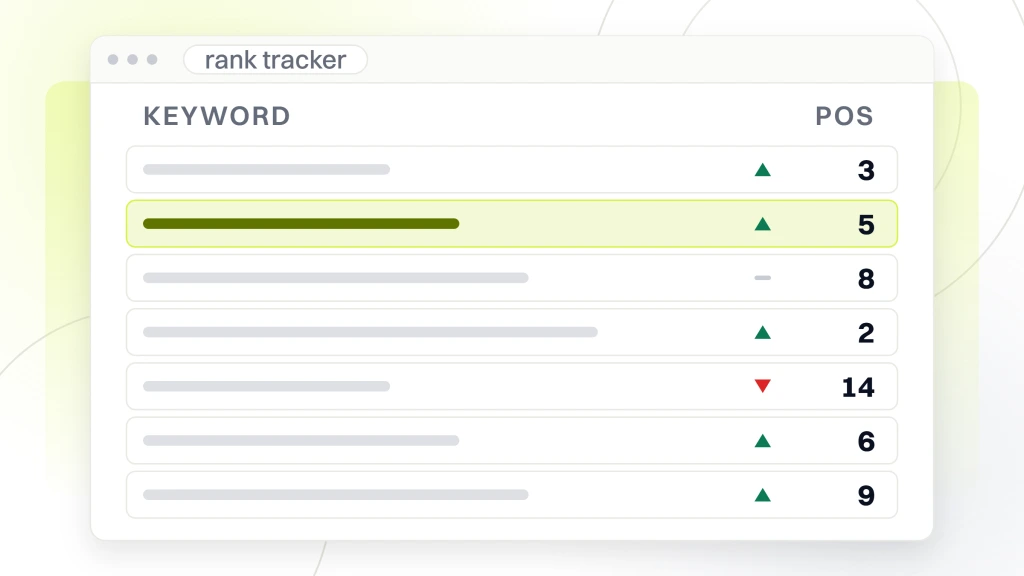
What changes is not your page. It is everything around it. Google states this plainly in the same documentation: “Keep in mind that positions aren’t static or fixed in place. Google’s search results are dynamic in nature because the open web itself is constantly changing with new and updated content. This constant change can cause both gains and drops in organic Search traffic.”
So published content decays for two reasons and only two. Either the answer goes out of date, or somebody publishes a better one. This is why the decay rate is so uneven across your own site. A page listing prices, software versions, screenshots of an interface or anything with a date in it starts rotting the week you stop touching it. A page explaining a mechanism that has not changed in a decade can hold its position for years untended. If you want a rough forecast for your own site, sort your top pages by how perishable their claims are. That ordering will predict your decline better than any timeline somebody sells you.
What happens to the links you already earned
A link to your site lives on somebody else’s server. It is not leased and it does not expire. When you stop paying an agency, no part of that arrangement reaches into a third party’s website and removes the mention they published two years ago. The links you earned are yours in the only sense that matters, which is that they are still there.
What stops is acquisition. Your profile does not shrink on a schedule, it stops growing while your competitors’ profiles keep growing, and relative position is the thing search results are made of. That is a slower and quieter effect than losing links, and it is the one that actually shows up.
Some attrition is real. Sites get rebuilt, articles get pruned, companies fold and take their domains with them, so a fraction of any link profile disappears over time whether or not you are paying anyone. We are not going to tell you what that fraction is, because we have not found a published figure we are willing to stand behind, and the number varies enormously with what kind of sites linked to you in the first place. A profile built from news coverage behaves nothing like one built from directories.
What stops the day you stop
This is the short, unambiguous list, and it is the only part of the answer where the effect is immediate. New content stops. Outreach and digital PR stop, so new links stop arriving. Monitoring stops, so nobody is reading Search Console and nobody catches a crawl error, a manual action notice or an indexing collapse in the week it happens. Competitive response stops, so when a rival publishes something better than your best page, nothing answers it. Reporting stops, which sounds administrative until you realize it is how you would have known any of the above.
Notice what those five have in common. Every one of them was buying future position rather than present position. That is the actual structure of the answer, and it explains the thing nobody says out loud, which is that on the day you stop, nothing happens. Not in the first week either. The work you stopped was never holding up today’s rankings. It was buying next year’s.
What Google says about why traffic falls
Google publishes a document called “Debugging drops in Google Search traffic” that lists the main causes it wants site owners to investigate. The list is short. An algorithmic update, technical issues, security issues, spam issues, seasonality and changing interests, and site moves or migrations.
Stopping your SEO program is not on that list. That is not proof it has no effect, and it would be dishonest to present it as proof. What it indicates is the shape of the effect. Stopping does not itself cause a drop. It removes your response to the six things that do. An algorithmic update lands and nobody reads it. A migration breaks four hundred URLs and nobody maps the redirects. Interest in your category shifts and nobody adjusts. The decline, when it comes, is one of Google’s documented causes going unanswered.
The same document is careful about a point most agencies skip, and it is worth quoting exactly, because it cuts against the panic narrative: “If you suspect a drop in traffic is due to an algorithmic update, it’s important to understand that there might not be anything fundamentally wrong with your content.” A fall is not automatically a verdict on your site, and it is not automatically something a retainer would have prevented.
The decay rate nobody on this page will give you
This genre runs on numbers like “traffic falls by a third within six months.” Those numbers are the reason this section exists. Five of the pages ranking for this search were opened and read in full on the day this was written, and every dollar figure, percentage and timeframe on them was checked against a source.
Not one of the five publishes a sourced decay rate. Three carry no decay figure at all, including the page ranking first. A fourth carries exactly one sentence of evidence. “One digital marketing study showed that stopping SEO in a competitive field for even a few months caused up to a 30% drop in rankings.” It names no study, links to no study, and puts the only nearby link on its own marketing page. The fifth publishes a full month by month timeline, with rankings sliding in months three and four and traffic dipping in months five and six, supported by nothing whatsoever. Its only sourced figure anywhere near the question is one about how long results take to arrive, which the author then inverts into a claim about how long recovery takes, by their own reasoning rather than the source’s.
So the useful answer is the uncomfortable one. There is no reliable published decay rate, and any article handing you a percentage and a month number is handing you a guess dressed as research. It could not be otherwise, because the honest variables are your industry’s rate of change, how perishable your content is, how hard your competitors are working and which of the three stopping decisions you actually made. A single curve cannot describe that, and the people selling you the curve know it.
How a real decline shows up in your own numbers
Since nobody can forecast your curve, measure it instead. You do not need an agency to do this, and it takes about twenty minutes a quarter.
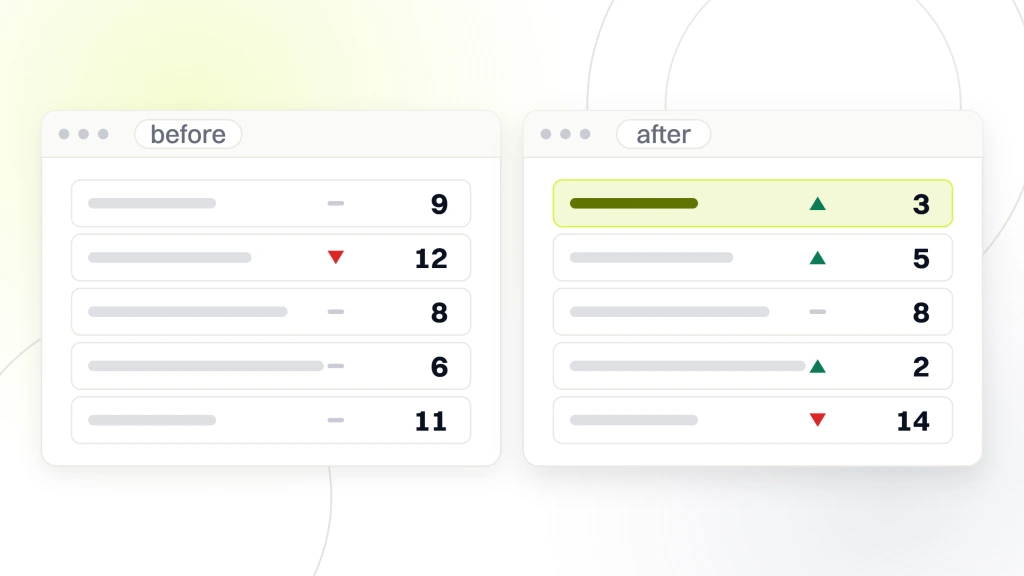
Open Search Console, set the range to sixteen months, and look at impressions and average position separately from clicks. Google notes that with a small slide in position “you might see a noticeable drop in traffic without a big change in impressions,” which is precisely the signature of drift rather than damage. Your pages are still being shown. They are being shown slightly lower, and the click rate falls faster than the position does.
Two shapes tell you two different stories. A broad, slow, roughly even slide across a large number of queries over several quarters is what stopping looks like. A cliff, confined to a date, or confined to one section of the site, is not stopping. That is a technical fault, a migration or an update, and it needs looking at regardless of whether you employ anyone. Confusing the second for the first is how businesses end up re-hiring an agency to solve a problem that was really a broken redirect. Our guide to knowing whether your SEO is working covers the same instruments from the other direction.
When stopping is the right call
Three situations where a business should stop, and where an agency telling you otherwise is selling rather than advising. All three are judged from what your own numbers show after you have already done the work, which is information a business considering whether to start does not have.
You have taken the fixable wins and there are no more to take. A great deal of what an SEO engagement does on a neglected site is one time. The title tags were wrong, the site was not indexed properly, there were no service pages, the redirects were a mess. Fix those and the curve jumps. Then the work changes character from repair to competition, and competition costs far more per unit of traffic. If your last three quarters of reports show effort going in and the line staying flat, the repair phase is over and you are now paying growth prices for maintenance outcomes.
Your own data now says the demand is not there. Plenty of good businesses sell things people do not search for, and you can only prove it after trying. If a year of decent content has produced impressions in the hundreds rather than the tens of thousands, that is not a failure of execution. It is a measurement, and it is a more trustworthy one than any keyword tool, because it was taken on your own site in your own market. Believe it.
The next dollar is worth more somewhere else. The retainer is not competing with zero, it is competing with paid search, with a salesperson, with fixing the part of your site where visitors give up. If your organic traffic converts at a third the rate of your paid traffic, the constraint is not visibility and more visibility will not fix it. Spend it where the constraint actually is and come back to search later. The content you already published will still be there.
What to protect on your way out
If you are stopping, the largest threat to everything you paid for is not decay. It is an unrelated decision made eighteen months later by somebody who does not know what is there.
The classic sequence is a redesign. A new team rebuilds the site, changes every URL, keeps no redirect map, and destroys in one weekend the whole stock of ranking pages and earned links that had been quietly surviving on their own for two years. Nothing about stopping SEO caused that. Stopping merely meant nobody was in the room to say the words “redirect map.”
So before the final invoice, make sure you personally hold administrator access to Search Console and analytics rather than borrowing it, and that both are in accounts that belong to your business. Get a list of your top pages by organic clicks and keep it somewhere a future developer will find it. Do not delete or consolidate old content because it looks untidy. And write down, in one line, that any future rebuild needs a redirect from every existing URL. That single line protects more value than a year of the retainer you are canceling.
What restarting actually costs
The common warning is that restarting means beginning from zero. That is not true, and the reason it is not true is the whole argument of this page. The technical state you paid for is still in place unless something changed it. The content is still published and some of it is still ranking. The links are still pointing at you.
What you genuinely lost is position relative to a field that kept moving while you stood still, plus whatever broke unnoticed. Those are real costs and the second one can be ugly, because a year of unread Search Console notices is a year of unfixed problems. But it is a repair job with a known shape, not a rebuild from nothing.
We are not going to tell you restarting takes a particular number of months, for exactly the reason given above. Our piece on how long SEO takes to show results declines to give that number on the way up, and it would be incoherent to invent one on the way down. If you want to know what you are walking back into, the cheapest first step is a technical read of the current state rather than a proposal, and what an audit actually costs sets out what that should run.
Where this article stops
Three limits, stated because a page whose main argument is that other people’s numbers are unsourced has to be careful with its own.
First, this page is about what persists after you stop. It is not about how long results take to appear in the first place, which is a separate question with a separate answer and its own article. Nor is it about what an audit or a retainer should cost, which our pages on SEO pricing, maintenance retainers and the cheap tier handle properly.
Second, every mechanism above is a mechanism, not a measurement of your site. We have not seen your Search Console and we are not going to pretend a general article can substitute for looking. Third, we sell the thing this article might talk you out of, which you should weigh accordingly, and which is also why the concrete advice here needs no agency to carry out. If you want a second opinion on what is actually holding your traffic up before you decide, an audit is the instrument for that, including when the honest result is that you can stop. Choosing who runs it is covered in picking an agency, and keeping your published pages useful afterwards is covered in auditing your own content.