Local SEO ranking factors for dentists split into 12 signals, and 4 of them carry 70% of the weight. Get those 4 right and your practice climbs to the top-3 map pack pin inside 90 to 120 days. Get them wrong and no volume of blog posts, backlinks, or ad spend rescues the rank.
Google has held these signals steady for 3 years. What changes is which practices fix the 4 that matter versus the 8 that chip away small edges. This guide ranks all 12 by weight, names the tool for each, and lays out a 30-to-60-day fix sequence you can start this week. You get the tier order, the questions to ask any agency, and a Vista, California case study of a practice that grew patient volume 1,000% by getting the tier-one signals right in sequence.
Tier one signals carry 70% of dental map pack weight
4 tier-one factors carry 70% of the weight in the dental map pack. GBP completeness at 24%. Review velocity at 22%. Primary category correctness at 14%. NAP citation consistency at 10%. Practices that lock in all 4 hit the top 3 for their primary dental query inside 120 days in most metros. Practices that skip any one stall at position 4 or lower no matter how hard they push tier-two work.
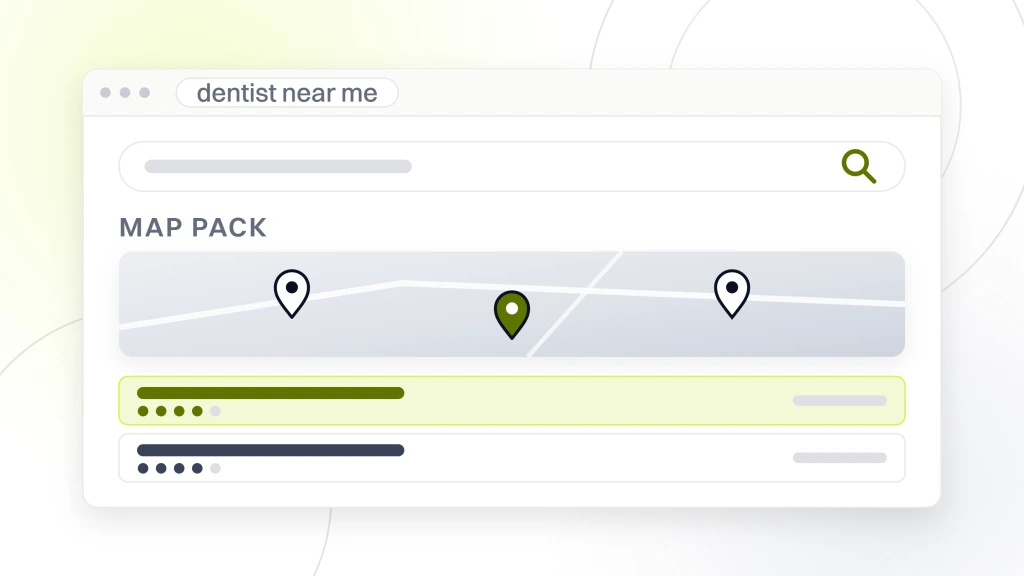
The tier-one diagnostic runs 90 minutes across the 4. Start with a manual GBP audit. Score every field. Note every gap. Then pull review velocity from the last 6 months of the GBP dashboard. Then confirm the primary category matches the practice’s actual specialty. Then run a citation consistency scan on the top 20 dental directories. That tells you which of the 4 is broken.
GBP completeness (24% of weight)
Fill every field. Primary category. 4 to 8 secondary categories. Full description at 750 characters. All service items with 300-character descriptions. Hours. Phone. Website. Attributes for accessibility, payment methods, and insurance. Practices at 95% GBP completeness rank 3 to 8 positions higher than practices at 70%. This is the highest-return 3 hours of local SEO work you can do all year.
Review velocity (22% of weight)
Google reads a steady flow of new reviews as a live-business signal. Velocity outweighs total count. A practice with 180 reviews earned across 3 years and 4 to 8 fresh reviews per month ranks above a practice with 400 reviews and none in the last 90 days. Fresh matters. Stale kills. Set a target of 5 new reviews per month and hold it, and the review signal alone moves rank 2 to 4 positions inside 90 days.
Primary category and NAP citation consistency
The wrong GBP primary category costs 3 to 8 rank positions on specialty queries. A pediatric practice set to Dentist stalls on pediatric queries. Endodontist-led practices set to Endodontist. General practices to Dentist with Cosmetic Dentist as a secondary. NAP must match byte-for-byte across the top 50 directories. A suite number on Yelp missing on Healthgrades is a trust gap. Practices that clean citations to 95% consistency see rank climb 2 to 4 positions inside 60 days.
Tier three ranking factors that add small edges
4 tier-three signals carry the remaining 8% of ranking weight. GBP messaging engagement at 3%. Structured data richness at 2%. Review response rate at 2%. Behavioral signals like map pack click-through rate at 1%. These signals compound once tier one and tier two are locked in. Time spent on tier three with tier one broken is time spent polishing a stalled car.
The full tier-three diagnostic runs 2 hours. Check GBP messaging response times. Validate structured data with the Schema.org validator. Pull review response rate from the GBP dashboard. Check map pack click-through rate in the GBP Insights tab. None of these should distract from tier-one work, and they deliver meaningful incremental gains once the foundation is set.
GBP messaging activity (3% of weight)
Turn GBP messaging on and respond in under 30 minutes on average during business hours. Practices with sub-30-minute response times rank 1 to 2 positions higher than practices with messaging off. Turn messaging off outside business hours so the response-time metric stays clean. The edge is small on its own, and it compounds with every other signal.
Structured data richness (2% of weight)
Rich structured data on the practice website, including LocalBusiness schema, Dentist schema, and MedicalTherapy schema on service pages, adds a small ranking edge. Validate with the Schema.org validator and Google’s Rich Results Test. Practices that add rich schema see click-through rate on organic listings climb 12% to 22%. Rich results earn more attention in the SERP. Our schema for dental websites post has the implementation. Reference the schema.org LocalBusiness documentation for the underlying spec.
Review response rate (2% of weight)
Google reads review response rate as an engagement signal. Respond to 100% of reviews, positive and negative, inside 48 hours. Practices at 100% response rate rank 1 to 2 positions higher than practices at 50%. Responses do not need to be long. A thoughtful 2-sentence reply carries the same signal weight as a paragraph, and doubles the daily throughput.
Behavioral signals (1% of weight)
Map pack click-through rate and direction-request rate are behavioral signals Google uses as a tiebreaker in tight rank races. A GBP listing that consistently earns more clicks and more direction requests than surrounding listings climbs slowly over 90 to 180 days. Practices with a distinctive photo and strong review count earn higher click-through than generic listings. Small edges that hold once earned.
Measuring local SEO ranking factors for dentists the right way
Not every signal is measured the same way, and half the confusion around dental local SEO comes from measuring the wrong thing. Track 4 numbers monthly. Map pack rank for the top 5 dental queries. GBP completeness score. Review count added. Citation consistency percentage. Those 4 numbers tell you whether the practice is climbing, stalled, or drifting.
Vanity metrics to ignore. Overall Google Search impressions. Organic keyword count above position 20. Total backlinks with no domain-rating filter. These move independently of the map pack and manufacture false confidence.
| Factor | Tier | Weight | Best measurement tool |
|---|---|---|---|
| GBP completeness | 1 | 24% | Manual GBP audit |
| Review velocity | 1 | 22% | GBP dashboard, monthly export |
| Primary category correctness | 1 | 14% | GBP category selector |
| NAP citation consistency | 1 | 10% | Moz Local or BrightLocal |
| On-page location signals | 2 | 8% | Screaming Frog crawl |
| Backlink profile | 2 | 6% | Ahrefs or Semrush |
| GBP posts activity | 2 | 5% | GBP posting calendar |
| Photo activity | 2 | 3% | GBP Insights |
Rank tracking tools that measure the map pack
Standard SEO rank trackers report organic position, not map pack position. Use Local Falcon, GeoRanker, or BrightLocal to pull map pack rank across a grid of geographic points around the practice. Grid rank tracking shows how the practice ranks at 400 meters, 1 kilometer, 3 kilometers, and 8 kilometers from the front door. Practices measuring only the exact-address rank miss the fact that they lose rank at 2 kilometers out, where 40% of prospective patients search from.
GBP Insights that carry signal
GBP Insights includes search views, map views, direction requests, phone calls, and website clicks. Track the ratio of direction requests to search views. That ratio is a proxy for high-intent prospective patients. Practices with a direction-to-search ratio above 8% are winning the map pack for high-intent queries. Practices below 3% are showing up and not earning the click, and that is a photo, review count, or category problem worth diagnosing.
Fixes that move dental map pack rank inside 60 days
Not every fix takes months to show up in the rank. 4 specific fixes move the map pack inside 30 to 60 days on almost every practice we audit. Any practice looking for a fast climb should start here before touching a single tier-two or tier-three item.
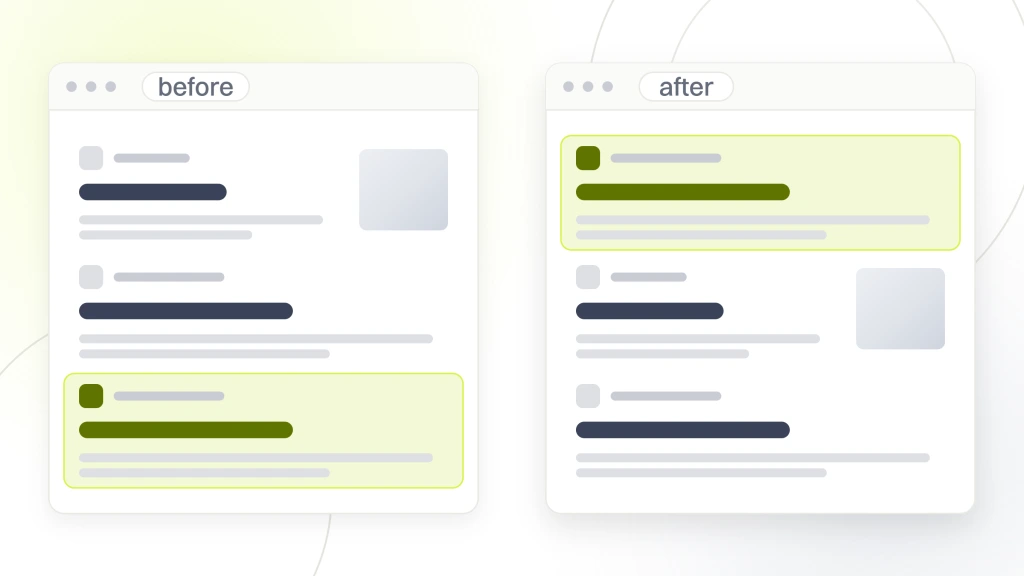
Fix one. The GBP primary category. If it is wrong for the specialty, changing it moves rank on specialty queries inside 30 to 60 days. Fix two. GBP completeness. Filling every field and adding all secondary categories moves general rank inside 45 to 90 days. Fix three. Review velocity deployment. Turning on a workflow that produces 4 to 8 reviews per month moves rank inside 60 to 90 days. Fix four. Citation cleanup on the top 20 directories. Cleaning inconsistent NAP on those 20 moves rank inside 45 to 75 days. Our dental seo strategies post covers the full priority sequence.
Primary category fix that moves specialty rank
The fastest ranking move in dental local SEO is changing the GBP primary category when it is wrong for the practice specialty. A pediatric practice with primary set to Dentist ranks 3 to 8 positions below where it should on pediatric queries. Changing to Pediatric Dentist takes 90 seconds and produces the rank climb within 30 to 60 days. Nothing else in local SEO produces a comparable return for so little effort.
Review velocity fix that compounds
Turn on a review workflow that fires a text 45 minutes after a positive appointment with a Google review link. Filter out negative appointments so only positive experiences trigger the ask. Practices that turn on this workflow see review velocity climb from 0 to 1 per month up to 4 to 8 per month inside 30 days. That velocity signal moves rank inside 60 to 90 days and holds rank as long as the workflow keeps running.
Case study, North County Dental Care, 1,000% patient growth
North County Dental Care is a 20-year practice in Vista, California that came to us with 1 to 2 new patients per month, zero page-one keywords, no HTTPS, and a thin Google Business Profile. We ran a local SEO program that put consistent listings and the Google Business Profile first, then built on that with a secure mobile-first site, technical SEO repair, and Google Business Profile ads.
From 2021 to 2024, new patient volume climbed to 12 to 16 per month. Marketing ROI hit 500%. Organic traffic grew 385%. The practice grew patient volume 1,000% by getting the local basics right first, then building on them. That exact sequence is what we run for any dental practice today. Read the full case study on our dental marketing hub.
Mistakes that stall local SEO for dentists
6 mistakes repeat across almost every dental practice we audit. Fixing them costs less than a month of paid spend and produces measurable rank climb inside a quarter. Read the list. Check your own practice against it this week.
- GBP primary category set to Dentist for specialty practices, killing specialty rank
- GBP completeness under 80%, missing 3 to 8 rank positions
- Review workflow inactive, producing 0 to 1 reviews per month instead of 4 to 8
- Inconsistent NAP across the top 50 citation directories
- Zero GBP posts in the last 90 days, missing an active-business signal
- Rank tracking only at the exact practice address, missing the 2 to 5 kilometer prospect radius
Specialty primary category fix
Pediatric, endodontist, periodontist, orthodontist, oral surgeon, and prosthodontist practices should set primary category to the specialty, not Dentist. That single 90-second change moves rank on specialty queries inside 30 to 60 days. This is the fastest and cheapest ranking move in dental local SEO. Practices that resist the change usually cite worry about losing general dental rank. In practice, the specialty listing still ranks for general dental queries in the local area, once the right secondary categories are set.
Citation cleanup fix that most agencies skip
Audit the top 50 dental citation directories for NAP consistency. Most practices have 12 to 22 inconsistent citations from a phone change, an address change, or a suite number added years ago. Cleaning them takes 4 to 6 hours across 2 weeks. Practices that clean citations see rank climb 2 to 4 positions inside 60 days.
How local SEO ranking factors for dentists compound over time
Signals dentists focus on one at a time compound instead of adding linearly. GBP completeness produces a step-change in rank. Review velocity holds that rank month after month. Citation consistency shores up trust once. On-page signals earn small edges. Each factor stacks. Skip one and the ranking suffers.
Once tier one compounds, tier-two work moves rank incrementally instead of dramatically. GBP posts add a small bump. Photo activity adds another. Backlink profile improves click-through in the organic listings under the map pack. Practices that respect the compounding order see rank climb steadily for 18 to 24 months and hold at the top for years.
Holding rank across 2 years and beyond
Once a practice hits top-3 rank in the map pack, holding it takes 3 to 5 hours per week of ongoing work. Review workflow continues at 4 to 8 per month. GBP posts continue at 2 to 4 per month. Photo activity continues at 6 to 12 per month. Response rate stays at 100% inside 48 hours. A quarterly citation audit catches any drift. Practices that hold the cadence keep rank for years. Practices that treat the initial climb as one-and-done lose 4 to 8 positions inside 6 months.
Questions for any dental local SEO agency
Not every dental SEO agency understands which signals need prioritized first. Most run a generic playbook that ignores tier weighting entirely. A tier-one-focused agency runs 3 things differently. Diagnostic focus on the 4 tier-one signals before anything else. Grid rank tracking rather than address-only tracking. Monthly reporting that leads with map pack rank, not vanity metrics.
Ask 5 questions before signing with any agency. What are the 4 tier-one signals and how do you audit each. Do you use grid rank tracking or address-only tracking. What is your review workflow deployment process. What is your monthly reporting cadence and what numbers lead. What is your target map pack rank by month 4. Vague answers on any of the 5 mean the general playbook is running. Our how to choose a dental seo company post covers the wider agency-selection framework.
In-house versus agency for local SEO
Practices below $80,000 monthly production can handle tier-one local SEO in-house with a $299 monthly software stack plus 4 to 6 hours per week of practice manager time. Above $120,000 monthly, an agency retainer of $1,600 to $3,600 monthly becomes cheaper than the equivalent in-house hours plus tools. Above $250,000 monthly with multiple locations, an agency retainer stops being optional and operational complexity exceeds any single manager’s bandwidth. Our dental seo cost post covers the pricing tiers in detail.
Monthly reporting that leads with rank
Monthly agency reporting should lead with map pack rank for the top 5 dental queries, then GBP completeness score, then review count added, then citation consistency percentage. Every other number is context. Impressions, sessions, and pageviews matter only inside the story of how they moved those 4 leading numbers. Practices that accept vanity-first reporting end up with a slick PDF and no rank climb. Ask for the 4 numbers first every month. Our dental marketing roi post breaks down the wider reporting framework.
Turn dental map pack rank into booked appointments
The bottom line. Focus the first 90 days on the 4 tier-one signals. GBP completeness. Review velocity. Primary category. NAP citation consistency. Add tier-two work in month 4 as rank climbs consolidate. Hold the cadence at 3 to 5 hours per week and rank stays for years. North County Dental Care grew patient volume 1,000% in Vista by putting local basics first. It is the same sequence we run for every dental practice today.