
A marketing agency for food products runs a packaged CPG marketing agency operating model that shares almost nothing with a restaurant shop or a foodservice ad agency. SKU-specific paid creative on Meta and Google. Amazon marketing for food brands split by branded, category, and sponsored brand roles. Klaviyo retention flows keyed to real consumption cycles. PDP conversion work tuned for a $9 hot sauce, a $28 six-pack of cold brew, or a $34 whole-bean coffee bag. Coordinated retail marketing for shelf real estate at Whole Foods and Sprouts. Coordination across DTC, Amazon, and retail is where the retainer earns its price. In the next 12 minutes you get the channel mix a marketing agency for food products actually runs, six screening questions that separate a category shop from a repurposed DTC generalist, retainer bands per revenue band, named case data from adjacent DTC accounts, and a full FAQ block covering everything a packaged food founder asks before signing.
Read straight through and you will know what a marketing agency for food products should quote you, what benchmarks to hold them to, and where our own Redefine Web retainer bands land against the wider market. For the wider vertical scope, see our food and beverage marketing hub.
Amazon Ads scope inside a marketing agency for food products retainer
Amazon Ads is a separate discipline inside any marketing agency for food products retainer, not a bolt-on line item. Sponsored Product ads defend brand keyword real estate at a 6 to 10% ACOS band. Sponsored Product ads on category keywords sit at 22 to 34% ACOS. Sponsored Brand ads run at 18 to 28% ACOS. Sponsored Display retargets shoppers who viewed but did not buy. Amazon DSP reaches off-Amazon shoppers with programmatic display. Every ad type has a different bidding structure, a different creative requirement, and a different KPI. Category shops know these bands cold and adjust bids weekly. Generalists lump every Amazon dollar into one campaign, blend the ACOS to a 26% average, and quietly forfeit the branded-keyword efficiency that drives most of the profitable revenue.
Ask any prospective marketing agency for food products for their target ACOS on branded keyword campaigns for a $34 AOV coffee brand. Category shops answer 6 to 10% inside 15 seconds with rationale about defended organic real estate. Generalists give a blended number and no distinction. That single answer sorts the shortlist. See the Amazon Ads sponsored products guide for the wider mechanics on bid structure and match types.
Review generation programs on Amazon
Amazon review count correlates directly with conversion rate. A product with 200 or more reviews converts 3.4 times higher than a product with under 50 reviews at the same star rating. Review generation programs stack Amazon Vine, post-purchase email requests, and product insert cards to accelerate review velocity in the first 90 days after launch. Category shops run a review program on every new SKU as standard scope. Generalists rely on organic review flow and then wonder why new products stall at 30 reviews for six months and starve the P&L of the velocity that never arrives.
Category defense on Amazon
Category defense means owning the Amazon search result page for high-intent category queries even when the brand is not the cheapest option. A packaged food brand with strong reviews, clean creative, and consistent Prime availability wins the category position over a cheaper competitor with weak reviews. Category shops track category share of voice on Amazon weekly and adjust Sponsored Brand bids to defend the position. Generalists never see category share of voice as a top-line metric and burn budget on generic Sponsored Product campaigns that a competitor with better reviews will crush on click-through rate.
Retention flows a marketing agency for food products builds
Retention flows for a packaged food brand deliver 24 to 38% of total revenue by month six on a well-run Klaviyo account. The flow set covers a welcome series, an abandoned cart, replenishment keyed to SKU consumption cycle, subscription reactivation, a VIP tier, and post-purchase education. Each flow has a specific KPI. Open rate for welcome. Click rate for education. Revenue per recipient for replenishment. Repeat purchase rate for VIP tier. A category-aware marketing agency for food products should map every flow to its KPI in the first 30 days and report on the flow-level number, not blended email revenue.
The build order matters. Welcome and abandoned cart go first, so they capture the highest-intent traffic already in motion. Replenishment goes second, keyed to the specific consumption window of your SKU. A 12-ounce coffee bag lasts a daily drinker 18 to 24 days, so trigger the replenishment email at day 14. Subscription reactivation goes third at 30 and 60 days with a product-variety hook. VIP tier and post-purchase education round out the set at month two. See our food influencer marketing agency breakdown for the adjacent scope on creator seeding.
Callout. If Klaviyo revenue share sits under 20% at month three, the flow set is missing replenishment logic or the VIP tier is a flat discount. Both are 30-day fixes for a category shop, not a full rebuild.
Replenishment window per SKU category
Replenishment windows vary by SKU category and the marketing agency for food products should quote yours in the first meeting. Coffee 18 to 24 days on a 12-ounce bag. Hot sauce 42 to 60 days on a 5-ounce bottle. Cold brew concentrate 12 to 18 days on a 32-ounce bottle. Granola 14 to 21 days on a 12-ounce bag. Snack bars 10 to 14 days on a 12-count box. Category shops calculate the window per SKU and time flows accordingly. Generalists send a single “time to reorder” email at day 45 across every SKU and post revenue per recipient of $0.36 instead of $2.60 on the same list.
VIP tier structure for packaged food brands
VIP tier flows work on packaged food brands when the tier structure gives real value beyond a discount. Early access to new SKU launches, free shipping across all orders, exclusive limited-release drops, and a birthday or anniversary gift all outperform a percent-off tier by 2.4 to 3.2 times on retention rate. Category shops design tier structures around product variety and access, not discount depth. Generalists default to a 15% VIP discount tier and lose the customers who feel their loyalty was purchased for a discount instead of earned through product experience.
Retainer bands for a marketing agency for food products
Retainer pricing depends on channel scope and revenue band. Our Redefine Web SEO retainer tiers cover packaged food organic and content work at $999, $1,499, $2,499, and from $4,500 monthly. Our PPC retainer tiers match the same structure at $999, $1,499, $2,499, and from $4,500 monthly for Meta and Google paid, with ad spend billed separately. A packaged food brand under $1M in revenue sits in the $999 to $2,499 monthly band on either service. A brand at $1M to $5M usually runs two retainers in parallel, PPC plus SEO, at the $1,499 to $2,499 tiers. Above $5M in revenue the from-$4,500 tier covers multi-channel coordinated scope plus Amazon Ads add-on.
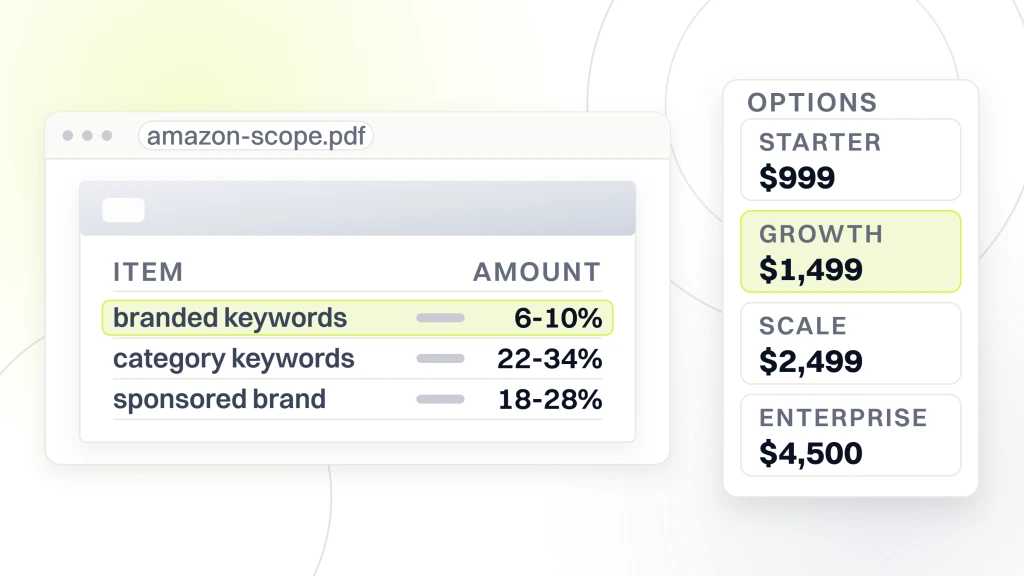
Amazon Ads gets scoped separately in most retainers, since Amazon’s flat fee model differs from DTC retainer math. A brand with $50K in monthly Amazon revenue pays a fixed Amazon Ads management fee on top of the DTC retainer. Above $200K in monthly Amazon revenue the Amazon fee usually moves to a percent-of-spend model at 10 to 14%. Category shops price Amazon transparently in the proposal. Generalists bury Amazon fees in the DTC retainer and overcharge silently for six months before the founder notices the blend.
| Redefine Web tier | Monthly | Best fit | Scope covered |
|---|---|---|---|
| Visibility | $999 | Under $500K revenue | PDP maintenance, Klaviyo basics, one paid channel |
| Traffic | $1,499 | $500K to $2M revenue | Add content velocity, review workflow, Amazon Sponsored Product |
| Scale | $2,499 | $2M to $8M revenue | Add two-channel paid coordination, retention flow depth, quarterly teardown |
| Enterprise | Starts at $4,500 | $8M-plus revenue | Dedicated pod, DTC and Amazon coordination, retail marketing overlay |
Ad spend ratio for packaged food brands
A healthy retainer-to-ad-spend ratio for a packaged food brand sits at 1 to 2 or 1 to 4. A $2K retainer on $4K to $8K in monthly ad spend keeps the math sensible. Retainers above 1 to 1 with ad spend usually mean the agency is padding fees. Retainers below 1 to 5 usually mean the agency is understaffed. Ask the ratio question on the sales call and watch the response. Category shops answer immediately with a real number for your revenue band and a rationale tied to hours per week on the account.
Contract terms for food product retainers
Six-month contracts are the standard for packaged food retainers. Ramp time on paid channels sits at 60 to 90 days, and retention flow revenue share compounds over 90 to 180 days. Shorter contracts do not give the retainer time to show its work. Category shops explain the ramp math in the sales call and ask for the six-month commitment upfront. Generalists offer quarter-length contracts, quit at month three when Meta paid takes longer than expected to hit the target return on ad spend, and blame the brand for weak creative.
Case study data on adjacent DTC accounts
A credible marketing agency for food products earns its stripes on adjacent DTC accounts before it wins packaged CPG retainers. Boogie Board, the reusable-writing-tablet DTC ecommerce brand, ran a $650K managed ad program with Redefine Web and hit $31 cost per sale over the annual curve. The work was structural site cleanup plus segmented ad testing across granular audience buckets rather than a single broad performance-max spend. For a packaged food brand the parallel is ingredient-segmented content clusters and SKU-specific ad groups instead of a single generic “coffee” or “hot sauce” campaign. Segmentation compounds every quarter. Depth beats breadth every time.
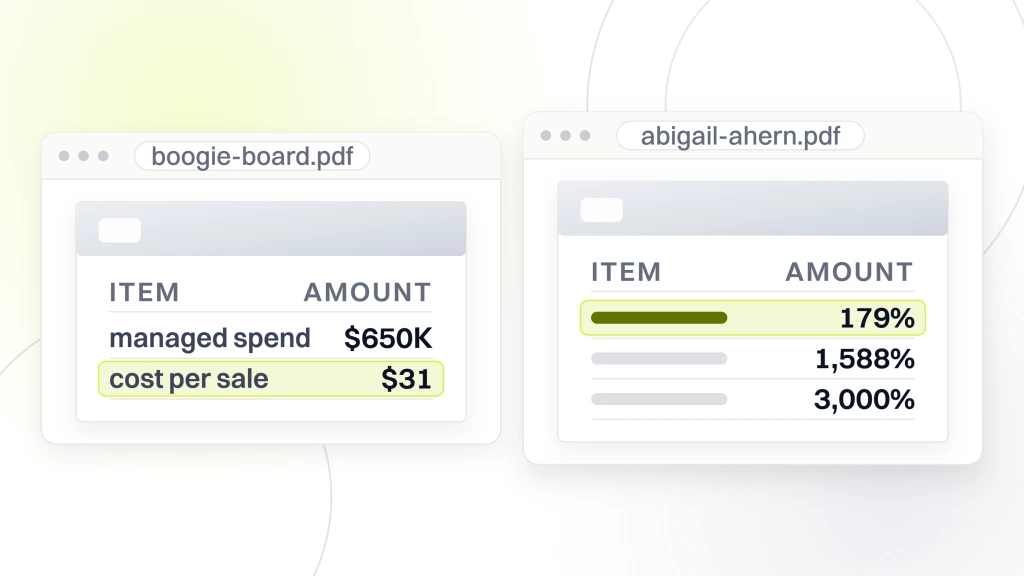
Abigail Ahern, the luxury home decor DTC brand, ran a paired SEO and paid-media program with Redefine Web and posted 179% ecommerce revenue growth on the 12-month curve, alongside paid search return on ad spend of 1588% and paid social return on ad spend of 3000%. The pattern was premium creative that replaced discount messaging, segmented shopping campaigns by product line, and category-page SEO depth that fed the paid programs with warmer traffic. For a packaged food brand the same operational discipline transfers directly to PDP conversion work, subscription hook design, and category-page architecture across specialty coffee, cold brew, hot sauce, granola, and shelf-stable snack lines.
| Adjacent DTC case | Headline result | Window |
|---|---|---|
| Boogie Board | $31 cost per sale on $650K managed spend | Annual curve |
| Abigail Ahern | +179% ecommerce revenue | 12-month curve |
| Abigail Ahern paid search | 1588% return on ad spend | 12-month curve |
| Abigail Ahern paid social | 3000% return on ad spend | 12-month curve |
Generic data points from adjacent verticals
Poly Processing, a Redefine Web professional-services account, cut cost per lead by 90% on the annual curve. Custimy, a SaaS account, ranked for 500+ new keywords and drove 25K+ organic sessions on the annual curve. Vejrø Resort, a travel account, hit a 2.2% booking conversion on a three-month curve after 200+ page rebuilds. These are not food product accounts, so the numbers stand as generic data points that show the retainer discipline moves rank and revenue across verticals. A category-specific marketing agency for food products would apply the same operational discipline to PDP work, Amazon defense, and Klaviyo depth on your SKU catalog.
PDP conversion work for packaged food
Moving packaged food customers off Amazon onto DTC needs a fast site, a clear subscription hook, a loyalty tier that rewards repeat purchase, and a retention flow that catches the customer before the next reorder window. Anything under 1.5% site conversion on paid traffic means the PDP is friction, not funnel. A well-tuned flagship SKU should hit 3.0 to 3.5% site conversion after 90 days of PDP work. That is the benchmark a marketing agency for food products should quote in the sales call for your top three SKUs before you sign the retainer. See our food and beverage SEO service page for the wider organic architecture behind the PDP work.
Screening questions for a marketing agency for food products
Category agencies answer specific questions with real numbers. Repurposed DTC generalists answer the same questions with slide decks about brand storytelling and consumer sentiment. The screening happens in the first 45-minute call, and there are six questions that separate the two. Ask them and you will know before the proposal arrives whether the shop understands packaged food or is padding capacity.
- Name three packaged food or beverage accounts you have run for more than 18 months and the Klaviyo revenue share you delivered.
- What is your target ACOS on branded Amazon keyword campaigns for a $34 AOV coffee brand?
- Which PDP elements do you A/B test first when a brand is converting at 1.8%, and what is the target conversion after 90 days?
- How do you coordinate DTC Meta paid with Amazon defense on the same brand?
- Show a real client dashboard from last month with client names redacted but numbers intact.
- What is your replenishment flow trigger day for a 12-ounce coffee bag and the rationale behind it?
Callout. If the shop cannot name three packaged food accounts over 18 months of tenure, they are a DTC generalist repositioning your logo. Drop them off the shortlist and keep the sales call short.
Dashboard review as a truth test
The dashboard tells the truth. If the top metrics are impressions, cost per click, and follower growth, the agency reports activity, not revenue. If the top metrics are DTC revenue, Amazon revenue, Klaviyo revenue share, and blended return on ad spend, the agency reports outcomes. If the dashboard does not exist, they will build one during the retainer, and you will fund the framework build with your first three months of fees. Category shops have a packaged-food dashboard template ready to modify for your SKU catalog on day one of the engagement.
ACOS answer as a category signal
Ask for the target ACOS on branded Amazon keyword campaigns and watch the response. Category shops give a specific band (6 to 10%) with a rationale (branded keywords should carry low ACOS, since you are defending organic real estate you would otherwise own for free). Generalists give a blended number (26% average across all campaigns) and do not distinguish branded from category. The distinction is the tell. See Jungle Scout’s ACOS deep-dive for the wider benchmark data across categories.
When a generalist fits a food product retainer
Generalists fit the marketing agency for food products slot only on defined projects. A rebrand. A website redesign. A launch video production. A photography shoot for the SKU catalog. Fixed timeline, defined deliverable, and a wider creative team than a category shop keeps on staff full-time. The generalist delivers the annual brand refresh, the launch video for the fall SKU drop, and the retail collateral for the trade show. That scope works for both sides and keeps the category shop focused on retainer performance work.
Where generalists lose is 12-month performance retainers. Pattern library beats capacity every time on a retainer scope. The mature vendor stack for a mid-sized packaged food brand is a generalist for project work plus a category specialist for retainer performance. Both shops know their lane and do not fight over scope. Above $15M in revenue this hybrid stack works cleanly. Below $5M, a single category retainer beats every combination on retainer economics. The operational overhead of managing two vendors eats the savings from splitting scope.
In-house team timing
The first in-house marketing hire lands somewhere between $3M and $6M in revenue for packaged food brands. Earlier and the hire sits idle waiting for agency deliverables. Later and the founder becomes the bottleneck on every brief. The hire is a generalist marketing operator who owns the brief pipeline, agency relationships, and content calendar. Channel specialists come at hire three or four once each channel has its own P&L. See our food marketing agency breakdown for the wider category comparison across shops.
Hybrid vendor stack at scale
Above $50M in packaged food revenue the vendor stack goes hybrid. In-house team owns strategy, brief pipeline, and vendor management. Category specialist owns retainer performance work across paid, Amazon, retention, and PDP. A separate media buyer often owns Meta and Google bidding to reduce agency markup on media spend. A separate PR shop owns trade publications and product launch pushes. Scope splits by capability. No vendor overlaps another vendor’s lane. That structure holds for every $50M-plus packaged food brand we have evaluated in the last 24 months.
Measuring a marketing agency for food products retainer
Three dashboards keep a marketing agency for food products retainer honest. A weekly acquisition dashboard for paid channels with return on ad spend by campaign, cost per acquisition, and creative fatigue signal. A monthly retention dashboard for Klaviyo and SMS with revenue share, list growth rate, and flow performance by KPI. A quarterly channel-mix dashboard for DTC versus Amazon versus retail with margin by channel. Anything more granular is a report, pulled on request, and does not live at dashboard tier.
Leading indicators beat lagging ones by a wide margin. Creative fatigue (frequency crossing 3.5 on a Meta audience) predicts return on ad spend drop by 10 to 14 days out. Amazon review velocity predicts conversion rate gains by 30 to 45 days out. Klaviyo list growth rate predicts revenue share by month three. Category shops report on leading indicators and adjust weekly. Generalists report last month’s return on ad spend as if it were news and then wait for month-end to react.
Return on ad spend benchmarks per SKU category
Blended return on ad spend for a growing coffee brand sits at 2.6 to 4.0 by month six of a well-run retainer. Snack brands run slightly lower at 2.2 to 3.4 on lower AOV. Functional beverage runs higher at 3.0 to 4.6, since subscription anchors the math on repeat revenue. Shelf-stable specialty like hot sauce and spice blends runs 2.4 to 3.6 on a longer repeat cycle. Category shops know the band your specific product category lives in and share the number upfront on the sales call without hedging.
CAC payback and LTV math
Cost per acquisition payback under 90 days for a packaged food brand means the model is healthy. Above 90 days and either AOV is too low, retention is too weak, or paid is chasing the wrong audiences. LTV-to-CAC ratio should sit at 3 to 1 minimum by month twelve. Below 2 to 1 and the retainer is not paying back. Above 5 to 1 and you are underspending on acquisition and leaving growth on the table. Category shops calculate CAC payback per channel weekly and shut off channels that break the ratio for two straight weeks.
Making the pick on a marketing agency for food products
Pick a category marketing agency for food products if you sell DTC plus Amazon plus retail and need coordinated channel work across all three. Pick a generalist for defined projects like a rebrand, a launch video, or a photography shoot. Run both above $15M in revenue with clear scope splits. Skip both if you are under $500K in revenue and DIY channels are still growing month over month. The retainer math does not pay back yet on a food product brand at that stage, and the founder is usually the cheapest and fastest channel operator in the room.
The last piece of advice is simpler than most of this guide. Have the sales call, ask the six screening questions, watch the dashboard demo, and trust the answers you get. Category shops answer immediately with real numbers from real accounts. Generalists circle back with a slide deck two days later. The circle-back is the tell. See our food and beverage marketing services page for the current retainer scopes we run and our services page for the wider capability list.
Category benchmarks help too on the buy side. The USDA food and nutrition research library gives a sanity check on category demand before you commit to a channel plan with any marketing agency for food products. Cross-reference your category growth against the wider trend before signing the retainer.