A food marketing agency is a specialist shop that grows food and beverage brands across three books, retail velocity on grocery shelves, delivery-app rank in restaurants, and DTC repeat orders. It runs channels a general agency does not touch, like Instacart Ads, Amazon Fresh listing work, category-manager sell sheets, and shopper-marketing gains tied to Nielsen or SPINS reporting.
Most food brands we audit have already paid one bad food marketing agency at least once. The pattern repeats. A lifestyle mood board, a promise of a viral moment, zero measurable velocity per store per week. This guide filters 40 shop websites down to a shortlist of 3 to 5 that can actually grow a food brand. According to the Food Industry Association, food and beverage retail sits at roughly $1.1 trillion in annual U.S. sales, and the median store carries 33,000 SKUs. Winning even 60 more units per store per week on 2,000 stores is a $6M line item.
How to read this guide. Skim the takeaways box for the fast answer. Read the CPG vs restaurant split next if you are shopping now. The retainer and channel-mix tables cost the least time to act on.
What a food marketing agency does that a general agency will not
The shop runs the food-specific channels a general shop skips. Shelf-adjacent geo-fenced ads pointed at grocery stores carrying the brand. Amazon Fresh and Whole Foods Market listing optimization tuned to grocery-shopper search intent. Instacart Ads with dayparted bids on peak grocery windows. DTC subscription flows for single-serve categories. Trade-show and IFT amplification for foodservice buyers. Category-manager sell sheets built from real velocity data.
The scope splits differently by model. A CPG shop runs retail-gain studies, coupon redemption tracking, and Instacart. A restaurant shop runs local SEO, Google Business Profile work, and delivery-app organic rank. A foodservice shop runs LinkedIn ABM into K-12 directors, hospital dietitians, and hotel purchasing. Ask any short-list shop to name the three channels they run for your model. If they name generic channels, they will run generic campaigns. See our food and beverage marketing companies shortlist for the vertical breakdown.
Ask which retailer relationships they have real work inside
An agency that has real work inside Whole Foods, Sprouts, Wegmans, Kroger, or Publix has learned the buyer calendar. That calendar dictates when a food brand can push a new flavor, run a promotion, or ask for a shelf reset. Ask for a named example inside each retailer. If the shop has never worked inside a real grocery buyer relationship, they will pitch calendars that clash with the retailer calendar and burn a chunk of the promotional spend.
Match the channel mix to your stage of distribution
A pre-launch food brand needs a shop that runs DTC acquisition, sampling programs, and press. A brand at $2M to $12M in DTC with early wholesale needs a shop that runs Amazon Fresh, Instacart, and hybrid retail-plus-digital. A brand at $12M plus with 3,000 stores of distribution needs a shop that runs shopper marketing, trade fund optimization, and category-manager storytelling. A shopper-marketing shop cannot launch a DTC brand from scratch. A DTC shop cannot manage a shopper-marketing budget without help.
Insist on a weekly retail velocity dashboard
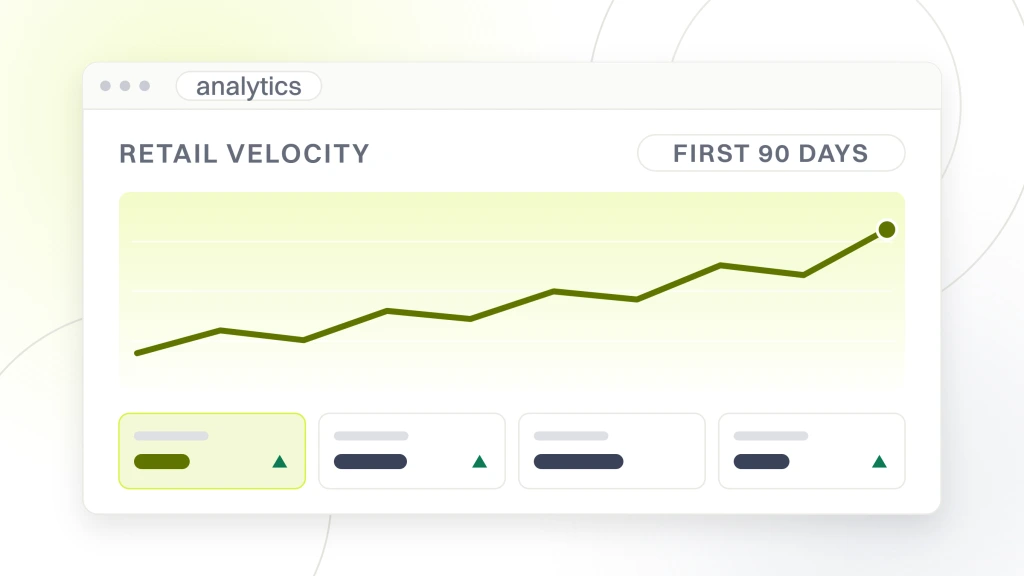
The single best filter for a shortlist is whether the shop runs a weekly retail velocity dashboard. Units per store per week by retailer, promotional gain, DTC repeat rate at 90 days, and Amazon organic rank on 5 top ASINs. Four numbers. Every week. If the shop reports monthly with a PDF, they cannot react to a Nielsen or SPINS drift fast enough to protect distribution. Weekly cadence matches the way category managers think.
Rule of thumb. If a food shop cannot produce a units-per-store-per-week number from a past client in the pitch call, put them on the no pile.
CPG food marketing agency versus restaurant food marketing agency
Shopping starts with the model, not the industry. A CPG shop thinks in SKU counts, retailer distribution, and Nielsen syndicated data. A restaurant shop thinks in seat turns, delivery-app rank, and local search share of voice. Hiring the wrong model burns 4 to 8 months of retainer time before the shop admits your business is not the one they know how to grow. See our restaurant marketing agency hiring guide for the restaurant-specific vetting.
The overlap is thin. Both models care about brand voice, packaging or menu photography, and content cadence on Instagram and TikTok. Everything else diverges. CPG runs on retail-shelf economics. Restaurant runs on location economics. A hybrid brand with both, like a fast-casual chain launching a grocery line, needs a shop that has run both books. Those shops exist, and they cost 40 to 80% more than a pure-play shop, but they save 12 to 18 months of coordination cost between two separate shops fighting over which brand voice belongs where. The fuller answer on food marketing basics lives in food and beverage marketing.
| Agency focus | Best for | Retainer range | Metrics they optimize |
|---|---|---|---|
| CPG shopper marketing | 3,000 plus stores | $18K to $65K monthly | Units per store per week |
| DTC food and beverage | Under $12M DTC | $8K to $32K monthly | 90 day repeat rate |
| Restaurant local marketing | 1 to 40 locations | $4K to $18K monthly | Local SEO calls per store |
| Foodservice B2B | Ingredient or bulk | $12K to $45K monthly | Qualified buyer meetings |
| Hybrid CPG plus restaurant | Fast-casual with retail | $28K to $85K monthly | Cross-channel share of wallet |
Pure-play food marketing agency versus full-service with a food practice
A pure-play food shop lives and dies on food work. Every case study is food. Every senior on the account has 5 plus years of category depth. A full-service shop with a food practice runs a food book inside a bigger book of business. The talent bench is deeper, the tech stack is broader, and the price is often higher. Ask which pod will actually run your account, and ask for the tenure of those specific people. See IAB agency guidance for what a healthy agency org chart looks like.
When to build in-house instead of hiring a specialist shop
Once a food brand crosses roughly $30M in revenue with steady growth, the math on in-house talent starts to beat retainer math. A brand director at $180K plus a paid media manager at $140K plus a shopper marketing lead at $155K costs about $475K loaded. That is $40K per month, close to the top-end retainer of a hybrid shop, and it buys full-time focus. Under $12M, a shop is faster and cheaper. Between $12M and $30M, a hybrid model with a lean in-house brand team and an outsourced media pod is the pattern that works.
Vetting a specialist agency shortlist by real work
A shortlist starts with 40 shops and ends at 3 to 5. Cross-check against our top food marketing agencies roundup as you narrow the field. The winnowing rules are hard. Named food case studies with real numbers. Retailer relationships that map to your distribution plan. A retainer structure that survives a bad quarter. A named team, not a mystery pod. The ANA agency management guide covers the pitch protocol every food brand should copy.
Green flags in the first discovery call
Green flags land in the first 20 minutes. The shop names your top 3 retailers by category-manager tenure and current shelf resets. They ask about your gross margin before pitching a media plan. They talk about UNFI and KeHE deductions eating 22 to 38% of gross before ad spend. They pull up a past client dashboard on screen and walk through units per store per week. They ask what your broker network looks like. They do not open with a mood board.
Questions to ask agency references
Reference calls are where the truth comes out. Ask three questions. First, what did the shop miss in the first 90 days that you had to catch. Second, what is the one thing you would rehire them for. Third, what is the one thing you would fire them for. Skip the generic questions about communication or timeliness. Those calls tell you nothing. The specific misses tell you the shop’s real weakness. In short, hire on strengths, budget for the weakness.
Red flags during the pitch presentation
Red flags are loud once you know the shapes. The pitch deck has no numbers from past food clients. The team on the slide is not the team who will run the account. The proposed channel mix looks identical to a proposal you saw from a different shop last week. The retainer starts at $25K with no scope breakdown per channel. The shop cannot answer a direct question about which retailer relationships they have real work inside. Any two of these in the same pitch is a pass.
Priority stack for the pitch review. Named food case studies first, then retailer relationships, then a real channel mix, then price. Never the other way around.
Food marketing agency retainer structures that align with growth
Retainer shape sets the incentive. A flat fixed retainer pays the shop the same whether your units per store per week climb or crash. A performance hybrid ties a slice of pay to a real number. A retainer-plus-royalty on shopper marketing ties a slice to trade fund efficiency. Pick the shape that matches the book you need the shop to grow. Redefine Web’s own retainer tiers run $999, $1,499, $2,499, and from $4,500 per month for SEO or PPC engagements, with ad spend billed separately.
Fixed monthly retainer for brand and content
A fixed monthly retainer works best for brand work, content, and slow-turn categories. Packaging refreshes, brand book updates, editorial calendars, and social content run on a fixed retainer with a clear deliverable list. Range for a food-specific fixed retainer runs $4K to $18K monthly depending on production load. Anything under $4K per month buys freelancer output with account-management overhead, which is worse than hiring a freelancer directly.
Performance-plus-fixed hybrid for DTC and Amazon
A hybrid retainer pairs a floor of $6K to $12K per month with a performance kicker tied to a real number. For DTC, tie the kicker to net-new subscribers or 90-day repeat rate, never to gross sales. For Amazon, tie it to organic rank on top ASINs plus advertising cost of sale (ACoS, the ratio of ad spend to attributed sales) under a cap. Kickers should sit at 10 to 25% of the floor. Bigger kickers push the shop to chase the metric at the cost of everything else.
Retainer-plus-royalty for shopper marketing programs
Shopper marketing retainers often carry a royalty on trade-fund efficiency, measured as incremental units gained per dollar of trade spend. This aligns the shop with the CFO, not just the CMO. Royalty rates run 3 to 8% of trade-fund efficiency gains, capped so a home-run quarter does not bankrupt the brand. The cap is the deal point. Get it in writing before signing.
Channel mix a strong food marketing agency will recommend
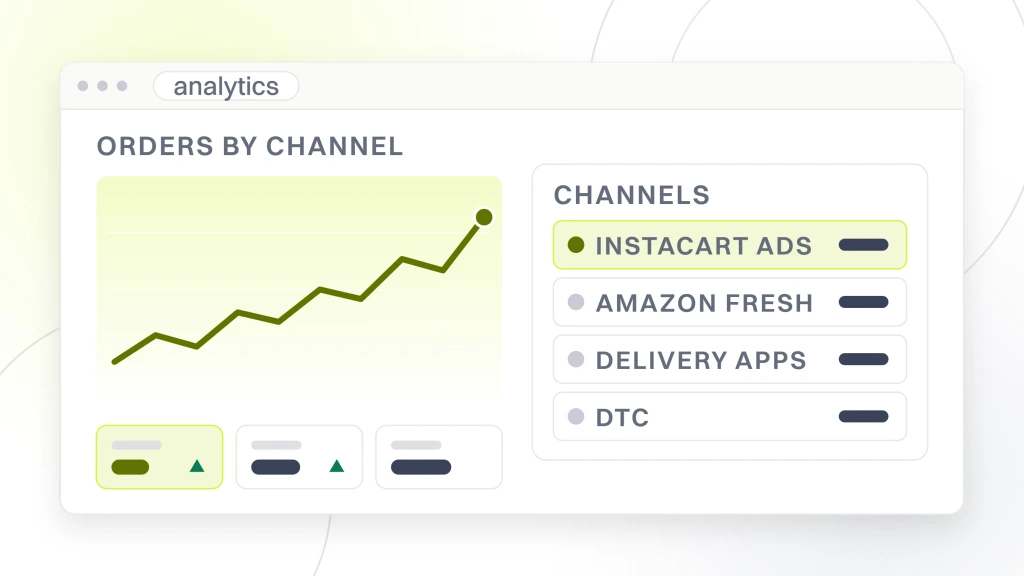
The mix a shop recommends tells you where their real muscle is. A CPG-heavy shop will lead with Instacart, Amazon Fresh, shopper-marketing programs, and category-manager storytelling. A restaurant-heavy shop will lead with local SEO, Google Business Profile, delivery-app rank, and geofenced paid social. A DTC-heavy shop will lead with Meta prospecting, TikTok creator seeding, email flows, and subscription optimization. The mix tells the truth even when the pitch does not.
Meta and TikTok paid social for trial and awareness
Paid social carries the top of funnel for food brands. Meta prospecting works best on cost per landing-page view under $0.35 for CPG, with a 3-second video view under $0.03. TikTok Spark Ads amplifying creator content run 30 to 60% cheaper CPM than Meta cold traffic for snack, beverage, and single-serve categories. Neither channel returns first-order profit. Both drive trial that shows up on retail velocity 6 to 12 weeks later.
Amazon Fresh and Instacart Ads for grocery-intent conversion
Amazon Fresh and Instacart Ads catch shoppers in a real grocery window. Instacart CPCs run $0.90 to $2.40 for pantry categories, $2.10 to $4.50 for premium and specialty. Dayparted bids on Thursday to Sunday windows return 30 to 60% better ROAS than flat bids. Amazon Fresh listing work matters more than ad spend on Amazon. On paid work for a DTC ecommerce brand, we hit $31 cost per sale on $650K in managed Google and LinkedIn ad spend plus a +11% conversion gain, which is the kind of disciplined-bid outcome the same rigor returns on Instacart plus Amazon for shelf-stable food.
Email and SMS for repeat purchase on shelf-stable categories
Email and SMS are where the profit hides for shelf-stable DTC. Post-purchase flows should carry a 45-day reorder trigger for coffee, tea, protein, and single-serve pouches. SMS list quality beats size. A 12,000-person opt-in list on a 22% CTR and 4.5% purchase rate beats a 60,000-person scraped list every quarter. Retention math for DTC food should show 30 to 45% of trailing 90-day revenue coming from email plus SMS. Under 20% is a signal the retention pod is asleep. See DTC food brand marketing strategy for the full flow map.
Food marketing agency red flags that predict engagement failure
Engagements fail on predictable patterns. Learn them once. Every failed engagement I have watched over 12 years traces back to one of five red flags visible in the pitch or the first 30 days.
The team who will run the work is not named
The pitch deck shows the founder, the head of strategy, and one senior producer. The proposal names none of them on the account. This is bait and switch. Ask for a named team with tenure and past food client attribution before signing. If the shop refuses, they are protecting a junior bench they know cannot win the account on merit.
Pitch slides reuse without customization
Slide 3 talks about a competitor’s brand. Slide 8 lists channels for a category you do not sell in. The mood board pulls images from a lifestyle brand outside food. The proposal has a section that reads like a template with your logo dropped in. This shop is running a stamped pitch. They will run a stamped campaign.
Case studies with no numbers or vague numbers
A food case study without numbers is a portfolio piece, not evidence. Reject any case study that says grew engagement 3x without a base number, or drove significant retail growth without units per store per week. Numbers must include the metric, the window, and the base. Grew units per store per week from 4.2 to 6.8 across 1,200 Whole Foods doors over 9 months is a real number. Drove retail growth is not.
Food marketing agency onboarding that sets up the first 90 days
Onboarding is where the shop earns the retainer or loses the account. A strong shop treats the first 30 days as a data audit, not a launch sprint. They pull SPINS or Nielsen, ask for the last 12 months of Amazon and Instacart data, request retailer scorecards, and get on the phone with your top 3 broker principals inside week one. A weak shop launches a campaign in week two on assumptions.
Kickoff week deliverables from the shop
Week one deliverables should include a full analytics access audit, a data-source inventory (SPINS, Nielsen, Amazon Ads console, Instacart Ads console, retailer portals), a named team roster with escalation paths, and a working weekly cadence booked on calendars. If any of these slip past day 7, the engagement starts behind. Expect a written status report on Friday of week one summarizing what the shop found and what it needs from you next week.
First 60 days should surface real data on channel performance
By day 60, the shop should have a baseline reading on every channel in scope. Actual units per store per week by retailer, DTC 90-day repeat rate from the prior 12 months, Amazon organic rank on top ASINs, and Instacart share of category. Baselines matter because every future win or loss gets measured against them. A shop that skips baseline reading has no way to prove it is earning the retainer.
Day 90 review and rebaseline meeting
The day 90 review is where a smart food brand renegotiates. Bring the baselines. Bring the actuals. Ask which of the shop’s early bets landed and which missed. Rebaseline the retainer scope for the next quarter. A shop that resists a day 90 review is a shop that knows the numbers will not support the retainer. Book this meeting in the contract before signing.
In-house team versus specialist shop for growth stages
The right structure changes with revenue. Pre-launch and early-stage brands should run 100% agency. Mid-stage brands should run a hybrid. Mature brands should run in-house first with agency support on peak channels. Getting this stage-match wrong costs 6 to 12 months of growth every time.
Pre-launch to $2M revenue structure
Under $2M in revenue, hire one shop that covers brand, packaging, DTC media, and content. A single point of accountability beats a lean patchwork of freelancers. Expect $6K to $14K per month for a scrappy shop with real food experience. Above that price at this stage is overbuying.
$12M to $30M revenue hybrid structure
At $12M to $30M, hire an in-house brand director plus a shop for paid media and shopper marketing. The brand director owns voice, packaging, and category story. The shop owns Instacart, Amazon Fresh, Meta, and TikTok. This split scales better than either pure model because it keeps brand consistency in house while renting media specialization by the month.
$30M plus revenue in-house-first structure
Past $30M, most of the marketing org should sit in house. A brand director, a paid media manager, a shopper-marketing lead, a retention manager, and a data analyst cover 80% of the work. Keep a shop on retainer for two things, category-manager storytelling on new retailer wins and creative production spikes. Retain $10K to $20K per month for that scope, not a full-service $50K bundle.
Category patterns from Redefine Web engagements
Twelve years of running paid media and retention for food-adjacent brands surfaces patterns that apply across categories. Two examples worth naming, both from our client roster, both with numbers pulled from our case book.
On paid media for a DTC ecommerce brand, we drove a $31 cost per sale on $650K in managed Google and LinkedIn ad spend with an 11% conversion gain on annual curve, an outcome that shows what disciplined bid management plus creative testing looks like at scale. For a custom packaging brand, we grew sales 200% on an 18-month curve with 150 plus monthly quotes and a 65 to 75% form-lead conversion, a result driven by tight bottom-of-funnel content plus a fast, mobile-first lead capture flow.
Lessons for the agency engagement
The lesson from the ecommerce work is simple. Tight creative testing plus disciplined bid management beats big budgets. On the packaging brand, the lesson is that lead capture speed beats lead capture volume. In food, translate those into DTC subscription creative testing on 45-day cycles and Instacart bid discipline on daypart windows. Both patterns port cleanly to a food book.
How the lessons translate across food categories
Coffee, tea, protein, snack, and single-serve pouches all follow shelf-stable DTC economics. Fresh, chilled, and frozen follow retail-first economics because the DTC channel is expensive to fulfill. Hybrid brands with both shelf-stable and frozen SKUs should split the media plan by fulfillment cost, not by brand voice. This is the single biggest structural mistake I see in food media plans.
Food marketing agency cost benchmarks by scope and stage
Retainer benchmarks are directional, not sourced. Every number in this section comes from 12 years of watching brands sign, break, and renew food shop contracts, not from a syndicated survey. Treat these as a starting range for negotiation, not a market price.
Scope-based pricing versus channel-based pricing
Scope-based pricing charges for outcomes across a defined scope, like own DTC acquisition on Meta plus TikTok for 12 months at $9K per month. Channel-based pricing charges per channel, like Instacart at $3K per month, Amazon Fresh at $4K per month. Scope-based aligns the shop with an outcome. Channel-based aligns the shop with hours. For food brands with clear channel priorities, scope-based beats channel-based on both cost and results.
Media, production, and platform fees on top of retainer
Retainer covers strategy, campaign management, and reporting. It does not cover media spend, production, or platform fees. Budget separately. Media spend for DTC food runs 3 to 6x retainer at a working ratio. Production for content runs $1.5K to $6K per shoot day depending on food styling and licensing needs. Platform fees on Instacart CPG and Amazon Fresh sit outside retainer and outside media too, running $2K to $8K per month for full-service tooling. See food service digital marketing agency for the foodservice-specific cost stack.
Contract terms that protect a food brand
Contract clauses that protect the brand include a 30-day termination for cause, a 60-day termination for convenience, IP ownership of creative on payment (not on contract end), and a data-export clause covering every dashboard the shop builds. The clause that matters most is the audit-rights clause. It gives you the right to audit media spend and reporting math once per year. A shop that refuses an audit clause has something to hide.
Fit signals to watch during the first 30 days
Fit is not a vibe. It is a set of measurable behaviors visible inside 30 days. Track these and you will know by day 30 whether the shop is a keeper or a rework candidate.
Communication cadence and responsiveness
Every strong food shop I have watched runs a Monday-Thursday-Friday cadence. Monday plan, Thursday mid-week status, Friday week-in-review with numbers. Email response inside 4 business hours. Slack response inside 90 minutes during working hours. Anything slower is a warning sign, not a communication style choice. Fast shops win because category managers move fast on shelf resets and promo calendars.
Proactive recommendations versus reactive execution
Strong shops send unsolicited recommendations. A note on a competitor’s Instacart bid pattern. A flag on a category-manager change at Wegmans. A pitch for a limited-time offer tied to a national food day. Weak shops wait for the client to ask. The ratio of unsolicited recommendations to client requests is the single best predictor of a 24-month engagement. Under 1 to 5, the shop is coasting. Above 1 to 2, the shop is worth keeping.
Data transparency in weekly and monthly reporting
Data transparency means the shop shares raw numbers, not just interpretive narrative. The weekly report should include the four core numbers pulled from the source systems, plus any exclusions or caveats. If a report is 12 slides of narrative and 1 slide of numbers, the shop is hiding the numbers because they are not good. Ask for the source spreadsheet or raw platform export every month. A shop that refuses is a shop to fire. For SEO-heavy engagements, SEO agency for food and beverage lists the reporting standards to expect.
How does a food agency get paid
Most food shops price on a monthly retainer plus a media-management fee tied to spend, plus milestone fees for one-time production. Some shops layer in performance kickers or shopper-marketing royalties. A short list of shops still price on hourly, which is a red flag for food work because hourly billing punishes the client for asking questions. Pet product marketing agency for DTC brands covers the payment shape for adjacent DTC categories and the answer maps closely to food. A craft-beverage variant of the same pricing stack is covered in craft beverage marketing agency.
Make your food marketing agency shortlist work
A food marketing agency is worth the retainer when the shop can name your retailers, quote your gross margin, produce units per store per week from past clients, and price a real scope inside your growth stage. Anything less is a general shop with a rebrand. Redefine Web runs SEO and PPC retainers at $999, $1,499, $2,499, and from $4,500 per month across the Foundation, Growth, Scale, and Enterprise tiers, with ad spend billed separately. Every tier includes weekly reporting, a named team, and a 90-day rebaseline. Book a 30-minute call to walk your top 3 retailers, your DTC repeat rate, and your Amazon organic rank on top ASINs. In brief, hire the shop that names the numbers on the first call. Skip the rest.