
Pediatric dental marketing is the friendliest math in dentistry. One new pediatric patient stays with the practice for 12 to 16 years, produces $2,800 to $4,800 in cumulative revenue, and brings 1.6 siblings on average. Winning one mom on a Tuesday morning search fills three chairs across two years. That’s why practices that get pediatric dental marketing right compound. The ones that treat it like general dentistry burn budget on the wrong keywords and wonder why the map pack never moves.
This guide covers pediatric dental marketing that books parents from the map pack, Facebook mom groups, and the school referral network. You get the local SEO stack, the review generation cadence pediatric dentists actually need, the Google Business Profile setup, the Meta angles that stop the scroll, and a real-world blueprint you can copy this week. Read straight through in about 10 minutes. Take the two sections that fit where the practice is today.
Pediatric dental marketing starts with review generation parents trust
Reviews carry more weight in pediatric than in any other dental vertical. Parents outsource their decision to the last 12 reviews they read on Google. A 4.7 star practice with 340 reviews outranks a 4.9 star practice with 42 reviews on parent trust, in short, since the sample size feels real. Getting to 340 reviews takes a systematic cadence, not a hopeful ask at checkout.
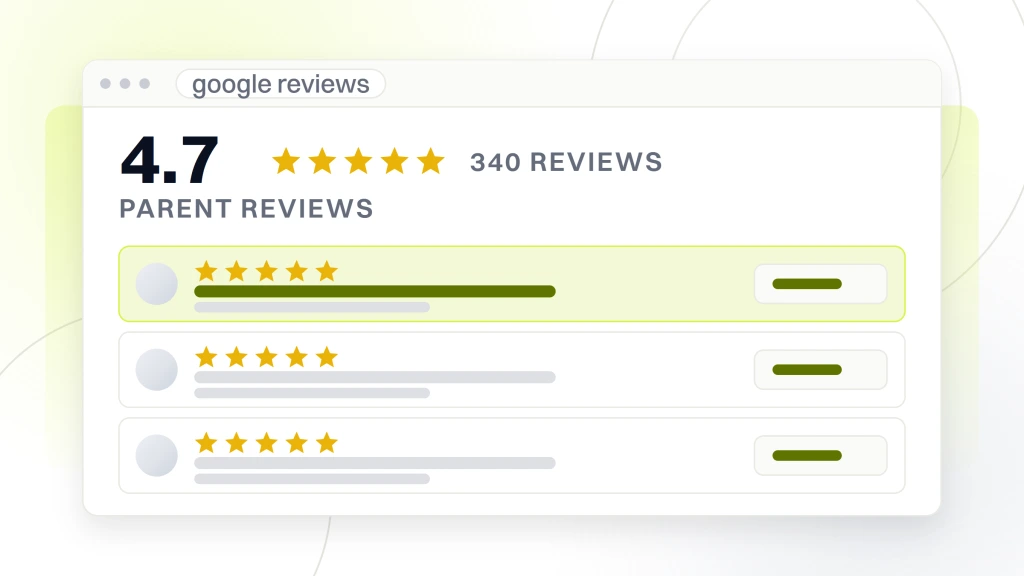
The cadence that works. Every parent who leaves after a positive appointment gets a text within 45 minutes with a review link. Not an email. Text response rate is 4 to 8 times the email rate. The text goes out only for appointments that ended well, so the front desk flags each appointment as green, yellow, or red before the review request fires. Yellow and red never get asked. That filter alone keeps the star rating at 4.7 or higher across 300 plus reviews.
Review workflow the front desk can run
The workflow is 5 steps. First, front desk closes out the appointment in the practice management system. Second, front desk selects green, yellow, or red on a tablet. Green triggers a 45-minute delay then a text with the review link. Yellow triggers no text and a note to call the parent in 48 hours for feedback. Red triggers an immediate note to the practice manager. That 5-step workflow runs at 60 to 90 seconds per appointment and produces 4 to 8 new Google reviews per week on a mid-size pediatric practice.
Response strategy for pediatric reviews
Every review, positive or negative, gets a reply within 48 hours. Positive replies thank the parent by first name and mention the child’s experience in one sentence without naming the child. Negative replies acknowledge the concern, offer to talk privately, and never argue on the public thread. Practices that reply to 100 percent of reviews rank 25 to 40 percent higher in the map pack than practices that reply to none, since Google reads response rate as an engagement signal. Our dental reputation management post covers the reply frameworks.
Kids dentist marketing on Facebook and Instagram
Meta is the second-highest ROI channel for kids dentist marketing after local SEO. Parents live on Facebook and Instagram, especially in local mom groups. The winning creative angle is a real-parent testimonial video, 30 to 60 seconds, shot at the practice or at the parent’s home, describing the first-visit experience. Stock photography and clip-art dental cartoons perform 3 to 5 times worse per dollar spent than authentic parent-shot content.
Meta targeting for pediatric works differently than for general dentistry. Age and gender matter. Target parents 26 to 44 with life events set to new baby, moved, or new job in the last 6 months. Interest layers include parenting groups, local school pages, pediatricians, and family-focused brands. Practices that use these interest layers see cost per patient drop from $180 to $85 versus broad location targeting. Our dental social media ads guide covers the audience-building stack.
| Channel | Monthly spend | Cost per patient | Best angle |
|---|---|---|---|
| Google Local Services Ads | $500 to $1,600 | $45 to $95 | First-visit special |
| Google Search | $800 to $2,400 | $85 to $140 | Pediatric dentist near me |
| Meta Facebook and Instagram | $700 to $2,000 | $65 to $120 | Parent testimonial video |
| Local SEO retainer | $599 to $1,600 | $18 to $42 blended | Map pack, reviews, GBP |
Mom group organic outreach
Local mom groups on Facebook are where pediatric practices win before they even run paid ads. Every metro has 4 to 12 active mom groups with 3,000 to 40,000 members each. Group rules usually restrict overt promotion, so the play is answering questions when a parent asks for a pediatric dentist recommendation. Practices whose staff are active in 3 to 5 local groups and answer honestly, without pitching, see 8 to 22 booked patients per month from the groups alone with zero ad spend.
Parent testimonial video creative
Ask two current parents to record a 45-second video on their phone answering 3 questions. Why did you switch, what was the first visit like, what would you tell another parent. Edit lightly, add captions since 80 percent of Meta viewers watch muted, and run as both a feed post and a reel. That single asset produces cost per patient of $65 to $95 for 4 to 8 weeks before it fatigues. Practices that rotate two new parent videos per month see paid social hold cost per patient inside a healthy band all year.
Pediatric website design that books first appointments
The pediatric dental website carries a different job than a general dentistry website. Parents scan, they don’t read. Every above-the-fold element has to answer a specific question in under 3 seconds. Are you kid-friendly. Are you close. Are other parents happy. Can I book quickly. Miss any of the 4 and the parent bounces to the next practice on the map pack.
The section pattern that converts. Above the fold, practice name plus city, offer restated from the ad, 3-field form, click-to-call, review count with star rating, one photo of a happy child in the treatment chair. Section two, first-visit walkthrough video. Section three, meet the doctors with real photos and short bios. Section four, insurance strip with 8 to 12 recognizable logos. Section five, parent testimonials, 3 of them, with first names and treatment tags. Everything else below the fold. See our dental website design guide for the full pattern.
First-visit walkthrough video
The first-visit walkthrough video is the single most important asset on a pediatric dental website. 90 seconds. Real footage. Real staff. The video shows the parking lot, the front door, the reception area with the toy corner, a hygienist greeting a child, the exam chair, the reward wall, and the checkout. No stock. No voice-over acting. Just the actual walk. Practices that add this video see form-fill conversion climb 25 to 45 percent. The anxious parent watched the walk and mentally rehearsed it.
Insurance strip that answers the money question
Parents scan the insurance strip before they scan anything else on the page. 8 to 12 insurance logos above the fold answer the money question without a phone call. Include Medicaid and CHIP logos where they apply. Practices that hide insurance details behind a we accept most plans line lose 22 to 38 percent of otherwise qualified traffic to competitor sites that show the logos. The strip isn’t decoration. It’s a conversion element.
Pediatric email marketing that fills the recall calendar
Pediatric practices run the highest recall rate of any dental vertical since kids need cleanings every 6 months for their entire childhood. Automated email plus text keeps that recall rate at 78 to 92 percent instead of drifting to 55 to 65 percent on manual reminders. The math on a $599 monthly marketing automation tool is 12 to 22 saved appointments per month, which pays for the tool 20 to 40 times over.
The 3 flows that matter for pediatric email. Recall reminders at 6 months from last cleaning. Birthday emails with a soft check-in and a book-your-next-visit link. Reactivation for families who haven’t booked in 9 to 14 months. Skip flow four. Newsletters underperform in pediatric since parents delete them faster than any other segment. Focus on the 3 flows that produce booked appointments, not the ones that hit a sends-per-month metric. Our dental email marketing guide covers the flow structure.
The recall flow that books cleanings
Send at 5 months and 3 weeks from last cleaning. Text plus email. Copy is short. Six months since your last visit. Book Emma’s cleaning here. Include a two-click booking link that pre-fills the child’s name and last appointment date. Practices that run the flow book 65 to 82 percent of recalls versus 40 to 55 percent on manual phone calls. That 20-point gap is 8 to 16 more booked cleanings per week on a practice with 400 active pediatric patients.
Reactivation for lost families
A pediatric family that goes 12 months without an appointment is 60 percent likely to have found another practice. The reactivation flow is your last chance to bring them back. Three touches over 21 days. First touch is a soft check-in. Second touch is a specific reason to come back, updated insurance list, new provider, expanded hours. Third touch is a small booking incentive that respects the family, free fluoride varnish or a new-patient toy from the reward wall. Practices that run the flow reactivate 12 to 22 percent of dormant families, which adds 5 to 12 recurring patient relationships per month at zero marginal cost.
Referral loops that scale pediatric dental practices
Pediatric dental practices grow faster through referrals than through paid ads once they cross 400 to 600 active families. The math is plain. Every happy parent tells 2 to 5 other parents at daycare pickup or school events. Practices that make referring easy see 25 to 45 percent of new patients come through referrals inside 18 months. Practices that leave it to chance see 5 to 12 percent.
North County Dental Care in Vista, California grew patient volume 1,000 percent from 2021 to 2024 on local SEO, a rebuilt site, and Google Business Profile ads. Referral loops add a channel on top of that kind of base. Three loops carry pediatric referrals. Pediatrician cross-referrals. School and daycare partnerships. Parent-to-parent word of mouth backed by a small thank-you gesture. Each loop takes 2 to 6 months to build and then compounds for years. None of them needs paid spend. All of them need a systematic touch cadence the practice manager runs.
Pediatrician cross-referrals
Every pediatric dental practice should have 3 to 8 pediatrician offices actively referring to them. The relationship is built with a quarterly visit, a folder of first-tooth handouts branded to both practices, and a shared scheduling protocol for pediatric patients who need urgent care. Practices that maintain the relationship see 8 to 18 pediatrician-referred families per month at zero ad cost. Practices that only exchange business cards see 1 to 3 per month.
School and daycare partnerships
Local schools and daycares are the second referral engine. Offer a free 20-minute educational visit twice a year at each partner site with a hygienist and a small giveaway. Every parent whose kid comes home with a branded toothbrush kit sees the practice name for a week. Practices with 4 to 8 active school partnerships see a steady 3 to 7 new families per month tied directly to that channel. It takes 45 minutes per visit and $80 per event in supplies. It funds itself many times over.
Pediatric dentist marketing mistakes that waste budget
Five mistakes repeat across almost every pediatric dentist marketing audit that comes across our desk. Fixing them costs less than a month of paid spend and produces 25 to 60 percent more booked appointments inside a quarter. Read the list. Check your own practice against it this afternoon.
- Google Business Profile categorized as Dentist, not Pediatric Dentist, killing pediatric-specific rank
- Website copy written for children in cartoon voice, not for parents making a decision
- Review generation only on a checkout ask, producing 1 review per week instead of 5 to 8
- No first-visit walkthrough video, forcing anxious parents to guess what will happen
- Insurance information hidden behind a call our office line instead of shown as logos
The GBP category fix that moves rank
The single fastest ranking move in pediatric dental marketing is changing the Google Business Profile primary category from Dentist to Pediatric Dentist. That change happens in 90 seconds. The ranking movement takes 30 to 60 days. Practices that make the switch and then wait patiently see map-pack rank climb 3 to 8 positions for pediatric queries. Nothing else in the marketing plan produces a comparable return for so little effort.
Copy fix that speaks to the actual decision-maker
Rewrite every homepage headline and above-the-fold section to speak to the parent. Not the child. Not the marketing team. The parent. Same-week availability. Gentle first-visit protocol. Every insurance we accept. Review count. That copy fix pushes conversion 20 to 35 percent inside a week with no other changes. The practices that resist the fix usually have a brand voice that emerged from the pediatric-friendly reception area. The reception area vibe belongs in person. The website belongs to the parent. For pattern references, the Nielsen Norman Group research on parents and websites is worth reading.
Pediatric dental marketing plan for a mid-size practice
A pediatric practice with 400 to 800 active families running $2,200 to $4,800 monthly across paid and organic should book 22 to 45 new patients per month. Any lower and the marketing plan has a gap. Any higher without capacity is a scheduling problem, not a marketing problem. The mix that produces those numbers has 4 inputs. Local SEO retainer, Google Search plus LSA, Meta, and email automation.
Local SEO takes $599 to $1,600 per month and produces 12 to 24 map-pack bookings across the quarter. Google Search plus LSAs take $1,200 to $2,400 monthly and produce 10 to 22 booked patients at $85 to $140 cost per patient. Meta remarketing plus cold traffic takes $700 to $1,400 monthly and books 7 to 15 patients at $65 to $120 cost per patient. Email and text automation takes $89 to $199 monthly and books 15 to 30 recall appointments per month from the existing base. Blended cost per new patient runs $65 to $95. Our dental marketing plan post has the full template.
Budget allocation month by month
Months 1 and 2 are foundation. GBP setup, review workflow, first-visit walkthrough video shoot, landing page build, LSA verification. Spend runs $2,200 to $3,200 monthly on tools plus a small $500 to $800 Google Search test. Months 3 through 6 are launch. Full budget of $2,800 to $4,200 across all 4 channels, tracking cost per patient weekly. Months 7 through 12 are optimization. Rebalance toward whichever channel produces lowest cost per patient, add YouTube pre-roll if the practice is at scale, expand to a second location if applicable.
KPIs that actually matter for pediatric
Track 4 numbers weekly. New patients booked, cost per new patient, review count added, recall rate on active families. Ignore vanity metrics like impressions, click-through rate, and follower count. The 4 numbers above tell you whether the practice is growing, staying flat, or bleeding. Practices that hold new-patient booking above 22 per month and recall above 78 percent for 4 consecutive quarters see revenue grow 25 to 45 percent year over year. Practices that ignore recall can double their new-patient number and still shrink since active families drift away without a systematic touch. Sources like the American Academy of Pediatric Dentistry policies and guidelines library and the CDC oral health resources are the citation backbone for parent-facing content.
Working with a pediatric dental marketing agency
Not every dental marketing agency understands pediatric. Most default to general dentistry playbooks and layer a few kid-friendly graphics on top. The signals that separate a real pediatric agency from a generalist are specific. Ask for their last 3 pediatric client results in booked patients, not clicks. Ask how they handle the parent-not-child copy question. Ask whether they run the review workflow themselves or hand it to your front desk with a manual. Vague answers to those 3 questions mean they’re guessing.
The right agency relationship covers 4 things. Local SEO retainer with monthly reporting on map-pack rank by keyword. Paid campaign management with weekly optimization on Google, LSA, and Meta. Review workflow automation implemented in the practice management system. Email and text automation for recall and reactivation. Ideas beyond these 4 are usually the agency justifying a bigger retainer, not producing more booked patients. Read our dental marketing ideas post for the wider tactical menu you can pick from.
Six questions to ask a pediatric marketing agency
Show me your last 3 pediatric client results in booked patients per month. What is your review workflow and who runs it. How do you handle mom group organic outreach ethically. Do you shoot the first-visit walkthrough video or coordinate with our team. What is your monthly reporting cadence and what numbers lead. Who is my point of contact and how many other pediatric accounts do they run. The answers separate agencies that will move the practice forward from agencies that will bill for the same generalist playbook every dentist gets.
In-house versus agency for pediatric
Pediatric practices below $60,000 monthly production usually can’t afford a real agency retainer. Handle the local SEO and reviews in-house with a $299 monthly software stack plus 3 to 5 hours per week of practice manager time. Above $80,000 monthly, an agency retainer of $1,600 to $3,200 per month becomes cheaper than hiring the equivalent hours in-house. Above $180,000 monthly and multiple locations, an agency retainer is non-negotiable since the operational complexity exceeds what any single practice manager can carry.