
Should healthcare businesses use PPC? Yes, when three conditions hold. Average revenue per new patient clears $180. The practice can absorb 15 to 40 extra booked calls per month without hurting care quality. The front desk answers the phone during posted hours 90% of the time. Meet all three and paid search pays back inside 30 to 90 days on any account spending $2,000+ per month. Miss one and paid spend drains the account fast. Most practices sit inside the yes column and do not know it.
In short, you get the three-condition test, pros and cons ranked by specialty, honest break-even math from urgent care to orthodontics, when to start and when to skip, why paired SEO amplifies paid returns, the channels that book patients cheapest, and a Smile Design Dentistry example where restructured paid ads drove higher lead quality and ROI across 50+ locations.
Three conditions that answer whether healthcare businesses should use PPC
The three conditions that decide whether healthcare businesses should use PPC track patient economics, capacity, and operational quality. Average revenue per new patient has to clear $180 across dental, medical, urgent care, and vision. Below $180, the cost-per-acquisition math on paid clicks never covers ad spend at typical click prices. Capacity has to absorb 15 to 40 extra booked calls per month without adding wait times or hurting patient care.
The third condition is answer rate on the phone. Every healthcare PPC account we run tracks answer rate through the call tracking platform. Below 85% answer rate during booking hours, paid ads still work but at 30 to 45% lower ROI, since a third of the paid calls go to voicemail. Above 90%, the ads hit benchmark returns. Fix the phone before you turn on the ads.
| Condition | Threshold | Impact if missed |
|---|---|---|
| Revenue per patient | $180 minimum | CPA math never clears |
| Capacity headroom | 15 to 40 extra calls per month | Wait times balloon |
| Phone answer rate | 85%+ during hours | ROI drops 30 to 45% |
Revenue per patient threshold
Below $180 average revenue per new patient, paid clicks at $8 to $22 apiece never clear the CPA math. Solo urgent care clinics at $95 per visit fail. Community mental health providers at $110 per session fail. Above $180 the math starts working. General dentistry at $340 per new patient works. Orthodontics at $4,200 per case works easily. Vision at $210 per exam works. Match the paid spend to the revenue math or you burn budget faster than the front desk can answer.
Capacity headroom check
Every healthcare practice has a capacity ceiling before extra volume hurts patient care. A two-provider dental practice at 380 exams a month can typically absorb 30 to 50 more before the chair count runs out. A solo primary care doctor at 24 appointments per day can absorb 10 to 15 more before appointment length compresses. Map current volume against physical capacity before turning on paid ads.
Pros of PPC in healthcare
The pros of PPC in healthcare split into three big wins. Speed, targeting, and revenue predictability. Paid search starts booking calls inside 48 hours of ad approval. Local SEO takes 90 to 180 days to move the map pack. Content marketing takes 6 to 12 months to gain compounding traffic. If the practice needs booked patients this quarter, paid is the only channel with that response time. Targeting runs tighter on paid too. Bid on exact conditions and services inside a specific geographic radius, and every dollar of spend maps to a booked-call outcome you can measure by end of week.
- Speed. Booked calls within 48 hours of ad approval.
- Targeting. Exact condition, service, and geo-radius bidding.
- Revenue predictability. 15 to 25% variance on CPA after 60 days.
- Local dominance. Paid plus organic doubles map pack visibility.
- Attribution. Every booked call maps to a keyword, ad, and landing page.
- Scalability. Dial spend up or down with 24-hour turnaround.
- Brand defense. Bidding on your practice name stops competitors from stealing patients.
Speed advantage over SEO
Speed is the biggest single pro of PPC in healthcare. A new practice with zero organic ranking can start booking calls Thursday on ads approved Wednesday. When a practice needs revenue this month, paid is the only channel that runs live that fast. The trade is cost. Every click is paid. Every SEO click is free after month six. So the honest strategy runs paid for cash flow and lets SEO compound for cost-free volume 12 months out.
Attribution advantage
Every booked call from a well-configured healthcare PPC account traces back to the keyword, ad copy variant, and landing page that produced it. That closed loop tells you exactly which $9 in click spend produced which $340 patient. That granularity is why healthcare PPC advertising is the most optimizable channel in the mix, and the reason accounts that survive 12 months typically double return on ad spend every 6 to 9 months.
Honest cons of PPC advertising for healthcare industry accounts
The honest cons of PPC advertising for healthcare industry accounts start with cost per click. Healthcare CPC in 2026 runs $6 to $28 on service and condition keywords across mid-size and large metros. That is 3 to 6 times the average B2C CPC. Every click has to convert or the CPA math collapses. A practice not ready to invest 6 to 10 weeks of testing into landing page and ad copy iteration will lose 25 to 45% of monthly spend before the account stabilizes.
The second real con is platform policy. Google’s health advertising policies restrict certain condition-related copy, protected health information (PHI) in landing pages, and remarketing on sensitive health topics. Meta’s policies restrict lookalike audiences and interest-based targeting on health conditions. Every launch runs through a compliance workflow. Skip it and the account gets disapproved during a policy sweep, losing 5 to 12 days of paid volume every time.
Cost per click reality
Healthcare CPC ranges by specialty and metro. General dental in mid-size metros, $6 to $14. Cosmetic dental, $8 to $22. Orthodontics, $9 to $28. Urgent care, $5 to $11. Primary care, $4 to $9. Vision, $5 to $12. The rule of thumb, the higher the average revenue per patient, the higher the CPC. Rural practices with less competition see CPC 30 to 60% below metro rates.
Platform policy overhead
Platform policy overhead for healthcare PPC costs 6 to 14 hours per campaign launch. Ad copy review against the vertical policy. Landing page HIPAA compliance check. Analytics scrubbing to keep PHI from hitting Google Analytics or Meta pixel. Skip any check and the account gets disapproved during policy sweeps that hit twice a quarter. Build the checklist once, run it every launch.
Break-even math behind the should healthcare businesses use PPC decision
The break-even math runs on three numbers. Average revenue per new patient. Target customer acquisition cost as a percentage of that revenue. Expected conversion rate from click to booked-and-showed patient. Target CAC lands at 30 to 40% for practices with strong retention and 15 to 25% for single-visit specialties. Multiply revenue by the CAC percentage and the result is the max cost per booked patient the paid account can absorb.
Take a general dental practice at $340 average first-visit revenue, 35% target CAC, 78% show-up rate. Max cost per showed patient, $119. Max cost per booked call, $93. Divide by paid conversion rate (typically 8 to 14% on well-structured accounts) and the max cost per click lands at $8 to $13. That is the honest bid ceiling for the account.
CAC math by specialty
CAC math shifts by specialty since retention and lifetime value change the calculation. Orthodontics, $4,200 first case, 25% CAC target, $95 max CPC. Cosmetic dental, $2,800 case, 30% target, $70 max CPC. General dental, $340 first visit, 35% target, $12 max CPC. Vision, $210 exam, 30% target, $6 max CPC. Urgent care, $150 visit, 25% target, $4 max CPC. Match the bid to the math.
Retention multiplier
Retention multiplies the CAC math when the practice model relies on repeat visits. A general dental patient books an exam every 6 months for 8 to 12 years on average. Lifetime value is not $340, it is $6,000 to $12,000. That changes the CAC math from 35% of first visit to 5% of lifetime value, which raises the max cost per patient to $300 to $600. Practices bidding on lifetime value outbid practices bidding on first-visit math on every high-intent keyword.
When healthcare businesses should skip PPC
Skip PPC in three cases. Revenue per new patient below $180 with no retention story. Fully-booked schedule sitting on a 3-week waitlist with no plan to expand. Front desk answering phones under 70% during posted booking hours. Any one of the three means paid spend creates operational damage bigger than the revenue it produces.
The fourth skip condition is regulatory. Practices offering services under active FDA review or unlicensed practitioners in states that require licensure should not run paid on the associated keywords. Google’s health advertising policies catch and disable accounts running restricted content within 7 to 30 days. Consult a healthcare marketing compliance specialist first.
Low-revenue alternatives
For practices below the $180 revenue threshold, alternatives deliver better ROI. Google Business Profile work with weekly posts and review request automation produces 30 to 60% gain in map pack impressions inside 90 days. Local citation building through Yext delivers 20 to 40% gain in local ranking signals. Content marketing on condition-specific topics builds organic search traffic over 6 to 12 months at zero click cost.
Capacity-constrained alternatives
For practices booked solid with a 3-week waitlist, paid creates the wrong problem. Raise prices by 10 to 15%, expand hours by 20%, hire an associate provider, or open a second location. Any of the four fixes creates capacity for growth. Paid ads on top of no capacity produce booked calls that never convert to appointments. Fix capacity first, then turn on paid.
Benefits of combining SEO and PPC for healthcare accounts
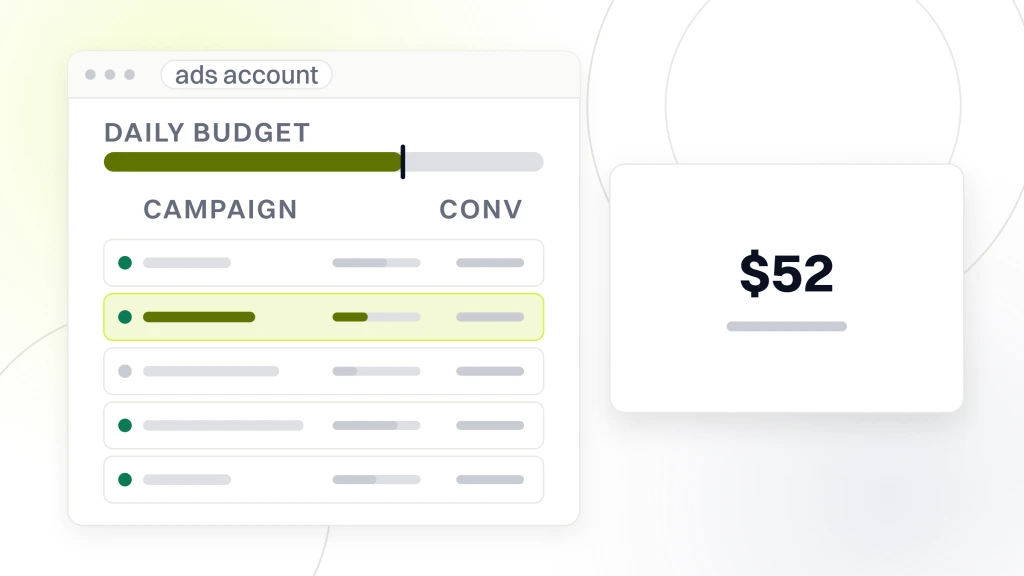
The benefits of combining SEO and PPC for healthcare accounts compound in three ways. Search real estate. Running both means the practice appears at the top of paid results, the local pack, and organic results on the same query. That triple coverage captures 60 to 80% of qualified click volume versus 20 to 35% for either channel alone. Keyword insight. Paid search terms data feeds SEO content prioritization. Attribution. Cross-channel data reveals which content the paid audience read before booking.
The second compounding benefit is cost efficiency over time. Month one, paid drives 100% of booked calls at $110 cost per call. Month twelve after SEO investment, paid drives 60% of booked calls at $95 per call, and organic drives another 40% at near-zero click cost. Combined effective cost per booked call across both channels drops from $110 to $52.
Data loop between channels
The data loop between paid and organic is one of the most underused advantages in healthcare marketing. The paid search terms report reveals which exact phrases patients use to describe conditions, ask about pricing, and compare providers. That feeds SEO content briefs. Organic ranking data reveals which topics drive the highest quality of organic booked calls. That feeds paid keyword expansion.
Smile Design Dentistry case study on healthcare PPC advertising decisions
Smile Design Dentistry, a 50+ location DSO, came to us with the same question every group asks. Does PPC in healthcare hold up across 50+ locations, and does the CAC math survive the group model. They came in with inflated ad spend, poor-quality leads, and limited tracking across the network. The previous vendor had let each market run its own keyword lists and landing pages, so budgets bled into duplicate auctions. Cost per booked call climbed and the operations team lost trust in paid.
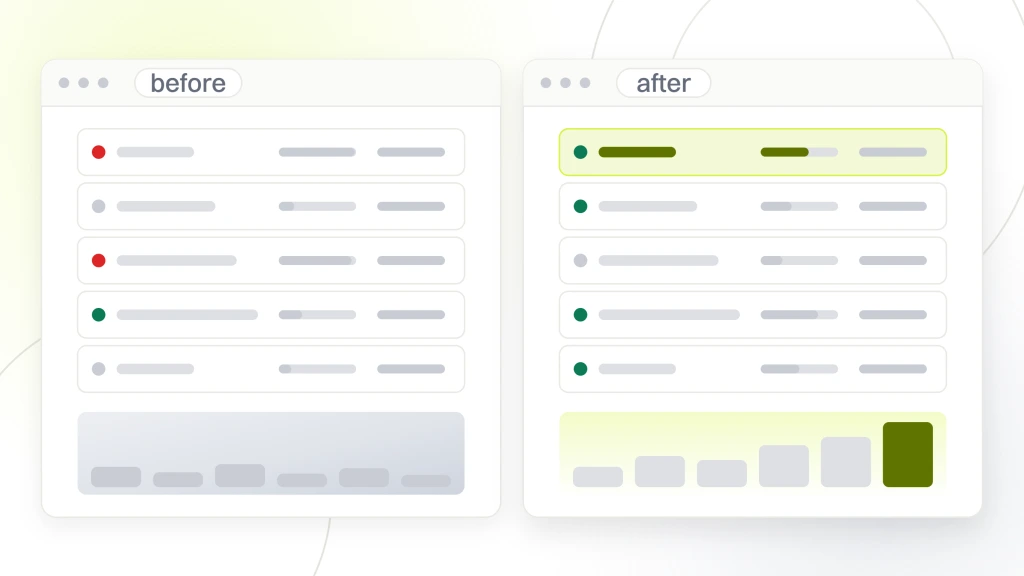
We restructured the PPC accounts around a four-bucket structure per location, added full-funnel paid social, and built landing pages that matched each market’s service mix. The rebuild produced higher lead quality, better ROI, and scalable growth across the network. Smile Design Dentistry successfully launched optimized campaigns across 50+ locations with scalable paid search, social, and landing page strategies. That headline result stands on their case study.
Lessons on PPC advertising for healthcare industry groups
Two lessons from Smile Design Dentistry apply to any practice weighing should healthcare businesses use PPC. First, past agency failure is not proof paid does not work for your specialty. It is proof the last agency did not run the four-bucket structure. 90% of failed healthcare PPC accounts we audit failed on structure, not on the vertical. Second, the CAC math tells you the answer before the first click fires. If the math clears at your target CPC, paid works.
Healthcare PPC advertising channels ranked by ROI
Healthcare PPC advertising works on more channels than Google Search alone, and the mix matters for accounts spending $5,000+ per month. Google Search delivers 55 to 70% of booked calls at the highest CPC. Google Local Services Ads deliver 8 to 15% at flat-fee pricing per verified lead. Bing Search delivers 5 to 10% at 40 to 60% lower CPC than Google. YouTube patient education video drives 10 to 20% of downstream branded search volume. Meta lead ads deliver 5 to 12% on older demographics.
Local Services Ads
Google Local Services Ads (LSA) run on a per-verified-lead pricing model instead of per-click. Cost per lead lands at $30 to $85 for dental, medical, urgent care, and vision in most metros. The Google-guaranteed badge raises trust for cold clicks. LSA sits above regular paid search results on mobile. For practices with strong front-desk answer rates, LSA typically produces the lowest cost per booked call across all healthcare paid channels.
Monthly budget guide for PPC advertising for healthcare industry practices
Monthly budget scales with capacity, not ambition. Solo urban practices at 30 to 50 exams per week sit at $2,000 to $4,500 monthly ad spend, producing 20 to 40 extra booked calls. Two-provider practices sit at $4,500 to $9,000. Multi-location groups run $8,000+ per location. Underspending starves the smart bidding algorithm. Below 30 conversions per month, Google’s Target CPA bid strategy underperforms manual CPC by 15 to 25%. Start at the low end and scale up 15 to 25% per month as CPA stabilizes.
Budget by specialty
General dentistry, $2,500 to $6,500 solo, $6,000 to $12,000 two-provider. Orthodontics, $3,500 to $8,000 solo. Cosmetic dental, $4,000 to $9,500 solo. Urgent care, $2,000 to $5,000 per location. Primary care, $1,800 to $4,200 per provider. Vision, $2,200 to $5,500 solo. Multi-location groups add 60 to 80% per location above solo baseline, not 100%.
Should healthcare businesses use PPC on a small monthly budget? Yes if the three-condition test passes and the CAC math clears at a low CPC. Solo urban practices with $180+ revenue per patient can run paid at $2,000 to $4,500 monthly and produce 20 to 40 booked calls. Below $2,000 monthly, the smart bidding algorithm starves for conversion data and CPA runs 20 to 40% above target.
How much does PPC in healthcare cost per click in 2026? Healthcare CPC in 2026 runs $6 to $28 across service and condition keywords in mid-size and large metros. General dental sits at $6 to $14. Cosmetic dental at $8 to $22. Orthodontics at $9 to $28. Urgent care at $5 to $11. Vision at $5 to $12. Rural markets run 30 to 60% below metro rates. Match your bid to the CAC math for your specialty.
What are the honest cons of PPC advertising for healthcare industry practices? Three real cons. High CPC that punishes accounts without landing page testing, losing 25 to 45% of monthly spend before the account stabilizes. Platform policy overhead of 6 to 14 hours per launch on HIPAA and health advertising compliance. Cash-flow lag of 60 to 90 days before CPA stabilizes. Practices that plan for all three succeed.
What are the benefits of combining SEO and PPC for healthcare accounts? Full search coverage that captures 60 to 80% of qualified click volume versus 20 to 35% for either channel alone. Keyword insight where paid search terms data feeds SEO content prioritization 6 to 12 months out. Cross-channel attribution that reveals which content the audience read before booking. Cost efficiency where combined cost per booked call drops from $110 to $52 by month twelve.
How fast does healthcare PPC advertising start booking patients? Paid search starts booking calls inside 48 hours of ad approval. Local SEO on the same market takes 90 to 180 days to move the local pack. Content marketing takes 6 to 12 months. If the practice needs booked patients this quarter, paid is the only channel with that response time.
When should healthcare businesses skip PPC entirely? Skip paid in three cases. Revenue per new patient below $180 with no retention story. Fully-booked schedule sitting on a 3-week waitlist. Front desk answering phones under 70% during posted booking hours. A fourth skip condition covers regulatory work under active FDA review or unlicensed practitioners in licensure states.
Which channel in PPC in healthcare delivers the lowest cost per booked call? Google Local Services Ads (LSA) typically produce the lowest cost per booked call for practices with strong front-desk answer rates. Cost per verified lead lands at $30 to $85 across dental, medical, urgent care, and vision. The Google-guaranteed badge raises trust for cold clicks. Google Search still drives the highest volume at 55 to 70% of booked calls, so run both.
Where to start once you decide healthcare PPC is worth running
Start with the three-condition test. Calculate average revenue per new patient. Check capacity for 15 to 40 additional monthly booked calls. Measure phone answer rate during posted booking hours. Pass all three and paid works. Fail one and either fix the operational issue first or run alternative channels instead. Run the CAC math to establish the honest max CPC for your specialty. Set that as the account ceiling. Split the account into the four buckets. Load the negative list. Match landing pages. Launch at 40 to 60% of target monthly budget and scale up as CPA stabilizes.
Ready to run the CAC math and stand up the account? Our Healthcare PPC Agency That Books Patients engagement handles setup, launch, and the weekly cadence. For a retainer at $1,499 per month that layers SEO on top, our Healthcare Marketing Retainer Plans from $1,499/mo is the plan. Pair the paid stack with our Healthcare PPC Management breakdown and our PPC Tips for Healthcare quick wins. Compare against SEO thinking in our Benefits of Combining SEO + PPC post and the CRO angle in Healthcare Website CRO. An outside reference worth reading, the Google Ads healthcare advertising policy.