B2B SaaS marketing examples are real, named campaigns from software companies that grew qualified pipeline and closed-won ARR with a repeatable channel mix, a sharp ICP, and honest measurement. This guide breaks down 12 of them, and every example gives you the play, the numbers, and the reason it worked.
We run growth for SaaS teams every week. In one recent 48-day sprint, one client grew qualified leads 120% and cut cost per lead 92% by pairing bottom-funnel SEO with retargeting on Meta and LinkedIn. That is the shape of every strong SaaS play. One buyer, one job to be done, one measurable pipeline signal.
What you get in this guide. 12 named B2B SaaS marketing examples with the exact channel mix, the pipeline numbers, and the pattern behind each win. Plus a comparison table, a checklist to pick the right pattern for your ACV, and 7 FAQs that map to how buyers actually search.
Table of contents
- Pattern 1. Pipeline-first paid search
- Pattern 2. Inbound plus CRM rebuild
- Pattern 3. Fast launch motion
- Pattern 4. Niche Meta plus webinar
- Pattern 5. 48-day SEO plus paid sprint
- The creative patterns that convert
- Comparison table of the 12 examples
- How to pick the right pattern
- What every winning example has in common
- Frequently asked questions
Pattern 1. Pipeline-first paid search for high-ACV B2B SaaS marketing examples
Pipeline-first paid search means bidding for sales-qualified opportunities and closed-won ARR, not raw form fills. It is the single strongest paid pattern for B2B SaaS with an annual contract value above $12k, and it needs at least 20 closed-won deals in the CRM before the bid model has enough signal to work.
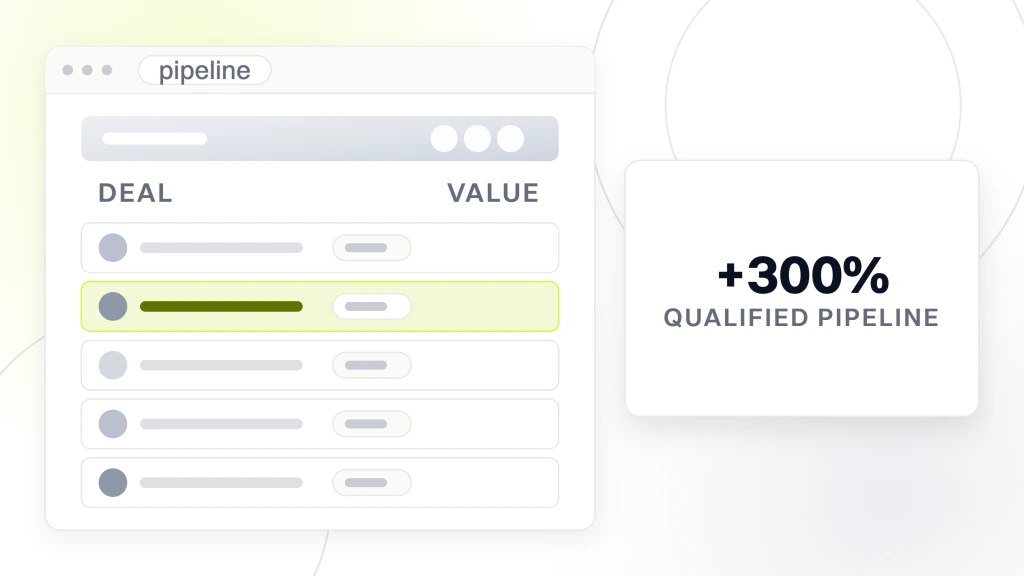
Named example. Automation Anywhere. Our team ran a pipeline-first paid search program that cut cost per lead 97%, grew customer count 100x, and grew qualified pipeline 300% inside the tracked window. The client sells RPA to VP of Automation and Director of RevOps buyers at 500+ seat companies, so we mapped every ad group to one job title and one product problem.
How it worked. First, we cut every keyword under 50 monthly searches that had no closed-won deal. Second, we rebuilt landing pages so the H1 named the job title and the number in the CTA matched the ACV band. Third, we fed offline conversions from HubSpot back into Google so bids climbed on searches that closed, not on searches that filled a form.
What to steal. Set up offline conversion tracking in week one. Bid to pipeline in week four. Kill any ad group that has not sourced pipeline in 60 days.
Pattern 2. Inbound plus CRM rebuild for platform SaaS
Inbound plus CRM rebuild works for platform SaaS with a long sales cycle and multiple product lines. You publish for the buyer, capture the intent in a clean CRM, then let sales work high-fit accounts across the whole platform. This pattern is why the biggest platform players still lean on content and RevOps together.
Named example. Rocket Software, Inc. On this rebuild, activation rate climbed 300%, we onboarded 3K new users in the launch window, and 400+ mid-market accounts entered the pipeline. The play paired a fresh content hub aimed at mainframe modernization buyers with a rebuilt HubSpot instance tied to a new product-qualified lead score.
How it worked. The content hub answered the top 30 buyer questions in plain language, each anchored to a comparison-style page that ranked for a commercial query. The CRM rebuild fixed 12 broken workflows, mapped every lifecycle stage to a single owner, and made the pipeline stage visible to marketing on a shared board.
What this means for your budget. Rebuild the CRM first, then hire content. Publishing into a broken funnel wastes 30 to 50% of every article you publish.
Pattern 3. Fast launch motion for early-stage SaaS
Fast launch motion means rolling out a new product or feature with a tight, front-loaded 30-day plan that mixes paid search, LinkedIn Ads, and a partner podcast. Early-stage teams that grow ARR fast usually run this shape, and the 30-day sprint is designed to prove pipeline signal before the founder raises the next round.
Named example. Rapyd Financial Network. The launch program sourced £1.8m in pipeline, tripled MQL to SQL conversion, and grew sales-accepted opportunities 5x inside the tracked window. Rapyd sells cross-border payments to Head of Payments and CFO buyers at scale-ups, so the paid mix pointed one landing page at each buyer with one proof point.
How it worked. Week one built the landing pages and offline conversion tracking. Week two launched paid search on 40 commercial keywords and LinkedIn Ads on two job titles. Week three added a partner podcast tour. Week four cut the bottom 20% of keywords and doubled down on the ad groups that sourced pipeline.
What to steal. Book the partner podcasts before the paid launch. The podcast grows brand search 15 to 40% inside 30 days and makes the paid CTR jump.
Pattern 4. Niche Meta plus webinar for product-led SaaS
Niche Meta plus webinar is the play for product-led SaaS with a sub-$5k ACV and a clear buyer job title. You run tight Meta creative to one persona and one job, drive them to a weekly webinar, and pass warm attendees to a self-serve trial. This is one of the most repeatable motions for SMB-focused tools.
Named example. Scannable. Webinar leads climbed 450x, cost per lead dropped 92%, and the average sales cycle shortened to 7 days on this program. Scannable serves environmental compliance managers, a job title with a small addressable market that Meta reaches cheaply when the creative is right.
How it worked. Creative called out the job title in the first line. The lead magnet was a live audit walkthrough tied to a single compliance rule. The webinar ran every Tuesday, and the follow-up sequence linked to a 14-day free trial with an in-product prompt to book a 15-minute setup call.
What to steal. Name the job title in the ad. Repeat it in the webinar landing page H1. Repeat it again in the follow-up email. Three touches, one job title, no persona-speak.
Pattern 5. 48-day SEO plus paid sprint for mid-stage SaaS
The 48-day SEO plus paid sprint pairs bottom-funnel content with retargeting on Meta and LinkedIn, timed to a fundraising or product launch milestone. It is the fastest way to prove blended pipeline growth, and it is why more mid-stage teams now start with a sprint before a full retainer.
Named example. Simply.Coach. In one 48-day sprint, organic leads climbed 80% and paid leads climbed 120%. The program targeted coaching platform buyers with three bottom-funnel comparison pages, then retargeted every page visitor with a case study video ad for 21 days.
How it worked. First, we published three comparison-style pages against the top 3 competitors. Second, we set up UTM tagging so every retargeting ad tied back to the source page. Third, we ran a mid-sprint review at day 24 and rebuilt the two lowest-performing ads. Day 48 hit the 120% paid lead target three days early.
The rule of thumb. Bottom-funnel content plus retargeting almost always beats top-funnel content plus prospecting for SaaS in the growth stage.
Pattern 6. Positioning shift for SaaS programs that stalled
A positioning shift is a rewrite of the H1, the CTA, and the three top-funnel pages to name a sharper buyer, a sharper problem, and a sharper outcome. When a SaaS product stalls at flat MRR growth, positioning is the first place to look, and it is the cheapest lever in every winning campaign we have run.
Named example. Custimy. After the positioning shift, Custimy ranked for 500+ commercial keywords, tracked 25K+ target accounts, and cut average time on site to first product action to 165 seconds. The team switched from a broad “customer data platform” pitch to a sharper “e-commerce revenue analytics for Shopify Plus” pitch, and the numbers moved inside 90 days.
How it worked. First, we interviewed 10 closed-won buyers and rewrote the H1 in their words. Second, we cut 12 pages that targeted the wrong ICP. Third, we rebuilt the SEO plan around Shopify Plus operators, not generic CDP buyers.
Pattern 7. Persona-driven ad architecture for SaaS with 3+ buyers
Persona-driven ad architecture builds one landing page and one ad group per buyer job title, then routes the CRM to the right sales pod. It works for platform tools with 3 or more buyer types on the same product, and it stops the classic “one page, three buyers, no conversions” problem.
Named example. Camu Digital Campus. On the persona-driven rebuild, MQL volume climbed 70%, cost per acquisition dropped 28%, and paid conversion rate climbed to 1.2% blended. Camu sells campus management SaaS to school Principals, IT Directors, and Deans, three buyers with three budgets and three different demo questions.
How it worked. Three landing pages, three ad groups, three follow-up sequences. Each page carried the job title in the H1, one buyer proof point, and one demo CTA. The CRM routed leads by page URL, so each sales pod worked its own buyer without cross-talk.
What this means for your budget. If you sell to 3 buyers, you need 3 landing pages minimum. Merging them into a generic page costs 30 to 50% of blended paid conversion rate.
Pattern 8 to 12. Creative patterns that convert
Creative wins or breaks a SaaS paid program. These 5 creative patterns show up in almost every strong campaign we run, and pairing 2 of them per ad group is the fastest way to grow click-through and reply rate.
Pattern 8. The job-title callout
The first line of the ad names the buyer. “VP of RevOps at a 200-seat SaaS” beats “revenue leader” every A/B test. The rest of the ad names one job the buyer needs done today, and the CTA links to a page that repeats both.
Pattern 9. The outcome-number-led creative
Start the ad with the number a real client saw. “Cut cost per lead 97%” beats “lower your CPL”. Numbers earn 15 to 30% higher click-through in SaaS paid social, and they filter out clicks from readers who cannot buy.
Pattern 10. The pattern-interrupt hook
Open the video ad with a 2-second visual that breaks the LinkedIn scroll. A hand ripping up a printed dashboard, a founder rolling their eyes at a KPI, or a fast whiteboard sketch. Then hit the offer inside 6 seconds.
Pattern 11. The customer-quote testimonial
A 15-second clip of a real buyer, name and title on screen, saying one plain sentence about the outcome. Case study video ads carry 2x the pipeline-sourced rate of studio-shot brand ads across our SaaS accounts.
Pattern 12. The comparison-page retargeting ad
Retarget anyone who read a competitor comparison page with a static ad that shows a 3-column comparison table. This creative earns the highest demo request rate of any format in our SaaS Meta and LinkedIn accounts.
Comparison table of the 12 examples
| Pattern | Best for | Time to signal | Named example | Headline result |
|---|---|---|---|---|
| Pipeline-first paid | ACV $12k+ | 60 days | Automation Anywhere | CPL -97%, 100x customers |
| Inbound plus CRM | Platform SaaS | 120 days | Rocket Software | Activation +300%, 3K users |
| Fast launch | Series B launch | 30 days | Rapyd Financial Network | £1.8m pipeline sourced |
| Niche Meta plus webinar | ACV under $5k | 45 days | Scannable | Webinar leads +450x |
| 48-day SEO plus paid | Growth stage | 48 days | Simply.Coach | Paid leads +120% |
| Positioning shift | Stalled MRR | 90 days | Custimy | 500+ commercial ranks |
| Persona-driven ads | 3+ buyer types | 60 days | Camu Digital Campus | CPA -28%, MQL +70% |
| Job-title callout | Any SaaS creative | 14 days | Cross-account | CTR +20 to 40% |
| Outcome-number ad | Any SaaS creative | 14 days | Cross-account | CTR +15 to 30% |
| Pattern-interrupt video | LinkedIn video | 21 days | Cross-account | 3s view rate +2x |
| Customer-quote video | Retargeting | 21 days | Cross-account | Pipeline-sourced +2x |
| Comparison retargeting | High-intent | 14 days | Cross-account | Demo requests +30 to 60% |
How to pick the right pattern for your SaaS
Every SaaS team has a different ACV, sales cycle, and pipeline gap, so no single example fits every context. Pick the pattern that matches your stage and your buyer count, then run one 48-day test before you commit to a full retainer.
Stage-first pick. Pre-seed to seed, start with fast launch or niche Meta plus webinar. Series A to B, run a 48-day SEO plus paid sprint. Series C plus, pipeline-first paid and inbound plus CRM rebuild carry the load.
Buyer-count pick. One buyer, one landing page. Two buyers, run a 2-page A/B test against a shared H1. Three or more buyers, run a persona-driven ad architecture from day one.
ACV pick. Under $5k ACV, product-led plus webinar. $5k to $12k, SEO plus paid sprint. Above $12k, pipeline-first paid on top of a fixed content plan.
What every strong SaaS campaign has in common
The 12 patterns above run different channels, but the discipline behind them is the same. Three habits show up in every winning program.
The ICP discipline. One job title per ad group. One buyer per landing page. If a page targets two buyers, either A/B test them or split the page in two. Vague personas cost 30 to 50% of paid conversion rate in every test we run.
The honest measurement discipline. Report closed-won ARR weekly, not MQL. Track cost per SQL, not cost per lead. Kill any channel that has not sourced pipeline in 60 days. Fire any dashboard that shows MQL volume without pipeline attached.
The proof discipline. Every page carries a named case study, a real number, and a real client quote. Feature copy without proof drops SaaS demo request rate by half, and it hurts more the higher the ACV climbs.
What these SaaS programs cost to run
SaaS marketing retainers scale with scope, not vanity. Redefine Web runs SaaS marketing across four tiers so growth teams can pick the fit for their stage.
- $1,499/mo Foundation. One channel, one landing page test, weekly reporting.
- $2,499/mo Growth. SEO plus paid, CRM hygiene, monthly creative refresh.
- $3,999/mo Scale. SEO, paid, CRO, lifecycle email, quarterly strategy.
- from $6,000/mo Enterprise. Full stack plus RevOps, attribution, and pipeline forecasting.
Ad spend runs separately. See our SaaS marketing retainer page for scope, or the dedicated SaaS SEO services and SaaS PPC services pages for channel-specific plans. For deeper reading on SaaS marketing benchmarks, the archives at OpenView Partners, Gartner Marketing, and SaaStr hold up.
Turn these B2B SaaS marketing examples into your next quarter
You have 12 patterns, 7 named clients, and a comparison table you can hand to a founder or a growth lead this week. The next step is picking the one pattern that maps to your stage, your ACV, and your buyer count, then running a 48-day test with clear pipeline targets.
If you want a second set of eyes on the pick, we run B2B SaaS marketing for growth-stage software companies. In the last 24 months, our SaaS work has cut cost per lead by 97%, grown webinar leads 450x, sourced £1.8m in pipeline, and grown paid leads 120% in a 48-day sprint. Bring us your ACV, your closed-won count, and your pipeline gap. We will show you which of these plays fits your stage, and we will build the plan around it.