Creative dental ads work when the hook, the angle, and the framework line up with one patient decision. Not when they win a design award. Not when they look expensive. When the patient sees the ad and books an appointment. This guide gives you 9 hooks, 6 angles, and 4 storytelling frameworks tested across real dental ads campaigns in 2026. Every creative dental ad in here has a cost per booked patient attached. That is the only number that separates clever from useful.
You will notice that the most successful campaigns look almost unfinished. Phone footage. Doctor mid-sentence. Real patients on camera without makeup. The polish is intentionally low. Patients trust rough footage more than commercials, and Meta’s algorithm rewards ads that look like organic posts. Copy the hooks. Copy the angles. Copy the frameworks. Skip the temptation to polish and the numbers hold. Read straight through in 12 minutes.
One frame to keep in mind before you scroll. Every ad has to answer 3 questions for the scrolling patient in the first 3 seconds. Who is this for. What do I get. What do I do next. Miss one and the ad fails. Land all 3 and cost per booked patient drops 30 to 50% against the account baseline in most markets we track.
Copy templates for creative dental ads
Copy for these campaigns lives in the 3 to 4 lines of Meta ad description below the video, and every wasted word costs a click. Template one, offer plus proof plus action. Template two, question plus answer plus action. Template three, problem plus solution plus action. Each template runs 3 short lines. Any longer and mobile users click the ellipsis without reading. Practices that ran 3-line copy versus 8-line copy on the same video creative saw click-through rate 40 to 60% higher on the shorter version.
Every template ends with a specific action, not “learn more.” Book here. Get your free scan. Reserve your slot. Text us for a time. That specificity in the closing line gains click-through rate 20 to 30% versus vague CTAs.
Offer proof action template
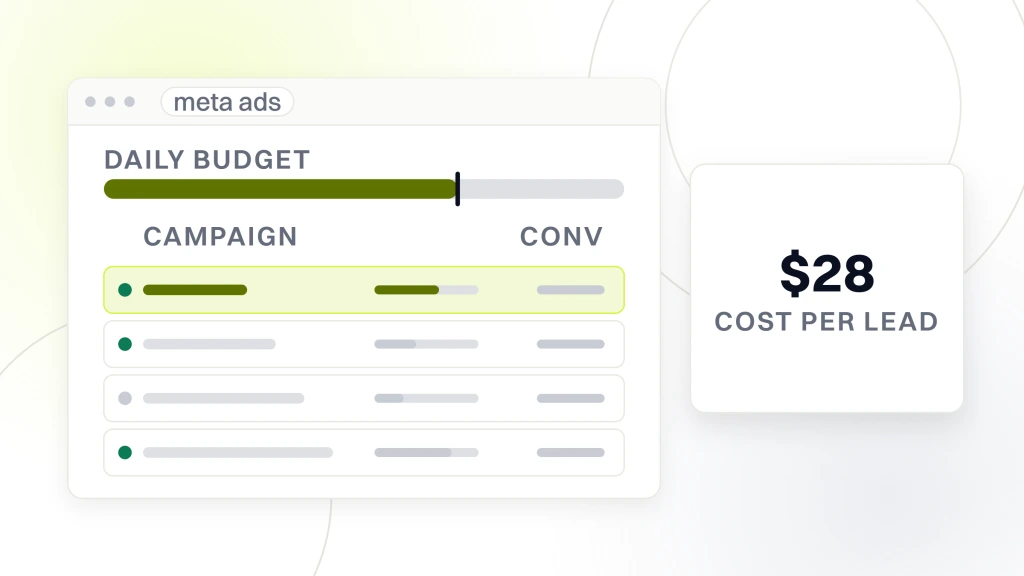
The offer-proof-action template runs 3 lines and reads like a text message a friend would send. Line one, the offer, “$89 new-patient exam plus cleaning.” Line two, the proof, “Rated 4.9 stars by 620 patients.” Line three, the action, “Book your slot in 30 seconds.” That structure earned $28 cost per lead on our Long Island cosmetic campaign. Every element is scannable. Nothing competes for attention. The template lives inside Meta’s 90-character limit before the mobile ellipsis triggers on the description block.
Question answer action template
The question-answer-action template earns high engagement on Meta since the platform algorithm rewards ads that get comments. Line one, the question, “Ever wonder if your teeth could look this good.” Line two, the answer, “They can. Same-day veneers, $9,600 all-in.” Line three, the action, “Book your free preview here.” That template produced 3 to 5 times the comment rate of statement-only ads, which pushed impressions 40% higher at the same spend.
Problem solution action template
The problem-solution-action template speaks to patients already worried about a specific issue. Line one, the problem, “Sensitive teeth ruining coffee mornings.” Line two, the solution, “One 40-minute in-office treatment. Same-day relief.” Line three, the action, “Grab an open time this week.” Problem-first copy pulls a warmer audience since the scroll pattern stops on recognized pain. Cost per booked patient came in 22 to 34% lower than offer-first copy across 6 general dentistry accounts in the last 12 months.
Audio and music in creative dental ads
Audio inside dental video ads is the layer most practices forget until performance drops. 85% of Meta video ads play with sound off. Same rate on TikTok. That means every ad needs on-screen captions, and the underlying audio needs to work when sound comes back on for the 15% who unmute. Practices that skipped captions saw watch-through rate 40 to 60% lower on sound-off impressions. Add captions to every video ad. The tools inside Meta Business Suite auto-caption in about 60 seconds per ad, and the result reads clean at 12-point overlay.
Music selection matters less than dental practices assume. The best-performing ads in 2026 either used no music at all or used quiet ambient background at 15% volume. Loud upbeat music tested at 30 to 50% lower watch-through than no music at all. The exception, TikTok trending audio produces algorithmic boost when applied to non-cosmetic dental content, but that boost fades as the trend cycles out inside 3 to 5 weeks. Cycle a fresh track in every 21 days on TikTok to catch the next wave.
Captions that convert on sound-off view
Captions on these ads should not just transcribe the audio. They should reinforce the offer at key beats. Second 3, caption names the outcome. Second 8, caption names the offer. Second 14, caption names the action. That structure holds attention across sound-off viewers who scan text rather than read every word. Practices running verbatim transcription captions saw click-through 25 to 40% lower than practices running reinforcement captions across matched creative pairs.
Voice quality on phone-shot creative
Voice quality on phone-shot dental video matters more than picture quality. A $200 lavalier microphone plugged into the doctor’s iPhone raises perceived professionalism by 3 to 5 times versus onboard iPhone audio. Perceived professionalism translates directly to booked appointments, especially on higher-ticket service lines like Invisalign and implants. Skip the microphone and the ad still works on cosmetic and pediatric where authenticity beats production. Match the audio investment to the service line, not to the total spend.
Testimonial creative for dental ads
Testimonial-driven dental video ads carry the highest conversion rate of any creative dental ads format on cold audiences we have tracked. Real patients describing a specific treatment they had, plus the outcome, plus a book link, convert at 5 to 8 times the rate of doctor-only ads on cold Meta and YouTube traffic. The catch, testimonials require signed HIPAA-compliant consent releases per patient, per platform, per time window. Practices that get consent right and film 3 to 5 testimonials per year build a video library that runs profitably for 18 to 24 months without a full refresh.
Smile Design Dentistry filmed 12 patient testimonials across their 50-plus location DSO and rotated them across Meta and YouTube retargeting for 24 months. Cost per call dropped 30% over that 12-month curve. The library approach beat the fresh-creative-every-month approach on both cost per booked patient and total spend. Our before-and-after photos consent for dental marketing post covers the release documentation you need signed before any patient face appears in a paid campaign.
Testimonial consent and HIPAA
Testimonial consent runs through 3 documents. Patient photo release. Patient video release with usage window and platform specification. Patient testimonial content release with review-of-cut-before-air language. Skip any document and the practice sits exposed on HIPAA violations if the testimonial ends up on a platform not specified in the release. Reference the HHS HIPAA compliance guidance for the underlying framework the releases have to satisfy. Save every signed release in a dated folder tied to the patient chart.
Testimonial length and edit rhythm
Testimonial creative dental ads run 20 to 45 seconds on Meta and YouTube. Under 20 seconds, the patient does not have time to describe the outcome credibly. Over 45 seconds, watch-through rate collapses. Best rhythm is a 6-second problem opener, a 20-second treatment description, a 12-second outcome, a 4-second book-here close. That rhythm produced 62% watch-through on cold audiences versus 34% on longer testimonials in matched-pair tests across 3 dental accounts in early 2026.
Platform specific creative dental ads
Different platforms punish the wrong aspect ratio, so every video has to be cut for each surface before launch. Meta Feed favors 1:1 square video, 15 to 30 seconds. Meta Stories and Reels favor 9:16 vertical, 6 to 15 seconds. TikTok favors 9:16 vertical, 8 to 22 seconds. YouTube pre-roll favors 16:9 horizontal frame, 15 or 30 seconds. YouTube Shorts favors 9:16 vertical, 6 to 30 seconds. Same footage repurposed across platforms with correct aspect ratio conversion cuts production cost 60 to 80% versus filming platform-specific creative from scratch.
The reverse holds too. Filming a single wide-frame version and cropping to 1:1 for Meta Feed and 9:16 for Stories takes 40 minutes per ad in Adobe Premiere or CapCut. Practices that filmed once and repurposed across 5 aspect ratios covered every major platform from a single 45-minute shoot. Our dental video marketing post covers the multi-platform repurposing workflow in step-by-step detail with the exact export presets we use.
Meta Feed square video format
Meta Feed creative dental ads run 1:1 square, 15 to 30 seconds, sound-off ready with captions. Feed users scroll faster than Story or Reel viewers, which means the hook has to land inside 1.5 seconds instead of 2 seconds. The offer needs to appear in text overlay by second 5. The CTA button needs to sit visible from second 10 onward. Feed ads that followed this format earned 3 to 5 times the click-through rate of Feed ads with delayed offers or missing captions across the accounts we manage.
TikTok vertical native format
TikTok creative dental ads run 9:16 vertical, 8 to 22 seconds, and match the platform’s native aesthetic. Handheld camera. Casual lighting. First-person doctor delivery. The polish level that works on Meta reads as advertising on TikTok and gets scrolled past inside 2 seconds. Match the platform. Our dental TikTok ads post covers the platform-native creative constraints in more depth, plus the 6 trending sound formats that carry paid boost right now.
Clever dental ads versus performance benchmarks
Every clever creative dental ad has to prove itself against cost per booked patient, or the cleverness is a hobby. Every hook, angle, and framework in this guide got measured against cost per booked patient. Below the top quartile, the creative fails no matter how clever it looked in the brief. Top quartile lives at $85 to $220 cost per booked patient across most service lines. Above $340, the creative dental ad is not creative enough to justify itself, and the rotation clock starts ticking on the concept.
Benchmarks compound across 90 days. Week one creative dental ads often look strong since novelty carries the numbers. Week 8 is where fatigue tests the actual quality of the hook and angle. Practices that judged creative at week 1 and scaled aggressively watched cost per booked patient double or triple by week 8. Judge at week 6 minimum before scaling spend on any creative variant.
Clever versus effective on creative dental ads
Clever spots are the ones that make a marketing coordinator laugh in the brief. Effective spots are the ones that book 30 plus patients per month at target cost. The overlap between clever and effective sits around 30%. Two out of 3 clever ads produce mediocre bookings. Test every clever concept for 14 days minimum before deciding whether it belongs in the rotation. Track cost per booked patient. Clever with weak numbers is a distraction the practice cannot afford past 21 days.
Effective benchmarks per service line
Effective benchmarks vary per service line. General dentistry lands at $85 to $180 cost per booked patient on Meta and search. Cosmetic and Invisalign land at $87 to $260 with case values that support the higher acquisition cost. Emergency lands at $47 to $95 on Google Search with proper extensions. Pediatric lands at $62 to $145 on YouTube plus retargeting. Match benchmark expectations to the service line before judging any creative dental ad as effective or ineffective. Every service line has its own math.
Unique creative dental ads by service angle
Unique dental video pairs a rare visual with a common service. Not the other way around. A rare visual on a common service like general cleaning stops the scroll. A common visual on a rare service like full-mouth reconstruction gets scrolled. Match the visual novelty to the service commonality and the ad earns attention where competitors cannot. Practices that ran unique visuals on general cleaning ads booked patients at 40 to 60% lower cost per acquired patient than practices running standard visuals.
Rare visuals include the doctor holding a physical object patients recognize, the treatment room shot from an unusual angle, and side-by-side comparisons no other practice in the market is showing. Save the polished production for services where credibility matters more than attention. Every unique spot still ends with a clear offer and a clear action. Novelty without a booking pathway wastes the attention it earned. Our dental ad ideas post covers the 50 plus campaign concepts we test in rotation.
Unique visuals catalog
Unique visual angles we tested successfully in 2026. Doctor holding an aligner tray at arm’s length for size comparison. Hygienist demonstrating scaler technique on a model tooth. Treatment room from an overhead angle showing the workflow. Insurance benefits calculator on a whiteboard. Doctor reading a patient thank-you card on camera. Each visual tested 30 to 60% higher watch-through than the account baseline on general dentistry service lines across matched creative pairs.
Rare visual paired with common service line
Rare visual paired with common service line is the highest-return video structure available in most markets. General cleaning is the most common service line in dentistry and typically the most boring in ad creative. Pairing it with a rare visual, like the doctor giving a 6-second tour of the scaler drawer, earned 42% watch-through versus 18% baseline on cleaning ads across our tracked accounts. The rare visual carries the attention. The common service provides the booking pathway.
Testing and rotation on creative dental ads
Rotation is the discipline that keeps creative dental ads working past the honeymoon window. Same creative to the same audience for 8 plus weeks drops watch-through and click-through 40 to 60% as fatigue sets in. Rotation does not mean total redesign. Swap the hook. Swap the offer detail. Swap the CTA button color. Each swap counts as a fresh variant to the ad platform algorithm. Practices that rotated micro-swaps every 4 weeks held creative fatigue at bay for 8 to 12 months per creative concept in matched-window tests.
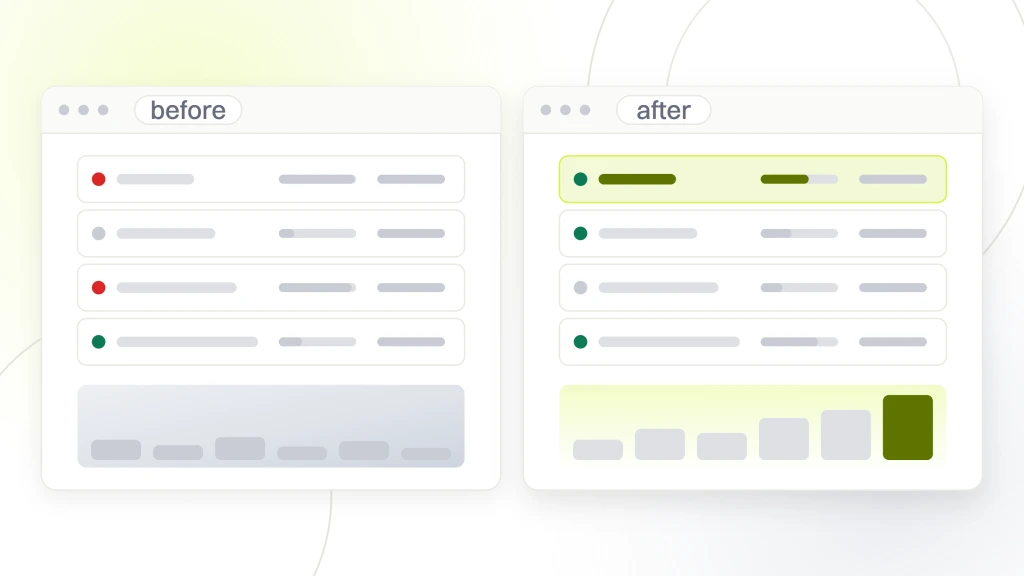
Test one variable per rotation. Change the hook. Measure 14 days. Restore the hook, change the offer. Measure 14 days. Track cost per booked patient, not click-through rate. Click-through rate is a leading indicator but cost per booked patient is what pays the bills. Practices that tested 3 to 5 variables at once could not attribute wins to specific changes and ended up with anecdotal creative theories instead of a documented playbook the next coordinator can follow.
| Creative element | Rotation frequency | Impact on cost per booked patient |
|---|---|---|
| Hook (first 2 seconds) | Every 4 weeks | 20-40% variance |
| Offer detail | Every 6 weeks | 15-30% variance |
| CTA button copy | Every 8 weeks | 8-15% variance |
| Music or audio bed | Every 12 weeks | 5-12% variance |
| Caption reinforcement | Every 6 weeks | 10-20% variance |
| Aspect ratio and crop | Per platform launch | 25-40% variance |
Variant tracking discipline
Variant tracking runs through UTM parameters plus a spreadsheet log. Every variant gets a unique campaign ID that ties to the specific hook, offer, and CTA combination. Cost per booked patient logs per variant per week. Winners stay. Losers rotate out. That discipline turns creative testing from anecdote into a documented playbook the practice can hand to the next marketing coordinator without losing knowledge. VP Dental ran this exact log for 12 months and doubled new monthly patients, a +100% curve tied directly to the disciplined variant rotation.
Rotation budget planning
Rotation costs 3 to 8 hours per month of practice time for the doctor plus 2 to 4 hours of marketing coordinator time. That production budget covers 4 to 6 variants per month across 2 to 3 service lines. Practices that budgeted less than 8 hours per month saw creative fatigue take hold inside 60 days as rotation slipped. Practices that budgeted 12 to 16 hours per month held cost per booked patient inside 15% of baseline for 12 months straight, with no seasonal drift and no scale-back weeks.
If you want the hooks, angles, and templates in this guide applied to your practice’s Meta and YouTube spend, talk to Redefine Web. We build creative dental ad rotations that book patients, track every variant against cost per booked patient, and hand you the playbook when the numbers hold. No agency retainer for the first campaign.