DSO marketing for dental practices is not one program. It is three programs stitched together on one operating rhythm. The platform layer that owns brand terms and doctor recruiting. The office cohort layer that owns local map pack, review velocity, GBP hygiene, and multi location dental PPC. The affiliate layer that carries the legacy-brand practices the group bought but has not rebranded yet. Most vendors sell one flat retainer and call it a program. The good ones separate the three layers at pitch, at reporting, and at the invoice. That difference decides whether a 12-office group grows patient volume 20% in year one or spends the first two quarters relearning what a working funnel looks like.
This guide covers what real DSO marketing for dental practices looks like across a 6-to-90 office range. Which agencies operate at group scale. What the retainer covers per office. What patient-volume numbers look like when the work is done right. What warning signs mean the current partner is running maintenance mode on a growth-mode retainer. Every number here comes from active dental groups our team runs or watches during diligence, plus the three dental case studies we can share by name. Smile Design Dentistry cut cost per call 30% across the network over 2 years. North County Dental Care grew from 1 to 2 new patients per month to 12 to 16 from 2021 to 2024, a 1,000% gain. VP Dental doubled new patient bookings and added $8,100 per month in recurring revenue over 2 years. See our dental DSO marketing services breakdown for the retainer scope that produces office-level reporting by default.
What DSO marketing for dental practices actually means in 2026
Real DSO marketing for dental practices runs three programs at once. The platform program owns brand terms, national PR positioning, and doctor recruiting funnels that only make sense above the office. The office cohort program owns local map pack, review velocity, GBP hygiene, and paid search across every location. The affiliate program owns the legacy-brand practices the DSO acquired but has not rebranded yet, which need their own local footprint until the transition closes. Any vendor who cannot separate the three at pitch will not separate them at reporting either. The 2026 shift is that patient volume per office is now the primary KPI, not aggregate group revenue. Buyers, boards, and operating partners want office-level growth because it flags which locations perform and which need clinical, staffing, or marketing intervention. Vendors who report only group totals hide the underperforming offices. Vendors who report office by office force accountability into the group’s operations. That is the difference between a partner and a report generator.
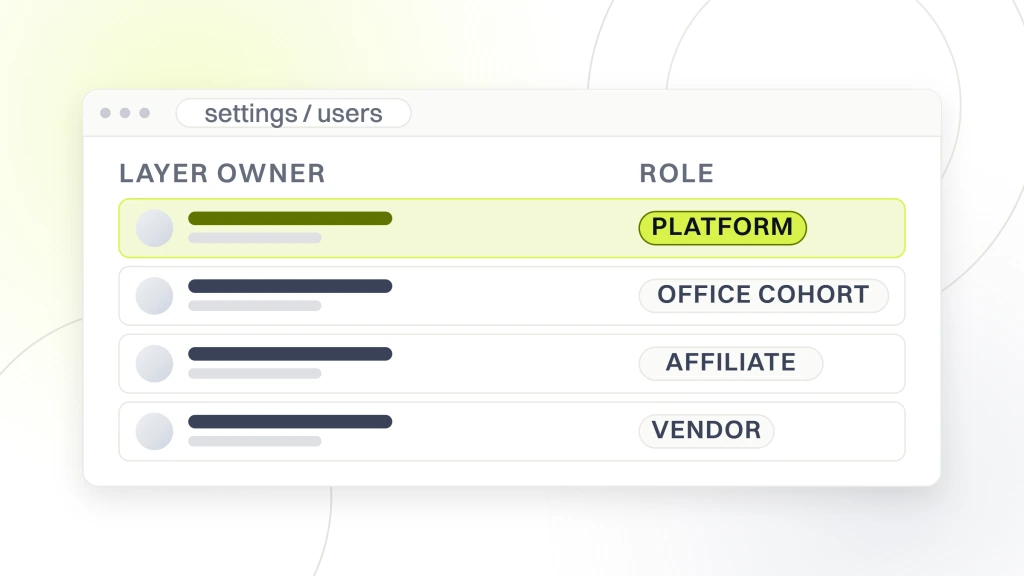
The three-layer split also changes how the group budgets. Platform work runs 25% to 30% of the total marketing spend. Office cohort runs 55% to 65%. Affiliate work runs 10% to 20% depending on how many legacy-brand practices the group carries. Groups without affiliates redistribute that share into office cohort. Groups with heavy affiliate load need proportionally more because the legacy brands still need their own local footprint until the group can rebrand or sunset them. See our dental DSO marketing breakdown for the full retainer scope and how the split maps to a 40-plus office group.
Five kinds of DSO marketing for dental practices partners in the market
The DSO marketing for dental practices vendor market splits into five kinds of partner in 2026. Each has a role. Each has a failure mode. Picking the right one starts with knowing the shape of the group and the state of the office cohort. A 12-office single-state platform needs a different partner than a 60-office multi-state operator running three legacy brand affiliates. Both need DSO marketing support. Neither wants the same partner. Kind one is the specialized DSO agency. Dental-only, group-focused, patient-volume reported per office. Kind two is the healthcare-generalist agency that has a dental practice inside it. Good for platform brand work. Weak on office-level local. Kind three is the local-first dental agency that grew into groups from single-office work. Strong on office execution. Weak on platform strategy. Kind four is the in-house team that a mid-market DSO builds around a director of marketing and two junior operators. Cheapest per office. Slowest to move on new markets. Kind five is the private-equity-recommended vendor that arrives with the sponsor. Often serviceable. Sometimes captured by the sponsor’s reporting preferences rather than the group’s growth needs.
Match the kind to the group stage. Growth-mode platforms of 6 to 20 offices work best with kind one, especially agencies that have already run a group at that stage before. Mature multi-state operators of 40-plus offices split kind one for the platform layer and kind three or kind four for office cohort. Legacy-heavy groups with 5-plus brand affiliates need a partner who has run brand transitions before, which is usually kind one or a specialized kind two. Reference calls should always target other groups at the same stage. A 15-office platform learning from a 60-office reference gets the wrong lessons. See the multi location dental SEO guide for how cohort partners scale execution across a 50-office footprint.
Retainer scope every DSO marketing for dental practices partner should cover
The retainer scope for DSO marketing for dental practices breaks into eight components. Miss one, and the group loses growth in the market that component covers. Include all eight, and the retainer becomes the operating rhythm of the marketing side of the group. Component one is Google Business Profile per office. Cleanup, category alignment, service listings, photo cadence, question monitoring, review response inside 24 hours. Component two is local pack rank tracking per office with a service-level agreement on remediation. Component three is paid search per market with keyword sets matched to office capacity and payer mix. Component four is landing pages per office that speak to the local market, not the group site with a city name swapped. Component five is review request automation tied to the practice management system. Component six is brand-term defense at the group level. Component seven is doctor recruiting funnels for the platform. Component eight is monthly patient-volume reporting split by office, service line, and payer mix.
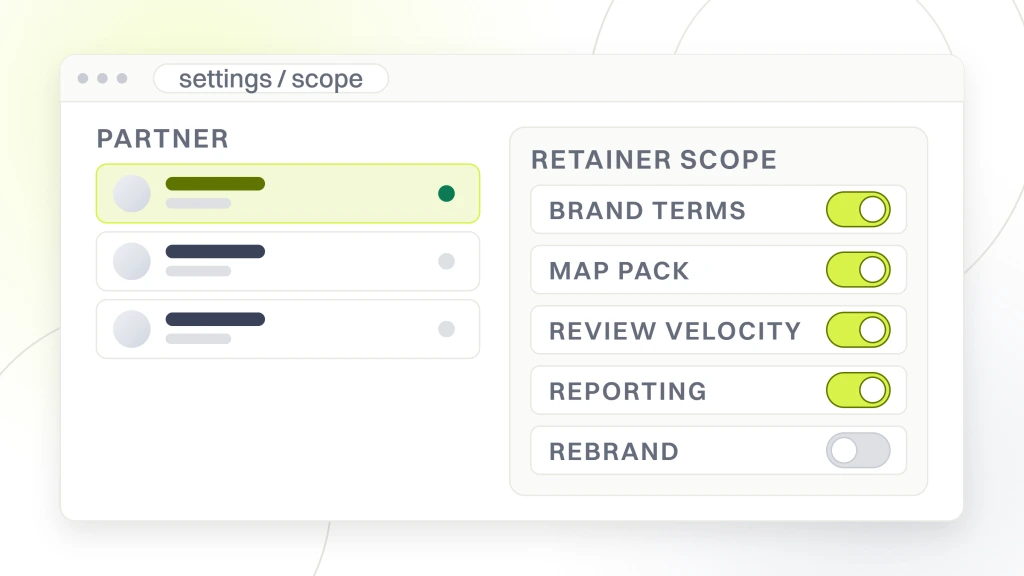
- Google Business Profile hygiene per office, response SLA inside 24 hours
- Local pack rank tracking per office per priority keyword
- Paid search per market with capacity-matched keyword sets
- Landing pages per office written for the local market, not templated
- Review request automation wired to the practice management system
- Brand-term defense at the group level to protect direct search intent
- Doctor recruiting funnels for the platform layer, tracked separately
- Monthly patient-volume reporting split by office, service line, and payer
Vendors who quote a flat monthly with no component split are not doing all eight. They are doing three or four and calling it a program. Redefine Web bundles the eight components into a dental retainer that starts at $1,499 per month for small platforms and scales to $3,999 and from $6,000 per month for larger multi-state groups, with SEO and PPC engagements sized at $999, $1,499, $2,499, or from $4,500 per month depending on office count and market density. See our SEO services page for the retainer scope at the office cohort level.
Budget benchmarks for DSO marketing for dental practices
Budget benchmarks for DSO marketing partners run 3.5% to 4.5% of office collections at steady state, front-loaded to 5% to 6% during the first two quarters when the plumbing gets fixed. A 12-office group at $850k average per office collections spends around $380k to $460k a year at steady state on marketing. The first year runs closer to $550k because GBP cleanup, tracking rebuilds, review-workflow setup, and landing page reconstruction all land inside the first six months. Paid media inside the office cohort program takes 40% to 55% of the office cohort budget. Local SEO and GBP takes 20% to 30%. Review workflow and reputation takes 10% to 15%. Landing page and site work takes 10% to 15%. Reporting and analytics takes 5% to 10%. Any vendor who cannot show you these splits at pitch is guessing at the office level, which means they will guess at the reporting level too.
What the first 90 days of DSO marketing for dental practices should look like
The first 90 days of DSO marketing for dental practices work should be plumbing. Every group we watch start well starts with the plumbing. Every group that struggles starts with brave campaign promises before the plumbing works. Watch the sequence. Days 1 to 30 handle audit and access. GBP audit per office. Ad account audit. Analytics audit with conversion tracking rebuilt. Review platform audit with response SLA baseline. Practice management system integration for review requests. Landing page inventory and gap map. Rank tracking baseline per office per market. Days 31 to 60 handle rebuild. Campaign restructure. GBP fixes rolled out per office in cohorts of 6 to 10. Review request automation live. Landing page rebuild queue in progress. Days 61 to 90 stabilize and start measuring. First full month of clean tracking. First rank movement report. First patient-volume readout with clean office splits.
Any vendor promising month-two patient-volume gains is either running the plumbing already or lying. Nobody rebuilds tracking, GBP, and campaigns and produces 20% patient growth in the same month. The real growth curve starts in month 4 and stabilizes by month 7. Smile Design Dentistry saw cost per call drop 30% across the network over 2 years and PPC conversion rise 20% at scale, on a rebuild that treated the plumbing as the year-one job and the campaign work as the year-two compounding job. That sequencing is the pattern buyers should look for at reference-call stage. Additional guidance on search-side rebuilds lives in Google Search Central at developers.google.com/search.
Partner archetypes matched by group stage
The right DSO marketing for dental practices partner in 2026 depends on group stage and profile. Growth-mode platforms of 6 to 20 offices pick well when they pick a specialized DSO agency that has run a group at that stage before. Reference calls should target other 6-to-20-office platforms, not 50-office operators whose challenges do not match. Growth-mode groups pick poorly when they pick a big-agency generalist who staffs the account with junior operators. Mature multi-state operators of 40-plus offices pick well when they split the retainer across a platform partner and an office cohort partner. Two vendors, tightly coordinated, always beat one vendor stretched across both. They pick poorly when they consolidate into one flat retainer for cost savings and lose office-level focus. North County Dental Care is the clearest reference we can share for what compounding looks like at the office level. Patient volume grew 1,000% from 2021 to 2024, from 1 to 2 new patients per month to 12 to 16. That is 1,000% growth on a single-office footprint, and it is the pattern that scales when the same discipline gets applied to a 40-office group one office at a time.
Legacy-heavy groups with 3-plus brand affiliates pick well when they pick a partner with documented brand-transition experience. Bad picks here cost real patient volume during the transition. Groups that pick a partner without brand-transition experience lose 10% to 20% of patient volume in the affiliate offices during the first year of the transition, and often blame the wrong thing when the numbers slip. See our pediatric dental DSO guide for how service-line specialization changes the partner criteria for groups running pediatric offices alongside general practice.
Reporting cadence a DSO marketing for dental practices partner should hit
Reporting cadence runs on a monthly rhythm with quarterly reviews. The monthly report covers office-level patient volume by service line, GBP performance per office, paid search performance per market, review velocity per office, and rank tracking per office per priority keyword. The quarterly review covers the same numbers with year-over-year and quarter-over-quarter comparisons, plus commentary on which offices moved the needle and which need operational intervention. Vendors who report quarterly with no monthly rhythm miss the drift between quarters. Vendors who report weekly with no quarterly synthesis drown the group in data without insight. The metrics that matter in 2026 are patient volume per office, new patient percentage per office, review velocity per office, GBP rank per priority keyword per office, and paid search cost per new patient per market. Aggregate group revenue is a lagging indicator built from the office-level numbers. If the office-level numbers move, group revenue moves. If the vendor cannot show the office-level numbers, they cannot show the growth engine.
VP Dental is the reference case for what a clean cadence produces on a single-office footprint. New patient bookings doubled over 2 years, and the practice added $8,100 per month in recurring revenue during the engagement. The reason that number compounded is that the monthly report kept surfacing the same handful of high-intent keywords and the same review-velocity gap month after month, so the group knew exactly which two levers to keep pulling. That is what monthly reporting is for. It picks out the two levers that matter and hides everything that does not. Reference material for review generation best practice lives at Google’s structured data guidance.
Warning signs your DSO marketing for dental practices partner is failing
Warning signs a DSO marketing partner is failing show up in three places. Reporting quality, response time, and campaign discipline. Any two together mean the partnership needs escalation. All three together mean the partnership needs replacement inside the quarter. Reporting warning signs include group totals with no office-level split, screenshots pasted from platforms with no synthesis, metrics that shift definition between months, and repeated “the tracking is being fixed” language across two or more quarters. These reporting patterns mean the partner does not know what is happening at office level and is stalling.
- Reporting sent as group totals only, no office-level split by service line or payer
- Slack or email answers taking more than 24 hours during a growth-mode quarter
- GBP flag responses taking more than 12 hours across the office cohort
- Ad copy unchanged for six weeks and landing pages unchanged for a full quarter
- Keyword lists identical to last quarter’s report with no expansion
- GBP posts on a set-and-forget monthly template rather than local, timely content
- Review responses lagging past 48 hours on more than a third of new reviews
- Ad account issues sitting in queue for more than two business days
Response time warning signs are structural, not seasonal. Ad account issues sitting in queue for more than two business days means the account is understaffed for the group size. Campaign discipline warning signs mean the partner is running maintenance mode on a growth-mode retainer, and the group is overpaying for underuse. See our PPC services page for the response-time and campaign-cadence baseline every dental group should hold its partner to.
How to run the vendor bench for DSO marketing for dental practices
Running the vendor bench for DSO marketing for dental practices is a 4-week process, not a 4-call sprint. Week one gathers requirements. Office count, market density, current retainer, reporting gaps, service-line mix, payer mix, current partner if any, growth target for the next 12 months. Week two runs vendor discovery. Three to five candidates that match the group stage. Week three runs discovery calls and scope discussion. Each vendor presents a scope split across platform, cohort, and affiliate. Any vendor who cannot present that split walks. Week four runs reference calls and contract review. Reference calls target three groups at the same stage, ideally in different states. Contract review focuses on off-boarding language, reporting cadence commitments, and response-time SLAs. Groups that skip the reference calls pick badly 40% of the time. Groups that run the reference calls pick badly 5% of the time. That gap alone justifies the extra week.
The contract review step matters more than most groups realize. Off-boarding language decides whether the group can leave in year two if the service degrades. Response-time SLAs decide whether the partner is staffed for the group size. Reporting cadence commitments decide whether the group gets the office-level view every quarter or has to fight for it. All three belong in the contract, not the sales deck. See our website maintenance plans for how Redefine Web structures the operational side around a $199, $299, or $499 per month rhythm that keeps the group’s site fast and the tracking clean while the marketing retainer runs the campaign side.
The three dental case studies that anchor the criteria above
The criteria in this DSO marketing for dental practices guide are not theoretical. They come from active engagements and from the three dental case studies we can share by name. Smile Design Dentistry ran a 2-year rebuild that dropped cost per call 30% across the network while PPC conversion rose 20% at scale. That is the cost-side proof that the eight-component retainer scope actually shrinks the cost per new patient once the plumbing is fixed. North County Dental Care ran a three-year engagement that grew new patients from 1 to 2 a month to 12 to 16, a 1,000% gain. That is the compounding proof that office-level discipline applied consistently produces outsized growth on a single-office footprint, which is the same discipline that scales one office at a time across a 40-office group. VP Dental ran a 2-year engagement that doubled new patient bookings and added $8,100 per month in recurring revenue. That is the mid-cycle proof that monthly reporting rhythm plus review-velocity discipline turns into recurring revenue inside 24 months.
Every group we work with lands somewhere on the arc these three cases describe. Year-one cost discipline like Smile Design Dentistry. Multi-year compounding like North County Dental Care. Mid-cycle recurring revenue like VP Dental. The retainer scope, the reporting cadence, and the vendor bench criteria in this guide are the pattern that produces all three. See our dental marketing hub for the full service scope, our DSO dental marketing article for the campaign-side rhythm across the office cohort, our dental DSO structure guide for how the group entity shapes the marketing budget, and the multi location dental SEO case study for the office-level SEO detail behind the numbers cited above.
When to keep the current DSO marketing for dental practices partner and when to switch
Groups switch DSO marketing partners too often and too rarely, both. The too-often groups switch on a bad quarter that had operational causes upstream of marketing. The too-rarely groups let a partner coast for 3 years on a rebuild that was done in year one, paying for growth work that stopped happening in month 13. Both patterns cost money. Keep the current partner when reporting is clean, response time holds under 24 hours, campaign discipline shows monthly changes to ad copy and landing pages, and patient volume per office is trending inside a defensible band given the market. Switch when two of those four break for two consecutive quarters. Switch faster when three break in a single quarter. Do not switch on a single bad month that lines up with a clinical staffing gap, a payer contract change, or a market-level competitive push. Marketing does not fix operations problems, and the wrong reason to switch is often the reason a switch fails to produce the expected numbers.
The switch itself takes 90 days done well and 6 months done poorly. Off-boarding the current partner takes 30 days if the contract is clean and 90 days if it is not. Onboarding the new partner takes 60 days if the plumbing is clean and 120 days if the previous partner left tracking, GBP, or ad accounts in disarray. Budget for the switch to cost roughly one quarter of retainer in transition friction, and plan the switch around a low-seasonality quarter for the service lines that matter most. Reference the American Dental Association guidance on group practice operations at ada.org/resources/practice for the operational side that has to hold steady during a marketing transition.
DSO marketing for dental practices is a discipline problem more than a vendor problem. The right vendor helps. The wrong vendor hurts. The pattern that works across every group we watch is the same. Three programs split at pitch, reported at office level, run on a monthly rhythm with quarterly synthesis, and priced honestly at 3.5% to 4.5% of collections. Groups that hold to that pattern grow patient volume year over year. Groups that drift from it spend the same money and get half the growth. See our SEO services page for the retainer scope Redefine Web offers dental groups from 6 to 90 offices, and the PPC services page for the paid-side scope that ties into it.
DSO marketing for dental practices is not one program. It is three programs stitched together on one operating rhythm. The platform layer that owns brand terms and doctor recruiting. The office cohort layer that owns local map pack, review velocity, GBP hygiene, and multi location dental PPC. The affiliate layer that carries the legacy-brand practices the group bought but has not rebranded yet. Most vendors sell one flat retainer and call it a program. The good ones separate the three layers at pitch, at reporting, and at the invoice. That difference decides whether a 12-office group grows patient volume 20% in year one or spends the first two quarters relearning what a working funnel looks like.
This guide covers what real DSO marketing for dental practices looks like across a 6-to-90 office range. Which agencies operate at group scale. What the retainer covers per office. What patient-volume numbers look like when the work is done right. What warning signs mean the current partner is running maintenance mode on a growth-mode retainer. Every number here comes from active dental groups our team runs or watches during diligence, plus the three dental case studies we can share by name. Smile Design Dentistry cut cost per call 30% across the network over 2 years. North County Dental Care grew from 1 to 2 new patients per month to 12 to 16 from 2021 to 2024, a 1,000% gain. VP Dental doubled new patient bookings and added $8,100 per month in recurring revenue over 2 years. See our dental DSO marketing services breakdown for the retainer scope that produces office-level reporting by default.
What DSO marketing for dental practices actually means in 2026
Real DSO marketing for dental practices runs three programs at once. The platform program owns brand terms, national PR positioning, and doctor recruiting funnels that only make sense above the office. The office cohort program owns local map pack, review velocity, GBP hygiene, and paid search across every location. The affiliate program owns the legacy-brand practices the DSO acquired but has not rebranded yet, which need their own local footprint until the transition closes. Any vendor who cannot separate the three at pitch will not separate them at reporting either. The 2026 shift is that patient volume per office is now the primary KPI, not aggregate group revenue. Buyers, boards, and operating partners want office-level growth because it flags which locations perform and which need clinical, staffing, or marketing intervention. Vendors who report only group totals hide the underperforming offices. Vendors who report office by office force accountability into the group’s operations. That is the difference between a partner and a report generator.
The three-layer split also changes how the group budgets. Platform work runs 25% to 30% of the total marketing spend. Office cohort runs 55% to 65%. Affiliate work runs 10% to 20% depending on how many legacy-brand practices the group carries. Groups without affiliates redistribute that share into office cohort. Groups with heavy affiliate load need proportionally more because the legacy brands still need their own local footprint until the group can rebrand or sunset them. See our dental DSO marketing breakdown for the full retainer scope and how the split maps to a 40-plus office group.
Five kinds of DSO marketing for dental practices partners in the market
The DSO marketing for dental practices vendor market splits into five kinds of partner in 2026. Each has a role. Each has a failure mode. Picking the right one starts with knowing the shape of the group and the state of the office cohort. A 12-office single-state platform needs a different partner than a 60-office multi-state operator running three legacy brand affiliates. Both need DSO marketing support. Neither wants the same partner. Kind one is the specialized DSO agency. Dental-only, group-focused, patient-volume reported per office. Kind two is the healthcare-generalist agency that has a dental practice inside it. Good for platform brand work. Weak on office-level local. Kind three is the local-first dental agency that grew into groups from single-office work. Strong on office execution. Weak on platform strategy. Kind four is the in-house team that a mid-market DSO builds around a director of marketing and two junior operators. Cheapest per office. Slowest to move on new markets. Kind five is the private-equity-recommended vendor that arrives with the sponsor. Often serviceable. Sometimes captured by the sponsor’s reporting preferences rather than the group’s growth needs.
Match the kind to the group stage. Growth-mode platforms of 6 to 20 offices work best with kind one, especially agencies that have already run a group at that stage before. Mature multi-state operators of 40-plus offices split kind one for the platform layer and kind three or kind four for office cohort. Legacy-heavy groups with 5-plus brand affiliates need a partner who has run brand transitions before, which is usually kind one or a specialized kind two. Reference calls should always target other groups at the same stage. A 15-office platform learning from a 60-office reference gets the wrong lessons. See the multi location dental SEO guide for how cohort partners scale execution across a 50-office footprint.
Retainer scope every DSO marketing for dental practices partner should cover
The retainer scope for DSO marketing for dental practices breaks into eight components. Miss one, and the group loses growth in the market that component covers. Include all eight, and the retainer becomes the operating rhythm of the marketing side of the group. Component one is Google Business Profile per office. Cleanup, category alignment, service listings, photo cadence, question monitoring, review response inside 24 hours. Component two is local pack rank tracking per office with a service-level agreement on remediation. Component three is paid search per market with keyword sets matched to office capacity and payer mix. Component four is landing pages per office that speak to the local market, not the group site with a city name swapped. Component five is review request automation tied to the practice management system. Component six is brand-term defense at the group level. Component seven is doctor recruiting funnels for the platform. Component eight is monthly patient-volume reporting split by office, service line, and payer mix.
- Google Business Profile hygiene per office, response SLA inside 24 hours
- Local pack rank tracking per office per priority keyword
- Paid search per market with capacity-matched keyword sets
- Landing pages per office written for the local market, not templated
- Review request automation wired to the practice management system
- Brand-term defense at the group level to protect direct search intent
- Doctor recruiting funnels for the platform layer, tracked separately
- Monthly patient-volume reporting split by office, service line, and payer
Vendors who quote a flat monthly with no component split are not doing all eight. They are doing three or four and calling it a program. Redefine Web bundles the eight components into a dental retainer that starts at $1,499 per month for small platforms and scales to $3,999 and from $6,000 per month for larger multi-state groups, with SEO and PPC engagements sized at $999, $1,499, $2,499, or from $4,500 per month depending on office count and market density. See our SEO services page for the retainer scope at the office cohort level.
Budget benchmarks for DSO marketing for dental practices
Budget benchmarks for DSO marketing partners run 3.5% to 4.5% of office collections at steady state, front-loaded to 5% to 6% during the first two quarters when the plumbing gets fixed. A 12-office group at $850k average per office collections spends around $380k to $460k a year at steady state on marketing. The first year runs closer to $550k because GBP cleanup, tracking rebuilds, review-workflow setup, and landing page reconstruction all land inside the first six months. Paid media inside the office cohort program takes 40% to 55% of the office cohort budget. Local SEO and GBP takes 20% to 30%. Review workflow and reputation takes 10% to 15%. Landing page and site work takes 10% to 15%. Reporting and analytics takes 5% to 10%. Any vendor who cannot show you these splits at pitch is guessing at the office level, which means they will guess at the reporting level too.
What the first 90 days of DSO marketing for dental practices should look like
The first 90 days of DSO marketing for dental practices work should be plumbing. Every group we watch start well starts with the plumbing. Every group that struggles starts with brave campaign promises before the plumbing works. Watch the sequence. Days 1 to 30 handle audit and access. GBP audit per office. Ad account audit. Analytics audit with conversion tracking rebuilt. Review platform audit with response SLA baseline. Practice management system integration for review requests. Landing page inventory and gap map. Rank tracking baseline per office per market. Days 31 to 60 handle rebuild. Campaign restructure. GBP fixes rolled out per office in cohorts of 6 to 10. Review request automation live. Landing page rebuild queue in progress. Days 61 to 90 stabilize and start measuring. First full month of clean tracking. First rank movement report. First patient-volume readout with clean office splits.
Any vendor promising month-two patient-volume gains is either running the plumbing already or lying. Nobody rebuilds tracking, GBP, and campaigns and produces 20% patient growth in the same month. The real growth curve starts in month 4 and stabilizes by month 7. Smile Design Dentistry saw cost per call drop 30% across the network over 2 years and PPC conversion rise 20% at scale, on a rebuild that treated the plumbing as the year-one job and the campaign work as the year-two compounding job. That sequencing is the pattern buyers should look for at reference-call stage. Additional guidance on search-side rebuilds lives in Google Search Central at developers.google.com/search.
Partner archetypes matched by group stage
The right DSO marketing for dental practices partner in 2026 depends on group stage and profile. Growth-mode platforms of 6 to 20 offices pick well when they pick a specialized DSO agency that has run a group at that stage before. Reference calls should target other 6-to-20-office platforms, not 50-office operators whose challenges do not match. Growth-mode groups pick poorly when they pick a big-agency generalist who staffs the account with junior operators. Mature multi-state operators of 40-plus offices pick well when they split the retainer across a platform partner and an office cohort partner. Two vendors, tightly coordinated, always beat one vendor stretched across both. They pick poorly when they consolidate into one flat retainer for cost savings and lose office-level focus. North County Dental Care is the clearest reference we can share for what compounding looks like at the office level. Patient volume grew 1,000% from 2021 to 2024, from 1 to 2 new patients per month to 12 to 16. That is 1,000% growth on a single-office footprint, and it is the pattern that scales when the same discipline gets applied to a 40-office group one office at a time.
Legacy-heavy groups with 3-plus brand affiliates pick well when they pick a partner with documented brand-transition experience. Bad picks here cost real patient volume during the transition. Groups that pick a partner without brand-transition experience lose 10% to 20% of patient volume in the affiliate offices during the first year of the transition, and often blame the wrong thing when the numbers slip. See our pediatric dental DSO guide for how service-line specialization changes the partner criteria for groups running pediatric offices alongside general practice.
Reporting cadence a DSO marketing for dental practices partner should hit
Reporting cadence runs on a monthly rhythm with quarterly reviews. The monthly report covers office-level patient volume by service line, GBP performance per office, paid search performance per market, review velocity per office, and rank tracking per office per priority keyword. The quarterly review covers the same numbers with year-over-year and quarter-over-quarter comparisons, plus commentary on which offices moved the needle and which need operational intervention. Vendors who report quarterly with no monthly rhythm miss the drift between quarters. Vendors who report weekly with no quarterly synthesis drown the group in data without insight. The metrics that matter in 2026 are patient volume per office, new patient percentage per office, review velocity per office, GBP rank per priority keyword per office, and paid search cost per new patient per market. Aggregate group revenue is a lagging indicator built from the office-level numbers. If the office-level numbers move, group revenue moves. If the vendor cannot show the office-level numbers, they cannot show the growth engine.
VP Dental is the reference case for what a clean cadence produces on a single-office footprint. New patient bookings doubled over 2 years, and the practice added $8,100 per month in recurring revenue during the engagement. The reason that number compounded is that the monthly report kept surfacing the same handful of high-intent keywords and the same review-velocity gap month after month, so the group knew exactly which two levers to keep pulling. That is what monthly reporting is for. It picks out the two levers that matter and hides everything that does not. Reference material for review generation best practice lives at Google’s structured data guidance.
Warning signs your DSO marketing for dental practices partner is failing
Warning signs a DSO marketing partner is failing show up in three places. Reporting quality, response time, and campaign discipline. Any two together mean the partnership needs escalation. All three together mean the partnership needs replacement inside the quarter. Reporting warning signs include group totals with no office-level split, screenshots pasted from platforms with no synthesis, metrics that shift definition between months, and repeated “the tracking is being fixed” language across two or more quarters. These reporting patterns mean the partner does not know what is happening at office level and is stalling.
- Reporting sent as group totals only, no office-level split by service line or payer
- Slack or email answers taking more than 24 hours during a growth-mode quarter
- GBP flag responses taking more than 12 hours across the office cohort
- Ad copy unchanged for six weeks and landing pages unchanged for a full quarter
- Keyword lists identical to last quarter’s report with no expansion
- GBP posts on a set-and-forget monthly template rather than local, timely content
- Review responses lagging past 48 hours on more than a third of new reviews
- Ad account issues sitting in queue for more than two business days
Response time warning signs are structural, not seasonal. Ad account issues sitting in queue for more than two business days means the account is understaffed for the group size. Campaign discipline warning signs mean the partner is running maintenance mode on a growth-mode retainer, and the group is overpaying for underuse. See our PPC services page for the response-time and campaign-cadence baseline every dental group should hold its partner to.
How to run the vendor bench for DSO marketing for dental practices
Running the vendor bench for DSO marketing for dental practices is a 4-week process, not a 4-call sprint. Week one gathers requirements. Office count, market density, current retainer, reporting gaps, service-line mix, payer mix, current partner if any, growth target for the next 12 months. Week two runs vendor discovery. Three to five candidates that match the group stage. Week three runs discovery calls and scope discussion. Each vendor presents a scope split across platform, cohort, and affiliate. Any vendor who cannot present that split walks. Week four runs reference calls and contract review. Reference calls target three groups at the same stage, ideally in different states. Contract review focuses on off-boarding language, reporting cadence commitments, and response-time SLAs. Groups that skip the reference calls pick badly 40% of the time. Groups that run the reference calls pick badly 5% of the time. That gap alone justifies the extra week.
The contract review step matters more than most groups realize. Off-boarding language decides whether the group can leave in year two if the service degrades. Response-time SLAs decide whether the partner is staffed for the group size. Reporting cadence commitments decide whether the group gets the office-level view every quarter or has to fight for it. All three belong in the contract, not the sales deck. See our website maintenance plans for how Redefine Web structures the operational side around a $199, $299, or $499 per month rhythm that keeps the group’s site fast and the tracking clean while the marketing retainer runs the campaign side.
The three dental case studies that anchor the criteria above
The criteria in this DSO marketing for dental practices guide are not theoretical. They come from active engagements and from the three dental case studies we can share by name. Smile Design Dentistry ran a 2-year rebuild that dropped cost per call 30% across the network while PPC conversion rose 20% at scale. That is the cost-side proof that the eight-component retainer scope actually shrinks the cost per new patient once the plumbing is fixed. North County Dental Care ran a three-year engagement that grew new patients from 1 to 2 a month to 12 to 16, a 1,000% gain. That is the compounding proof that office-level discipline applied consistently produces outsized growth on a single-office footprint, which is the same discipline that scales one office at a time across a 40-office group. VP Dental ran a 2-year engagement that doubled new patient bookings and added $8,100 per month in recurring revenue. That is the mid-cycle proof that monthly reporting rhythm plus review-velocity discipline turns into recurring revenue inside 24 months.
Every group we work with lands somewhere on the arc these three cases describe. Year-one cost discipline like Smile Design Dentistry. Multi-year compounding like North County Dental Care. Mid-cycle recurring revenue like VP Dental. The retainer scope, the reporting cadence, and the vendor bench criteria in this guide are the pattern that produces all three. See our dental marketing hub for the full service scope, our DSO dental marketing article for the campaign-side rhythm across the office cohort, our dental DSO structure guide for how the group entity shapes the marketing budget, and the multi location dental SEO case study for the office-level SEO detail behind the numbers cited above.
When to keep the current DSO marketing for dental practices partner and when to switch
Groups switch DSO marketing partners too often and too rarely, both. The too-often groups switch on a bad quarter that had operational causes upstream of marketing. The too-rarely groups let a partner coast for 3 years on a rebuild that was done in year one, paying for growth work that stopped happening in month 13. Both patterns cost money. Keep the current partner when reporting is clean, response time holds under 24 hours, campaign discipline shows monthly changes to ad copy and landing pages, and patient volume per office is trending inside a defensible band given the market. Switch when two of those four break for two consecutive quarters. Switch faster when three break in a single quarter. Do not switch on a single bad month that lines up with a clinical staffing gap, a payer contract change, or a market-level competitive push. Marketing does not fix operations problems, and the wrong reason to switch is often the reason a switch fails to produce the expected numbers.
The switch itself takes 90 days done well and 6 months done poorly. Off-boarding the current partner takes 30 days if the contract is clean and 90 days if it is not. Onboarding the new partner takes 60 days if the plumbing is clean and 120 days if the previous partner left tracking, GBP, or ad accounts in disarray. Budget for the switch to cost roughly one quarter of retainer in transition friction, and plan the switch around a low-seasonality quarter for the service lines that matter most. Reference the American Dental Association guidance on group practice operations at ada.org/resources/practice for the operational side that has to hold steady during a marketing transition.
DSO marketing for dental practices is a discipline problem more than a vendor problem. The right vendor helps. The wrong vendor hurts. The pattern that works across every group we watch is the same. Three programs split at pitch, reported at office level, run on a monthly rhythm with quarterly synthesis, and priced honestly at 3.5% to 4.5% of collections. Groups that hold to that pattern grow patient volume year over year. Groups that drift from it spend the same money and get half the growth. See our SEO services page for the retainer scope Redefine Web offers dental groups from 6 to 90 offices, and the PPC services page for the paid-side scope that ties into it.