Weighing the dental dso pros and cons keeps thousands of practice owners up at night. Dental service organizations dangle capital events, group buying power, and central marketing muscle. Independent owners point to autonomy, culture, and the long-term math of full ownership. Both camps land honest punches. The real answer sits inside your specific practice profile, your age, and how much boss you can stomach inside your own operatory.
This guide walks the honest trade-offs across five dimensions that decide the outcome. Money at close. Money at second bite. Operational autonomy. Cultural fit. Long-term flexibility. Every claim carries real numbers from transactions our team watched close between 2023 and 2025. You’ll see where the DSOs deliver on the promise and where they fall short. You’ll see which owner profile wins and which one loses. Read the whole guide before you take another unsolicited buyer call.
Dental dso pros and cons on money at the closing table
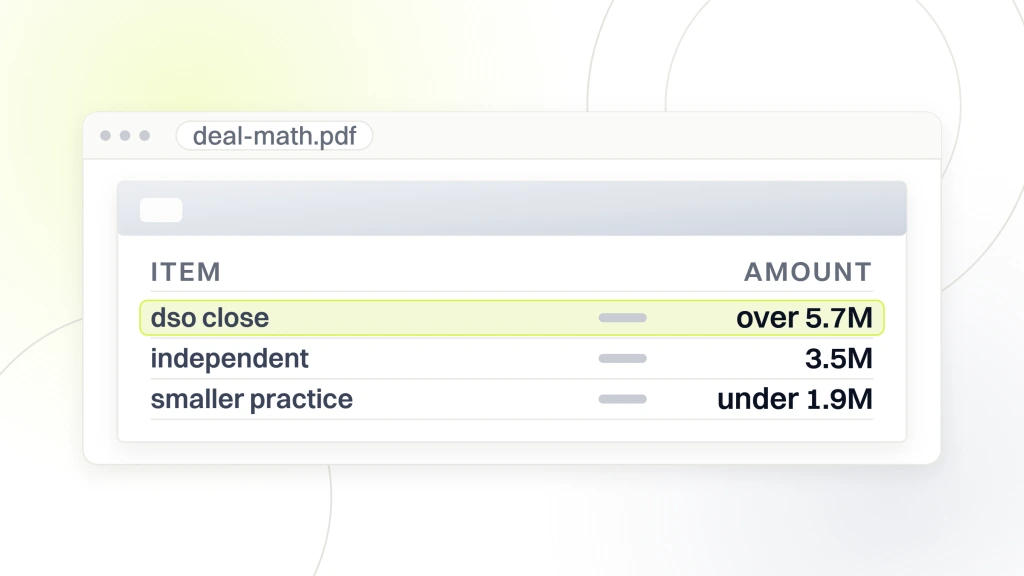
Money at close is the pro side headline that gets owners in the door. A well-prepared 2.5M practice with EBITDA at 20% and clean books can close north of 5.7M in cash and rollover equity from a top-tier DSO. The same practice sold to an independent buyer might clear 3.5M on a 3x multiple. The gap is real, and it’s the reason DSO reps get returned calls at all.
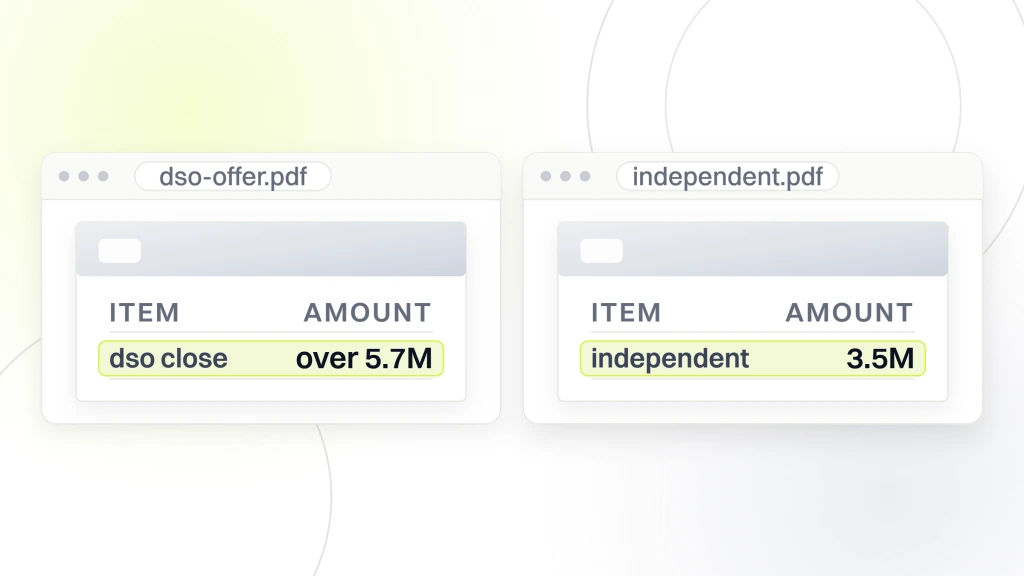
The con side hides on smaller books. A 1.3M practice with EBITDA at 15% typically closes under 1.9M from a DSO, and often less once rollover math and holdback lines get counted honestly. Independent buyers pay a similar or higher headline number on that same practice, minus the seven year lock-in. Practice size is the single biggest input on which side of the ledger you land on at the closing table.
Pros on capital events for larger books
Practices above 2M in collections with clean EBITDA see the strongest multiples. Bidder pools stay competitive above that threshold. Ten to twelve DSOs will pitch a 3M practice inside a 90 day window. Multiples run 6x to 9x on that profile, with rollover equity stacked on top. Prepared sellers who ran call tracking, cleaned owner comp, and produced audited financials for 12 months before going to market walk into LOI holding real pricing power.
Cons for sub-1.5M practices
Sub-1.5M books draw thin bidder pools. Two to three DSOs might pitch, and only one will move to LOI. Multiples soften to 3.5x to 4.5x with heavier rollover ratios and longer holdbacks. Independent buyers often beat DSO offers on this profile once the seven year work-back gets valued at market rates. Smaller sellers should get an independent broker’s take alongside DSO pitches to see the full picture.
How to weigh money at close
Run three numbers side by side before signing anything. Cash at close after fees and taxes. Rollover equity valued at 50% of face for planning purposes. Present value of seven years of employment pay compared to what an independent buyer would leave on the table. If the DSO offer beats both alternatives by 15% or more after that math, the pro side has real weight. If the gap is under 10%, the cons of the seven year lock-in start to eat the premium.
The second bite math for rollover holders
The second bite is the DSO pitch the reps talk about most. Rollover equity, they say, will multiply 2x to 3x when the sponsor sells the platform in 3 to 5 years. On a well-run platform with strong EBITDA growth, that math works. Sellers who took 30% of the deal in rollover on a 5M transaction can see 3M to 4.5M come back at second bite, tax-advantaged as long-term capital gains.
The con side is that sponsor quality varies enormously. Weak platforms sell at flat or negative returns to rollover equity holders. Sellers who took rollover on those platforms watched their equity vaporize when the sponsor exit was forced by a fund life cycle rather than a growth story. Sponsor quality is the single input that decides whether second bite math delivers on the pitch or destroys the seller’s cash-in-hand math.
If the DSO offer beats independent buyer alternatives by less than 10% after seven year lock-in math, the pros lose to the cons every time.
Pros on rollover multiplication with top sponsors
Top-quartile sponsors deliver 2.5x to 3.5x on rollover equity across the hold period. Add ins, tuck-in acquisitions, and central platform improvements drive EBITDA growth of 15% to 25% a year at those sponsors. Sellers who took 25% to 35% of their deal in rollover with top sponsors report satisfaction at the second bite. The tax treatment as long-term capital gains adds another 10% to 15% to the net-net compared to ordinary income on the closing check.
Cons on weak sponsor exits
Bottom-quartile sponsors sell platforms flat, at losses, or through recapitalizations that dilute rollover holders to near zero. Sellers who took 30% rollover on those platforms often see 20% to 40% of face value returned at second bite. The pitch called it a second capital event. Reality delivered a partial return of the original stake. Screening for sponsor quality at LOI is the single most valuable diligence exercise in the whole process.
How to screen sponsor quality
Ask three things. Track record of the sponsor’s last three dental exits, with specific multiples on rollover equity paid out to sellers. Fund vintage and remaining hold window on the current fund. Sponsor operating team depth outside the platform CEO. Any sponsor that dodges those three questions is telling you the pros side of the pitch outruns the cons of the actual portfolio. Walk away from those pitches early.
Operational autonomy trade-offs sellers underestimate
Operational autonomy trade-offs show up on the con side for most sellers we interviewed. The DSO takes over HR, payroll, marketing, PMS, supply ordering, and payer contracting inside the first 90 days. Sellers who welcomed the handoff reported satisfaction at year one. Sellers who resisted any single change reported frustration that lingered into year three and beyond. Owner temperament is the input that decides which side you land on.
Cons on daily operational control
Sellers lose control over vendor choice, marketing spend allocation, front office hiring, and supply purchasing decisions inside the first 90 days. Every decision routes through a regional operations manager or central platform team. Sellers used to running the practice like a family business feel the loss immediately. This is the single largest complaint we heard from sellers in the growth-tired and near-retirement scenarios who thought they wanted the handoff but found the reality harder than expected.
Pros on strategic clinical autonomy
Clinical autonomy usually stays intact at the best-run platforms. Treatment planning, procedure choice, and clinical protocol all remain with the doctor. Some platforms mandate clinical protocol standardization. Others do not. Ask reference sellers directly about clinical autonomy under the specific platform. The best platforms let doctors doctor and take over only the non-clinical operational work that was already dragging the owner down at solo scale.
The autonomy handoff test
A simple test predicts whether the seller will thrive or struggle inside the DSO. Ask honestly. Do I want to hand off HR, payroll, marketing, and supply decisions to a central team? Sellers who answer yes generally love the DSO experience since it removes work they never enjoyed. Sellers who answer no or maybe generally struggle. The handoff is not optional. It happens on day 90 whether the seller is ready or not.
Pros and cons of joining a dental DSO on cultural fit
Cultural fit determines whether year two and year three feel like a partnership or a punishment. The pros side sees strong platforms that treat sellers as clinical partners with equity and voice. The cons side sees weak platforms that treat sellers as employed providers with rollover, nothing more. Screen for culture at LOI through 10 reference calls, not through pitch deck presentations.
Any DSO that refuses to connect you with 10 reference sellers is hiding a culture problem. Skip them and go to the next bidder.
Pros of a strong-culture platform
Strong-culture platforms include the seller in quarterly platform strategy meetings. They ask for clinical input on protocol standardization. They welcome pushback on operational changes that hurt the local practice. They send platform leadership to the office twice a year for face time. Sellers report these gestures matter far more than any specific policy. Culture is what makes the seven year employment agreement feel like a partnership rather than a countdown to freedom.
Cons of a weak-culture platform
Weak-culture platforms treat the seller as an employed provider from day one. Central decisions get pushed down without local input. Communication runs one-way through regional email threads. Platform leadership never visits the office. Sellers report these platforms feel punitive within six months of close. Even if the money is comparable, the day-to-day experience declines steadily. Ten reference calls surface culture reliably. Two reference calls miss the pattern most of the time.
What reference calls reveal
Every reference call asks the same three questions. What surprised you in the first year post-close? What one thing would you negotiate differently if you did the deal again? How did the post-close first year compare to the pitch you got at LOI? Ten calls across your final four platforms produce more actionable culture data than any pitch deck. Platforms that will not connect you with 10 sellers are hiding something. Skip them.
Long-term flexibility on both sides of the ledger
Long-term flexibility on the pro side comes from optionality after the second bite. Sellers who complete a seven year employment agreement and cash out at second bite have real capital plus real professional freedom to start over. The con side is the seven year lock-in itself. Every dentist we interviewed described the seven year window as longer than it looked at signing.
Pros on post-agreement optionality
Once the employment agreement expires, sellers can retire, consult, teach, open a specialty practice inside the non-compete perimeter, or take a partnership at a friendly independent practice. That optionality is real capital in a professional sense. Age 55 sellers who signed at age 48 emerge with 4 to 6 million in the bank and a decade of clinical work still ahead. That is a strong platform for the next chapter, whatever the chapter looks like.
Cons on the seven year lock-in
The employment agreement is a seven year hard commitment for most GP practices. Nine years for oral surgery. Six for multi-location GP. Sellers cannot leave early without losing unvested rollover equity and triggering the non-compete radius. Health issues, family relocations, career pivots all become expensive during the term. Negotiate the good-leaver definition aggressively at LOI to cover retirement after 60, disability, terminal illness, and non-renewal by the DSO. That softens this con substantially.
How to think about the lock-in
Read the seven years as a work period, not a prison term. If the platform culture fits and the money math works, the seven years pass quickly. If either fits poorly, the seven years drag. Screening at LOI for culture and platform quality is the biggest input on which experience the seven years become. Prepared sellers who screened aggressively at LOI report the term went by faster than expected.
The trade-offs in one comparison table
The table below compares the pros and cons across the five dimensions we walked in the sections above. Read left to right for each row and match against your specific practice profile. Not every con applies at every profile. Not every pro delivers for every seller. The pattern is a guide, not a template for any single transaction outcome.
| Dimension | Pro side | Con side | Key input |
|---|---|---|---|
| Money at close | Over 5.7M on 2.5M practice | Under 1.9M on 1.3M practice | Practice size |
| Second bite | 2.5x or more on rollover | Under 1x on rollover | Sponsor quality |
| Autonomy | Clinical control kept | Operational control lost | Owner temperament |
| Culture | Partnership feel | Employed feel | Platform quality |
| Flexibility | Post-term optionality | Seven year lock-in | Age at signing |
Read the key input column carefully. Practice size, sponsor quality, owner temperament, platform quality, and age at signing all get set at different stages of the decision. Practice size is a preparation question. Sponsor quality is a screening question. Owner temperament is a personal question. Platform quality is a diligence question. Age at signing is a timing question. Each one deserves separate attention before the transaction moves forward.
Which dimension weighs most for you
For most sellers we interviewed, money at close and cultural fit weigh most. Money at close is easier to calculate and negotiate. Cultural fit takes 10 reference calls and honest conversations to screen for. Sellers who prioritized money and skipped culture screening regretted the transaction inside two years. Sellers who prioritized both together reported satisfaction at year three and again at second bite. Balance both weighing exercises before signing anything.
Case study on Smile Design Dentistry pros and cons
Smile Design Dentistry runs 50-plus locations across Central Florida and Tampa Bay. Founded in Dade City, Florida in 2004, the group covers cosmetic, emergency, preventive, and specialty care. Sellers who joined Smile Design between 2020 and 2023 saw the pros of platform-scale marketing execution and the cons of central operations tightening the local rhythm every quarter.
Our team restructured the PPC accounts by funnel stage and geography, built dedicated landing pages for every service line and market, and layered full-funnel paid social with awareness, consideration, and conversion campaigns. Cost per call fell 30% across the network within 12 months. PPC conversion rate grew 20% year over year. Fifty-plus offices reported on one dashboard for the first time. That’s the pro side of the platform delivering on the marketing scale promise.
What sellers reported as pros
Sellers reported three pros consistently at Smile Design. Marketing scale that produced more new patients per office than any solo practice could match. Payer contracts at group rates that added 2 to 4% to fee schedules. Central HR that took payroll off the seller plate. Combined, these three raised EBITDA at the local practice within 18 months of close, which fed into the sponsor exit story that eventually drove the second bite value up for early sellers on the platform.
What sellers reported as cons
Sellers also reported three cons consistently. Loss of vendor choice at the local level. Standardized supply ordering that felt punitive on niche clinical preferences. Regional ops calls that added 4 to 6 hours a week to the schedule. None of these were fatal complaints. All three were real friction points that sellers had to accept as part of the trade for the pro side capital event and marketing scale gains. Our DSO Dental Marketing for Multi-Location Groups program manages this trade explicitly for multi-office sellers working the same terrain.
Benefits of joining a DSO for dental career advancement versus staying independent
Career benefits inside a DSO look strongest for two owner profiles. First, mid-career owners aged 45 to 55 who want a capital event with a runway of clinical work still ahead. Second, growth-tired owners burned out by the administrative load and open to trading autonomy for a lighter operational plate. Both profiles can win inside a DSO with the right platform screening.
Independent buyer paths stay stronger for two other profiles. Younger owners aged 35 to 45 who want to build wealth through practice ownership rather than a partial exit. Rural or small-town practices where the DSO bidder pool is thin and the multiples soften enough that independent buyers beat DSO offers on headline price and post-close autonomy alike. Match the path to the profile and both routes work.
North County Dental Care on the independent build path
North County Dental Care stayed independent and grew patient volume 1,000% from 2021 to 2024 through a rebuilt website, structured local SEO, and Google Business Profile work. That growth curve becomes the DSO exit story on any future timeline. Owners who build EBITDA through organic and paid channels before exploring DSO offers walk in with a defensible growth story and a bidder pool that treats them as a top-quartile target.
VP Dental on the doubled patient volume path
VP Dental doubled new monthly patient acquisition and added over 8,000 in monthly recurring revenue after a redesigned WordPress site and a targeted Google Maps SEO campaign. Independent practices that produce that growth curve retain full ownership economics on the multiple. If a DSO exit becomes attractive later, the practice enters the bidder pool from a stronger position than the average solo practice pitching cold.
Weighing dental dso pros and cons before signing
Weighing the DSO decision honestly takes one hour of quiet reflection and 10 reference calls with sellers who signed in the last three years. Skip either exercise and the decision becomes emotional rather than analytical. Both directions have real merit for the right owner. The wrong direction is a rushed decision that skips the weighing altogether.
The quiet-reflection hour
Take one hour on a weekend to rank the five dimensions on paper. Money at close. Second bite math. Autonomy. Cultural fit. Long-term flexibility. Rank each dimension from most important to least important for your specific situation. Do not talk to family or advisors before the hour ends. The ranking is personal, not committee-driven. That ranking becomes the filter every subsequent conversation runs through.
The 10 reference call project
Ten reference calls take three to four weeks of calendar time. Ask each platform for their reference list. Call 2 to 3 sellers per platform across your final four. Ask the same three questions every time. Track answers on a spreadsheet. Patterns emerge inside the first five calls. By call 10, you know which platform has the culture and execution to match your quiet-reflection ranking. That knowledge is worth every hour spent.
The final decision moment
After the reflection hour and the 10 reference calls, the final decision comes down to one question. Which platform delivers more pros against my ranking? That platform gets the LOI. Every other consideration is secondary. Sellers who followed this process report satisfaction at year three. Sellers who signed without the reflection or reference calls tend to report regrets by year two. Owners who maintain organic patient acquisition alongside the decision often engage our Dental SEO Services team during this window.
For owners pushing ahead with a sale
Owners pushing ahead with a DSO sale need three preparations. Twelve months of book cleanup and marketing attribution work. Ten reference calls across the final four bidders. A dental transaction attorney who has redlined at least 20 MSAs. Skip any one of these and the pros and cons math shifts against you across the seven year term. Prepared sellers hold the multiple. Unprepared sellers lose a quarter to a half turn on the closing check.
Twelve month preparation checklist
Month 12 to 9, clean the P&L and normalize owner comp. Month 9 to 6, install call tracking on every marketing channel. Month 6 to 3, run a self-directed quality of earnings. Month 3 to 0, screen brokers and build the buyer shortlist. A specialist marketing retainer runs the attribution work that supports months 9 to 6 without pulling the owner off patient care.
Single-location seller support
Single-location sellers preparing for their first DSO conversation benefit from a specialist marketing partner running the attribution work in parallel. Installing call tracking, structuring paid ad accounts around dental queries, and producing monthly source data all pay back at LOI. Twelve months of that work adds a quarter to a half turn on the multiple. That’s real cash on top of the closing check.
Ongoing SEO support
Local map pack presence produces a steady stream of low-cost new patients that flows into the practice EBITDA reported at LOI. Twelve months of consistent SEO work combined with paid attribution data becomes the artifact the buyer team values at LOI. Both channels together produce the strongest documented growth curve for the closing math.
The wider industry context around the decision
The DSO decision plays out inside a broader industry context that shifts every quarter. Private equity funding cycles. Payer negotiation dynamics. CMS scrutiny on corporate dentistry ownership. Interest rate environments. All of these affect what any specific platform will pay for any specific practice profile at any specific closing month.
Private equity funding cycles
Sponsor funding cycles run in 3 to 5 year waves. When funding is aggressive, multiples run high. When funding tightens, multiples soften by half a turn to a full turn. Read ada.org policy updates and dentaleconomics.com coverage quarterly to understand which end of the cycle your closing month falls into. Timing matters, though not as much as preparation matters.
CMS and regulatory pressure
CMS scrutiny of corporate practice of dentistry is real but slow. State-level enforcement varies by state. A few high-profile enforcement actions in 2023 and 2024 rattled specific platforms but did not shut the market. Buyers price this risk into the multiple. Sellers should ask sponsors directly how their platform structures MSA relationships to comply with corporate practice rules in the states where the platform operates. Answers vary widely across sponsors.
Interest rate environment
Interest rates on sponsor debt directly affect multiple bids. Every 100 basis point rate increase reduces multiples by roughly a quarter turn. Every 100 basis point decrease adds roughly a quarter turn. Rate cycles run 12 to 24 months at typical amplitudes. Sellers watching for the top of the multiple range should track rate cycles alongside preparation timelines. Neither variable is worth timing perfectly. Preparation still wins the bulk of the multiple gain.
Common myths about selling to a DSO
Two myths dominate the industry conversation on DSO transactions. First, DSOs always pay more than independent buyers. Second, DSOs always destroy practice culture. Both myths oversimplify a complex reality. The truth lives in the specific transaction, the specific sponsor, and the specific practice profile, not in industry-wide generalizations pushed by either camp.
Myth one on always paying more
DSOs pay more than independent buyers on 2M-plus practices with clean books and bidder competition. DSOs pay less than independent buyers on sub-1.5M practices, on rural practices with no bidder pool, and on niche specialty practices where sponsor economics do not support the multiple. Every transaction has its own math. Independent broker sales beat DSO offers on specific practice profiles more often than the DSO pitch decks admit. Talk to independent brokers alongside DSO reps to see the full picture. For the wider take on which DSOs actively acquire practices, see our guide to DSOs buying dental practices.
Myth two on destroying culture
Weak platforms destroy culture in the first 90 days. Strong platforms preserve most of the culture and add operational scale on top. The variance across platforms is enormous. Some DSOs feel like a partnership from day one. Others feel like a takeover from day two. Ten reference calls surface which platform you’re dealing with. Sellers who skip reference screening tend to land at platforms that surprise them negatively in year two. Do the screening work. It changes the outcome directly.
What both myths get right
Both myths get one thing right. Trade-offs exist. Sellers who accept the trade-offs upfront and screen aggressively at LOI report satisfaction at year three. Sellers who deny the trade-offs on the way in tend to feel betrayed by year two when reality lands hard against expectations. Do not sign expecting the pros without the cons. Sign expecting both and pick the platform that gives you the best mix of both against your ranking. Owners running this work in parallel typically engage our Dental Marketing Retainer at $1,499 a month for the reporting alongside the transaction preparation.
Final read on dental dso pros and cons
The dental dso pros and cons are real. Neither camp is right in isolation. The right answer depends on the specific practice profile, owner temperament, sponsor quality, and timing of the market cycle. Prepared sellers who screened aggressively at LOI report satisfaction at year three and again at second bite. Rushed sellers who signed with the highest bidder without screening tend to report regret inside two years of close.
Read the pros and cons above with your specific practice profile in mind. Rank the five dimensions on paper. Call 10 reference sellers. Screen for sponsor quality. Negotiate the MSA line by line. If the pros beat the cons on your ranking and the sponsor screening confirms fit, run the process this year. If either check falls short, prepare the practice for 12 more months and revisit the question after that window closes.