
Multi location dental ppc is a different problem than single-office paid search. One office optimizes for one calendar. A group optimizes for a cohort of calendars. That cohort quietly loses revenue when the group runs one flat account across every office, and no dashboard flags it. Per-office structure exposes the waste and lets you fix it.
This guide walks through group paid search the way it actually runs at group scale in 2026. You will get the account structure, the budget-split logic across markets, the bid strategy per office maturity, the landing-page rule that grows Quality Score, and the reporting cadence that keeps operating partners focused on the moves that matter. Every number here comes from live engagements our team runs across groups from 8-office single-state platforms to 90-plus multi-state operators. The pattern is consistent. Treat each office as its own paid search program, stitch them together at the platform level, and the group performance climbs on every metric that ties to new patients.
Why one flat campaign per service breaks at group scale
Offices are not interchangeable audiences. A cleanings campaign that stuffs all 22 offices into one campaign runs the same ad copy, the same landing page, and the same bid strategy across markets that behave nothing alike. Coastal metros pay 3 to 4x rural CPCs. Established offices already win most of their local demand through Google Business Profile, so paid search rarely picks up the incremental patient. New offices need paid search to carry acquisition until organic rank compounds. One flat campaign per service treats those three offices as one, and the reporting confirms nothing useful.
The fix is one campaign per office per service line. A 22-office group with three service lines runs 66 campaigns. Yes, that is more setup work. Yes, that is more monitoring time. The trade is per-office visibility into cost per new patient by service line, which is the number operating partners need to allocate budget. See how this scales at platform level in DSO Dental Marketing.
Account structure at group scale for multi location dental ppc
The account structure runs on three levels. Account, campaign, ad group. Each level has clear rules that stop the account from drifting into chaos as the office count climbs.
Account level. One Google Ads MCC across the group with per-office sub-accounts. Sub-accounts inherit the group’s negative keyword lists and audience lists, so you keep centralized control without breaking office-level reporting. Payment splits flow from the sub-account to the group’s card, and per-office spend rolls up cleanly at month-end.
Campaign level. One campaign per office per service line. Naming convention includes office code, market, and service line for fast filtering. Location targeting sits at a tight radius per office based on real patient drive-time patterns, not a lazy blanket city-level target that pulls searches from ten miles outside your usable draw area.
Ad group level. Ad groups organized by intent match type. Brand terms in one ad group. General service terms in another. Local service terms in a third. Symptom-based terms in a fourth for service lines that map to symptoms like tooth pain or bleeding gums. Splitting by intent lets you write ad copy that lines up with what the searcher actually needs, which is where Quality Score grows and cost per click drops.
Structure discipline pays off in reporting. When an operating partner asks why the Dallas office’s cost per new patient jumped 30% last month, the answer is one filter away. When the account is a blob of campaigns organized by service instead of by office, the answer takes half a day to dig out, and half the time the analyst gets it wrong.
Fix per-office structure before touching bid strategy. A group-flat account cannot be saved by smart bidding on top of bad structure.
Budget allocation across markets and office maturity
Budget allocation flexes on three factors. Market density, office maturity, and payer mix. Groups that distribute budget equally per office subsidize weak-market offices with strong-market office money and cap the ceiling of the strong offices for no reason.
Market density adjusts budget up for coastal metros and dense suburban markets, and down for rural and low-competition markets. A Miami office needs 2 to 3x the paid search budget of a similar-size office in Tulsa to hit similar impression share numbers. Fund the market you are actually in, not the average across the group.
Office maturity adjusts budget up for offices in their first 12 months and offices in growth-investment mode, and down for mature offices with strong GBP and organic footprint. A new office needs paid search to fill new-patient chairs during the months the local pack rank climbs. A 10-year-old office with 400 reviews at 4.8 stars needs a smaller paid search line and more of the budget flowing to reactivation and recall.
Payer mix pushes budget toward service lines that fit the office’s dominant payer. Medicaid-heavy offices push budget toward general dentistry and pediatric queries. PPO-heavy offices push budget toward higher-value service line queries. Fee-for-service offices push budget toward cosmetic and implant queries where case value carries the ROAS math.
The starting baseline is 2 to 2.5% of office collections in paid search spend at steady state, flexing up to 3.5 to 4% during growth-investment or new-office ramp phases. Groups that budget flat percentages across every market end up with 8 offices overspending and 5 offices underspending. The report averages out. The reality does not. Read our Dental DSO Marketing Services scope for how paid search fits inside a broader retainer.
Bid strategy defaults by office maturity
Bid strategy defaults depend on office maturity and conversion volume, and getting this wrong costs a quarter of learning. Automated bid strategies need data to work. Offices with fewer than 30 conversions per month starve automated bidding of signal, and Google’s algorithm chases noise instead of patterns.
Offices with fewer than 30 conversions per month run Manual CPC with per-keyword bid adjustments based on device, location within the radius, and time-of-day patterns. Manual gives the ppc manager control during the months conversion volume builds. Offices with 30 to 100 conversions per month run Maximize Conversions with a target CPA guardrail set 15 to 25% above the current CPA to give the algorithm room to explore. Offices with 100+ conversions per month run Target CPA or Target ROAS depending on whether the tracking model uses conversion value. Target CPA works when every new patient counts equally. Target ROAS works when the group tracks treatment plan value at conversion, which is where fee-for-service groups pull the most out of automated bidding.
Switching bid strategies too early fails often. An office that just crossed 30 conversions per month is not ready for Target CPA yet. Give the account 60 days of Maximize Conversions performance data before moving to Target CPA. Groups that flip too early see performance degrade for 3 to 4 weeks during the period the algorithm searches without enough signal, and every one of those weeks costs the office booked patients.
Landing pages built per office, not per city name swap
Landing pages should be built per office, not one page with a city name dropped in. Google’s Quality Score reads geo-specificity, and it penalizes generic pages. Patients spot generic pages fast and bounce inside 6 seconds. Both problems compound and both problems get expensive.
Every office landing page should include the office address, the office phone number, the office team introduction with real photos and real names, real patient reviews from that office’s GBP, and directions or a map embed showing the office location. Service-line landing pages layer service-specific content on top of this per-office foundation. A cleanings landing page for the Dallas Uptown office includes Uptown’s phone, address, team, and reviews, plus cleaning-specific content. A cleanings landing page for the Dallas North Park office looks similar in structure but includes North Park’s phone, address, team, and reviews. Same template, different office data. Same trust signals, different trust signals per office.
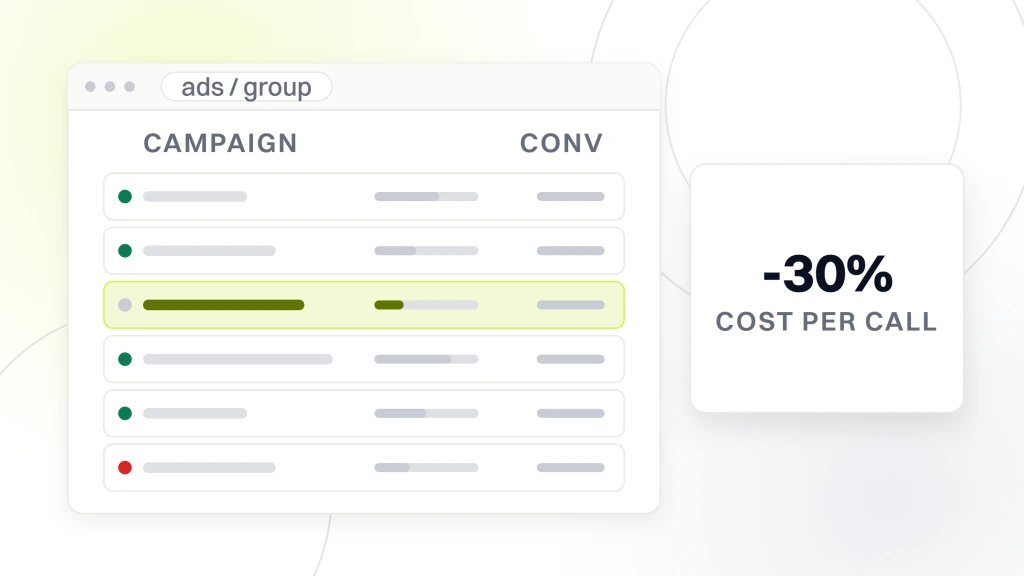
Building 66 landing pages for a 22-office group with 3 service lines looks heavy until you weigh the Quality Score and conversion rate gains. Per-office landing pages average 3 to 5% conversion rate versus 1 to 1.5% for generic pages. That gap alone pays back the build effort inside a quarter for most groups. Smile Design Dentistry, one of our long-running dental clients with 50+ locations, saw cost per call drop 30% and PPC conversion rate climb 20% after we rebuilt landing pages office-by-office instead of leaning on a shared template.
Per-office landing pages convert at 3 to 5% versus 1 to 1.5% for city-swap generics. That gap alone pays back the rebuild inside 90 days for most groups.
Conversion tracking that holds up per office
Conversion tracking covers form submissions, phone calls, and appointment bookings. Missing any of these breaks the picture. Groups that track only form submissions miss the 60 to 70% of dental leads that come in through phone calls. Groups that track calls but not bookings miss whether those calls turn into new-patient visits or fall out on the way to the calendar.
Set up call tracking per office through a dynamic number insertion service so each office’s paid search calls are tracked separately. Import calls into Google Ads as conversions with a 60-second duration threshold to filter hangups and wrong numbers. Set up form tracking through GTM with per-office form identifiers. Set up appointment booking tracking either through the group’s practice management system or through a lightweight middleware if the PMS does not expose an event feed. Import the appointment bookings as an offline conversion into Google Ads. That import is what gives the bid algorithm the real signal, not the proxy signal of a form fill.
Groups that skip the appointment booking import optimize on the wrong signal every day. Google will bid up for keywords that generate lots of form fills and calls, but if those calls do not book appointments, the group pays for lead volume that does not translate to patient volume. Fix the tracking first, and the outcomes follow. See how tracking connects to broader group reporting in our piece on how DSOs grow through marketing.
Negative keyword discipline at group and office level
Negative keyword discipline runs at group level and at office level. The group-level negative list blocks queries the group never wants to pay for anywhere. Job searches. Franchise inquiries. Free-service seekers. Non-treatment queries. Office-level negative lists block queries specific to that office’s payer mix. A cash-pay office negatives Medicaid queries. A Medicaid-heavy office might negative high-priced cosmetic queries the office does not perform.
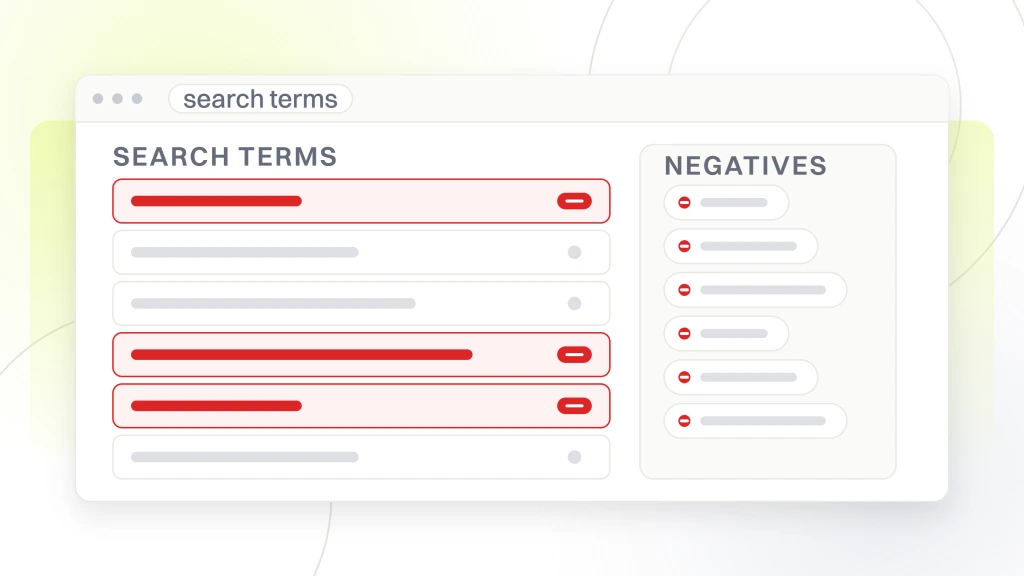
Review the search terms report weekly for the first 90 days of any new campaign. Weekly review catches the wasted spend fast, before a bad query racks up four figures of wasted click cost. After 90 days, move to bi-weekly review at the group level with monthly reviews per office. Groups that skip the review discipline burn 15 to 25% of the paid search budget on wasted clicks that a well-maintained negative list would block in 20 minutes.
Comparison of account structures for a group
| Structure | Group fit | Reporting clarity | Setup effort | Bid strategy fit |
|---|---|---|---|---|
| One campaign per office per service | 10 to 40 offices | High | High | Automated at maturity |
| One campaign per service, offices as ad groups | Under 10 offices | Medium | Medium | Manual through mid maturity |
| Performance Max per office | 40+ offices with data | Low without asset labels | Low | Auto only |
| Group flat campaign | Never past 3 offices | None | Low | Poor at scale |
| Hybrid Search + PMax per office | 20+ offices | Medium high | High | Search manual, PMax auto |
Reporting rhythm for a multi location dental ppc account
Reporting rhythm runs weekly for the first quarter of a new engagement, then monthly from month 4 onward. Weekly reports catch search-term issues and bid-strategy misfires fast during the ramp. Monthly reports settle the rhythm once the plumbing is stable and the account is not throwing surprises. Quarterly reviews layer year-over-year and quarter-over-quarter comparisons plus commentary on office-level movers, up and down.
Monthly reports cover cost per new patient per office, cost per call per office, new patient count per office, impression share per office per market, and quality score per campaign per office. Quarterly reviews layer competitive analysis per market, seasonal-adjustment commentary, and forward-looking spend allocation recommendations for the next quarter. Skip the daily report. Nothing in multi location dental ppc moves fast enough to need a daily view, and the daily view invites over-tuning that breaks the algorithm’s learning phase.
Common setup mistakes to avoid in multi location dental ppc
Setup mistakes fall into four patterns. Group-flat campaign structure. Missing call tracking per office. Ignoring quality score at office level. Rushing to Target CPA before conversion volume supports it.
Group-flat campaign structure hides everything at office level and makes reporting useless for operating partners. Fix by rebuilding per office per service line against a two-week window of concentrated build time. Missing call tracking per office means the group cannot attribute new patients to the right office. Fix by installing dynamic number insertion with per-office tracking. Ignoring quality score means offices with weak landing pages pay 40 to 80% more per click than offices with tight, per-office pages. Fix by rebuilding landing pages per office with real office data. Rushing to Target CPA before 60 days of conversion data means the algorithm chases the wrong signals and performance drops for 3 to 4 weeks. Fix by holding Maximize Conversions with a target CPA guardrail until 60 days of stable data supports the switch.
How paid search integrates with local SEO and GBP
Paid search integrates with local SEO and GBP through the office-level landing page. Paid search sends traffic to that page. GBP sends organic traffic to that page. Local citations reinforce the office’s local presence and raise both organic rank and quality score. Review workflow feeds trust signals into both organic rank and paid search conversion rate. Every component reinforces every other component when the group builds the office-level foundation as part of a broader dental group marketing strategy and then keeps it fed.
Groups that run paid search in isolation from multi location dental SEO end up paying for clicks they could have earned organically for offices with strong GBP positions. Groups that run local SEO in isolation from paid search miss the paid-search speed advantage for new offices or growth-investment offices that need patient volume faster than organic can produce it. The right approach runs both, budgets both intentionally, and measures both against per-office cost per new patient. That is how iSmile Dental Spa compounded from a small local footprint to a multi-year run at roughly 900% growth in monthly patient volume, and how North County Dental Care reached a similar climb from 2021 to 2024.
Investment ranges for multi location dental ppc management
Management fees for multi location dental ppc typically run from $999 per month for the smallest single-service-line accounts up to $4,500+ per month for large multi-office groups running full-funnel paid search across cleanings, cosmetic, ortho, implants, and emergency service lines. Ad spend sits separately on the group’s card. A dental retainer of $1,499 per month covers the strategic layer on the marketing side, and per-office paid search management fees stack on top for accounts we build and run end-to-end. Most groups land in the $1,499 to $2,499 per month management range at the point where per-office campaign structure, per-office landing pages, and per-office conversion tracking are all live and stable.
Under-investing in management to save fees usually costs the group more than the saved fee. Ad spend waste from poor negative-keyword discipline, mis-set bid strategies, and missing tracking runs 15 to 40% of the media budget for groups without dedicated multi-office management. On a $60,000 per month cohort media budget, that is $9,000 to $24,000 per month walking out the door that would fund the entire management retainer twice over.
Where to go next with multi location dental ppc
Next steps look like this. Audit the current account against the office-level structure the group needs, using this dental PPC guide as the baseline reference. Prioritize the rebuild by office impact, not by ease. Set a 90-day rebuild plan with weekly check-ins during ramp. Measure at monthly cadence from month 4 forward. Roll the working per-office pattern across the cohort as the framework proves out.
External reference worth reading. Google Ads bid strategy documentation covers the mechanics of automated bidding at the campaign level. Cross-check any vendor claim against real search-term reports from your own account before believing the report.
Read our DSO Dental Marketing overview for the platform-level view that sits above office-level paid search work.