Food and beverage web design starts with a shopper reading the ingredient panel on a phone at 11 pm. That single mobile moment sets the entire architecture for the site. Font size on nutrition, touch targets on quantity steppers, sticky add-to-cart with subscription and one-time toggle, cart drawer with upsell, and a checkout that doesn’t ask for the phone number twice. Miss any one and conversion rate on a $28 six-pack of cold brew sits at 1.4% when it should sit at 3.2%. The category lives or dies on the tiny operational details most agencies skip in favor of a moodboard.
You get the 12-week build map for a CPG food storefront, PDP patterns that grow AOV, subscription and wholesale architecture, ADA compliance for nutrition labels, retainer bands by shop size, a DTC cold brew case teardown with 90-day numbers, and a FAQ that answers what founders ask on a first call. Read straight through in 14 minutes and you’ll know what to brief a food and beverage web design agency before you sign a $28,000 SOW.
Food and beverage web design covers 7 surface areas
CPG storefronts cover 7 surface areas at a minimum. A homepage that answers the flavor question in the first 800 pixels. Product listing pages sorted by both diet and price. Product detail pages with expandable ingredient panels, nutrition tables, allergen callouts, and shipping windows visible without scrolling. Subscription upsell inside cart with a real discount on the line item, not a coupon field. A wholesale gate for buyers with a business account. Recipe or usage content that ranks for long-tail search. And an ADA-compliant nutrition label rendering that screen readers can parse.
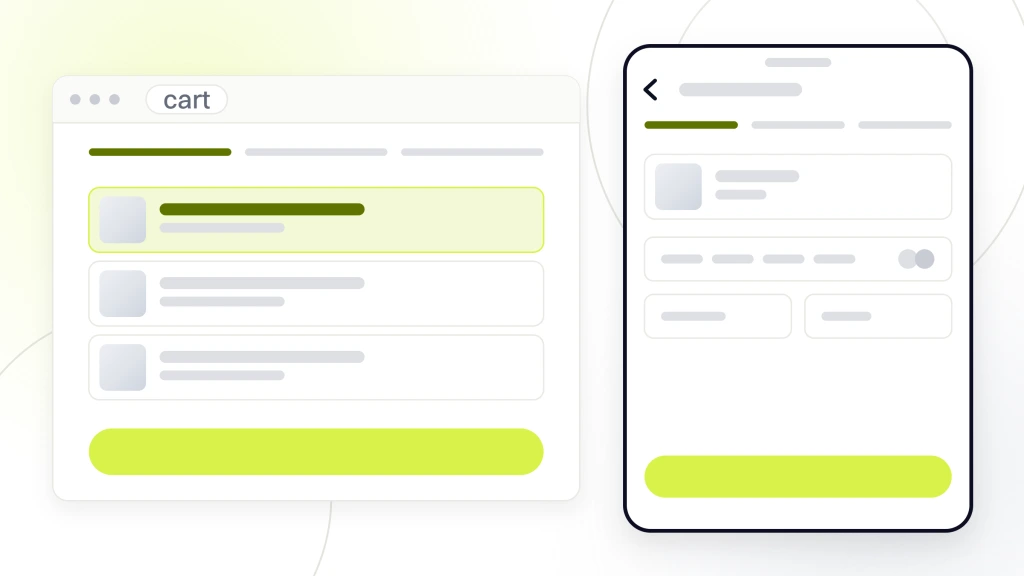
Every category brief adds category-specific rules on top of that base. Alcohol brands need age gates that pass state law and don’t wreck bounce rate on Meta traffic. Frozen brands need shipping windows visible above the fold. Cold brew and coffee subscription brands need grind selection, roast level, and rotation preferences saved to the customer profile. Snacks need pack-size math that shows unit price next to pack price. Functional beverages need substantiation copy that stays inside FDA rules without killing conversion. Skip the category piece and your agency built a template site with your logo pasted on top.
PDP conversion pattern for CPG food
A CPG food PDP that converts at 3.2% has 7 blocks stacked in a specific order. Hero shot with pack-in-hand at eye level. Price band with subscription and one-time toggle preselected to subscription, since subscribers repurchase 3.4 times more. Quick add with a quantity stepper next to a sticky rail. Trust row with third-party certifications rendered as monochrome badges, never colored. Expandable ingredient panel with allergen callouts pinned. Reviews block with photo reviews from customers, not the brand’s own photography. And a related products carousel keyed to complementary SKUs, not lookalikes. Rearrange the order and conversion drops 20 to 40%. This is the pattern a proper CPG agency has built 30 times.
Cart drawer mechanics that grow AOV
Cart drawer beats cart page for food brands under $50 AOV. The drawer keeps the shopper on the current page and shows a live upsell block with 2 curated add-ons and a shipping progress bar tied to the free-shipping threshold. AOV grows 14 to 22% when the drawer is designed correctly. The upsell block matters more than the shipping bar. Food shoppers convert on complementary flavor recommendations, not on saving $6 in shipping. See the Baymard checkout usability research for the underlying conversion data on cart drawer patterns. Custimy, one of our SaaS clients, cracked 500+ keyword rankings on an annual curve. The same content-first pattern rolls into food PDPs when you treat category and usage pages as ranking assets.
Platforms a specialist agency chooses between
Three platforms handle 90% of these projects. Shopify, WooCommerce, and BigCommerce. Shopify wins on speed of build and app ecosystem, and it fits DTC coffee, snack, and beverage brands under $30M in revenue without breaking. WooCommerce wins on customization and multilingual, and it fits brands with heavy content marketing needs or complex subscription rules Shopify apps handle awkwardly. BigCommerce wins on B2B and wholesale gate flexibility, and it fits brands where 40%-plus of revenue comes from wholesale accounts. Anything else is a vanity platform choice and adds 6 months to the build.
Custom platforms are almost always the wrong answer for CPG storefronts under $50M in revenue. The build cost is triple, the monthly maintenance quadruple, and the app ecosystem doesn’t exist. A founder who insists on custom is usually reacting to a bad Shopify build, not to a real limit. Get a second opinion before signing a $180k custom quote. Our own SMB packages run $2,500 to $7,500 for small food storefronts, and full custom stacks start at $12,000+. See our take on food and beverage web design services for the platform choice framework we run through in a first call.
| Platform | Best fit | Build cost | Monthly total |
|---|---|---|---|
| Shopify | DTC food, coffee, snack, DTC beverage | $18k to $58k | $260 to $980 |
| WooCommerce | Content-heavy food brands, multilingual | $22k to $72k | $180 to $640 |
| BigCommerce | Wholesale-heavy food, B2B distribution | $28k to $84k | $400 to $1,600 |
| Custom stack | Rarely justified under $50M revenue | $90k to $240k | $1,800 to $6,000 |
Shopify apps a food brand really needs
The Shopify app stack for a food brand stays under 7 apps if the shop is built correctly. Recharge or Skio for subscription. Klaviyo for email plus flows. Judge.me or Yotpo for reviews with photos. Rebuy for cart drawer upsell. Loop or Aftership for return management. Route or Shipium for shipping protection. And one country-specific tax app if selling in the EU or UK. Every app past 7 adds latency to the storefront, cost to the P&L, and complexity to the checkout. An agency that installs 14 apps is padding the invoice or covering for a weak build.
When WooCommerce wins over Shopify
WooCommerce wins when a food brand has 200-plus recipe pages, multilingual across 3-plus languages, or subscription rules Shopify’s apps can’t model without a workaround. Recipe-heavy content marketing programs live better inside WordPress than inside Shopify’s blog. Multilingual food brands using WPML get cleaner URL structures than Shopify’s Markets feature. Complex subscription rules (skip the third order, swap the fifth) are painful in Shopify and native in WooCommerce Subscriptions. Outside those 3 cases, Shopify wins on operational cost per year. BSH Hausgeräte GmbH, a consumer goods client, gained +15% in lead generation on their post-launch curve after we rebuilt the storefront around content that fed the buyer journey.
Twelve-week food and beverage website design build
A proper CPG storefront project runs 12 weeks from kickoff to launch, and every week has a specific deliverable. Weeks 1 and 2 are discovery. Brand audit, competitor teardown, analytics review, and content inventory. Weeks 3 and 4 are architecture. Sitemap, wireframes, SEO taxonomy, and content model. Weeks 5 through 8 are design and development. Visual design, component library, template build, PDP patterns, and subscription integration. Weeks 9 and 10 are content migration and QA. Weeks 11 and 12 are launch readiness. Redirects, schema, analytics, ADA testing, and the actual cutover. Any agency quoting 6 weeks is skipping half the work.
Extending past 12 weeks usually means scope grew mid-project or discovery wasn’t done properly. Common scope grow-outs include recipe migration from an old site, wholesale portal build, multilingual rollout, and Amazon syndication. Each adds 2 to 4 weeks and $12k to $28k to the invoice. Get them scoped in the SOW or accept the extension will happen. A vendor quote that hides these items behind “as needed” language will cost you 30% more by launch.
Discovery questions that shape the build
Six questions run every CPG discovery call. What’s the AOV band today and where do you want it in 12 months? What percent of revenue comes from subscription versus one-time? Which SKUs drive the most repeat purchases? Where do you rank organically and which recipes drive traffic? What’s the shipping footprint and where are the free-shipping cutoffs? And who’s the wholesale buyer profile if wholesale is 15%-plus of revenue? The answers shape every architectural decision from PDP layout to platform choice to subscription flow to cart drawer mechanics.
Content migration mistakes that cost SEO
Content migration on a CPG storefront project is where SEO gets murdered if the team isn’t careful. Recipe pages ranking on Google need to hold their URLs, or you rebuild redirects for every single one. Product URLs need to hold or map cleanly with 301s. Image alt text needs to migrate along with the images. Schema markup needs to rebuild in the new template. And Google Search Console needs a daily watch for the first 45 days post-launch. An agency that hands you the site and disappears is the one that costs you 20 to 40% of organic traffic in month two. See the Google 301 redirect documentation for the migration baseline.
Subscription architecture inside food web design
Subscription architecture makes or breaks the site for consumables. Coffee, tea, snacks, hot sauce, protein, and any SKU with a natural repurchase cycle needs subscription treated as a first-class citizen, not a checkbox. The subscription option shows on PDP with a preselected toggle. The discount is real and visible on the line item. Cadence options match the actual consumption window (14, 21, 30, 45 days for coffee. 30, 60, 90 for hot sauce. 30, 45 for snacks). And the customer portal lets subscribers skip, swap, and pause without emailing support. Get any one wrong and subscription retention drops 20%.
Subscription math is the retention lever in food and beverage. A subscriber repurchases 3.4 times more than a one-time buyer, has 60% higher LTV, and costs 40% less to reacquire. Every agency that skips subscription architecture is leaving 30% of lifetime value on the floor. The design has to make subscription the obvious choice, not the hidden option. Preselect the toggle. Show the discount. Explain the cadence in one line. Watch retention hold. Boogie Board, an ecommerce brand we worked with, hit a $31 cost per sale on the annual curve after we tightened the PDP-to-cart flow.
Customer portal features that reduce churn
The customer portal in a CPG storefront project is the churn control lever. Portals that let subscribers skip, swap, add-on, and pause without a support email hold subscribers 40% longer. Portals that require a support email churn at 3x the rate. The design pattern is simple. Three buttons visible on the subscription card (skip next, swap product, pause for 30 days), a fourth for cancel that opens a save flow with 2 discount options and one product swap suggestion. That’s it. Complex portals with 15 options confuse subscribers and increase cancellation. Simple portals hold retention. This is the tell of an agency that understands the category.
Cadence hooks tied to product type
Coffee cadence defaults to 21 days for a two-cup-a-day drinker on a 12-ounce bag. Hot sauce cadence defaults to 60 days for a household using 2 tablespoons a week. Snacks cadence defaults to 30 days for a household with 2 snackers. Protein powder cadence defaults to 30 days for a 25-serving container at daily use. Every cadence default should map to actual consumption math on the SKU. Defaults that don’t map to consumption drive skips, and skips predict churn 34 days out. A vendor team that runs the consumption math sets defaults correctly. One that copies defaults from another client’s Shopify install churns your subscribers.
Wholesale gate and B2B architecture
Wholesale accounts on a food brand hit 15 to 40% of revenue for growing DTC brands and 60 to 85% for CPG brands with retail distribution. Storefront projects that ignore the wholesale gate leave that revenue in email chains and PDF price sheets. A proper wholesale portal lives on the same platform as the DTC site with a separate customer group, gated pricing, minimum order quantities, and net-30 payment terms. Setup takes 2 to 3 weeks inside Shopify Plus, BigCommerce, or WooCommerce, and pays back inside 90 days on any brand with real wholesale demand.
The wholesale gate needs 3 things to work. An application form that captures reseller certificate, EIN, and buyer profile. Approval workflow that lets sales approve accounts inside 48 hours. And a portal experience that shows case pack quantities, wholesale pricing, and lead times for shipping. Buyers who wait 5 days for approval buy from another brand. Buyers who see retail pricing on the homepage lose trust. Buyers who can’t see case pack quantities call sales, which slows the funnel. An agency that understands wholesale sets all 3 up inside the initial build.
Minimum order quantity display patterns
Minimum order quantity display makes or breaks the wholesale portal. Buyers looking at a wholesale case price need to see “minimum 4 cases per SKU” before they add to cart, not at checkout. The MOQ badge sits next to the price on the wholesale PDP with a lead time badge next to it. Case pack quantity sits under the badge. Buyers scan and decide inside 8 seconds. Hide the MOQ and buyers bounce at checkout when they realize they can’t order what they wanted. Show the MOQ and buyers self-qualify before entering the funnel. Simple pattern, dramatic effect on conversion inside the wholesale gate.
Net terms and payment options
Net-30 payment terms are standard for wholesale food and beverage. The portal needs to offer net-30 at checkout as a preselected option for approved accounts, with credit-card and ACH as fallback. Apps like Balance or Kanmon handle net-30 approval and financing without the brand carrying the risk. Setup runs $200 to $600 per month depending on volume. The alternative is a spreadsheet and manual invoicing, which caps wholesale growth at whatever the sales team can process by hand. A vendor project that scopes net-30 into the initial build opens wholesale growth without adding headcount. See our food and beverage PPC breakdown for how paid channels support the wholesale gate on the demand side.
ADA compliance and nutrition label rendering
ADA compliance on food storefronts is not optional and not a checkbox at launch. Nutrition labels need to render as HTML tables screen readers can parse, not as image PNGs that don’t. Allergen callouts need to sit in the page semantic order, not floating in a modal. Color contrast on ingredient panels needs to hit WCAG 2.1 AA at minimum. And every product image needs meaningful alt text, not “product photo”. Food brands hit with ADA lawsuits over inaccessible sites are a growing category, and settlement bands sit at $15k to $45k plus remediation. Getting ADA right at launch costs less than fixing it under legal pressure at month 9.
The nutrition label is the specific technical challenge on these sites. Regulatory bodies require specific formatting for the label, and reproducing that formatting in HTML that screen readers can parse takes a real component library, not a copy-paste from the packaging supplier. A properly built nutrition component uses semantic table markup, ARIA labels for grouped nutrients, and expandable sections for full ingredient lists. Rendering the label as an image is the fastest way to fail ADA compliance. Any agency that hands you image labels is billing without doing the work.
WCAG checklist for a food storefront
The WCAG 2.1 AA checklist for a food storefront covers 7 areas beyond the nutrition label. Keyboard navigation through the entire checkout without a mouse. Focus indicators visible on every interactive element. Color contrast ratios of 4.5:1 on body text and 3:1 on large text. Form fields with visible labels, not placeholder text. Error messages that describe the specific fix, not “invalid input”. Video content with captions or a text alternative. And ARIA landmarks on every major page region. A vendor team that runs an axe or WAVE audit at the end of each sprint catches issues before they compound. See the WCAG 2.1 quick reference for the current spec.
Alt text patterns for food product photography
Alt text on food product photography needs to describe what a shopper who can’t see the image needs to know. Product name, key visual detail, and context. “Cold brew coffee bottle held over marble counter with amber light” beats “cold brew photo” every time. Alt text that just repeats the product name misses the point of the standard. Alt text that describes the moodboard misses the shopper. Get it in the middle. Descriptive without being poetic. An agency that copies alt text from filenames is skipping accessibility work. Write alt text as if you’re describing the shot to a customer on a phone call.
Case study on a DTC cold brew rebuild
A DTC cold brew brand shipping a $34 six-pack came to us after a Shopify Plus rebuild from a generalist agency stalled subscription attach at 6% and held conversion rate at 1.4% on cold Meta traffic. The previous build had a subscription toggle buried three clicks deep, nutrition labels rendered as flat images screen readers couldn’t parse, and a checkout that lost 44% of add-to-carts on shipping cost surprise. We rebuilt the storefront around a preselected subscription toggle, HTML nutrition tables, shipping-included pricing above $32, and a customer portal with skip, swap, and pause buttons on the subscription card. The build ran 12 weeks and moved the numbers inside 90 days post-launch.
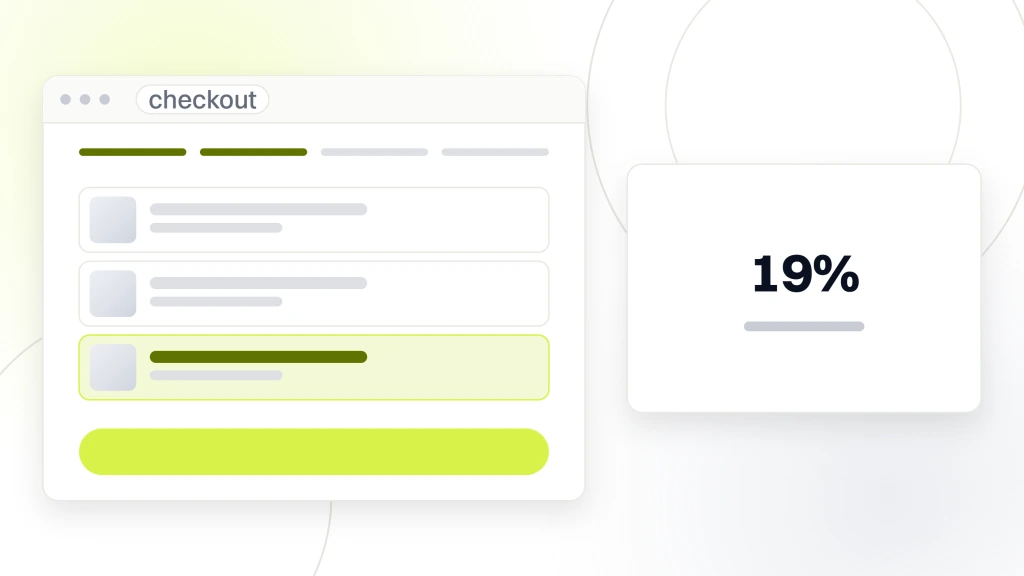
The rebuild pushed subscription attach from 6% to 19%, conversion rate on cold traffic from 1.4% to 3.1%, and AOV from $34 to $48 after we bundled the six-pack with a signature glass at $12. Ninety-day repurchase held at 62% versus 38% pre-rebuild. Customer support tickets on subscription changes dropped 71% inside the first month once the portal absorbed the skip and pause requests that used to hit email. The same architecture rolls to any storefront running a 21 to 45 day consumption cadence, a $28 to $58 AOV, and a subscription-first retention model.
| Cold brew brand metric | Pre-rebuild | 90 days post-launch |
|---|---|---|
| Subscription attach rate | 6% | 19% |
| Cold traffic conversion | 1.4% | 3.1% |
| Average order value | $34 | $48 |
| 90-day repurchase rate | 38% | 62% |
| Subscription support tickets | Baseline | Down 71% |
Content architecture lesson for food brands
The cold brew rebuild broke the storefront into dedicated pages per capability. Single-origin sourcing, brew method guides, subscription math, and shipping windows. Each page ranks for its own long-tail queries and each feeds the same cart flow. Food brands built on the same pattern rank for the long-tail queries generalist sites lose to homepage-heavy architecture. Homepage-only sites concentrate all SEO into one URL and cap organic at the launch pages. Dedicated-page architecture is the SEO edge inside food and beverage web design. Abigail Ahern, a home renovation client on the ecommerce side, drove +179% ecommerce revenue on a 12-month curve on the same dedicated-page model applied to their category tree.
Integrated storytelling that converts on cold traffic
Cold Meta traffic converts on storytelling wired next to the buy button, not on a separate About page. The cold brew PDP ran the origin story in a 90-word block right above the add-to-cart, with the roast profile in a two-line callout under the price. Cold traffic converted at 2.4x the rate of the pre-rebuild layout that hid the origin story on a press page. Storytelling on separate pages is decoration. Storytelling next to the purchase action is conversion architecture. The pattern rolls to any vendor engagement on a CPG account with a real origin story.
Retainer bands and total cost of ownership
Project cost sits at $18k to $58k for a Shopify build, $22k to $72k for WooCommerce, and $28k to $84k for BigCommerce depending on scope. Ongoing retainer for maintenance, feature work, and conversion optimization runs $2,400 to $6,800 per month for a growing brand. Our own food and beverage retainer starts at $1,499 per month for maintenance plus organic content on smaller single-location food brands and CPG launches. Larger CPG brands running paid and complex subscription flows land in the higher band when the operational depth per month is real work.
Total cost of ownership across 3 years matters more than the launch quote. A $28k Shopify build with a $3,200 monthly retainer costs $143k across 3 years. A $80k custom build with a $5,400 monthly retainer costs $274k. The custom build wins on P&L only if it drives $131k in incremental revenue over the 3 years, and most custom builds under $50M in revenue don’t. Run the TCO math before signing a custom quote. An agency that resists TCO math is the one selling the custom build.
CRO retainer that pays back
The CRO retainer is where food and beverage websites earn their operating cost. A $4,200 monthly retainer running 2 structured A/B tests per month plus one landing page build grows site-wide conversion rate 0.4 to 0.9 percentage points across 12 months. On a food brand doing $2M in annual DTC revenue, that’s $88k to $198k in incremental revenue against $50k in annual retainer. The math pays back inside 4 months. A vendor team that skips CRO work after launch is treating the site as a project. The site is a product, and it earns compounding gains only if it’s maintained like one.
Content retainer for organic growth
Content retainer for organic growth on a food brand runs $2,400 to $6,000 per month depending on volume. Four to 8 recipe or usage pages per month, keyword research and clustering, on-page SEO, and internal linking. Organic traffic on a food brand build compounds slowly for the first 6 months and then accelerates. Brands that skip content marketing after launch cap organic traffic at whatever the launch pages captured. Brands that fund content retainers see organic revenue take over paid revenue by month 18 on well-run accounts. Content is the quiet lever inside these engagements. See our content marketing for food brands guide for the retainer scoping we run in parallel to the build.
Screening a food and beverage web design agency
Screening a food and beverage web design agency in one call takes 6 specific questions. The answers tell you whether you’re talking to a specialist or a generalist selling a template. Ask them in this order and watch how quickly answers land. Vague answers or a promise to circle back is the tell that the agency doesn’t run food accounts often enough to have the muscle memory built. Vejrø Resort, a Travel client, hit 2.2% bookings on a 3-month curve when we ran the same specialist versus generalist screen for their booking engine rebuild.
- Show me 3 food or beverage builds you’ve launched in the last 18 months with post-launch conversion rate numbers.
- Which subscription platform do you install for coffee versus for hot sauce and why the difference?
- What’s your ADA compliance process for nutrition labels and can I see a screen reader demo?
- Walk me through your PDP pattern for a $28 six-pack cold brew brand at $34 AOV.
- How do you handle content migration on a recipe-heavy site without losing organic traffic?
- What’s your post-launch CRO cadence and what did you gain in the last 6 months on a food account?
The redacted client dashboard tells the truth
Ask for a redacted client dashboard from a live food account. If the top metrics are pageviews, sessions, and bounce rate, the agency is reporting activity. If the top metrics are conversion rate, AOV, subscription attach rate, and LTV, the agency is reporting outcomes. If the dashboard doesn’t exist, the agency will build one during your retainer at your cost. A food and beverage web design agency with real category muscle has a dashboard template ready to modify for your storefront on day one. That template is worth more than the pitch deck. Ibemploy, a business services client, hit 7.5K+ monthly visits on the annual curve after we swapped their vanity dashboard for one keyed to hiring conversions.
Account lead tenure over 18 months
The account lead running your build matters more than the agency logo. Ask who your account lead will be and how long they’ve been at the agency. Under 12 months and there’s churn risk mid-project. Under 24 months and there’s competence risk on complex food architecture like subscription plus wholesale plus multilingual. Category specialists retain their strongest leads . Food and beverage sites are category-native fun work. Generalist shops churn talent onto food accounts. Food feels adjacent to whatever they specialize in.
Launch day and the first 45 days after
Launch day on a CPG storefront project isn’t the finish line. It’s the start of the observation window. The first 45 days after launch are where SEO, conversion rate, and subscription attach rate either hold or slide. Watch Google Search Console daily for indexation gaps. Watch conversion rate hourly for the first week and daily for the next 6. Watch subscription attach rate weekly. Watch cart abandonment weekly. Any metric that moves 20% from pre-launch baseline gets flagged and investigated inside 24 hours. This is the work a proper specialist agency does that lookalike shops skip.
Most agencies charge extra for post-launch monitoring and treat it as a retainer add-on. Category specialists include the first 45 days in the launch scope. They know the work matters. Read the SOW carefully. If “post-launch support” is a bullet with no defined deliverable or hours, the agency will charge extra when you call about a conversion drop on day 9. If “post-launch monitoring for 45 days” is scoped with specific dashboards and daily check-ins, the agency has done this before. See the Google Web Vitals guidance for the specific performance metrics to watch across the first 45 days.
Redirect map audit at day 7
The day-7 redirect audit catches most SEO regressions. Pull the top 200 URLs by organic traffic from the old site, check that each has a 301 redirect to the correct new URL, and verify each redirect returns a 200 at the destination. Any URL that 404s, chains through multiple 301s, or redirects to a different topic gets fixed inside 48 hours. Google’s crawler forgives one bad redirect. It doesn’t forgive twelve. A vendor team that runs the day-7 audit as standard practice catches issues before they compound into a 40% organic traffic drop by day 60.
Conversion baseline at day 30
Day 30 is the conversion baseline read. Post-launch conversion rate on a food brand should sit within 15% of pre-launch baseline by day 30 and above baseline by day 60. If conversion rate is down more than 15% at day 30, the PDP pattern is wrong, the checkout has a bug, or the mobile experience has a specific issue. Diagnose inside a week. Fix inside 2. Any agency that shrugs at a 25% conversion drop and points to “the algorithm” is deflecting. Real causes are always specific and always fixable.
Making the pick for your food brand
Pick the specialist food and beverage web design agency if your build needs subscription architecture, wholesale gate, recipe migration, ADA-compliant nutrition rendering, or CPG-specific PDP patterns. Pick the general web design shop if the build is a straight brochure with a single SKU, no subscription, and no compliance rules. Run both on scope split if you’re above $25M and know how to divide project work from performance work. Skip the build entirely and stay on Shopify’s default theme if you’re under $200k in annual revenue and product-market fit is still in question. The retainer math doesn’t pay back at that stage.
The last piece of advice is simpler than the whole guide. Have the sales call, ask the 6 screening questions, review the redacted dashboard, and trust the answers. Category shops answer directly. Generalists circle back. The circle-back is the tell. See our food and beverage marketing services page for the retainer scopes we run alongside the build. And see the USDA per-capita food availability data for the category context that shapes your channel plan after launch.