An ecommerce digital marketing strategy is the yearly plan that decides which channels a direct-to-consumer store invests in, at what depth, against which customer segments, and at what ROAS floor. Most owners get the narrow version that stops at Meta and Google spend, so the retention half of the funnel goes dark. The brand caps out at whatever contribution margin the paid engine alone can carry. The wider version pulls ecommerce SEO, lifecycle email, SMS, organic content, and creative production into one plan that reports against one blended efficiency number every Monday morning.
For DTC brands in the pet vertical, our pet product marketing agency scope guide covers the channel mix, Amazon cadence, and reorder flywheel that hold across a full 6-month starter term.
This guide walks ecommerce digital marketing strategy the way Redefine Web runs it inside a retainer. What the channel stack covers, how the yearly plan separates from the weekly plays, which six metrics decide budget growth, and where a real London client rebuild moved revenue 179% year over year. Every benchmark below sits on Shopify, WooCommerce, and BigCommerce accounts we manage today. Read straight through, or skip to the section that fits your store best. The wider ecommerce marketing agency hub carries the retainer side of the same playbook.
Ecommerce Digital Marketing Strategy Metrics That Decide Budget
Six metrics decide whether marketing budget grows or shrinks quarter over quarter at a working DTC brand. Owners who track all six get honest reads on the business. Owners who track two or three usually cherry-pick the metric that supports the plan they already wanted to run this quarter. Numbers work as a discipline only when the discipline covers every uncomfortable question the P&L asks, not just the flattering ones the founder wants to celebrate on Monday.
- Blended ROAS across all paid channels combined, not per-platform ROAS in isolation
- Marketing efficiency ratio (MER). Total revenue divided by total marketing spend
- New customer acquisition cost split from returning customer acquisition cost
- Contribution margin per order after product cost, shipping, payment fees, and returns
- Repeat purchase rate at 30, 60, and 90 days after the first order
- Email plus SMS revenue as a percentage of total revenue, target 25% to 35% mid-market
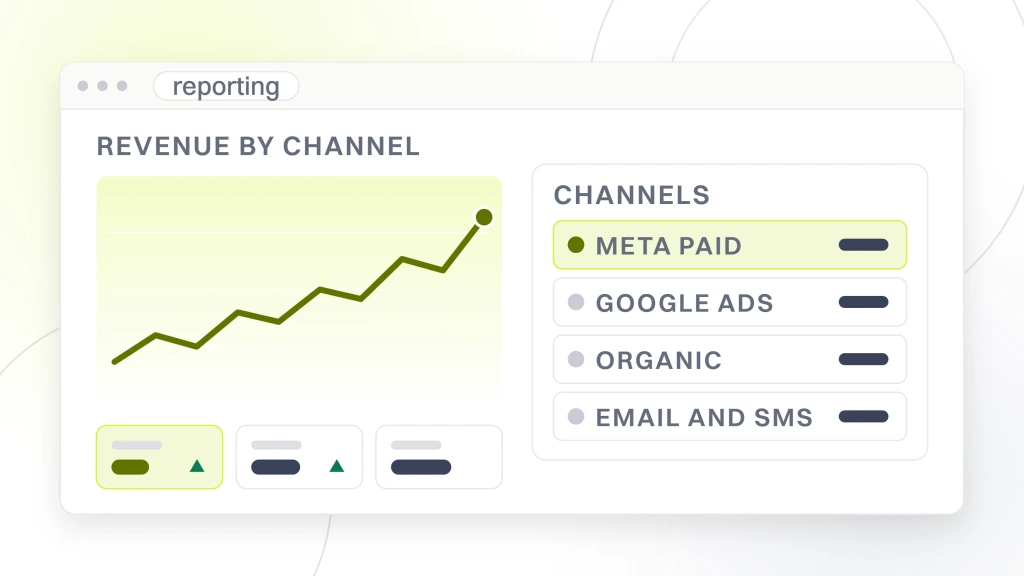
MER is the north-star metric for a growing brand. It captures the halo paid media has on branded search, direct traffic, and organic sessions. A brand doing $100,000 a month in revenue on $25,000 in spend runs a 4.0 MER. Healthy mid-market DTC brands sit at 3.0 to 4.5 MER. Below 2.5 the brand usually loses money on new customer acquisition. Above 5.0 the brand is under-spending relative to demand.
Retainer pricing at Redefine Web starts at $1,499 per month for starter brands, $2,499 for growth-stage catalog work, $3,999 for full-stack four-channel retainers, and from $6,000 per month for mid-market brands running deeper. Ad spend gets billed separately from the retainer, always.
Ecommerce Digital Marketing Strategy by Brand Stage
Brand stage decides which channels get investment this quarter and which channels wait until next year. A starter Shopify brand under $500K in yearly revenue runs three channels well. A scale-stage brand past $10M runs the full nine. Matching the plan to the stage separates brands that compound quarter after quarter from brands that plateau inside 18 months.
| Brand stage | Yearly revenue | Channel count | Monthly ad spend | Retainer band |
|---|---|---|---|---|
| Starter | Under $500K | 3 channels | $3K to $8K | $1,499 to $2,499 |
| Growth | $500K to $5M | 5 to 6 channels | $10K to $40K | $3,999 to from $6,000 |
| Mid-market | $5M to $20M | 7 to 8 channels | $50K to $200K | Starts at $6,000 |
| Scale | $20M to $100M | Full 9 channels | $250K to $1.5M | From $6,000 plus |
| Enterprise | Past $100M | Full 9 plus dedicated in-house | $1.5M plus | Project-based plus retainer |
Starter Stage Under $500K
Starter brands run three channels well. Meta paid at $3K to $8K monthly spend. Klaviyo email flows across the five core sequences (welcome, browse abandon, cart abandon, post-purchase, winback). One organic content channel picked based on where your target customer already spends attention. That is the whole scope. No influencer program yet, no affiliate program yet, no full Google Shopping catalog build yet. Your job at this stage is pulling product-market-fit signal from the first thousand customers, not building a 12-channel machine before the product proves it converts. Retainer spend at this stage sits in the $1,499 to $2,499 band, packaged around one channel of depth plus a starter email build.
Growth Stage $500K to $5M
Growth-stage brands layer Google Shopping, category page SEO, SMS, and organic social on as second-tier channels. Meta and Klaviyo stay the two anchors. Retainer scope opens up to a full-stack four-channel plan starting at $3,999 a month and moving to from $6,000 as spend scales. Ad spend usually sits at 15% to 25% of revenue, which gives room to test new creative angles without breaking MER. This stage is where the retention math starts to compound. Repeat purchase rates above 25% at day 90 pull the whole brand into a healthier acquisition-to-lifetime-value ratio, which is the number your board asks about first at every quarterly review.
Digital Marketing for Ecommerce Website Real Work
Abigail Ahern, a luxury home decor brand headquartered in London, partnered with Redefine Web in August 2020 to grow ecommerce revenue and protect a premium brand identity. The brief centered on three fixes. Cut the discount reliance that had trained buyers to wait for the next promotion. Tighten Google Shopping campaign structure across the top 30 SKUs. Rebuild category page SEO around non-branded, high-intent search terms the brand had been losing to competitors quarter after quarter. Digital marketing for ecommerce website work spanned paid media and SEO under one retainer, run by one team, reported through one weekly dashboard.
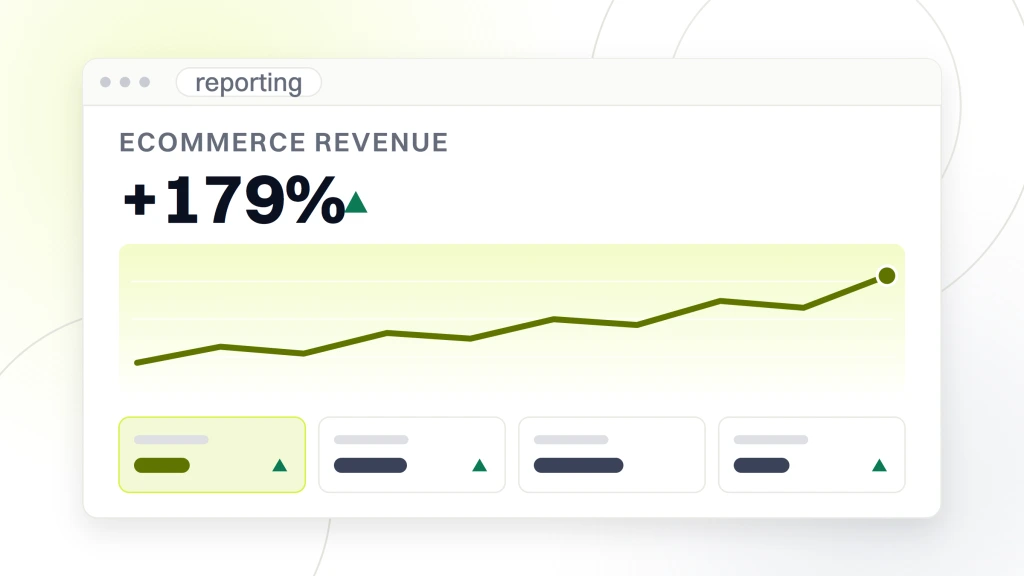
The rebuild results across a 12-month window read like this. Abigail Ahern grew ecommerce revenue 179% year over year. Paid search ROAS climbed to 1,588%, more than doubling the previous year’s efficiency. Paid social ROAS reached 3,000% through disciplined retargeting layered on top of fresh prospecting audience work. Conversion rate roughly doubled from the pre-partnership baseline. Category and product-level SEO captured non-branded search demand that had been losing revenue to competitors during the previous cycle, and the compounding organic revenue held steady through the next four quarters.
The scope alignment made the retainer work. One team ran SEO and paid together, which meant organic keyword data fed paid keyword targeting the same week the report landed, and paid audience learnings fed SEO content planning the following sprint. That cross-channel loop rarely happens when a brand hires three specialist agencies in parallel and each one optimizes against a different attribution model on a different reporting cadence.
Ecommerce Digital Marketing Versus B2B Digital Marketing
Ecommerce digital marketing differs from B2B digital marketing on three axes worth naming out loud. Buying cycle. Decision-maker count. Creative refresh pace. A DTC buyer decides inside 48 hours on a $40 consumable, and inside maybe two weeks on a $400 durable. A B2B buyer runs a six-to-18-month cycle with three-to-nine decision makers on a mid-five-figure contract. That timing gap forces different plays across every channel and every reporting cadence.
Creative Pace Is the Underestimated Gap
The creative pace difference gets underestimated most often at the hiring stage. A B2B marketer who refreshes two LinkedIn campaigns per quarter can be world class inside that world. The same cadence in ecommerce collapses inside 60 days. Meta and TikTok algorithms burn creative fast. A DTC brand that pushes three creatives a week live runs 156 fresh assets a year across paid and organic. A B2B brand at eight campaign refreshes a year sits at a completely different rhythm. Same marketing degree, same tools, different daily job. Store owners who hire a B2B marketer without briefing on the pace gap usually part ways inside six months once the creative pipeline dries up in Q2.
Attribution Models Diverge Too
B2B teams report on sourced pipeline and closed revenue over quarterly windows. Ecommerce teams report on blended ROAS and MER over weekly windows. The measurement infrastructure diverges early. B2B usually runs Salesforce plus HubSpot attribution across a lead-to-close funnel. Ecommerce runs Northbeam or Triple Whale plus GA4 across a session-to-order funnel. Same word, attribution, very different math. Founders who mix the two vocabularies in a single reporting deck usually confuse the board and dilute the case for whichever channel is actually working best that quarter.
Ecommerce Digital Marketing Services Across SEO, PPC, and Design
Ecommerce SEO, ecommerce PPC, and ecommerce web design each sit inside the broader ecommerce digital marketing services roster. Each one carries a distinct retainer scope, reporting cadence, and team specialization. Owners who bundle all three into one vague marketing budget usually under-invest in the channel that would move real revenue this quarter. Break the budget out per channel and the tradeoffs become obvious inside one board meeting.
SEO Compounds, PPC Converts, Design Sets the Ceiling
Ecommerce SEO earns compounding organic revenue over 6 to 12 months. Brands that skip SEO in year one usually pay a higher acquisition cost forever. Ecommerce PPC converts high-intent buyers this week but stops the moment paid spend stops, so brands that lean only on paid have no runway if cash flow tightens through a slow quarter. Ecommerce web design sets the ceiling on conversion rate. A store with a 1.2% conversion rate on 100,000 monthly sessions loses the same revenue every month as a store hitting 2.4% would gain. Deeper work on the SEO side sits inside the ecommerce SEO services post.
Design Is Marketing Infrastructure
Ecommerce web design is not a one-time build. It is marketing infrastructure that gets rebuilt every 18 to 24 months as the brand grows into new categories, new customer segments, and new conversion patterns. Product page templates get iterated. Category page layouts get rewritten. Homepage hero sections get tested against fresh customer research. A store that never updates the design layer usually watches conversion rate drift down by 0.1 percentage points a quarter until the compounding revenue loss finally forces a rebuild anyway. Better to iterate small every quarter than rebuild big every two years. Product page speed, checkout friction, and category page merchandising all count as marketing infrastructure the same way ad account structure does.
Ecommerce Digital Marketing Tooling Stack
The tooling stack under a real DTC brand usually reads like this. Shopify or WooCommerce as the storefront, Klaviyo for email plus SMS, Meta Business Manager and Google Ads for paid, GA4 for cross-channel session data, Search Console for SEO, Northbeam or Triple Whale for blended attribution, and a helpdesk like Gorgias or Zendesk that closes the loop on post-purchase support and return rates. Add a review tool like Judge.me or Okendo. Add a subscription tool like Recharge if the catalog fits repeat purchase. Every tool in the stack earns its subscription by feeding one of the four channels or the reporting layer that connects them.
Reporting Layer Ties It Together
Your reporting layer is where most tooling stacks fall apart. GA4 gives one number. Meta Ads Manager gives another. Klaviyo gives a third. Shopify gives the truth. A working DTC brand reconciles all four inside a Looker Studio dashboard or a Northbeam blended view every Monday morning. The number that matters is Shopify’s revenue reconciled against total marketing spend. Every other number is either a directional signal or a platform’s self-reported credit for revenue that Shopify would have booked anyway. Founders who trust Meta’s reported ROAS without reconciling to Shopify usually over-invest in prospecting audiences that were retargeting warm buyers the whole time.
Attribution Beyond Last-Click
Last-click attribution rewards whichever channel touched the customer most recently, which biases the report toward branded search and email regardless of which channel first created the demand. Blended attribution through Northbeam or Triple Whale pulls in first-click, view-through, and post-purchase survey data to redistribute credit across the funnel. Neither model is perfectly honest, yet the blended view catches Meta prospecting work that last-click misses, which usually justifies the paid spend a last-click read would cut. Owners who cut Meta prospecting on a last-click read usually watch revenue drop 30% to 40% inside two months and quietly restore the budget the next quarter.
Who Owns Ecommerce Digital Marketing at the Brand
Ownership decides whether the marketing plan stays a plan or turns into a scattered set of weekly tactics. Your ownership stack should match brand stage. A starter brand stack looks like founder plus freelance media buyer plus Klaviyo contractor. A growth-stage stack looks like marketing lead plus agency retainer plus creative freelancer. A mid-market stack looks like marketing director plus in-house media buyer plus agency for SEO and email. Enterprise stacks add an analyst, a conversion rate specialist, and a customer research role. Each stage promotes ownership up the org chart as revenue and channel count grow.
Founder-Led Marketing Has Real Limits
Founder-led marketing works up to about $1 million in yearly revenue for most DTC brands. The founder still has enough hours to run Meta ads, write emails, and pick creative angles personally. Past $1 million, the founder turns into the bottleneck on every channel decision, and the brand plateaus at whatever revenue the founder’s calendar can support. The transition to hired marketing leadership usually happens between $1.5 and $3 million in yearly revenue. Delaying that transition costs more than paying for it, yet the payroll line looks scary the month before the first director hire lands.
The Marketing Director Role
A working ecommerce marketing director owns the yearly strategy, the quarterly channel-mix decisions, the weekly cross-channel standup, and the monthly board update. The director does not personally build every Meta creative or write every Klaviyo email. The director makes sure the people who do build creatives and write emails have clear priorities, clean data, and honest reporting. Brands that hire a director expecting tactical work usually lose the strategic layer inside a quarter and then wonder why the channels stopped compounding. Buy strategy from the director. Buy tactics from the agency or the specialists on your team.
Platform Choice Under Your Ecommerce Digital Marketing Strategy
Platform choice affects how your ecommerce digital marketing strategy executes week to week. Shopify simplifies tracking and Klaviyo integration but restricts backend customization. WooCommerce opens backend flexibility on WordPress but takes more hours on tracking hygiene and site speed. BigCommerce handles B2B and hybrid stores with tiered pricing built in. A working plan runs on all three, though the tactical work shifts based on which platform the brand already sits on.
Shopify Dominates DTC Mid-Market
Shopify covers roughly 70% of the mid-market DTC brands running full-stack ecommerce plans today. Shopify Plus opens B2B wholesale, checkout customization, and multi-currency selling for global brands. Klaviyo integrates natively for email and SMS. Google and Meta ad platforms plug into Shopify feeds without custom developer work. The app ecosystem covers reviews, subscription, upsell, and analytics with a few well-chosen apps rather than a heavy custom build. That simplicity keeps the marketing team focused on marketing rather than engineering firefighting through Q4.
WooCommerce Fits Content-Heavy Brands
WooCommerce fits brands that already run WordPress for content marketing and want a native ecommerce layer without a platform swap. Content-heavy brands with strong blog SEO usually keep WordPress and add WooCommerce rather than migrate the content library into Shopify. The tradeoff sits in tracking hygiene and page speed. WooCommerce sites need more careful setup on GA4, Meta Pixel, and page speed scoring than Shopify sites do. Read the Content Marketing Institute ecommerce content guide for external framing on the content-plus-commerce model.
Vertical variants such as what is fashion marketing layer season windows and creative refresh cadence on top of the general ecommerce digital marketing strategy playbook.
Where Your Ecommerce Digital Marketing Strategy Fits Your Growth Stack
Your ecommerce digital marketing strategy sits between the product side of the brand and the customer surface where every channel touches the buyer. Product owns what gets sold. Merchandising owns how it gets priced and bundled. Marketing owns how the offer meets the customer across every channel, from Meta ad to post-purchase email. Once those three seats coordinate well, the store compounds through market cycles. Once they miscommunicate, retainer dollars vanish into channels the product side is not ready to support with fresh SKUs or fresh margin.
The best DTC founders read ecommerce digital marketing the same way they read a P&L. Not as jargon. As a tool that names what sits inside the four walls of the marketing job and what does not. A founder who cannot draw the five layers on a whiteboard from memory usually delegates the marketing seat by default rather than by choice. A founder who can draw the diagram, name the metrics, and say which channel is compounding this quarter usually keeps the strategic seat regardless of who runs the tactical work day to day.
Store owners ready to talk retainer scope with Redefine Web can start with a free tracking and paid account audit. That audit produces a written fix map and a channel-priority order before any retainer conversation opens. Whether the brand is a starter Shopify store doing $200K a year or a scale-tier DTC brand pushing past $20M, the audit-first pattern beats the demo-first pattern every quarter without exception. Let’s talk once the audit lands and the fix map is on your desk.
The best sibling read for a founder still mapping the channel roster is our companion piece on the ecommerce marketing definition. It covers the same channels through a different lens, which usually helps a first-time reader see the funnel from two angles.
A fashion marketing agency handles the paid social, creative production, and retention side for DTC apparel brands.
For a creative-play companion piece, see our marketing ideas for ecommerce guide with 12 real DTC examples and the numbers each idea moves.