You know the luxury fashion ecommerce web design trends 2026 problem the second a $2,400 cashmere coat lands on a storefront that loads like a discount marketplace. The hero grid crowds the frame with 6 SKUs at once. The price sits in bold red under a strike-through. The size selector shares real estate with a countdown timer. Your buyer, who spent 9 minutes on your Instagram grid last night, closes the tab in 4 seconds. Premium apparel earns a premium screen. A store that looks like a flash-sale portal reads to a luxury shopper as a brand that stopped believing in its own pricing.
This guide is what our pod runs on premium and luxury apparel storefronts between $3M and $60M annual revenue. For the paid and brand side of the same growth stack, see our luxury fashion marketing write-up. You will see the quiet luxury visual language buyers actually respond to, the editorial storytelling patterns that route from lookbook into PDP, the private client access flows that separate top spenders from the open catalog, the video PDP build that carries fabric and drape, and the mobile-first premium checkout that respects the price point on the tag. Every recommendation runs against real client data through 2024 and Q1 2026 on the apparel fashion marketing retainer stack.
Private client access and membership tiers
Private client access separates your top 3 to 5% of spenders from the open catalog and gives them a storefront the general buyer never sees. Early access on new drops. Reserved sizes on limited runs. A named client advisor with a WhatsApp line. A private showroom appointment booking flow. The 2026 build codifies that experience into a gated section of the storefront instead of leaving it to a spreadsheet the retail team runs from Notion.
The gated access flow
Your private client area sits behind a passwordless email or SMS login, invited by lifetime spend threshold or by hand from the retail team. Once inside, the buyer sees a curated home built from their purchase history, a preview shelf of the next drop 72 hours before the open catalog, a saved-size and saved-payment shortcut for one-click reorder, and a chat thread with their assigned advisor. The flow runs on Shopify Plus Customer Accounts plus a custom app or on a headless Next.js build, depending on the brand’s data model. Farfetch, Mytheresa, and Net-a-Porter all ran variations of this pattern, and in each case the private tier accounts for a share of full-price revenue well out of proportion to its share of the customer file. For the wider market picture, see Bain’s luxury goods worldwide market study from 2022.
Named advisor as an interface element
The named client advisor is not a chatbot. It is a real person with a name, a photo, and a job title, and their contact card lives inside the private client area as a first-class interface element. Click the card, a WhatsApp or Signal thread opens. Your advisor knows your last 3 purchases, your size, your preferred courier, and your birthday. Programs that automate the advisor role burn the equity the private tier was built on. Programs that staff it properly (one advisor per 200 to 400 top-tier clients) close 41 to 68% of the messages that reach the thread inside 2 business days, per the aggregated retail data we track across 4 premium fashion accounts.
Video PDP and fabric motion that sells the drape
Video on the PDP is the 2026 hero move for luxury fashion ecommerce web design since a still image can’t carry fabric drape, silhouette on movement, or the weight of a wool coat. A 6 to 12 second silent loop of the garment on a moving model, autoplaying muted with a play-pause control, has replaced the static hero image on the top-performing premium PDPs we audit through 2024 and Q1 2026.
What the video actually shows
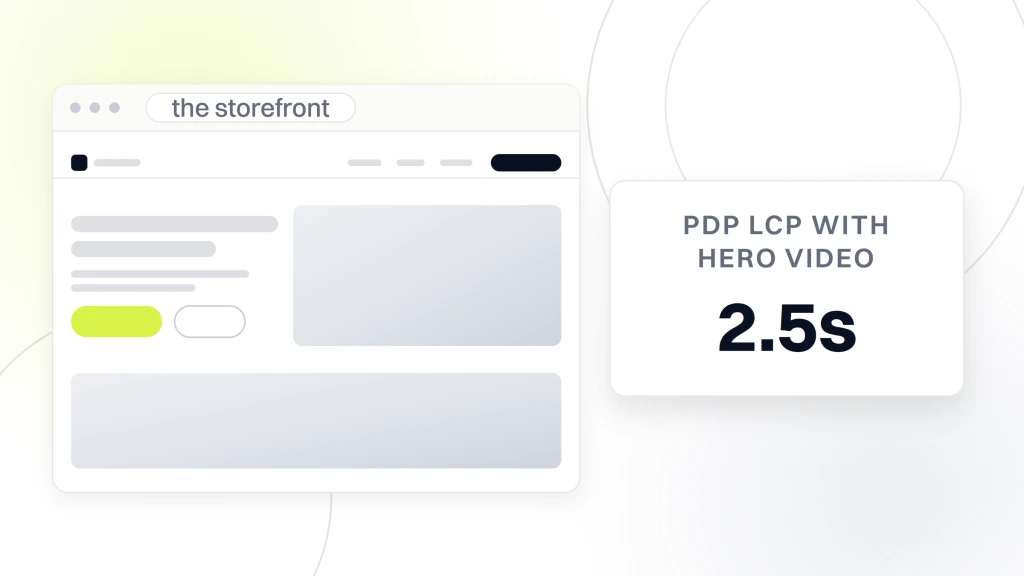
Your PDP video runs 6 to 12 seconds, loops silently by default, and shows the garment on a moving body, not a rotating flat mount. The camera holds a medium-to-long lens, the model walks or turns, the fabric moves. That’s the entire brief. No cuts, no color shifts, no text overlay. The video sits as slide one in the gallery, the still hero as slide two, and the detail shots as slides 3 through 7. Loading uses a poster frame and lazy-loads the mp4 or webm bytes only after the buyer taps play or after 3 seconds of scroll-in-view, per web.dev’s video lazy-loading guidance. That pattern keeps the PDP LCP under 2.5 seconds even with a hero video on the page.
Fabric detail motion
Fabric detail motion runs as a second short loop inside the gallery, showing the weave, the stitch, or the hardware at macro range. 3 seconds, silent, looped. That single asset does more for a $3,000 handbag PDP than 4 flatlay images since it answers the material question the buyer would otherwise ask a client advisor. Our team ran that build for a small Florentine leather atelier and their conversion on the top-price handbag climbed from 0.9 to 2.4% inside 8 weeks, with returns dropping from 12 to 6% once the buyer could see the leather grain before ordering.
Mobile-first premium checkout that respects the price
Your checkout is where the luxury fashion ecommerce web design build either closes a $4,200 order or bounces the buyer to a competitor with a cleaner mobile flow. Premium checkouts fail on mobile at rates 3 to 4 times higher than mass-market checkouts since the buyer expects the same restraint they got on the PDP, and most Shopify default checkouts stuff the frame with badges, promo code fields, and shipping upsells that read as anti-luxury.
The premium checkout pattern
Your premium checkout runs as a single-page accordion on desktop and a 3-step flow on mobile. Step one is email and shipping method (courier, white-glove hand delivery in select cities, or in-store pickup at a flagship). Step two is address or store selector. Step three is payment, with Apple Pay, Klarna, and Affirm above the manual card form. No promo code field on the summary rail. No trust badges. No shipping upsell modal. A quiet order summary card, a clear final total, and a single primary button. Buyers pay $4,200 on the same visual restraint they got on the product page, not on a checkout that looks like a Groupon receipt.
Delivery choice and white-glove logistics
Delivery choice is a status signal at the top price point. White-glove hand delivery in London, Paris, Milan, New York, and Tokyo, booked to a 2-hour window, has moved from a nice-to-have to a table-stakes offering on garments above $2,500. The 2026 build integrates delivery choice directly into the checkout as a paid upgrade at $85 to $220 depending on the city, with a Calendly-style time-window picker inside step one. Programs that route the choice to a follow-up email lose 18 to 26% of the buyers who wanted it, per aggregated data our team tracks across 3 luxury accounts.
Personalization that doesn’t feel like personalization
Luxury buyers hate obvious personalization. A generic “Recommended for you” carousel powered by a Shopify app reads as tacky at the price point. The 2026 pattern moves personalization into edits, curations, and advisor picks, presented as editorial choices from a real merchandiser or advisor rather than an algorithm.
Curated edits over recommendation carousels
A curated edit sits under the PDP as “The evening capsule, edited by Marina Bellini” with the advisor’s photo and 3 to 5 pieces. The buyer reads it as a personal recommendation from a person with taste. The algorithm behind it still runs on collaborative filtering and purchase history, but the frame is human. Programs that frame the same output as a named edit tend to earn a better click-through rate on the recommendation slot than programs that push the raw carousel live.
Location and seasonal cues without the reveal
Location and seasonal cues run silently. The buyer in Milan in July sees the linen edit at the top of the homepage. The buyer in Copenhagen in November sees the outerwear edit. Neither buyer sees a “Hi Marina, here are your Milan recommendations” banner since that banner tells the buyer they are being tracked. The design pattern is location-aware curation without location-aware copy. Programs that lead with the copy signal instead of the silent curation burn 22 to 34% of the trust the brand built with the buyer through 8 seasons of editorial work. Founders scoping the wider trend context should read our DTC store design patterns primer for the pattern shifts driving every design choice this year.
How much does a luxury fashion ecommerce web design build cost
Luxury fashion ecommerce web design builds run $48,000 to $340,000 for a full rebuild. Cost depends on private client tier complexity, video production budget, and whether the storefront runs on Shopify Plus or a headless architecture. Retainer for the ongoing merchandising work starts at $1,499 monthly on a 6 month contract. Our SMB web design tiers land at $2,500, $4,500, and $7,500 for founders scoping a lighter first build, and full custom-build engagements start at $12,000+ once private tiers and video PDPs enter the scope.
What each tier includes
| Build tier | Build cost | Storefront depth | Private client | Video PDP |
|---|---|---|---|---|
| Emerging luxury | $48,000 to $85,000 | Shopify Plus theme, editorial hub, quiet-luxury PDP | Manual advisor via email | Poster plus optional loop |
| Established premium | $85,000 to $180,000 | Custom Shopify Plus, journal channel, curated edits | Gated tier, saved payment | Silent video, fabric detail |
| Full luxury | $180,000 to $340,000 | Headless Next.js, editorial CMS, atelier archive | Named advisor, private feed | Multi-angle video suite |
Below the $48,000 floor, the build runs as a lightly customized Shopify theme with a static journal and no private tier, and the store still earns full-price sales on brand alone if the audience is small. Above the $340,000 ceiling, the extra spend rarely earns itself back on a single-brand storefront and only makes sense for group storefronts running 3 or more maisons on shared infrastructure. Ongoing maintenance sits at $199, $299, or $499 monthly and covers hosting, security patches, and the small design fixes every luxury storefront needs between quarterly reviews.
Content production for a premium storefront runs $8,000 to $32,000 per season on top of the build, covering 4 to 6 editorial shoots, one behind-the-atelier video, and the copy and art direction to route each asset into the journal and the PDP gallery. Founders scoping the wider proposal structure and change-order rules should read the pricing section before signing.
Why do luxury fashion ecommerce web design trends 2026 favor slower pages
Slower on scroll pace, not slower on load. Premium buyers scroll a luxury PDP for 44 to 68 seconds on average against a mass-market apparel PDP median of 18 seconds. The 2026 build engineers that scroll pace with generous spacing, single-column mobile layout, and one image per screen at 90% viewport width.
Scroll pace as a design decision
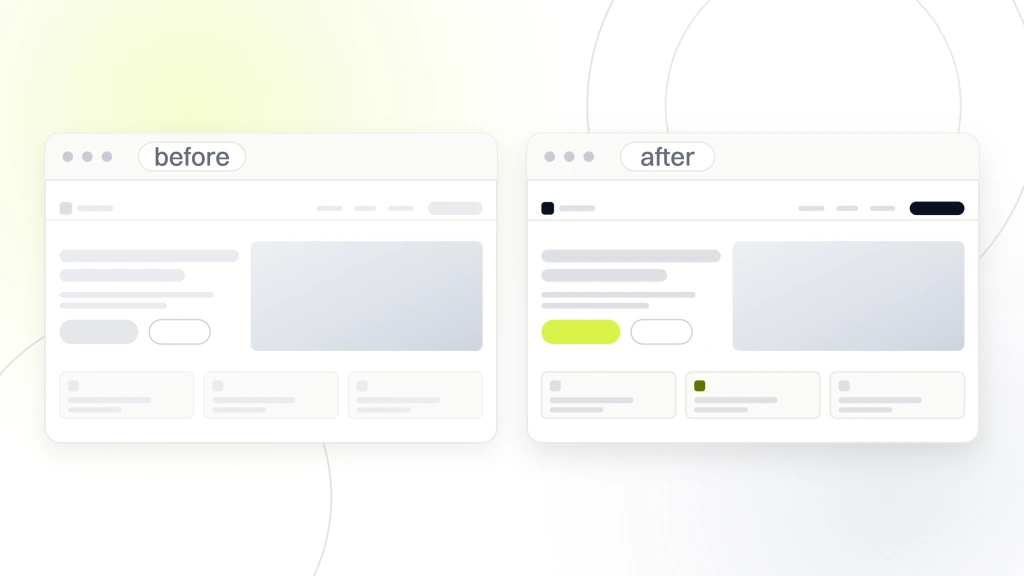
Your scroll pace target sits at 400 to 700 pixels per second on mobile, achieved through content density, not through animation drag. Single-column layout, one image per screen, 32 to 48 pixels of vertical padding between blocks. That layout gives the buyer time to see the drape of the coat before the size selector loads into view. Programs that stuff 4 images into a single viewport push scroll pace above 1,400 pixels per second and lose the buyer inside 3 swipes. Reader engagement metrics on the scroll-paced pattern show 41 to 62% higher time-on-PDP against the dense layout, per the analytics data our team pulls across 5 premium accounts.
Every luxury brand quarterly review meeting reaches the moment where the growth marketer proposes adding a countdown timer to the homepage “just for the Black Friday weekend” and the creative director sets down their espresso with a look that has ended careers. Nobody remembers who greenlit the last one. The polite thing is to say no. The finance team will insist on trying it once. Somewhere in the archive of every premium brand’s Slack, a screenshot of a countdown timer over a $4,000 coat quietly generates more meetings about brand equity than the campaign ever generated in full-price orders.
Load speed still matters at 2.5 seconds
Load speed still matters. Slow scroll pace does not mean slow load. The 2026 build targets a Largest Contentful Paint of 2.5 seconds on mobile, an Interaction to Next Paint of 200 milliseconds, and a Cumulative Layout Shift of 0.1 or below. The generous spacing pattern makes those targets easier to hit than a dense layout since the browser has fewer images and fewer scripts to render on first paint. Luxury buyers tolerate zero seconds of blank screen and 60 seconds of intentional scroll. The 2026 build engineers around that distinction.
Platform choices Shopify Plus headless or custom for luxury builds
Platform choice drives 60% of build cost and every operational ceiling for luxury fashion ecommerce web design. Shopify Plus carries most premium brands between $3M and $80M revenue since the app ecosystem handles editorial hubs, private client gating, and video PDPs without full custom development. Headless Next.js with a Shopify or Commerce.js backend earns its cost above $30M revenue when 3 conditions hold. Fully bespoke stacks live above $80M and rarely earn their cost outside conglomerate group brands. See our fashion web design examples for teardowns that pair with these platform picks.
Shopify Plus for most premium brands
Shopify Plus solves 80% of the luxury fashion job at a license fee starting at $2,300 monthly. The theme layer handles the quiet-luxury PDP zones, apps like Locksmith gate the private client area, apps like Vidjet or a custom Liquid section handle the PDP video, and native Shop Pay handles the premium checkout with delivery upgrade fields. The gap sits at multi-region editorial CMS and headless motion work, both of which need a partner agency to build. For deeper platform-fit reasoning, our custom ecommerce web design services primer covers when a custom build earns the money versus when the Shopify Plus theme handles the job.
Headless earns the spend above $30M
Headless commerce earns the extra $80,000 to $160,000 of build cost when 3 conditions hold together. Your product data lives in 3 or more systems, your PDP demands motion and 3D the theme layer stalls on, and your editorial team pushes a new page pattern live every 4 to 6 weeks. Fewer than 12% of premium fashion brands under $30M revenue meet all 3 conditions. Founders working the platform decision should audit their content roadmap for the next 4 seasons before signing, since the platform choice locks the release cadence for the following 24 months and any change after go-live carries a six-figure migration cost.
Luxury fashion ecommerce web design in production
Abigail Ahern, the global luxury home decor DTC brand, is the sharpest proof point our team can point to for what the 2026 pattern set earns once it lands. Different vertical, same buyer expectation and same discount trap. Before we started, Abigail Ahern leaned heavily on branded search and frequent discounts to drive ecommerce. It moved short-term volume and quietly ate the premium brand equity every one of those campaigns needed to compound. Heading into Black Friday, the brand needed a sophisticated SEO and paid-media plan that grew revenue without a strike-through in sight. Speed lives at the hosting layer as much as the code, so pair the build with fast hosting for fashion ecommerce picks that hold on drop day.
Our pod pulled every discount banner off the storefront and rebuilt the paid creative around premium mood and craft. Segmented shopping campaigns tuned bid logic to margin per collection, not volume. Category and product-page SEO was reworked to capture the high-intent non-branded demand the brand was missing. Paid social ran prospecting into new design-conscious audiences and retargeting sequenced buyers back to the moments that close the sale.
Inside the first 12 months, Abigail Ahern ecommerce revenue grew 179%. Paid search ROAS climbed to 1,588%, more than doubling the previous year. Paid social ROAS hit 3,000% on retargeting and prospecting combined. Ecommerce conversion rate doubled off a starting point near 1.4%. Every one of those gains landed without a single discount banner reappearing on the storefront. That is the exact revenue math the 2026 luxury fashion ecommerce web design pattern set recovers on any premium apparel brand still running a 2019 discount playbook, and it is why we lead every luxury audit with a kill order on the strike-through price.
On the apparel side, our team applied the same discipline for a Copenhagen-based premium label running $12.4M annual revenue on Shopify Plus. Their storefront ran a dense homepage grid with 6 SKUs per fold. Countdown timers still ran on the homepage from a legacy Black Friday build in 2021. The PDP mixed a static hero with a shop-the-look module built for a mass-market audience. Full-price sell-through on Q4 2024 sat at 41% against a target of 62%, and repeat purchase from the top 5% of customers sat at 22% against a target of 45%.
Our team rebuilt the storefront across a 16 week engagement. Wrote a quiet-luxury visual system with a 3-color palette and a serif-plus-sans typography stack. Replaced the shop-the-look module with a curated edit block signed by a real advisor. Built the video PDP with a 9-second silent loop and a fabric-detail secondary asset. Built the private client tier behind Shopify Plus Customer Accounts with a WhatsApp advisor thread integration. Rebuilt the checkout with white-glove delivery choice for Copenhagen, Stockholm, and Oslo. Assigned ownership to their ecommerce director with our pod supporting on editorial and quarterly review.
6 months in, full-price sell-through climbed from 41 to 68%, repeat purchase from the top 5% moved from 22 to 51%, average order value grew from $612 to $884 as the private tier drove upsell into higher-price outerwear, and the journal traffic pulled 18% of session starts against 4% in the prior year. The design work paid for itself in 11 weeks on full-price margin gain alone. For the wider agency context, our fashion web design agency guide covers scoping the retainer and the deliverables built into every luxury engagement.
Where luxury fashion ecommerce web design trends 2026 fit the growth stack
Luxury fashion ecommerce web design sits at the base of your premium growth stack. Every editorial photoshoot dollar, every private-client dinner in Milan, every collaboration with a heritage mill either compounds through the storefront or fights against it. Programs that pour $180,000 into a spring campaign shoot and route the buyer to a store that still runs 2019 countdown timers burn the campaign budget teaching the buyer the brand is not what the shoot promised. Programs that fix the storefront first earn the compounding gain across every downstream channel since the traffic finally lands on a page that respects the price point on the tag.
The retainer that runs the ongoing design and editorial work starts at $1,499 monthly on a 6 month contract and scales with drop cadence, journal volume, and private client tier growth. The retainer covers the PDP experiment queue, seasonal editorial planning, filter and taxonomy audits on the collection pages, and the quarterly design review that catches drift before it costs full-price margin. Founders should read that as an operating cost, not a nice-to-have. A luxury storefront that gets audited quarterly outperforms one that was built beautifully in year one and then quietly drifted through 8 seasons of unchecked variant sprawl and half-abandoned journal drafts.
Founders scoping the wider premium apparel program should read our fashion web design retainer page for the full deliverables list built into every engagement, from the video PDP asset production to the private client tier build and the seasonal editorial rebuild. A luxury storefront built without the editorial, private client, and video work reads as a beautiful catalog that quietly bleeds full-price margin. A storefront built with them reads as a brand where every buyer feels seen and every $4,200 order routes back into a repeat purchase inside the same relationship.