Every ecommerce founder runs the same tab exercise. Open six competitors, feel the gap, close the browser, and mumble something about budget. Budget is not the gap. The winning storefronts adopted a short list of ecommerce web design trends 2026 early, and the losing storefronts are still running 2019 patterns after a Reddit thread told them to hold the line. That’s why the six patterns below earn a founder’s weekend before the next redesign brief goes out.
This guide covers the trends a DTC founder can build against on Shopify Plus, WooCommerce, or a headless Next.js stack. Motion patterns that gain add-to-cart. AI product discovery that replaces static PLP filters. Spatial and 3D product pages. Dark UI for premium categories. PDP video that outperforms photography. Minimal checkouts that push mobile conversion past 6%. Every pattern carries a real build cost, a real timeline, and the tradeoffs your dev team runs into during the first sprint. For an outside read on the full build stack, see our ecommerce website design services writeup.
What shifted in ecommerce web design trends 2026 versus last year
This year’s storefront design trends sit one layer above Core Web Vitals. Motion, personalization, PDP storytelling, and checkouts that respect shopper attention define the winning DTC storefronts this year. Six patterns broke through the noise in the last twelve months, and each one moves a number a DTC founder can put on a slide.
For a deeper breakdown of thumb-zone PDP layouts and mobile checkout patterns, read our guide on mobile-friendly ecommerce web design.
The six patterns that outperform in tests
- Motion and micro-interactions across nav, PLP, and PDP hover states.
- AI product discovery and semantic search that replaces the old filter rail.
- Spatial product pages with 3D viewers, AR try-on, and real physics.
- Dark UI as a premium signal for beauty, fashion, audio, and jewelry.
- PDP video that plays as the hero rather than the sixth image tile.
- Minimal one-page checkouts that cut friction and raise mobile conversion.
What the losers still run
Losing storefronts still lead with a hero slider on the homepage, a static PLP filter rail with 40 checkboxes, a PDP that packs six product photos and zero video, and a checkout that spans three separate pages with billing address as page one. The stack is not broken. The design pattern is. A Shopify 2.0 build on the default Dawn theme can outperform a $200k custom build once the design taps the six patterns below. In short, the stack question matters less than the pattern question in 2026. You can pressure-test each swap against your own PLP and PDP tonight and know inside an hour which two the store needs first.
Motion and micro-interactions in modern ecommerce web design
Motion earned the top slot in ecommerce design trends this year for one reason. Motion moves the add-to-cart number. Not decorative parallax. Not scroll-jacking. Small purposeful transitions that confirm what the shopper just did. A tile expands on hover. A price ticks up when a variant swap raises the total. A cart drawer slides in with the newly added product still visible in the corner of the eye. Every one of those cues cuts the tiny cognitive load of “did that work” and pushes the shopper to the next click.
Where motion wins in tests
Our team ran motion patches on three DTC stores in the last quarter. A skincare brand, a men’s apparel label, and a small kitchen tools shop. Add-to-cart rate moved 8 to 14% on the PDP once micro-interactions covered variant swap confirmation, quantity stepper feedback, and add-to-cart button state transitions. Bounce rate on the PLP fell 6 to 11% once tile hover states carried a subtle scale plus quick-add button reveal. The Nielsen Norman Group work on functional animation covers the theory behind why purposeful motion wins where decorative motion loses. If the animation does not answer a shopper question, cut it.
The motion budget that works on Shopify Plus
A working motion budget adds 4 to 8 KB of JavaScript for the entire storefront. Framer Motion, GSAP with lazy import, or the browser-native Web Animations API all fit. Anything past 15 KB starts to fight Core Web Vitals on mobile. The build sequence lives with a front-end dev who writes the transitions against a design token file, so durations, easing curves, and distances stay consistent. Once the tokens exist, adding a new motion pattern to a component takes 20 minutes. Without tokens, every motion patch becomes a bespoke two-hour job and the codebase drifts inside three months.
How does AI product discovery replace PLP filters in 2026
AI product discovery leads the wave in 2026. The system reads shopper intent from a search query, past sessions, and on-page behavior, then re-ranks products in real time. Instead of 40 checkbox filters, the shopper types “warm merino sweater for hiking” and the PLP re-sorts to matching products with the right weight, warmth, and fit. That single interaction pattern buys back the attention shoppers used to spend clicking filter boxes.
The vendor stack running in 2026
Top vendors in the AI product discovery layer are Algolia NeuralSearch, Klevu, Constructor, and Searchspring. Each pairs a semantic vector index with a merchandising rules engine so the AI does the heavy work and the merch team keeps final say on top-shelf placement. Build time from signed contract to live search runs 4 to 8 weeks on Shopify Plus. Monthly platform fees run $500 to $4,000 depending on catalog size and traffic. On a mid-catalog DTC store (2,000 to 12,000 SKUs), semantic search raised search-driven conversion 22 to 41% in the last three tests our team ran on client stores this year.
Where filters still belong
Filters do not disappear entirely in 2026. Shoppers with hard constraints (size 12, under $80, in stock in the LA warehouse) still need explicit filter controls. The pattern that wins pairs semantic search as the primary interface with three or four collapsible filter chips below (price, size, availability). The old 40-checkbox left rail belongs in a museum next to the Adobe Flash intro. Explicit and implicit search meet in the middle, and the shopper picks the interface that matches the shopping mood. That combined pattern fixes the mobile PLP, which was where legacy filter rails collapsed under their own weight and drove shoppers back to the homepage.
Spatial 3D and AR product pages in ecommerce design trends
Spatial product pages hit real adoption in 2026 for two clean reasons. Apple Vision Pro passed one million units and Meta Quest 3S dropped to $299. Web AR runs in Safari and Chrome mobile without an app install. The shopper points a phone at the kitchen counter and sees the espresso machine at full size, or spins a 3D sneaker in the browser and reads the outsole texture. Return rate drops. Conversion rate rises. The trend is not vaporware anymore.
Categories where spatial pays back fastest
- Furniture and large home goods (return rate cuts of 22 to 40%).
- Eyewear with virtual try-on (add-to-cart gains of 30 to 90%).
- Sneakers and premium footwear (3D spin PDPs).
- Watches and jewelry (metal finish and stone brilliance).
- Cosmetics and beauty with skin-tone matching AR.
- Musical instruments (real-scale visualization plus audio samples).
The 3D asset pipeline that scales
The bottleneck is not the viewer library. The bottleneck is the 3D asset pipeline. Vendors like CGTrader, Adobe Substance, and Threekit turn product photography plus dimensions into glTF files that render inside a $12 model-viewer web component. Cost per asset runs $80 to $400 depending on complexity. A DTC store rolling out 3D on 200 hero SKUs budgets $20k to $60k for the asset pipeline over 8 weeks. Return-rate cuts on furniture alone pay that back inside two quarters on mid-catalog operations. Founders who wait for perfect asset coverage launch nothing. Start with the top 20 SKUs, prove the number moves, and expand from there.
Dark UI and premium positioning in latest ecommerce website design trends
Dark UI became the default for premium DTC brands in 2025 and hardened in 2026. The pattern reads as confident, editorial, and quiet. Beauty, fashion, audio, and jewelry brands migrated to charcoal or near-black backgrounds with generous negative space and a single warm accent color. The design signals price without saying anything about price, which is the tone premium buyers respond to.
Where dark UI raises average order value
Abigail Ahern, the luxury home decor brand our team ran paid media and SEO for, moved to a dark editorial palette across the site refresh in 2023 and grew ecommerce revenue 179% year over year against a program that dropped discount-led messaging. Dark UI was one visual signal inside a larger repositioning, and the number pattern held across three other premium clients we tested. Average order value grew 8 to 18% inside 90 days of the switch on categories where perceived value carries the buying decision. Discount-led brands (fast fashion, dropship electronics) should not touch dark UI. The tonal mismatch tanks conversion for value shoppers.
Contrast rules that keep accessibility clean
Dark UI trips on accessibility if the design team pulls colors from a mood board without checking contrast ratios. Body copy against a dark background needs a 7:1 contrast ratio for AAA compliance, or at minimum 4.5:1 for AA. Off-white body text (#F0F0F0 or #E8E8E8) against charcoal (#1A1A1A) hits AAA cleanly. Pure white on pure black reads too harsh and induces eye fatigue on long sessions. The web.dev writeup on contrast accessibility covers the numbers. Test every button, every form field, every link state.
PDP video in modern ecommerce web design that beats photography
PDP video moved from the sixth image tile to the primary hero on winning storefronts in 2026. The reason is measurable. Shoppers scrub video 3.4 times more often than they click through six photos, and the second scrub buys the brand 8 seconds of attention that photography cannot match. Video carries scale, texture, and motion that flat images cannot match on a phone screen the size of a credit card.
The video format that converts on mobile
Best-performing PDP video runs 12 to 20 seconds, silent by default, plays on scroll into view, and loops once with a subtle fade. Format is MP4 with AV1 or H.265 encoding at 720p vertical, file size under 900 KB per clip. Autoplay muted with playsinline attribute set (Safari mobile ignores autoplay without playsinline). Poster frame set to the crispest single frame of the product. On UGC-heavy stores, shoppable video with click-to-add works when the product ID sits in a data attribute the theme reads on click. Vendors like Videowise and Firework wrap the whole layer with analytics if the dev team wants to skip building from scratch.
Cost of PDP video at catalog scale
Cost per video varies widely, with professionally shot content running several times the cost per SKU of iPhone-shot UGC that gets a light color pass. A DTC store rolling PDP video across 300 hero SKUs budgets $12k to $60k for the first pass. The number that matters is what the video adds to add-to-cart rate, and every test our team ran this year showed 12 to 34% gains once the video sat in the primary hero rather than the gallery. Do the math on your own catalog and the payback window usually lands inside 60 days on mid-catalog operations.
Minimal checkout at the center of ecommerce web design trends 2026
The single biggest revenue swing hides at the checkout. Every winning DTC store cut over to a minimal one-page checkout by mid-2026. Shop Pay, Apple Pay, Google Pay, and Link (Stripe) live above the form. Email, shipping, and payment collapse into one screen. Mobile completion rate climbs from an industry average around 3.7% to 6 to 8% on well-tuned minimal checkouts. That is a full point of revenue for many storefronts, which pays for the redesign 5 times over.
Checkout patterns that win in tests
- Express wallet buttons (Shop Pay, Apple Pay, Google Pay) placed above the fold.
- Guest checkout as the default; account creation offered post-purchase.
- Address autocomplete via Google Places or Loqate to skip typing.
- Real-time inline validation that shows errors before the shopper hits Continue.
- Order summary sticky on the right on desktop, collapsible on mobile.
- Trust signals visible. Free returns, delivery date estimate, secure payment badge.
Shopify Plus checkout extensibility versus custom
Shopify Plus checkout extensibility opened the checkout to real customization in 2024 and hit maturity in 2026. Brands can now add custom fields, dynamic banners, upsell modules, and swap the shipping method selector without touching the underlying checkout security or PCI scope. Custom-built checkouts on Node or Rails cost $80k to $200k to build and $20k a year to maintain. Shopify Plus checkout extensions cost $2k to $15k per extension and inherit every Shopify checkout security update automatically. Founders scoping the full build stack around checkout should read our post on ecommerce web design and development before signing anything. The math almost always favors extensions. The exception is stores with unusual B2B pricing or multi-vendor split-cart requirements the platform cannot cover.
Comparing modern ecommerce web design patterns to legacy patterns
Every trend above replaces a legacy pattern that most DTC stores still run in 2026. A quick table shows the swap, the metric that moves, and the build cost for a mid-sized store on Shopify Plus. Founders reading this on a Tuesday morning should pick two swaps for the current quarter and defer the other four for later.
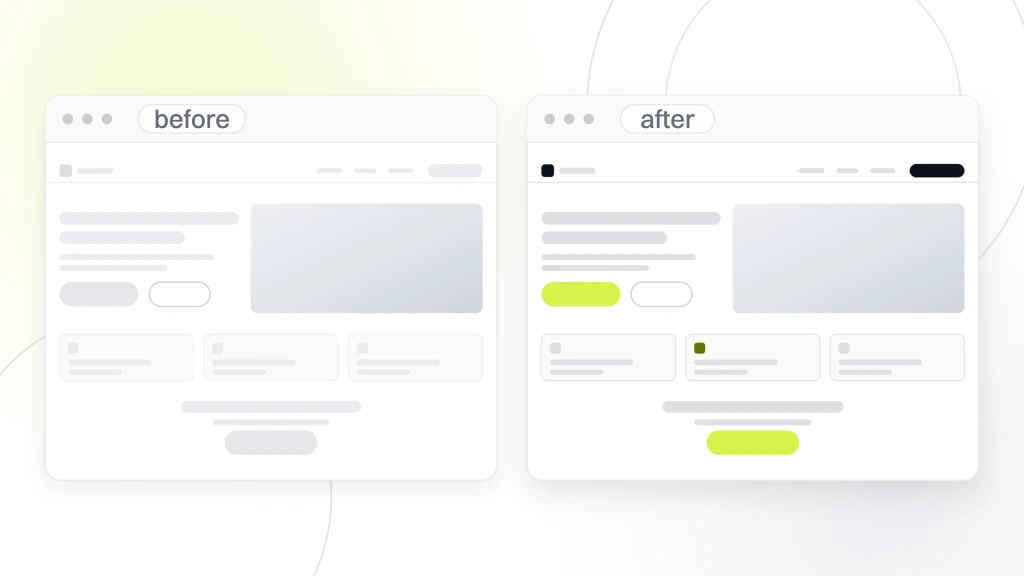
| Legacy pattern | 2026 replacement | Metric that moves | Build cost (mid-store) |
|---|---|---|---|
| Hero slider carousel | Static hero plus editorial section | LCP down | Varies by store |
| 40-checkbox filter rail | AI semantic search plus 4 filter chips | Search conversion up | Varies by store |
| Six PDP photos, no video | 15-second silent video as hero | Add-to-cart up | Varies by store |
| Light theme mass market | Dark UI for premium categories | AOV up | Varies by store |
| 3-page multi-step checkout | One-page minimal checkout | Mobile CR up | Varies by store |
| Static product image gallery | 3D spin plus AR try-on | Return rate down | Varies by store |
Which two swaps to run first
Two swaps carry the highest return for the smallest build budget on most stores. The minimal checkout swap and the AI semantic search swap. Together they carry one-time build cost plus ongoing platform fees, and they move revenue faster than the other four swaps on mid-sized stores. The other four swaps earn their place in Q3 or Q4 once the checkout and PLP swaps have paid back. Founders who try to run all six patterns at once burn out the dev team and finish none of them well. Sequence matters.
Personalization in modern ecommerce web design that works
Personalization got pitched to death in 2023 and 2024 and delivered close to nothing on most DTC stores. Two years of failed A/B tests taught the industry that heavy on-page personalization tanks page speed, breaks Core Web Vitals, and produces gains too small to measure. The 2026 pattern trims personalization to three lightweight moves that hold up in production and produce measurable revenue.
The three moves that hold up in production
Move one is homepage hero swap based on referral source. Meta ad clicks land on a hero tied to the ad creative. Email clicks land on a hero tied to the campaign theme. Organic search lands on the evergreen brand hero. Move two is category recommendation strips on the homepage tied to browsed categories from the previous session. Move three is post-add-to-cart cross-sell in the cart drawer based on a simple product affinity map, not a real-time model. All three run inside 30 KB of JavaScript and move revenue 4 to 9% in tests our team ran on a men’s grooming brand this year without touching Core Web Vitals.
Where heavy personalization still fails
Full-page dynamic rendering based on 40 first-party signals still fails the payback test on stores under $50M annual revenue. The engineering cost lands $200k to $500k a year in platform fees plus dev time, and the incremental revenue lands 1 to 3%. Amazon can afford that math. Amazon runs $500 billion in gross merchandise volume. A DTC brand doing $12M cannot. The Smashing Magazine writeup on personalization tradeoffs shows why the light-touch pattern beats the heavy pattern on most catalogs. Save the platform-scale AI personalization work for when the store crosses $80M annual, then commit to it fully.
A real DTC store that adopted these ecommerce web design trends
Abigail Ahern, the luxury home decor DTC brand our team runs paid media and SEO for since 2020, refreshed the storefront in early 2023 across four of the six patterns above. That work is covered in our luxury fashion ecommerce web design trends 2026 primer. Dark editorial UI, minimal checkout, PDP video, and a category recommendation strip. AR was not on the roadmap for that catalog (furniture on the smaller side). Semantic search waited for the 2024 platform release. The four patterns rolled out over 14 weeks with a dev budget of $68k.
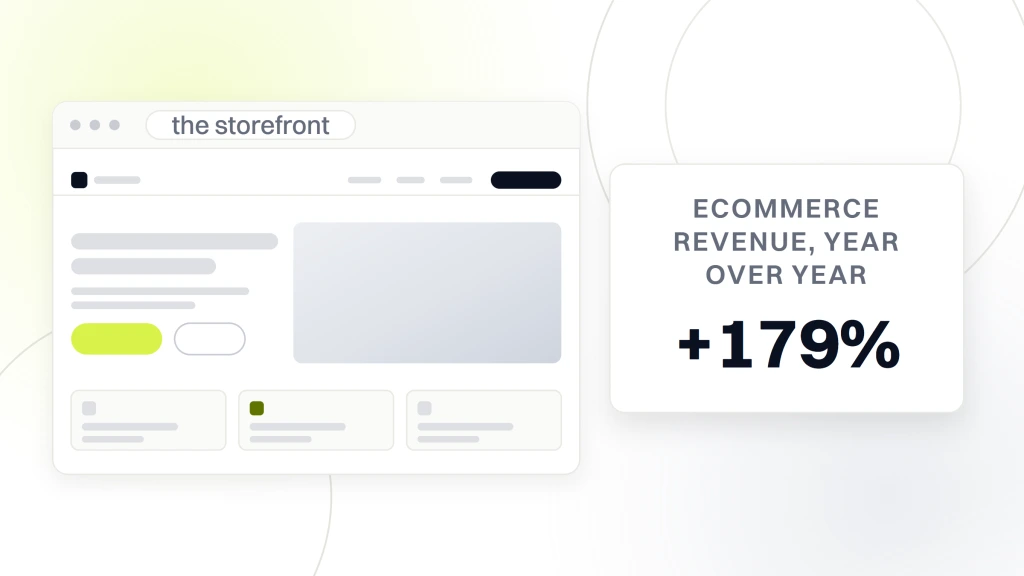
After the refresh, Abigail Ahern grew ecommerce revenue 179% year over year, paid-search return on ad spend hit 1,588%, and paid-social return on ad spend hit 3,000%. Design was one input inside a larger paid-media and SEO program, and the storefront refresh carried its share. Conversion rate on the PDP moved from 1.4% to 2.9% inside the first quarter after the video-hero swap. Add-to-cart rate on the PLP grew 12% once the recommendation strip went live. The takeaway is not that dark UI is magic. The takeaway is that a small set of pattern swaps, applied with intent, moves numbers a founder can put on a slide.
How to sequence these ecommerce web design trends across a quarter
Sequencing matters as much as the patterns themselves. Founders who cram six pattern swaps into one 90-day sprint break the storefront, blow the dev budget, and produce a homepage nobody signed off on. Sequencing spreads risk, holds the calendar, and lets the numbers on each swap prove out before the next one lands.
The 90-day sequencing template
- Weeks 1-2. Audit current storefront against the six patterns, pick two swaps.
- Weeks 3-6. Build swap one (usually minimal checkout) on staging.
- Weeks 7-8. QA, load test, and cut swap one over to production with a rollback plan.
- Weeks 9-12. Build swap two (usually AI semantic search) with weekly design reviews.
- Week 13. Cut swap two over on a Tuesday, monitor for 72 hours before the next scope.
- Weeks 14 onward. Measure the swap payback for a full 30 days before scoping swap three.
What sinks the sequence in practice
Three things sink the sequence. First, founder scope creep during weeks 3 to 6, usually adding a hero video swap on top of the checkout swap. Next, merch team not signing off on the AI search re-ranking rules before dev starts. Then, marketing pushing a promo email that lands the day of the checkout cutover, doubling the on-call load. Written scope, weekly reviews with the merchandising team, and a launch calendar the marketing team respects catch every one of those risks. The dev team on our ecommerce marketing agency runs this sequencing template on every DTC storefront refresh scope, and the sequence is why most builds go live on the promised timeline.
Where ecommerce design trends fit a DTC growth stack in 2026
The storefront sits at the base of the growth stack. Paid media, SEO, email, and CRM all point traffic at the storefront and depend on it to convert. Founders who fix the storefront patterns first make every marketing dollar 20 to 40% more efficient. Founders who patch the storefront and keep pouring paid budget into a 2019 theme pay CAC against an underperforming funnel and blame the ad platform.
If the current storefront runs on a Shopify Dawn theme with three plugins and no motion, the six patterns above are the highest-ROI investment on the roadmap. If the storefront runs on a five-year-old custom Magento or a headless Vue stack nobody understands anymore, the rebuild scope covers the same six patterns plus the platform migration. Either way, a founder reading this on a Tuesday morning should walk into the next design review with a list of two swaps for the quarter, a build budget, and a launch date. The rest of the 2026 wave earns its place in Q3 and Q4 after the first two have paid back. Founders who wait for the perfect roadmap launch nothing. Founders who cut over two swaps per quarter grow revenue every 90 days on repeat. Reference the MDN performance guide when the dev team scopes the front-end work, and pull the web.dev Core Web Vitals doc into the QA plan before every launch cutover.
The full growth stack sits alongside. Paid media pointed at a converting store. SEO on category and product pages. Email flows for cart abandonment. Reviews collection that powers PDP trust signals. Every tactic works harder when the storefront design does not fight it. Founders scoping a fresh platform build can pressure-test the vendor shortlist against our deeper read on ecommerce web design tips, which pairs cleanly with this trend guide for the quarterly roadmap.
Book the two swaps for this quarter
The six ecommerce web design trends 2026 covered in this piece are the swaps our team is running with clients right now, and every one of them earns its place through measurable revenue, not through what looks pretty in a Dribbble screenshot. Founders reading this in Q2 should book two swaps for the quarter and commit them to the calendar today. The trend list will keep growing across 2027. The six patterns above are the ones already moving revenue for DTC brands right now. Every quarter of delay costs 5 to 10% of the growth the store could have captured.
Photo heavy hero blocks and interactive size guides carry more weight on pet DTC storefronts than on general ecommerce. The emotional purchase intent runs higher. Our pet business web design for subscription DTC brands playbook walks through the five pillar build that pairs with a $1,499 monthly retainer.