A PPC agency for food and beverage brands is the outside team that owns the paid media plan for a CPG, snack or drink company across Google Ads, Meta, TikTok Shop, Amazon Ads and the retargeting flows that stitch every channel together. A good one holds a written 12-month plan with weekly reporting a founder reads in five minutes and a cost per sale the finance lead can defend. A bad one manages one Google Ads account, sends a monthly screenshot of impressions and never touches the Amazon parent-child listing hierarchy or the Google Merchant Center feed that ties DTC and marketplace paid together. The gap between the two shows up on the profit and loss statement inside six months.
This guide walks the scope a real PPC agency for food and beverage runs, the vetting questions founders should ask before signing an SOW and the specific paid work that pays back inside the first two quarters. A craft-snack DTC brand our team ran on retainer dropped acquisition cost from $44 to $31 across $650,000 in annual paid spend once the paid plan started coordinating across Google Ads, Meta and Amazon instead of running past each other on separate calendars. The pattern below is the same one our food and beverage marketing agency team runs across CPG, natural food and craft beverage retainers on six-month contracts.
Five workstreams a real PPC agency for food and beverage owns
A PPC agency for food and beverage owns five workstreams that most retainer scopes conflate into one line item covering paid media management. Google Ads structure across brand-search, non-brand-search, Shopping and Performance Max campaigns tuned to food category rules. Meta and TikTok creative rotation with weekly UGC refresh cadence. Amazon Ads coordination covering Sponsored Products, Sponsored Brands and Sponsored Display tied to the DTC blog calendar. Retargeting flows tying Meta, Google display and Klaviyo email into a three-touch sequence inside 72 hours of cart abandonment. And product feed hygiene syncing Shopify or WooCommerce inventory to Google Merchant Center, TikTok Shop and Amazon Vendor Central weekly.
Skip any workstream and the brand’s paid spend caps at 2 or 3 percent return on ad spend on the head-term keywords and the founder starts wondering why the retainer costs $3,200 a month with no revenue movement past quarter one. Food brands especially fail on the Amazon coordination layer because most general PPC shops default to Google Ads management only and never touch the Amazon parent-child hierarchy that Google reads as one entity through brand-name queries. Our writeup on food and beverage PPC campaign structure covers the retainer-scope detail for CPG brands in particular across every channel we run on a six-month contract, and the ecommerce PPC services what you actually get per retainer writeup goes deeper on workstream detail. The workstream sequence changes for brands with heavy Amazon revenue versus DTC-only shops. A craft beverage brand with 90 percent DTC revenue will front-load Meta and Google, while a snack CPG brand with 60 percent Amazon revenue rebalances toward Sponsored Products in month one.
Google Ads structure the PPC agency for food and beverage rebuilds first
Google Ads structure is the first workstream a PPC agency for food and beverage rebuilds because bad structure wastes budget across every downstream channel for the entire retainer calendar. A proper test-first structure separates brand-search campaigns, non-brand-search campaigns, Shopping campaigns and Performance Max campaigns into four dedicated budgets that never share bids. Brand-search protects the brand-name terms competitors bid on. Non-brand-search targets category head terms and long-tail buyer questions. Shopping surfaces individual SKUs against product-image queries. Performance Max fills the gaps without cannibalizing the other three campaign budgets.
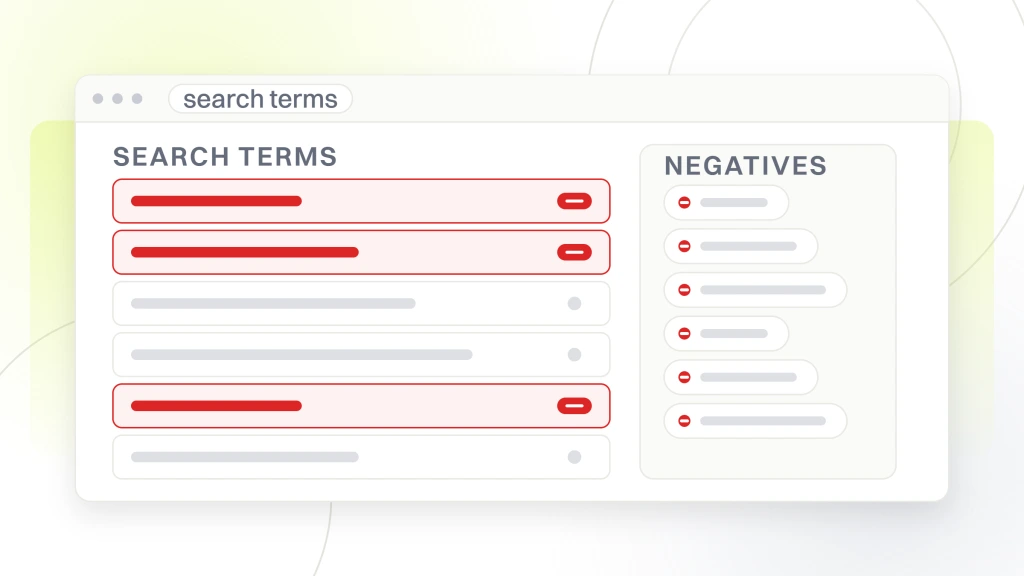
Structure rebuilds run in the first 30 days of every retainer. Our team pulls the last 90 days of Google Ads history, identifies wasted spend on generic broad-match keywords that Performance Max would have caught for cheaper and rebuilds the account with negative keyword lists that block irrelevant searches. Food brands need a strong category negative list covering unfulfillable searches, competitor brand-name searches and low-intent recipe searches that consume Shopping budget without converting. Missing the negative list burns 8 to 14 percent of monthly spend on unfulfillable searches. Our team runs the structure rebuild against the full account before touching any creative or bid strategy. Our Google Ads management services page covers the structure-first sequence across every category we run on retainer, and the Google Ads campaign structure guide covers the four-campaign separation Google itself recommends for retail accounts. The structure work usually takes two weeks and pays back inside 45 days on any account with more than $5,000 in monthly Google Ads spend.
Meta creative rotation the PPC agency for food and beverage runs weekly
Meta creative rotation is the second workstream a PPC agency for food and beverage holds accountable weekly across the entire retainer calendar. Meta’s algorithm rewards creative freshness. A single ad running for weeks against the same audience sees click-through rate decay as the same people keep seeing it. Yet most food brand retainers run three ads for six months with no refresh, because the retainer scope covers campaign management and not creative production. The founder pays for management and gets fatigued creative that stops working inside 30 days of the first ad going live.
Real PPC work runs a weekly creative refresh with three new UGC-style ads, two new brand-produced ads and one seasonal ad tied to the brand’s promotional calendar. The refresh pipeline pulls UGC from the brand’s Instagram tag mentions, edits the clips to 15 and 30 second cuts and pushes them to Meta and TikTok Shop at the same time. Weekly refresh holds click-through rate steady across quarters and keeps cost per sale in a predictable band the founder plans against. Retainers without a weekly refresh cadence usually run at 40 to 65 percent higher cost per sale than retainers with one. That gap turns into 15 to 30 percent of annual revenue on any brand doing more than $1M in paid spend annually across all channels combined. The weekly cadence also gives the paid media owner enough signal to spot which creative angles resonate with the brand’s actual audience segment.
Amazon Ads coordination the PPC agency for food and beverage owns monthly
Amazon Ads coordination is the piece most food brand PPC plans skip and the piece that pays back fastest across the first six months of a retainer for CPG brands with active Amazon Vendor Central or Seller Central accounts. A DTC food brand selling on Shopify plus Amazon Vendor Central runs two parallel paid search economies that Google reads as one entity through brand-name queries. The Amazon Sponsored Products, Sponsored Brands and Sponsored Display placements all feed the Google understanding of the brand’s product authority through the review count and A plus content quality metrics.
Our team audits Amazon parent-child hierarchy monthly, flags orphaned variations that never rolled up under the parent SKU and coordinates the Amazon Sponsored Products spend calendar with the DTC Meta and Google Ads calendar so brand-name search results stay consistent across every surface a customer touches. That coordination usually adds 15 to 22 percent to blended paid return inside 90 days because the brand-name query on Google returns a Shopping tile, a rich result and a knowledge panel instead of one plain blue link. Retainers that treat Amazon as a separate channel run by a different agency almost never coordinate this well and the founder pays two teams to work against each other on the same brand-name terms. The Amazon Seller Central listing quality guide covers the parent-child mechanics for founders who want to check the current state before hiring. Our Amazon marketing for food brands writeup covers the coordination sequence in particular.
Full PPC agency for food and beverage versus a Google Ads freelancer
Founders vetting a PPC agency for food and beverage should read the SOW against a checklist that separates the full-scope agencies from the Google Ads freelancers billing at half the price. The table below is the same one our team walks founders through in sales conversations where the brand has already worked with a Google Ads freelancer and hit the ceiling on blended return across every channel outside Google Ads in particular. Read the table row by row against the current retainer SOW before renewing.
| Scope area | Full PPC agency for food and beverage | Google Ads freelancer |
|---|---|---|
| Google Ads structure rebuild | First 30 days | Ongoing management only |
| Meta creative rotation weekly | 3 UGC plus 2 brand plus 1 seasonal weekly | Not in scope |
| Amazon Ads coordination | Monthly review with Sponsored Products | Not in scope |
| Retargeting three-touch flow | Meta plus Google display plus Klaviyo | Google display only or nothing |
| Product feed hygiene | Weekly Merchant Center sync check | Quarterly review |
| Category negative keyword list | Built and refreshed monthly | Basic list from account launch |
| Weekly reporting a founder reads in 5 minutes | Yes, with blended return and CPA per channel | Monthly Google Ads screenshot |
| Retainer floor | $999 to from $4,500 monthly | $1,500 to $2,800 monthly |
A retainer priced under $2,800 a month rarely covers more than Google Ads management and quarterly reporting. Founders paying that rate and expecting blended return above 3 usually see the campaigns stall at 1.8 to 2.4 return on ad spend because the scope never covers Meta creative rotation, Amazon coordination or the retargeting three-touch flow that food brands especially need to hold retention. Moving to a full-scope PPC agency for food and beverage usually pays back inside 60 days on cost per sale improvement alone across the paid mix.
Retargeting flows the PPC agency for food and beverage ties to email retention
Retargeting flows are where the PPC agency for food and beverage earns compound revenue the initial acquisition campaigns never reach on their own across the retainer calendar. A first-visit shopper on a CPG food site converts at 1.4 to 2.8 percent. A shopper who browsed a product page, added to cart, but did not check out converts at 8 to 14 percent when hit with a proper retargeting sequence inside 72 hours of cart abandonment. The retargeting sequence needs to run across Meta, Google display and email at the same time to hit the shopper in the window they still remember the product.
Our team builds the retargeting sequence across three touches. Touch one is a Meta ad within 24 hours showing the exact product the shopper viewed plus a review carousel. Touch two is a Google display ad within 48 hours showing the product plus a related product. Touch three is a Klaviyo email within 72 hours with a subject line naming the product and a subtle promotional code that expires in 48 hours. The three-touch flow drops cart abandonment revenue loss by 42 to 68 percent inside 90 days of the sequence going live across the retention layer. Food brands that skip the retargeting layer routinely lose 50 to 70 percent of intent-signal traffic to no follow-up, which is the single biggest source of losing revenue in most CPG brand paid programs across the calendar year.
Weekly reporting the PPC agency for food and beverage owes the founder
Weekly reporting on a PPC agency for food and beverage retainer separates real management from set-and-forget campaign babysitting across every channel. A founder reading the report in five minutes sees blended return across Google, Meta and Amazon, cost per sale split by channel, disapproved product count from Merchant Center, creative fatigue scores per active ad and one plain-English decision the retainer needs from the founder inside 48 hours. A report that shows total impressions and total clicks without return attribution and channel split is a set-and-forget dashboard, not a management deliverable a founder should accept at month six of any retainer.
The report reads in five minutes because it opens with total revenue, blended return and cost per sale change from the prior week. Screenshots of Google Ads, Meta Ads Manager and Amazon Ads live in the appendix. The report closes with the plan for the next seven days and the two or three risks the PPC owner watches. Founders who read the report weekly catch drift 30 to 45 days sooner than founders who only look at monthly summaries. The craft-snack founder our team ran on retainer switched to daily report review during the second month and the return gain inside quarter one came from that review cadence, not from any single tactic our team ran across the account calendar. Our PPC management services page covers the full weekly reporting rhythm we run across every industry retainer we handle.
Vetting questions before signing with a PPC agency for food and beverage
Founders vetting a PPC agency for food and beverage send six specific questions during the sales cycle. The answers separate real agencies from Google Ads freelancers within a single 30-minute call. Skip the questions and the founder ends up on a retainer that runs one Google Ads account and stalls at 2.2 blended return across the first year of paid work. Send the questions inside the first sales call and the vetting round closes in a week instead of six weeks of back-and-forth conversations.
- Show me the last three retainer reports for food brands your team ran. A real agency has the reports and a redacted version to share. Google Ads freelancers route around the question every time.
- Which Meta creative refresh cadence runs on your food clients and why. The answer should describe a weekly refresh pipeline with UGC editing. Vague answers signal missing creative scope.
- What is the current DTC to Amazon Ads revenue split for two of your food clients. A real agency knows the split and monitors it monthly. Google Ads freelancers do not.
- How does your team coordinate Amazon Sponsored Products spend with the DTC Google Ads calendar. The answer should describe a specific process. Silence signals the agency does not touch Amazon Ads.
- Show me a retargeting flow your team built that recovered cart abandonment for a food brand. Full agencies pull the flow live during the call. Freelancers promise to send it later.
- What is your retainer floor and what happens at month six. Real agencies commit to six-month contracts because the work compounds across two quarters.
Craft-snack retainer the PPC agency for food and beverage ran
A craft-snack DTC brand our team worked with ran a $650,000 annual paid media budget across Google Ads, Meta and Amazon. Two SKU parent listings, six child variants, a Shopify DTC storefront, an Amazon Vendor Central account and a paid mix split three ways. Ranking work had stalled at page two for the head terms and cost per sale on Meta was floating between $42 and $47 across three consecutive quarters. Two prior agencies had promised paid media coordination and delivered Google Ads reports only.
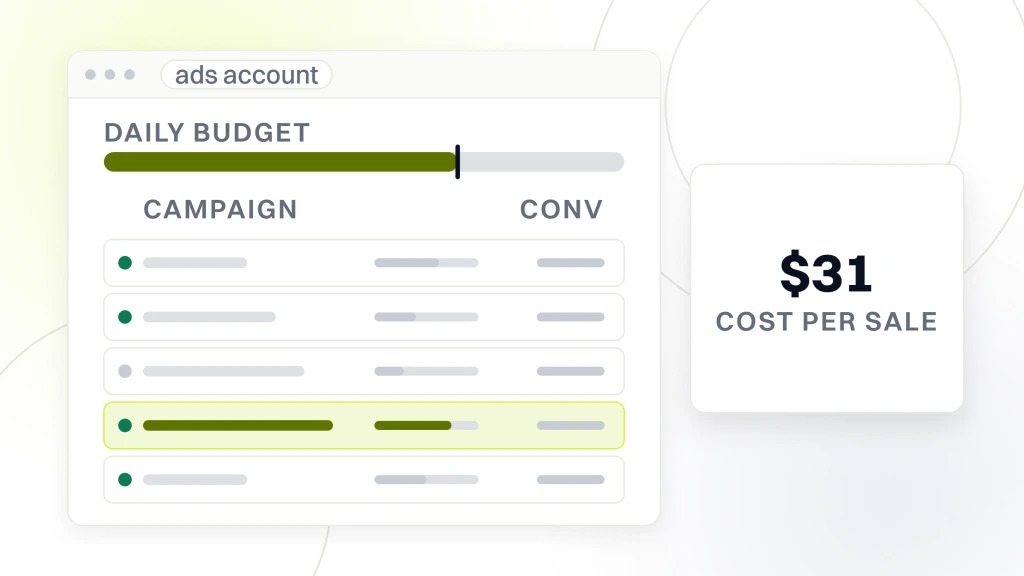
Our team ran all five workstreams. Weeks one through four covered Google Ads structure rebuild with proper brand-search, non-brand-search, Shopping and Performance Max separation, plus a negative keyword list build across 340 blocked terms. Weeks five through eight covered a weekly UGC creative rotation, an Amazon Sponsored Products spend calendar coordinated with the DTC blog cadence and a Google Merchant Center feed hygiene sweep that dropped feed errors from 340 to 12. Weeks nine through 24 covered a Klaviyo retargeting sequence tied to Meta and Google display, monthly A plus content refresh on Amazon and weekly reporting with the founder on the five-minute format.
Cost per sale dropped from $44 to $31 inside 12 weeks. Blended return climbed from 2.1 to 3.4 across the year. Amazon Sponsored Products revenue grew 51 percent because the coordination rolled orphaned variants back under the parent and the A plus content refresh raised the review count Google surfaces on the knowledge panel. The retainer paid back inside the first quarter based on cost per sale savings alone and the founder renewed for a second year on the five-minute report format. The brand later added a subscription program that our team helped merchandise into the Klaviyo flow, which added another 22 percent to annual revenue by the end of year two.
Case studies behind the PPC agency for food and beverage sequence
The five-workstream sequence did not come out of a template. It came out of paid work Redefine Web ran across food, CPG, hospitality, ecommerce and B2B accounts where the same coordination gaps showed up in different verticals. A few of the retainers that shaped the current sequence are worth naming so founders can read the pattern before signing an SOW.
Boogie Board, the pioneer of the first reusable writing tablet, ran on Google Ads and LinkedIn Ads with our team managing $650,000 in annual ad spend. Cross-platform reach, product-focused lead magnets and automated Klaviyo follow-ups dropped cost per sale to $31 while lifting conversion rate 11 percent. The paid mix used the same structure logic a food brand needs for parallel DTC and marketplace paid. Abigail Ahern, the luxury home decor brand, moved off discount-led creative onto premium-aligned UGC and segmented Shopping campaigns tuned to margin, not volume. Ecommerce revenue grew 179 percent and paid social return hit 3,000 percent, a proof point for food brands debating whether to keep running promotional creative or shift to brand-aligned messaging.
Vejrø Resort, the Danish private-island resort, went from no website and social-only presence to 10,000 organic visitors, 200-plus first-page keywords and 2.2 percent booking conversion inside three months on a hospitality-specific plan. The direct-booking mechanics carry across to food and beverage subscription programs where the goal is repeat order capture. BSH Hausgeräte, Europe’s largest home appliance manufacturer covering Bosch, Siemens, Gaggenau and Neff with 15.9 billion euros in revenue, added 15 percent lead growth on its Turkey site through backend modernization and funnel optimization while preserving SEO equity. Custimy, the SaaS customer data platform, ranked for 500-plus first-page keywords and pulled 25,000 monthly organic visits through isometric brand-aligned design and off-site SEO. And Ibemploy, the Latvian recruitment agency serving agriculture, manufacturing and food production, hit 7,500 monthly visits and 4.2 percent conversion on an accessibility-first build with deep local SEO. Every retainer taught the paid team something the food and beverage plan now bakes in.
Where a PPC agency for food and beverage fits the growth stack
A PPC agency for food and beverage sits at the acquisition layer under every retention flow, every retailer sell-in conversation and every seasonal promotional calendar. Fix the acquisition layer and every downstream tactic runs a little cheaper. Skip the acquisition layer and every downstream tactic runs a little more expensive across the whole year. A CPG founder paying 40 percent of monthly revenue on Meta ads to acquire one-and-done customers usually finds the acquisition math flips inside two quarters once Google Ads structure, Meta creative rotation, Amazon Ads coordination and retargeting flows start running under one owner instead of three.
Our team runs all five workstreams on a six-month contract because compound wins land in quarter two, not quarter one. Retainers open at $999 a month for solo-owner shops under $500K annual revenue and scale through $1,499, $2,499 and from $4,500 a month for brands past $3M annual with active Amazon and retailer channels. Ad spend is billed separately. The CPG food ecommerce marketing guide covers the full scope for brands wanting the paid plan run alongside SEO, email and retention, and the beverage and alcohol PPC service writeup covers the alcohol category rules Google Ads applies before any beverage retainer starts. Founders looking for reference reading from outside our shop should skim Meta’s creative fatigue documentation before signing any retainer.