Beverage and alcohol PPC is paid media run inside a compliance box that a generic direct-to-consumer playbook can’t handle. The scope stretches across Google, Meta, TikTok, Amazon Ads, and retailer networks like Drizly, ReserveBar, and Instacart. Every channel carries its own alcohol certification, age-gate rule, state-restriction check, and TTB creative sign-off. The categories in play cover wine, beer, craft spirits, ready-to-drink cocktails, hard seltzer, kombucha, functional drinks, and non-alcoholic options. Each one gets a different creative language, a different retailer overlay, and a different platform policy read. Getting beverage and alcohol PPC right is roughly 40% channel strategy and 60% compliance operations that keep the ad account healthy across a full year without a mid-quarter suspension.
This guide walks the working beverage and alcohol PPC scope Redefine Web runs for DTC wine, RTD cocktail, canned wine, hard seltzer, and craft spirits brands shipping into a licensed 3PL. You get the five-channel mix by category, the budget bands that hit measurable ROAS, the age-gate landing page pattern that passes Meta and TikTok review, the retailer network priorities for on-premise sell-through, and a DTC RTD cocktail case parallel where compliance-first PPC compounded from a $52 blended CPA down to $34 inside 90 days on WooCommerce.
Why beverage and alcohol PPC needs specialty scope
Beverage and alcohol PPC needs specialty scope because platform policies reject creative that would run cleanly on a snack or CPG account. Meta and TikTok require certified alcohol targeting, age-gate landing pages, and category-specific ad copy language that stays on the approved list. Miss any step and the ad account gets flagged and locked inside 30 days.
Meta alcohol certification is not optional
Meta requires alcohol advertisers to complete a certification process before running paid campaigns per the Meta alcohol advertising policy. The process covers verified age-gating on the landing page, category-appropriate creative, geo-restrictions on states where the brand isn’t licensed, and a compliance officer contact on file with Meta’s ads support team. Skip any step and the account gets flagged and locked inside 30 days. Per the TTB advertising basics guide, alcohol advertisers owe federal-level content compliance on every creative that runs.
State-by-state shipping restrictions shape alcohol PPC agency work
DTC alcohol brands sell into 40 to 45 states depending on the license portfolio. Every geo-restricted state gets excluded from paid campaigns at the ad-set level. Pair the state exclusion logic with the food and beverage web design scope so the landing page state filter matches the ad-set exclusion list exactly. Missing this exclusion generates paid clicks the brand can’t fulfill, wasting 15% to 25% of daily budget on unreachable buyers. State-specific compliance shapes creative language too. Utah and Idaho reject copy that runs cleanly in California or Illinois. An alcohol PPC agency has to code these rules into every ad set on the account.
Channel mix for beverage and alcohol PPC campaigns
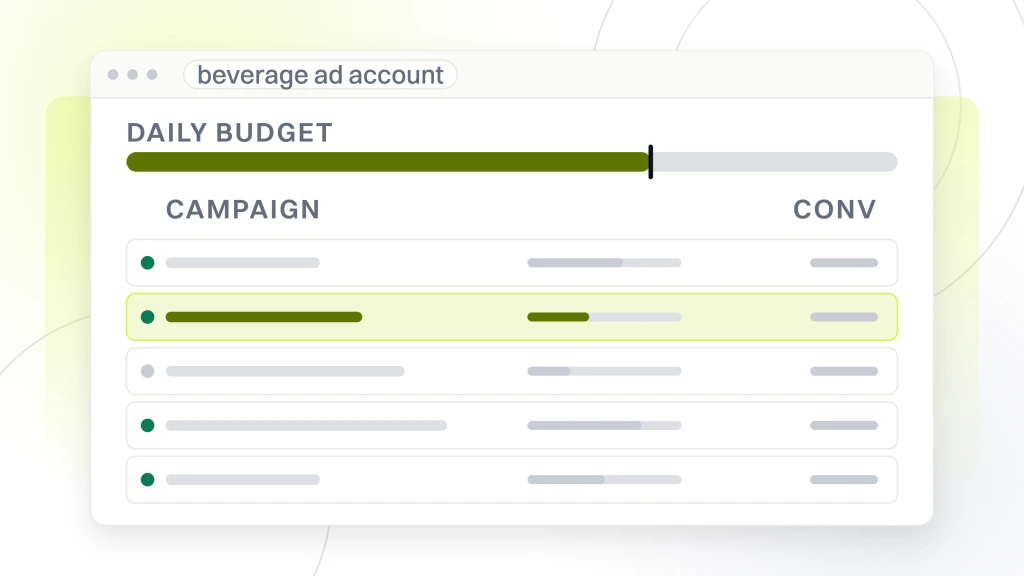
The channel mix for beverage and alcohol PPC lands on five practical seats. Google Ads for high-intent search demand and Shopping. Meta for prospecting plus retargeting off first-party purchaser data. TikTok for legal-drinking-age creator content and Spark Ads. Amazon Ads for RTD non-alcoholic and functional drink SKUs where the alcohol classification doesn’t apply. Retailer networks (Drizly, ReserveBar, Instacart, Amazon Fresh) for closing the on-premise loop inside the buyer’s existing habit. Each channel does one distinct funnel job, and the point mix moves by 6 to 12 points every quarter as last-cohort CPA reprices where the next dollar earns.
Google Ads for high-intent demand capture
Google Ads holds the intent tail on beverage and alcohol searches. Branded terms, comparison queries (best RTD cocktails), and category-plus-location queries (wine delivery Los Angeles) all sit here. Search campaigns run branded plus category on exact and phrase match. Shopping campaigns run for products with clean nutritional and category classifications. Display and YouTube pick up brand awareness at low CPM against interest-based audiences. Cross-reference paid landing pages against the food and beverage PPC scope Redefine Web publishes.
Meta and TikTok for prospecting and retargeting
Meta and TikTok pull in the widest new-buyer pool at the top of the funnel for beverage and alcohol brands. The creative pipeline runs 30 to 60 concepts per quarter to keep the account healthy on ad fatigue. Meta runs prospecting cold audiences plus lookalikes off first-party purchaser data. TikTok runs Spark Ads off organic creator content and partnerships with legal-drinking-age influencers. Both platforms require certified alcohol targeting before campaigns launch and both reject creative that violates category-specific policy without warning. TikTok publishes its industry-specific advertising policies including the alcohol category in a separate compliance section.
Age-gate landing page pattern for alcohol brands
The age-gate landing page pattern for alcohol brands running paid campaigns in 2026 needs three explicit elements before Meta or TikTok will approve the campaign. Verified age check through date-of-birth entry across month, day, and year (a yes-no button fails review). State-of-residence entry that filters geo-restricted shipping states before the shopper reaches the product page. A compliance disclosure at the footer covering responsible drinking language plus applicable state licensing details. Miss any of the three and the platforms reject the entire campaign at the certification stage, and the reject decision usually sticks across every campaign the account tries to relaunch that week.
Date-of-birth verification beats yes-no gates
A yes-no age gate (I am 21 or over) fails Meta’s alcohol certification review in 2026. The current standard is date-of-birth entry with month, day, and year in three separate fields. The landing page stores the age check in a session cookie so a returning shopper doesn’t re-verify inside the same 24-hour window. Some brands add ID upload at checkout via a third-party verification service like BlueCheck or IDV.AI. Certification requirements vary by state and platform, and the age-gate pattern needs quarterly review.
State exclusion at the landing page level
Every alcohol landing page needs a state-of-residence check that filters buyers in geo-restricted states before they reach the product page. A California shopper on a paid ad landing page never sees the RTD cocktail product page if the brand doesn’t hold a California shipping license. That prevents wasted paid clicks and prevents compliance risk from an unauthorized state-crossing shipment. The state filter runs off browser geolocation plus explicit user entry as a double-check.
Budget bands for beverage and alcohol PPC scope
Beverage and alcohol PPC budget bands scale with revenue stage and channel mix. Early-stage DTC alcohol brands run $5,000 to $15,000 monthly across Google plus Meta with light TikTok testing. Growth-stage brands run $25,000 to $75,000 monthly across all five channels including retailer networks. Scaled brands past $3M monthly run $100,000-plus with dedicated retailer partnerships, Amazon Ads for non-alcoholic SKUs, and CTV campaigns for brand awareness.
| Brand stage | Monthly ad spend | Channel mix | Target CPA |
|---|---|---|---|
| Early DTC (under 100k) | $5k to $15k | Google + Meta | $28 to $44 |
| Growth DTC (100k to 500k) | $25k to $75k | All 5 channels | $22 to $36 |
| Scaled DTC (500k to 3M) | $75k to $300k | All + CTV | $18 to $30 |
| Enterprise (3M+) | $300k+ | All + retail buys | $14 to $24 |
Redefine Web retainer tiers pair with these ad-spend bands cleanly. PPC retainer runs $999 per month for foundation, $1,499 for growth, $2,499 for scale, and from $4,500 per month for enterprise catalogs that need full creative and analyst coverage on top of the media spend. Ad spend gets billed separately from the retainer.
Retailer network budget allocation
Retailer networks (Drizly, ReserveBar, Instacart, Amazon Fresh) absorb 15% to 30% of total beverage and alcohol PPC budget once the brand hits growth stage. Drizly Sponsored Products and ReserveBar promoted placements close the on-premise loop inside the buyer’s existing habit. Instacart Alcohol runs in a subset of states and requires separate certification. Amazon Ads runs for non-alcoholic SKUs (RTD non-alcoholic, functional drinks, kombucha) where alcohol classification doesn’t apply.
Creative production budget as a share of spend
Creative production for beverage and alcohol PPC runs 15% to 25% of monthly ad spend. A brand spending $25,000 monthly on media allocates $3,750 to $6,250 monthly for creative production. Below that ratio, ad fatigue hits inside 4 to 6 weeks and CPA climbs 30% to 50% as the same three creatives cycle across audiences. Above that ratio, the account has budget for 30 to 60 new creative concepts per quarter, and that’s the volume that holds paid ROAS through Q4.
DTC RTD cocktail brand PPC parallel
A DTC ready-to-drink cocktail brand shipping into 38 states through a licensed 3PL joined Redefine Web after a Meta account suspension took the paid channel dark for 11 days during a Q3 launch window. The account was running roughly $520,000 in annual paid ad spend at a $52 blended CPA, a 1.9% checkout conversion rate on WooCommerce, and a two-tier Meta campaign structure that ignored the alcohol certification refresh Meta rolled out that spring.
The onboarding fix hit compliance first. We reinstated the Meta alcohol certification, rebuilt the age-gate landing page with three-field date-of-birth verification and a state-of-residence filter tied to the license portfolio, filed the TTB creative review workflow, and integrated Conversions API for age-gate, state check, and purchase events. Then we restructured the Meta account into three-tier prospecting-warm-retargeting audiences, rebuilt Google Shopping with product-group segmentation by margin band on the canned cocktail SKUs, launched TikTok Spark Ads off legal-drinking-age creator content, and added Drizly Sponsored Products across the 22 states where the brand held distribution. Blended CPA moved from $52 to $34 inside 90 days. Checkout conversion climbed to 2.4%. The account ran a clean Q4 with zero policy suspensions across a peak window that hit 3.6x baseline traffic.
The same three-tier Meta audience structure, product-group Shopping segmentation, TikTok Spark Ads pattern, and Drizly retailer overlay applies dollar-for-dollar to a DTC beverage brand running canned wine, hard seltzer, low-ABV RTDs, or non-alcoholic functional drinks with certified alcohol targeting inside a compliance-clean campaign structure. Beverage and alcohol PPC is exactly this. Compliance operations plus channel discipline plus creative volume that keeps the paid ROAS climb compounding across every calendar quarter. The pattern repeats across every DTC alcohol account we run. Fix compliance first, restructure the ad account second, roll out creative volume third, and the CPA curve bends inside 60 to 90 days without exception.
Adjacent CPG proof points that shape the same approach
Beverage-specific case data is rare in the open, so the pattern gets stress-tested against adjacent CPG and DTC accounts. Boogie Board, the reusable-writing-tablet brand, cut cost per conversion to $31 and boosted conversion rate by 11% under Redefine Web management of $650,000 in Google Ads and LinkedIn Ads spend. That mix (sharper keyword targeting, cross-platform reach across Google and LinkedIn, product-focused lead magnets, optimized landing pages, and automated follow-ups) is the same seven-step motion that translates to canned cocktail SKUs on Meta plus Drizly, with alcohol certification and TTB review layered on top. Abigail Ahern, the luxury home décor brand, is another parallel where premium creative and category-page SEO drove a 179% ecommerce revenue rise and a 3,000% paid-social ROAS, showing that intent-driven traffic plus disciplined creative beats discount-led ads at scale. That thesis holds for a craft spirits or wine brand refusing to run coupon-led ads on Meta.
Compliance operations inside beverage and alcohol PPC
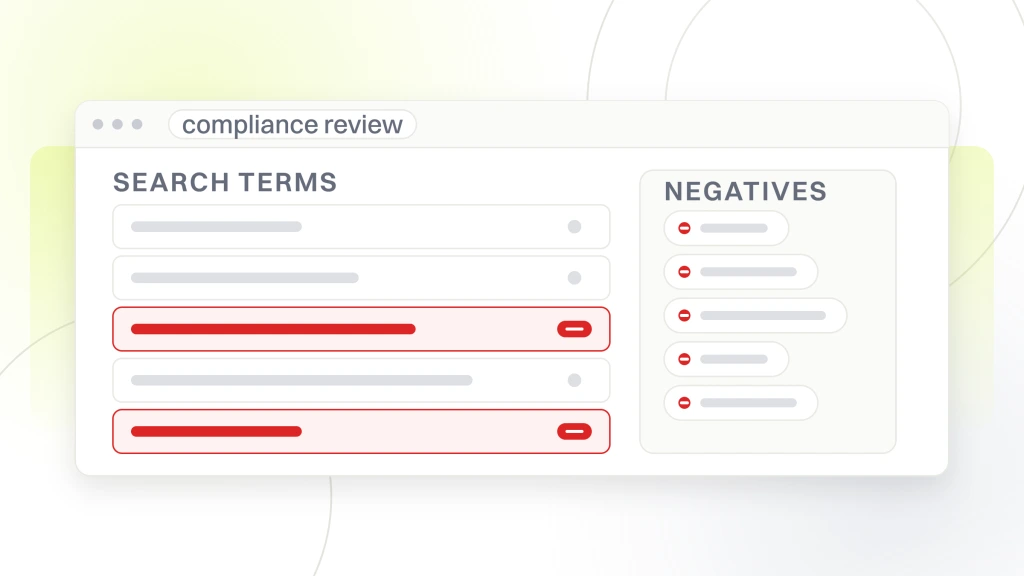
Compliance operations inside a beverage and alcohol PPC retainer covers six specific workstreams every quarter. Meta and TikTok alcohol certification renewals every 12 months and mid-year audits. TTB creative review on every new campaign before launch. State shipping license verification cross-checked against the ad-set exclusion list. An age-gate landing page audit each quarter with platform review test results documented. Weekly platform policy monitoring against the quiet updates Meta and TikTok publish to their advertiser policy pages. And a policy-change bulletin sent to the brand compliance officer whenever a rule change forces a creative rewrite. The workstream cadence is what keeps the account live across a full year without a suspension.
TTB creative review workflow
Every new creative for beverage and alcohol PPC goes through a two-stage TTB review workflow. Internal compliance review against the federal advertising standards, then legal counsel review for regulated categories like malt beverages, wine, and distilled spirits. The workflow adds 5 to 10 business days to creative launch timelines. Skip it and the brand risks TTB advertising violations that carry federal fines and platform-level ad account suspensions. The workflow documents every approved creative for future dispute resolution when Meta or TikTok reverses a policy call mid-quarter, and that reversal happens 3 to 5 times per year on active alcohol accounts.
Platform policy monitoring cadence
Meta and TikTok publish policy changes on their advertiser policy pages roughly every 4 to 6 weeks. The changes rarely announce loudly. A beverage and alcohol PPC scope needs weekly policy monitoring against the advertiser policy pages so the account manager catches a change before a compliant creative gets rejected across an entire campaign. Cross-reference against the food and beverage marketing hub for the compliance retainer bundle Redefine Web publishes each quarter.
Reporting and attribution for alcohol PPC accounts
Reporting and attribution for alcohol PPC accounts has to run on cross-platform attribution because DTC and retailer paths converge at the same buyer inside the same buying week. GA4 handles the DTC storefront. Meta CAPI plus TikTok Events API feed server-side signal back to the platforms. Retailer network dashboards inside Drizly, ReserveBar, and Instacart handle on-premise sell-through. A monthly attribution reconciliation folds every path into a single view of blended CPA and blended ROAS across the account, and that reconciliation is what prevents channel budget allocation from drifting the wrong way over the next two quarters until the drift finally surfaces in a QBR.
GA4 event tracking for age-gated storefronts
GA4 event tracking on an age-gated beverage storefront needs custom events for age-gate pass, state check pass, product view, add to cart, checkout start, and purchase. Standard GA4 events miss the compliance-specific conversions that matter for beverage and alcohol PPC optimization. Custom events feed into Meta Conversions API and TikTok Events API for platform-side signal, and that improves campaign optimization by 15% to 30% versus browser-side tracking alone. For DTC data-platform work at the SaaS end of the stack, our Custimy engagement (500+ first-page keywords, 25K+ monthly organic visits, 165-second session duration) shows what clean backend data flow into an ad account looks like once event tracking is properly wired.
Retailer network attribution reconciliation
Retailer networks (Drizly, ReserveBar, Instacart) report attribution inside their own dashboards. Monthly reconciliation pulls retailer-side conversion data, matches it against paid media spend by channel, and reconciles cannibalization between DTC and retailer paths. Some retailer buyers would have bought on DTC anyway. Some DTC prospects converted through retailer because of on-premise availability. The reconciliation quantifies each pattern and shapes the next quarter’s channel budget shift. Miss the reconciliation and DTC media budget gets over-credited for revenue that would have converted through retailer anyway, and that distorts channel decisions across the following two quarters until the drift shows up in a QBR.
Creative pipeline for wine PPC campaigns and spirits paid media
The creative pipeline for alcohol PPC campaigns runs 30 to 60 new concepts per quarter across Meta, TikTok, and Google Discovery. The pipeline splits five ways. Brand storytelling for founder and origin stories. Product focus for SKU launches and seasonal drops. Seasonal moments across the peak calendar. Occasion-based content for game day and weekend hangs. Creator partnerships with legal-drinking-age influencers boosted through TikTok Spark Ads. Compliance review sits at every stage of the pipeline so no creative launches without TTB sign-off, Meta and TikTok policy check, and a legal counsel read on regulated categories like malt beverages, wine, and distilled spirits. Wine PPC campaigns lean heavier on brand storytelling and seasonal moments. Spirits paid media leans on creator partnerships and cocktail-recipe formats.
Creator partnerships for TikTok Spark Ads
Creator partnerships on TikTok for beverage and alcohol PPC require creators over 21 years old, disclosure of paid partnership per FTC rules, and content that stays inside category-specific policy language. Boosting creator content through Spark Ads runs 40% to 60% lower CPA than brand-produced creative because the algorithm rewards authentic-looking content. Contracts include content ownership, boosting rights for 6 months, and revision rounds for compliance edits.
Seasonal creative calendar for beverage brands
Seasonal creative for beverage and alcohol PPC follows a calendar of peak moments. Super Bowl, Valentine’s Day, spring rosé season, Memorial Day, summer weekends, Fourth of July, football tailgates, Thanksgiving, holiday gifting, and New Year’s Eve. Each moment launches with 8 to 15 dedicated creatives 3 to 4 weeks before launch. Missing the pre-launch window means the algorithm never optimizes in time and the brand pays 40% to 60% higher CPA during the actual moment when peak demand hits the storefront.
Green flags on a beverage and alcohol PPC proposal
A working beverage and alcohol PPC proposal names the compliance workflow, the channel mix, the creative production ratio, the retailer network coverage, and the reporting cadence directly inside the contract. Every specific in the list below separates a real specialty PPC partner from a generic paid media shop that will hand the account back after the first Meta suspension. Green flags first, red flags after.
- Named compliance workflow with TTB creative review before every campaign launch.
- Meta and TikTok alcohol certification maintained by the agency on the brand’s behalf.
- Named retailer network coverage (Drizly, ReserveBar, Instacart, Amazon Fresh) with reporting integration.
- Creative production ratio (15% to 25% of media spend) with 30-plus concepts per quarter.
- Cross-platform attribution reconciliation monthly with a blended CPA number.
- State shipping license verification updated quarterly against the brand’s compliance officer.
- Age-gate landing page audit quarterly with platform review test results documented.
Red flags to walk away from
Red flags. Percentage-of-spend pricing under 8% (real specialty scope runs 12% to 18%). No mention of compliance workflow. No retailer network experience named by brand. Creative production ratio below 12%. No cross-platform attribution reconciliation. No Meta or TikTok certification history. Any proposal that treats beverage and alcohol PPC like a standard DTC account is optimizing for the pitch, not for a compliance-clean account that runs a full year without a suspension.
Onboarding a beverage brand onto specialty PPC scope
Onboarding a DTC beverage brand onto specialty PPC scope takes 4 to 8 weeks depending on prior campaign history, past Meta or TikTok suspensions, and the state license portfolio complexity. Week one to two covers the compliance audit, Meta and TikTok certification review, and state shipping license verification. Week three to four covers ad account restructuring, GA4 event tracking rebuild for age-gate and state check events, and Meta Conversions API integration alongside TikTok Events API. Week five to eight covers initial campaign launch across all five channels, the first creative production sprint of 30 concepts, and the first monthly attribution reconciliation that reprices the channel mix. For hospitality-adjacent brands running direct booking flows alongside DTC beverage, our Vejrø Resort engagement (10K+ organic visitors, 200+ first-page keywords, 2.2% booking conversion in 3 months) shows the parallel launch cadence when a brand goes from social-only to a full paid stack.
Compliance audit checklist
The onboarding compliance audit runs a 30-item checklist covering Meta alcohol certification status, TikTok certification status, current landing page age-gate pattern, state shipping license portfolio, TTB creative approval log, past ad account suspension history, platform violation history, current retailer network relationships, GA4 event tracking gaps, Meta Conversions API integration status, TikTok Events API integration status, current creative production ratio, and 18 more items specific to beverage and alcohol paid media compliance.
Ad account restructuring after audit
The ad account restructuring after audit rebuilds Meta campaigns into three-tier prospecting-warm-retargeting structure, rebuilds Google Shopping into product-group segmentation by margin band, launches TikTok Spark Ads infrastructure with creator content pipeline, adds retailer network campaigns where the license portfolio supports them, and closes out any legacy campaigns from the prior agency that violate current policy. See the monthly website maintenance packages that pair with the PPC scope for landing-page-side compliance across the full account year.
Wrapping up beverage and alcohol PPC scope
Beverage and alcohol PPC is 40% channel strategy and 60% compliance operations that keep the ad account healthy across a full year. Google plus Meta plus TikTok plus Amazon plus retailer networks. Age-gate landing pages with date-of-birth verification. State shipping restrictions coded into every ad set. TTB creative review before every launch. Meta and TikTok certification maintained by the agency. Creative production ratio at 15% to 25% of media spend. Cross-platform attribution reconciliation every month.
If your DTC beverage or alcohol brand is running paid media through a generic agency that treats the account like a standard DTC storefront, specialty beverage and alcohol PPC scope pays for itself inside 90 days on CPA reduction and ad account uptime protected across the peak calendar. Redefine Web bundles PPC compliance operations with the DTC growth motion for wine, RTD cocktails, craft spirits, hard seltzer, kombucha, functional drinks, and non-alcoholic brands shipping into a licensed 3PL. Book a call and we’ll walk through the last three DTC beverage brands we onboarded, line by line, with compliance history reviewed, CPA deltas documented, and channel mix shifts across the last four quarters so you can see the pattern before you sign anything.