PPC for beauty products lives across four channels on any given day. Google Search catches high-intent buyers typing brand and ingredient queries. Google Shopping catches product-name and comparison queries. Meta on Instagram and Facebook drives discovery and cold prospecting through creative-heavy feeds. TikTok pulls the youngest cohort with UGC-style creative that other platforms can’t match. Each channel has different customer acquisition cost math, different creative demands, and different attribution gaps after Apple’s iOS 14 changes broke most beauty direct-to-consumer reporting. Running one channel in isolation leaves 40 to 70 percent of demand on the table.
This guide walks through the channel mix by revenue stage, cost per acquisition bands per SKU price, the creative refresh cadence that fights ad fatigue, the attribution stack that closes the iOS 14 gap, retainer bands by scope, and a Manhattan clinic case study you can benchmark against. See our beauty and skincare marketing hub for the paired organic and retention work that compounds with paid.
Channel mix for PPC for beauty products by revenue stage
The channel mix shifts as the brand scales. Launch stage under $200,000 annual revenue runs Meta 70 percent, Google Search 20 percent, and Google Shopping 10 percent because discovery volume dominates demand. Growth stage from $200,000 to $2M runs Meta 50 percent, Google 30 percent, and TikTok 20 percent as branded search picks up. Scale stage from $2M to $12M runs Meta 40 percent, Google 30 percent, TikTok 20 percent, and Pinterest or YouTube 10 percent as the brand can afford diversification. Enterprise stage above $12M runs a rebalanced 30-30-20-20 split with programmatic display added.
The specific percentages matter less than the underlying pattern. Beauty brands under $2M in revenue over-index on discovery because branded search volume can’t yet feed a Google-heavy budget. Above $2M, branded search plus category queries absorb more Google spend at healthy return on ad spend. Above $12M, all channels can absorb budget at healthy return on ad spend and the mix balances by unit economics per channel. Any agency that recommends the same mix regardless of stage is applying a template rather than doing scoping work. Ask what mix they’d recommend for your specific revenue stage during the sales call.
Meta creative load per week
Meta ads for beauty direct-to-consumer need 4 to 12 new creative variants per week to fight ad fatigue and rising cost per thousand impressions. Beauty audiences on Instagram see the same creative 3 to 6 times before return on ad spend drops 20 to 40 percent. Real PPC retainers for beauty include creative production or partnership with a creative studio in the scope. Agencies that quote media buying without creative production leave the brand to source creative separately, which caps performance at whatever the founder can produce on iPhone in a bathroom mirror. Ask about the creative production scope during the sales call.
Google Shopping feed hygiene
Google Shopping feed hygiene decides whether the Shopping campaign runs at target return on ad spend or burns budget on mismatched impressions. Real PPC retainers audit the feed weekly for title optimization on shade names, size, and ingredient family, plus image quality on background, angle, and resolution, missing GTINs, out-of-stock items, and category taxonomy mapping. The audit takes 40 minutes weekly on a 240 SKU catalog. Skipping it costs 12 to 34 percent of Shopping performance on mismatched impressions. See our beauty PPC company evaluation framework for the retainer scope breakdown.
CAC bands for PPC for beauty products by SKU price
Customer acquisition cost bands for PPC for beauty products track SKU price and average order value. A $12 lip product on Meta averages $18 to $32 per new customer. A $58 serum averages $28 to $54. A $180 device or professional-grade kit averages $80 to $180. Above $180 average order value, acquisition cost drifts higher as consideration cycles lengthen and multi-touch attribution matters more. The band you actually hit depends on contribution margin and lifetime value, not on industry averages. Real PPC agencies build the acquisition cost target from unit economics rather than benchmark charts.
Here is the math that sets a target. Take contribution margin per order after cost of goods, fulfillment, and payment processing. Multiply by expected order count per customer over 24 months. Divide by 3 to leave headroom for other cost lines. That’s the target acquisition cost. A $58 serum with 62 percent contribution margin at roughly $36 per order, 2.8 orders per customer over 24 months at roughly $101 lifetime contribution, and a 3x buffer targets acquisition cost around $34. Anything above that band and unit economics break. See Klaviyo’s guide to customer acquisition cost for the retention side of the math.
| SKU price band | Meta CAC | Google CAC | Blended CAC target |
|---|---|---|---|
| Under $20 | $18 to $32 | $12 to $22 | $14 to $26 |
| $20 to $60 | $28 to $54 | $22 to $38 | $24 to $44 |
| $60 to $180 | $54 to $120 | $38 to $84 | $44 to $98 |
| $180 to $600 | $120 to $340 | $84 to $240 | $98 to $280 |
| Over $600 | $340 to $840 | $240 to $620 | $280 to $720 |
Blended acquisition cost versus platform reporting
Platform reporting from Meta or Google overstates efficiency because both platforms count assisted conversions plus last click as their own. Blended acquisition cost, meaning total ad spend divided by new customers acquired, tells the real story. A beauty brand with $40,000 monthly ad spend and 1,200 new customers has a blended acquisition cost of $33 regardless of what Meta or Google reports. Real PPC agencies report blended acquisition cost weekly alongside platform numbers. Reseller agencies report platform numbers only because they look better. Ask about blended reporting during the sales call.
Contribution margin math per SKU
Contribution margin per SKU decides which SKUs can absorb what acquisition cost. A hero SKU with 68 percent contribution margin can absorb higher acquisition cost than a promotional SKU with 34 percent margin. Real PPC agencies build a per-SKU target sheet from the merchant’s cost of goods, fulfillment, and payment processing data. Reseller agencies apply a blanket return on ad spend target across the catalog, which starves high-margin SKUs of budget and overspends on low-margin SKUs. Ask whether the agency builds per-SKU acquisition targets during the sales call.
Creative refresh cadence for beauty product PPC
Creative refresh cadence sits second only to unit economics as the driver of Meta and TikTok return on ad spend. Beauty audiences on Instagram burn through the same creative in 3 to 6 impressions before performance drops 20 to 40 percent. TikTok fatigue hits at 2 to 4 impressions. Category PPC retainers push 4 to 12 fresh creative variants live per week across static, video, and UGC formats. Reseller retainers push 1 to 2 variants monthly and blame the platform when performance drops. Confirm weekly creative production scope during the sales call.
The creative production pipeline covers 5 formats you’ll want in your rotation. Static product hero for feed placement. Static lifestyle for Stories placement. Short-form vertical video for Reels and TikTok. UGC-style creator footage for cold prospecting. Motion graphic for retargeting. Real PPC agencies either produce creative in-house or partner with a beauty-focused creative studio. Reseller agencies buy stock footage and add text overlays, which doesn’t hit beauty-buyer aesthetics. Category retainers include the creative studio partnership. Reseller retainers leave creative to the brand.
UGC creator partnership scope
UGC creator partnership drives 40 to 68 percent of cold prospecting return on ad spend on Meta and TikTok for beauty direct-to-consumer brands under $20M in revenue. Category PPC retainers include creator sourcing, brief writing, and content licensing in the scope with a monthly budget of $2,400 to $8,600 for creator fees. Reseller retainers exclude creator work and expect the brand to source and manage creators separately. That gap means the brand runs two vendor relationships instead of one, which slows creative velocity by 40 to 60 percent. Ask about creator sourcing during the sales call.
Creative testing framework
Real PPC retainers run a documented creative testing framework rather than launching variants and hoping. The framework covers hypothesis per test with this hook against that hook, minimum spend threshold for statistical significance typically $800 to $2,400 per variant before calling a winner as modeled with a standard sample size calculator, and a rollup of findings into the next production cycle. Reseller retainers run tests but never roll findings into the next production cycle, so they repeat the same test every quarter. Ask about the testing framework during the sales call.
Attribution fixes for iOS 14 gaps on beauty product PPC
Apple’s iOS 14 changes killed deterministic last-click attribution for Meta ads, and Google’s third-party cookie deprecation is finishing the job on the web side. Beauty direct-to-consumer brands see 40 to 72 percent of orders reported by Meta as modeled rather than measured. Real PPC agencies close this attribution gap through server-side tracking, media mix modeling, and incrementality testing. Reseller agencies ignore the gap and report Meta’s modeled numbers as if they were real, which overstates return on ad spend by 20 to 60 percent and burns budget on channels that aren’t actually performing.
Server-side tracking through Meta’s Conversions API and Google’s Enhanced Conversions closes about 40 to 60 percent of the iOS 14 gap by capturing conversion events server-side where iOS restrictions don’t apply. Media mix modeling closes another 20 to 30 percent by attributing revenue to channels based on time-series regression against spend. Incrementality tests close the final 10 to 20 percent by turning off channels in test markets and measuring the revenue delta. Real PPC agencies run all three. See Meta’s Conversions API documentation for the server-side stack, and Google’s Enhanced Conversions help doc for the Google side.
Conversions API implementation
Meta Conversions API implementation runs through a server-side tag manager on Google Tag Manager Server, Stape, or a custom Node.js endpoint that receives conversion events from the ecommerce platform and forwards them to Meta with hashed customer identifiers. The implementation takes 8 to 24 hours of engineering work on WooCommerce and 4 to 8 hours on Shopify Plus with the native Meta app. Real PPC agencies handle this implementation inside the retainer. Reseller agencies charge $2,400 to $8,600 extra for the setup and never confirm the events fire correctly.
Media mix modeling cadence
Media mix modeling for beauty direct-to-consumer runs monthly on 12 to 24 months of historical spend and revenue data. The model outputs incrementality per channel, saturation curves per channel, and marginal return on ad spend at current spend levels. Real PPC agencies run modeling quarterly minimum with a tool like Recast, Prescient AI, or an internal model built on Meridian. Reseller agencies never run modeling because it exposes overstated platform numbers. Ask about the modeling cadence during the sales call. Category agencies name the specific tool and the last model refresh date.
Landing pages for PPC for beauty products
Landing pages for PPC for beauty products carry 40 to 70 percent of the return on ad spend gain over sending traffic directly to a product detail page. Category product pages on WooCommerce or Shopify are built for browse behavior rather than paid-traffic conversion. A purpose-built landing page for a single hero SKU or bundle converts 2.4 to 4.8 times higher than the same product page at the same traffic quality. Real PPC agencies build landing pages as part of the retainer scope with a monthly production cadence of 2 to 6 new pages.
The landing page structure that converts beauty PPC traffic includes 6 sections you can drop straight into a brief. Hero with product image and one-line value prop. Ingredient or dermatologist trust badge above the fold. Two-line why-it-works with specific mechanism. Real customer photo or testimonial with named source. Bundle or subscription offer. A sticky CTA that stays visible on scroll. Real PPC agencies design landing pages against this structure. Reseller agencies build pages against a generic template that doesn’t hit beauty-buyer patterns. See our beauty social media marketing breakdown for the paired creator work.
Page speed on the landing page
Page speed on the PPC landing page moves conversion by 0.4 to 0.9 percent per 100 milliseconds of largest contentful paint improvement. A landing page at 3.2 second largest contentful paint converts 8 to 18 percent below the same page at 1.4 second largest contentful paint. Real PPC agencies audit landing page speed before launch and iterate on image weight, third-party scripts, and above-fold layout to hit sub-1.8-second timing. Reseller agencies launch pages and blame the platform when conversion misses. Ask about the landing page speed audit process during the sales call.
Trust badge placement above the fold
Trust badges above the fold on a beauty landing page move conversion by 4 to 12 percent depending on the badge and audience. Dermatologist-tested, board-certified physician endorsement, and clinical study citation drive the biggest gains. Cruelty-free, vegan, and clean-beauty callouts drive smaller but still meaningful gains for younger audiences. Real PPC agencies test badge placement and combination as part of the landing page optimization cycle. Reseller agencies drop generic badges and never test placement. Ask about the trust badge testing cadence during the sales call.
Case study on Beauté Aesthetics New York
Beauté Aesthetics New York, a Manhattan luxury clinic with a retail skincare line, ran PPC for beauty products across Meta and Google Search during a 12-month engagement at Redefine Web. The baseline was Meta acquisition cost around $84 against a $54 target, Google Search running only branded queries, no landing pages built for paid traffic, and Meta Conversions API not implemented. The rebuild built 8 landing pages for hero SKUs and bundles, wired up the Conversions API, added Google Search category and ingredient queries, launched a UGC creator partnership, and moved to a weekly creative refresh cadence.
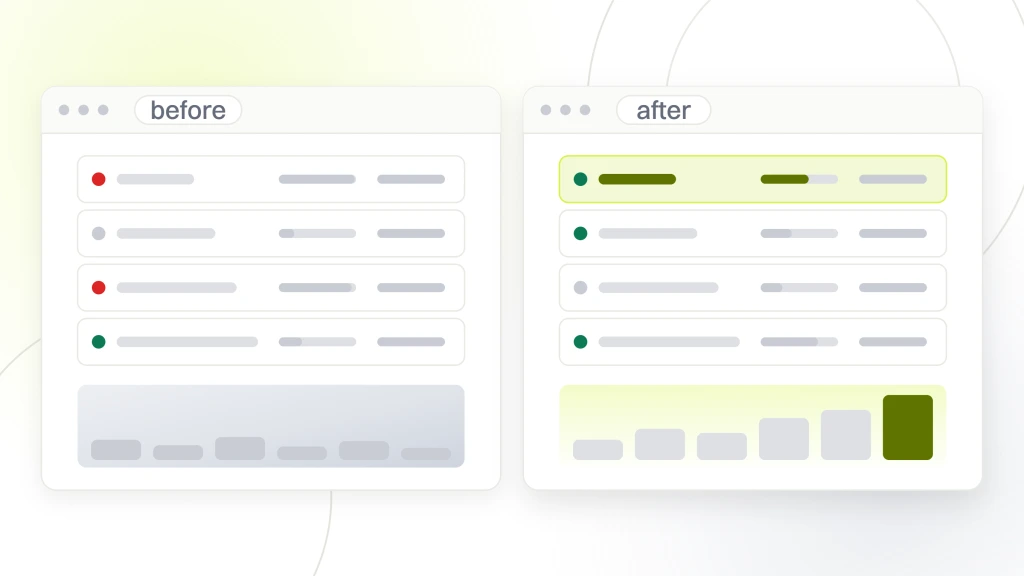
Twelve month results tracked with the SEO retainer running in parallel. 166 percent lead growth, 88 percent new user growth, and 27 percent conversion rate gain across the site. Blended acquisition cost on retail skincare dropped from $84 to $46. Meta return on ad spend moved from 1.4x to 3.2x. Google Search return on ad spend moved from 4.8x to 6.4x as category and ingredient queries scaled. The paid channel contribution to total revenue moved from 22 percent to 41 percent over the year. PPC done right compounds with SEO rather than competing with it.
| Beauté Aesthetics New York metric | Baseline | After 12 months |
|---|---|---|
| Blended CAC | $84 | $46 |
| Meta ROAS | 1.4x | 3.2x |
| Google Search ROAS | 4.8x | 6.4x |
| Landing pages live | 0 | 8 |
| Paid share of revenue | 22 percent | 41 percent |
Parallel from Abigail Ahern on the premium end
Abigail Ahern, a London-based luxury home décor brand on Shopify, ran the same discipline on a bigger canvas over a 4-year engagement. Baseline conversion rate around 1.4 percent, discount-heavy campaigns, and no non-branded search coverage. The rebuild moved to premium-aligned creative without discount banners, segmented Shopping campaigns tuned to margin per collection, and paid social prospecting to new audiences. Results across the first 12-month window were 179 percent revenue growth, 1,588 percent paid search return on ad spend, and 3,000 percent paid social return on ad spend. Premium-aligned creative is the beauty-adjacent parallel for anyone selling above $60 average order value.
Parallel from Boogie Board on volume PPC
Boogie Board, the pioneer of reusable writing tablets in 2009, ran Google Ads and LinkedIn Ads through Redefine Web with $650,000 in managed ad spend. The baseline was broad targeting, high cost per sale, and no retargeting. The rebuild ran enhanced keyword targeting, cross-platform Google and LinkedIn buys, product-focused lead magnets, optimized landing pages, and automated follow-ups. Results landed at $31 cost per sale at scale and 11 percent conversion rate growth. For a beauty brand doing $500K-plus in monthly spend, that’s the volume pattern. Precise targeting, landing page rebuilds, and post-purchase automation.
Retainer bands for PPC for beauty products
PPC for beauty products retainers run across four bands. Our own beauty paid retainer runs at $999 monthly for established clinics running Google Search only, $1,499 monthly for Meta plus Google Search with basic creative rotation on ad spend under $20,000, $2,499 monthly adding TikTok, weekly creative refresh, Conversions API implementation, and monthly modeling on ad spend $20,000 to $80,000, and from $4,500 monthly for scale programs adding Pinterest or YouTube, dedicated creator partnership, and quarterly incrementality testing on ad spend $80,000 to $340,000. Ad spend itself sits outside the retainer.
Ad spend and creative production sit outside the base retainer. Meta and Google ad spend runs 2 to 5 times the retainer fee at healthy scale. UGC creator fees run $2,400 to $8,600 monthly. Video production runs $3,200 to $12,000 monthly if the agency handles it in-house. Category retainers break these out transparently. Reseller retainers bundle everything into a percentage of ad spend model that inflates cost as ad spend scales without corresponding value gain. Ask for the retainer versus percentage-of-spend model during the sales call. See our beauty spa PPC breakdown for the spa-specific side of the pricing.
Flat fee versus percentage of spend
Flat fee retainers cost less than percentage of spend at scale because agency work doesn’t grow linearly with ad spend. Managing $80,000 in monthly spend takes about 40 to 60 percent more time than managing $40,000 in monthly spend, not 100 percent more. Real PPC agencies quote flat fee retainers with clear scope. Reseller agencies quote percentage of spend typically 12 to 18 percent because that model captures more revenue as the brand scales. At $340,000 monthly ad spend, a 15 percent fee runs $51,000 monthly while the equivalent flat fee retainer runs $18,000 to $28,000. Ask for both quote options during the sales call.
Contract term length
Contract term length for PPC retainers should run 6 months as the first term with 60-day cancellation notice thereafter. Shorter than 6 months and the agency hedges against performance, which usually means the agency expects poor results. Longer than 12 months on the first term and the agency locks in revenue before proving the model. Rolling 6-month terms after the first term protect both sides and show category maturity. Reseller agencies push 24-month first-term contracts to lock in revenue certainty. Category agencies stay flexible after the first term.
Platform picks for beauty product PPC
Platform picks for PPC for beauty products depend on audience demographics and category depth. Meta on Instagram and Facebook fits every stage from launch to enterprise because the platform reaches every beauty buyer cohort. Google Search fits every stage above launch because branded and category query volume grows with brand awareness. TikTok fits growth stage and up when the brand can produce vertical video creative. Pinterest fits scale stage and up for aspirational purchases like premium serums and devices. YouTube fits scale stage and up for tutorial and demonstration content on higher-consideration SKUs.
The specific tradeoffs by platform matter more than the mix percentages. Meta drives discovery and cold prospecting at scale but suffers the largest iOS 14 attribution gap. Google Search captures high-intent buyers at healthy return on ad spend but has limited discovery reach. TikTok drives the youngest cohort at low cost per thousand impressions but requires vertical video creative velocity that most brands can’t sustain. Pinterest converts high-consideration aspirational buyers but reaches a narrower audience. YouTube drives high-consideration research but requires long-form creative production. Category PPC agencies explain these tradeoffs plainly. Reseller agencies push whichever platform has the highest commission structure.
TikTok Shop integration for beauty DTC
TikTok Shop integration lets beauty brands sell inside the TikTok app without sending shoppers to an external site. The integration reduces the checkout friction that iOS 14 attribution created and captures the impulse-purchase moment on discovery. Category PPC agencies handle TikTok Shop setup, catalog sync, and creator affiliate management as part of the growth-tier retainer. Reseller agencies treat TikTok Shop as a separate scope with extra fees. Ask about TikTok Shop scope during the sales call. Category agencies name active merchant accounts they manage right now.
Google Performance Max caution
Google Performance Max campaigns bundle Search, Shopping, Display, and YouTube into a single automated campaign type. The bundling looks convenient but obscures which placement drove which conversion, which prevents optimization. Real PPC agencies use Performance Max carefully with brand exclusion lists to stop it from cannibalizing branded search at higher cost per click. Reseller agencies default to Performance Max because it’s easier to set up and the automation hides poor targeting. Ask about the Performance Max stance during the sales call and whether brand exclusions are configured on day one.
Reporting cadence for beauty product PPC
Reporting cadence inside the PPC retainer decides whether the brand founder sees value or sees noise. Category retainers deliver a weekly dashboard with blended acquisition cost, per-channel return on ad spend, creative fatigue metrics, and Conversions API event match quality. A monthly narrative report ties the weekly numbers to strategy adjustments and next-month priorities. A quarterly business review with the founder covers trend analysis, modeling refresh, and roadmap updates. Reseller retainers deliver platform screenshots pasted into a PDF once monthly with no narrative. Ask about the cadence and the sample report format during the sales call.
The specific metrics that belong on the weekly dashboard for beauty direct-to-consumer. Blended acquisition cost as the headline number. Per-channel spend and return on ad spend. New customer count and returning customer share. Creative fatigue metrics like impressions per unique user and return on ad spend decay from launch. Conversions API event match quality score. Landing page conversion rate. Meta reach and frequency. Google Search impression share on target queries. Category agencies build this dashboard in Looker Studio or Segment with automated data pulls. Reseller agencies build it in a Google Sheet updated manually. See our fast hosting guide for the landing page speed inputs that feed these numbers.
Looker Studio dashboard setup
Looker Studio dashboards with automated data connectors pull daily from Meta Ads API, Google Ads API, Google Analytics 4, and the ecommerce platform. Category agencies wire this dashboard as part of onboarding within 30 days. Reseller agencies never wire the dashboard because the data engineering work isn’t included in their retainer. The founder ends up logging into 4 platforms every Monday morning to piece together weekly performance. Ask about the dashboard tool and the pull cadence during the sales call. Category agencies share a sample dashboard link on request.
Quarterly business review structure
Quarterly business review structure covers the last 90 days of performance against target, modeling output showing incrementality per channel, competitor spend estimates from tools like SensorTower or Similarweb, and the next-quarter roadmap with specific test hypotheses. The review runs 60 to 90 minutes with the founder plus CFO or head of finance. Category agencies run the review as part of the retainer. Reseller agencies charge separately for the review or skip it. Ask about the review cadence and attendee list during the sales call.
Amazon PPC for beauty products
Yes, Amazon has PPC. It’s the second-biggest paid channel for beauty direct-to-consumer brands after Meta once the brand carries an Amazon storefront. Sponsored Products, Sponsored Brands, and Sponsored Display each play a different role. Sponsored Products captures buyers already searching a category or brand term. Sponsored Brands runs the top-of-page banner that drives brand awareness inside Amazon. Sponsored Display retargets shoppers on and off Amazon. A beauty brand doing $80,000 monthly on Amazon typically spends $8,000 to $18,000 monthly on Amazon PPC at a target advertising cost of sale between 12 and 22 percent.
Amazon PPC for beauty products needs different creative than Meta. Hero image on white background per Amazon guidelines. A+ content that reads like a landing page inside the product detail page. Video for higher-consideration SKUs like devices and professional kits. Real Amazon PPC agencies audit the product detail page before running spend because the page is the landing page. Reseller agencies launch campaigns first and blame Amazon’s algorithm when conversions miss. Ask about the product detail page audit during the sales call.
Amazon versus DTC on unit economics
Amazon takes 15 percent referral fee plus Fulfillment by Amazon storage and pick-pack, which lands total marketplace cost around 30 to 42 percent of gross sale. That’s before ad spend. A DTC beauty brand doing 62 percent contribution margin on its own site drops to 20 to 32 percent contribution margin on Amazon. The math means Amazon works as a distribution channel for volume and brand discovery, not as a margin play. Real PPC agencies model both channel margins side by side before recommending spend allocation. Reseller agencies push whichever channel has the higher commission for them.
What a DTC beauty brand actually is
A DTC beauty brand is a direct-to-consumer beauty brand that sells primarily through its own website and social channels rather than through big retailers or beauty department stores. Think Glossier’s early years, The Ordinary, Drunk Elephant before Shiseido bought it, and hundreds of newer indie labels. The DTC model keeps a higher share of revenue in-house but requires the brand to fund its own customer acquisition through PPC, influencer, and content. That’s why PPC for beauty products lives at the center of the DTC model, not on the periphery.
The DTC model has shifted since 2022. Pure DTC brands are opening retail doors at Sephora, Ulta, and Target once the direct channel proves demand. Hybrid brands run DTC for margin and full-price customers, retail for volume and discovery, and Amazon for search-driven purchases. PPC strategy flexes across all three channels with different acquisition cost targets per channel. Real PPC agencies model the hybrid math. Reseller agencies treat DTC as a single-channel play and miss the retail attribution question entirely. Ask how the agency thinks about hybrid DTC and retail during the sales call.
What DTC founders say on Reddit
Reddit threads in r/beautyindustry and r/ecommerce show the same pattern month after month. Founders launching a beauty DTC brand start with Meta because that’s where beauty content lives. They burn 90 to 180 days trying to figure out Conversions API and blended acquisition cost on their own. They eventually hire a small agency at $2,400 to $4,800 monthly and see 40 to 90 day results. The pattern that fails on Reddit is founders trying to run Meta plus TikTok plus Google plus Amazon from day one without a mix strategy. Pick two channels first, prove unit economics, then add.
In-house media buyer versus agency
An in-house senior media buyer costs $110,000 to $180,000 in base salary plus benefits, plus 20 percent for tools like Triple Whale, Northbeam, or a modeling tool. That’s $150,000 to $240,000 loaded cost for one person managing one channel well. An agency at $2,499 monthly manages multiple channels with pooled tooling and creative studio access. In-house makes sense above $8M revenue when a full-time buyer can specialize on one channel. Agencies make sense below $8M when the brand needs breadth. See our PPC for home services breakdown for the same math applied to a different vertical.
Making the pick
PPC for beauty products runs multi-channel, works around iOS 14 attribution gaps, fights tight ad fatigue windows, and holds acquisition cost math tied to per-SKU contribution margin. The right agency sets channel mix by revenue stage, hits acquisition cost bands per SKU price with real headroom on contribution margin, produces 4 to 12 weekly creative variants, runs Conversions API plus modeling to close attribution gaps, produces purpose-built landing pages, and quotes flat-fee retainers rather than percentage-of-spend. Anyone hedging on any of those six points is running yesterday’s playbook on today’s platforms.
The timing note matters more than most founders think. Sign the retainer 60 days before your peak season because Conversions API implementation, landing page production, and creative testing all need 30 to 45 days to stabilize before the traffic ramps. Brands that hire PPC agencies during peak season burn 20 to 40 percent of the season on setup work that should have been done in September. See our beauty marketing retainer plan for the paid channel scope options at a rolling six-month term.