Dental website hosting sits under every marketing metric that matters. Page speed, uptime, security posture, and HIPAA readiness all trace back to the host. A slow or unpatched stack drops organic rankings, hurts PPC quality score, drives up bounce rate, and can expose patient contact data. Most practices pay $8 to $40 per month for hosting that would embarrass a college hobby project, then wonder why the site never ranks. This guide walks through the real spec, the vendor shortlist, the security posture, the migration playbook, and the HIPAA notes that keep the stack production grade without paying enterprise pricing.
Redefine Web hosts and manages roughly 120 dental sites across shared, VPS, and managed WordPress tiers. The patterns below reflect what holds up in production, not the sales deck. Hosting stays boring until it breaks. Then it turns urgent, expensive, and visible to patients.
Key takeaways for dental website hosting
- TTFB under 200 ms from a US East test node is the target for any patient site with real marketing intent.
- Managed WordPress at $30 to $60/mo usually recovers 40 to 60 Lighthouse points on mobile versus shared plans.
- HIPAA and BAA rules only fire when the site actually collects PHI, not for names and phone numbers.
- Daily backups with 30 day retention is the floor, restore tested quarterly, off site copy weekly.
- Bundled maintenance plans fold hosting, CDN, WAF, and patching under one invoice at $199 to $499/mo.
Performance benchmarks across hosting vendors
Performance across vendors varies more than the marketing suggests. Two managed WordPress plans on paper can differ by 3x in real page speed, driven by stack tuning, CDN quality, and cache behavior. Numbers below reflect what we measure on production dental sites, not the sales page.
Time to first byte (TTFB)
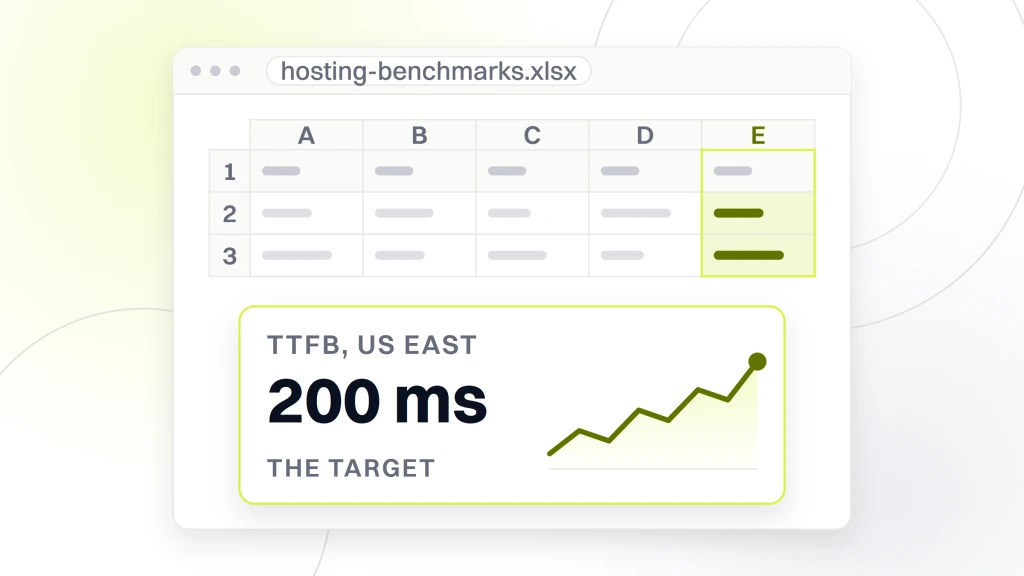
TTFB under 200 ms from a US East node is the target. Managed WordPress on tuned stacks delivers 80 to 180 ms. Shared plans deliver 400 to 900 ms. TTFB feeds every downstream Core Web Vitals metric, so a bad number cascades into every page load. Over 500 ms on repeat tests means the host is the problem, not the theme.
Largest Contentful Paint (LCP)
LCP under 2.5 seconds on mobile 4G is Google’s good threshold. Well hosted patient sites hit 1.4 to 2.1 seconds. Poorly hosted sites sit at 3.5 to 6 seconds and lose ranking to competitors on a better platform. Hero image sizing and lazy loading fixes half the LCP problem. The host has to deliver the rest.
Uptime measurement
Measure uptime with a third party monitor like UptimeRobot, Pingdom, or StatusCake, not the host’s own dashboard. Hosts self report uptime that skips CDN and DNS outages. Independent monitoring catches what the dashboard hides. Practices that find out the host was down 22 hours last quarter usually start shopping that week.
HIPAA and dental website management under a host
Dental website management under HIPAA shifts based on whether the site collects PHI (Protected Health Information). Marketing sites that only capture names and phone numbers fall outside the strict HIPAA line. Sites hosting new patient intake, medical history, or insurance uploads cross into PHI territory. That single distinction dictates whether the host has to sign a BAA (Business Associate Agreement). See our dental website compliance guide for the full HIPAA rulebook.
Rule of thumb. If a form on the site asks anything a patient wouldn’t want a stranger to read, the data behind it is PHI. Route it through a HIPAA tier vendor and keep the marketing host out of the perimeter.
When a BAA is required
If PHI touches the server, the host has to sign a BAA. Enterprise managed WordPress plans offer BAA ready tiers, but standard shared plans almost never sign one. Practices that collect intake forms without a BAA signing host expose the office to reporting duty on any breach. The safer pattern keeps PHI off the marketing site entirely, routing intake through a HIPAA tier vendor like Formstack or JotForm Enterprise.
TLS, encryption, and data at rest
Every patient site needs TLS 1.2 minimum, ideally 1.3, on every page. Free Let’s Encrypt certificates cover marketing sites. Sites collecting PHI need encryption at rest on the database and backup encryption on top. Managed WordPress business plans handle this by default. Shared plans rarely do. Test the TLS grade with SSL Labs (aim for A or A+) and confirm HSTS is enabled.
Backup and recovery cadence
Daily backups with 30 day retention is the floor. Weekly off site backups in a separate account cover the ransomware case. Practices that find the host’s backup was corrupt during a real restore usually swap hosts inside 30 days. Test the restore quarterly. Never trust a backup that has not been restored. See the dental website maintenance checklist for the full schedule.
The real cost of $4.99 shared hosting is not the invoice. It’s the ranking drop from a 900 ms TTFB, the PPC quality score penalty from a 5 second LCP, and the two hours of downtime per month patients notice. A practice on a shared plan loses 15 to 30 percent of organic traffic against a comparable one on managed WordPress, and the gap widens as Core Web Vitals weight climbs.
How to choose a hosting vendor
Choosing a vendor comes down to five questions. Performance, security, support, HIPAA readiness, and exit terms. Every question deserves a real answer before you sign the contract. Sites end up on the wrong host when the practice skips even one of these.
Questions to ask the vendor
What is your TTFB benchmark from US East? Do you sign a BAA on the plan we need? What is the backup retention and off site policy? What is the uptime SLA and how do you measure it? How do I migrate away if I leave? What is included and what costs extra (staging, SSL, CDN, malware scan)? Real hosts answer with numbers. Cheap hosts pivot to marketing bullets.
Red flags on the sales call
The vendor cannot cite TTFB numbers. The vendor claims HIPAA compliance without offering a BAA. The vendor charges extra for basic SSL. The contract runs 3 years with a big renewal jump. Support is chatbot only. Any two flags together mean the vendor sells a discount, not a hosting solution. Practices on discount plans usually pay 5x the savings back in lost SEO and PPC performance inside 12 months.
Bundled hosting versus standalone
Standalone managed WordPress at $30 to $60/mo covers the platform, but leaves patching, monitoring, malware cleanup, and quarterly reviews to the practice or an agency retainer. Bundled dental website services that fold hosting into one maintenance plan run $199 to $499/mo and cover the full stack under one throat to choke. Redefine Web maintenance plans include the host, CDN, WAF, weekly patching, uptime alerts, and quarterly reviews so the practice pays one invoice. For the wider vendor stack, see our guide to dental marketing tools.
Migrating a dental site to better hosting
Migrating off a bad host is a 1 day job for a solo practice and a 3 to 5 day job for a multi location group. The dental website services team should own it end to end. Practices that try to migrate mid week without a staging test usually take the site down for 2 to 6 hours, which costs more than the migration.
Pre migration audit
Before touching DNS, audit the current stack. PHP version, MySQL version, plugin list, theme, cron jobs, database size, hardcoded URLs, and any custom code in wp-config or htaccess. Document everything. Sites that migrate without this audit often break on the new host because a custom snippet never made it over. A 90 minute audit up front saves a 6 hour firefight during cutover.
Staging deploy and DNS cutover
Deploy the site to a staging URL on the new host. Run Lighthouse and a link crawler against staging. Fix any broken images or 404s before flipping DNS. Lower the DNS TTL to 300 seconds 24 hours out. Flip DNS on a low traffic weekend morning, then raise TTL back to 3600 once propagation completes. Sites cut over this way see zero downtime.
Post migration validation
After cutover, run Search Console, GA4, and CallRail to confirm tracking still fires. Test the appointment form, the click to call link, and every third party embed. Update Google Business Profile with any URL changes. Watch Search Console for 24 to 72 hours for crawl errors. Fix them before the ranking absorbs the hit. Our dental marketing attribution guide covers the tracking verification playbook.
Real world hosting benchmarks across dental sites
The table below tracks the benchmarks we measure across roughly 120 patient sites. Numbers vary by market, site size, and content complexity, but the ranges are consistent enough to use as a sanity check. If your site sits well outside a range, dig into that metric before assuming everything is fine.
| Metric | Shared cheap host | Managed WordPress | Managed VPS or cloud |
|---|---|---|---|
| Monthly cost | $4 to $12 | $25 to $65 | $80 to $300 |
| TTFB (US East) | 400 to 900 ms | 80 to 180 ms | 60 to 140 ms |
| Mobile LCP | 3.5 to 6.5 s | 1.4 to 2.4 s | 1.1 to 2.0 s |
| Mobile Lighthouse (Perf) | 28 to 55 | 82 to 96 | 90 to 100 |
| Uptime SLA | 99% claimed | 99.9 to 99.95% | 99.95 to 99.99% |
| BAA availability | Rarely | On business plan | Yes |
| Backups (retention) | 7 days | 30 days | 30 to 90 days |
The single biggest factor that moves a patient site up the performance table is the jump from shared plans to managed WordPress. That one change recovers 40 to 60 Lighthouse points on mobile, cuts TTFB by 5x, and pulls Core Web Vitals into the green. Practices that make the move see a 15 to 30 percent organic traffic gain inside 90 days without any content or SEO work.
The second factor is the CDN tier. A properly configured Cloudflare or Bunny.net edge shaves another 200 to 500 ms off international page loads. Most practices only serve one metro, so the CDN gain is smaller, but multi location DSOs serving national traffic see real gains. The third factor is image optimization at the host level. Plans that include native WebP conversion and lazy loading save the practice from installing 4 plugins that fight each other. Get all three right and the site rarely needs another migration.
Case study Smile Design Dentistry hosting migration
Smile Design Dentistry, a 50+ location DSO, came to Redefine Web on a shared stack stitched together across acquisitions. Each acquired practice brought its own host, SSL, and random cron jobs. Page speeds ranged from 22 to 74 on mobile Lighthouse, and Google Search Console showed roughly 3,200 crawl errors across the group.
What we migrated to
All 50+ location sites consolidated onto a single WP Multisite instance on a managed cloud tier with Cloudflare Enterprise in front. Each location kept its own subdomain and independent content, but the underlying host became one thing to manage. WP core updates went from 50+ manual updates to one. Backup cadence became daily with 30 day retention plus weekly off site. TLS grade rose to A+ across every location.
The migration timeline
Migration ran 12 weeks. Weeks 1 to 3 audited every acquired stack and cataloged plugins, cron jobs, and custom code. Weeks 4 to 8 deployed the WP Multisite skeleton and migrated 5 to 8 locations per week to staging. Weeks 9 to 12 flipped DNS location by location on off peak mornings. Zero locations lost more than 15 minutes of production time.
The result post migration
PPC conversion rate rose 20% because faster pages held mobile visitors long enough to fill the form. Cost per call dropped 30% because higher quality score cut CPC. Google Search Console crawl errors dropped 94 percent inside 45 days. Mobile Lighthouse rose to 88 to 96 across every location. For the retainer scope that covers hosting plus maintenance plus SEO, see our dental website maintenance guide.
CDN caching and security layers on top of hosting
The host alone does not deliver top performance. A CDN, a caching layer, and a WAF (Web Application Firewall) sit on top and multiply what the origin delivers. Practices that skip these layers leave real performance on the table.
CDN choice and configuration
Cloudflare (free or Pro), Bunny.net, and QUIC.cloud all deliver strong CDN performance for patient sites. Configure the CDN to cache HTML for logged out visitors, cache static assets aggressively, and turn on Brotli compression. A properly configured CDN cuts LCP by 300 to 700 ms. A misconfigured one slows the site by fighting the host’s own cache. Read the CDN docs before flipping switches.
WAF and bot protection
Cloudflare, Sucuri, and Wordfence all offer WAF layers that block SQL injection, XSS, and known bot patterns. Sites without a WAF absorb weekly wp-admin brute force attempts and PHP scanner probes. A WAF blocks 95 percent of that noise at the edge before it hits the origin. Practices without one hit resource issues a WAF would prevent for $10 per month.
DNS provider matters too
DNS resolution is the first mile of every page load. Cloudflare DNS, Google Cloud DNS, and Route 53 resolve in 10 to 30 ms globally. GoDaddy DNS and cheap registrar DNS resolve in 60 to 200 ms. Moving DNS to a fast provider costs nothing and shaves 30 to 150 ms off every first visit page load. See our dental website optimization for the full Core Web Vitals stack.
Ongoing dental website services around hosting
Dental website services around hosting include patching, monitoring, backups, malware cleanup, and performance tuning. Some hosts bundle these into the plan. Others charge extra or leave them to the practice. The wrong combination leaves the office paying for hosting plus a plugin stack plus a maintenance retainer that all try to do the same job.
Core and plugin updates
WordPress core, plugin, and theme updates need to happen weekly at a minimum. Managed WordPress plans automate core updates and offer visual regression testing on plugin updates. Sites on shared plans rely on the practice to run updates manually. Skipping updates for 6 months is the single biggest cause of patient site compromises we see. A plugin with a CVE from 2023 that never got patched is an open door.
Monitoring and alerts
Set up UptimeRobot to alert on downtime within 60 seconds. Set up New Relic or the host’s APM to alert on TTFB spikes. Set up Search Console alerts for crawl errors and mobile usability issues. Practices with monitoring know within 5 minutes when something breaks. Practices without monitoring hear about outages from patients, which is the worst way to find out.
Quarterly performance review
Every 90 days, re-run Lighthouse on the top 10 pages, check SSL Labs grade, verify backup restore works, and review the host’s own performance report. Fix any regression before the next quarter. This is a 2 hour job that catches slow drift before it eats a full percent of ranking. Our dental website management retainer covers this cadence end to end.
Make dental website hosting work for your practice
Hosting is not a place to save $30 a month. The savings come back as slower page speed, worse SEO, lower PPC quality score, and higher legal exposure on any breach. A practice with real marketing intent belongs on managed WordPress at $30 to $60/mo with a CDN, a WAF, daily backups, and quarterly reviews, or a bundled maintenance plan at $199 to $499/mo that covers it under one invoice. Get that stack right and the topic goes away. For the Google Core Web Vitals thresholds behind this guide, see Google’s Core Web Vitals reference. For HIPAA basics see HHS security guidance, and for a primer on TLS grading, see SSL Labs best practices.