An SEO sales funnel is a content system that maps every keyword you rank for to a specific buyer stage, so search-driven visits move from first question to signed customer instead of piling up as raw traffic. It’s one lane inside your digital marketing sales funnel, and when the mapping is honest, organic traffic stops being a vanity number and starts feeding pipeline every week.
Most content programs quietly stall for the same reason. You rank, traffic climbs, and the sales team says the leads are junk. Or you rank for the wrong keywords and traffic never converts. That gap between rankings and revenue is why content budgets get cut first in a downturn. This guide fixes the gap with the exact funnel stages, the content mix by stage, the internal linking pattern from awareness to demo, the reporting cadence that ties organic search back to closed revenue, a real B2B SaaS case study, and the five mistakes we clean up on almost every audit.
Internal linking that moves readers through the funnel
The most underrated conversion tool in the funnel is internal linking. Every top-of-funnel article should link to the next-stage article, which links to the bottom-stage page. The reader clicks through the sequence. Traffic converts. Nobody has to click a button called Book a Demo until they’re ready. The internal link is the button.
Build the internal link map before you write a word. Every top-of-funnel article gets a natural link to one or two middle-of-funnel articles. Every middle-of-funnel article gets a link to at least one bottom-of-funnel page. Comparison pages link to product pages. Product pages link to pricing. That’s the reader path through your site. If a reader lands on any article and can’t find the next relevant step in under three clicks, you have an internal linking problem. Fix that first and conversion rates jump 20 to 40% without changing a single word of body copy.
Anchor text that reads natural
Anchor text should read like something a human would write, not a keyword-stuffed link farm. Instead of linking click here or learn more, link the actual title of the destination article or a descriptive phrase that names what the reader will get. Google reads anchor text as a topical signal, and so do readers. Natural anchors help both rankings and click-through rates.
Hub and spoke internal linking
Hub and spoke structures are the cleanest way to organize internal linking around a funnel. The hub is a pillar page that covers the topic broadly. The spokes are supporting articles that dive deep into sub-topics and link back to the hub. Every spoke links to the hub. The hub links to every spoke. Google reads the topical relationship, and readers get a clear path from any entry point. Two well-built hubs beat 200 orphan posts every time.
The SEO sales funnel stages and what content each one takes
SEO sales funnel stages come in three tiers. Top of funnel handles problem-aware readers, middle of funnel handles solution-aware evaluators, and bottom of funnel handles decision-stage buyers who already have a shortlist. Each stage takes a different content format. Get the format wrong and traffic never converts, no matter how well the page ranks.
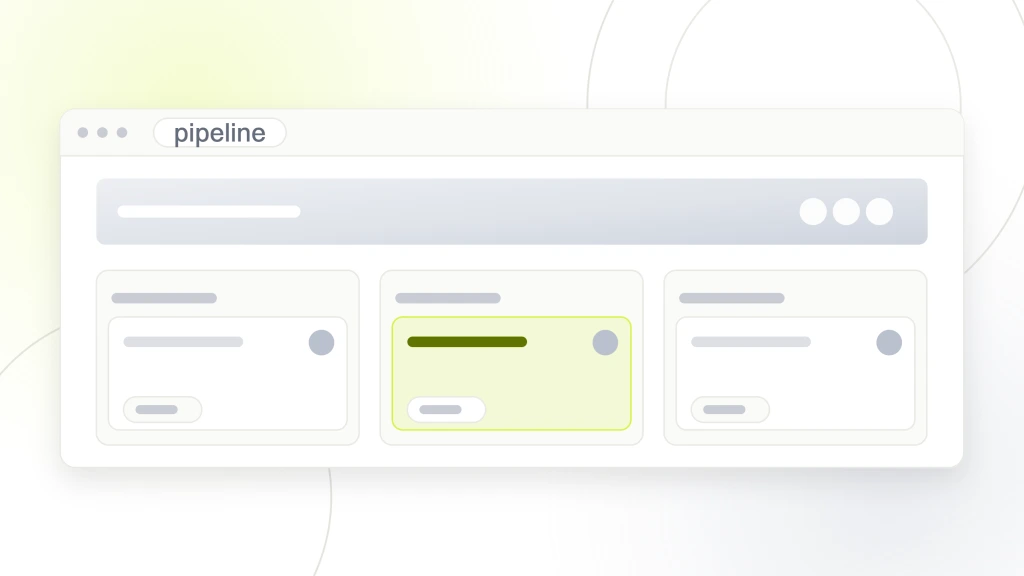
Top-of-funnel content answers the question a buyer types before they know a solution category exists. Middle-of-funnel content helps them build a shortlist. Bottom-of-funnel content makes an honest case to a reader who’s already comparing two or three options. Bottom-of-funnel pages convert at 10 to 15 times the rate of top-of-funnel pages. That’s why a program that publishes only blog posts leaves most of its pipeline unrealized.
- Top of funnel. Diagnostic explainers, how-to guides, and problem-phrased articles that name the pain and connect it to a solution category.
- Middle of funnel. Criteria-led buyer’s guides, comparison articles, and category overviews that surface the three or four decision criteria that matter.
- Bottom of funnel. Head-to-head comparison pages, alternative pages, pricing pages, and product landing pages built for readers who are minutes from a decision.
Publish in the right ratio, not just the right formats. A healthy funnel runs roughly 50% top of funnel, 30% middle of funnel, and 20% bottom of funnel by article count, with the bottom-of-funnel pages carrying most of the conversion weight. Skew the mix too far toward the top and you get traffic without revenue. Skew it too far toward the bottom and pipeline stays thin since nobody enters the funnel.
Digital marketing sales funnel channel mix by stage
A digital marketing sales funnel uses multiple channels at each stage, and the SEO lane is one slice inside that bigger picture. SEO alone rarely does the whole job. Social media adds awareness and retargeting. Email nurtures middle-of-funnel readers. Paid search catches bottom-of-funnel intent. Layered together, the channels compound. Run in isolation, they fight each other for credit and none get full budget.
- Top of funnel. SEO, organic social, PR mentions, podcast appearances.
- Middle of funnel. Email nurture, retargeting ads, webinars, YouTube long-form.
- Bottom of funnel. Paid search, review site placements, sales outreach, direct traffic.
- Post-purchase. Email lifecycle, in-product prompts, community, referral programs.
The channel mix decides the pace. SEO is slow and compounds for years. Paid search is fast and stops the day you turn it off. Email nurture is the connector between the two. Match the channel to the stage and the audience. Don’t run bottom-of-funnel ads on TikTok. Don’t run top-of-funnel content on Google Ads.
Social media sales funnel by platform
A social media sales funnel runs mostly at the top and middle. LinkedIn dominates B2B awareness and MOFU nurture, especially for six-figure deals with long buying committees. Instagram and TikTok dominate consumer categories at the top of funnel with short cycles. YouTube is the workhorse for solution-aware evaluators comparing options. Pick two platforms your buyers actually use, publish consistently, and pipe engaged viewers back into your SEO content through link-in-bio and pinned posts.
Inbound marketing sales funnel vs outbound
An inbound marketing sales funnel is reader-initiated. The reader searches, finds your content, self-educates, and eventually raises a hand. Outbound is the opposite. You interrupt with an email or a call. Neither wins in isolation. The right mix depends on average deal size, target market size, and sales cycle length. Enterprise B2B usually needs both. SMB inbound often stands alone. Ecommerce runs almost entirely on paid inbound plus organic.
Attribution across the mix
Multi-channel attribution is the hardest reporting problem in any funnel. Nobody has a perfect answer. What works. Capture UTMs on every campaign, put a self-reported source field on every form, and combine first-touch, last-touch, and multi-touch views in your dashboard. Never trust one attribution model alone. Every model is wrong in a different way. Show all three side by side and let the pattern tell the story.
A real case study on organic search moving pipeline
Rapyd Financial Network came to us with a fragmented marketing operation. Inbound leads sat at about 5 per month. The CRM was a mess. There was no organic traffic to speak of, and the funnel had no defined stages. Marketing was running campaigns without knowing which ones produced pipeline. Sales was closing deals from referrals only. Every quarter the CFO asked where the leads were coming from and nobody could answer.
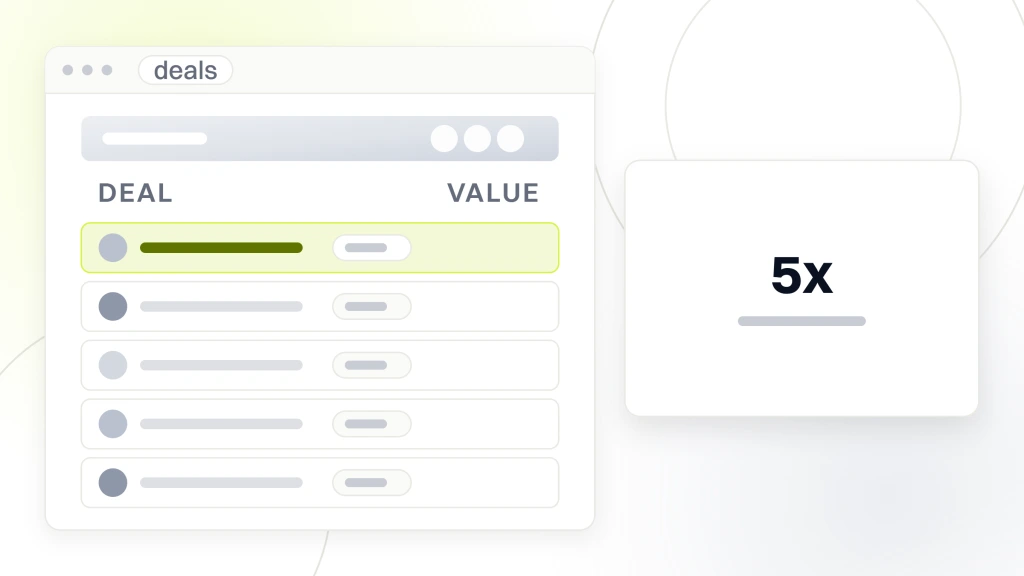
We rebuilt the whole SEO sales funnel from the top down. Keyword research mapped every term to a funnel stage. The content calendar rolled out pillar pages for the top of funnel, comparison articles for the middle, and product landing pages for the bottom. The CRM got cleaned up with defined stages and required fields. Internal linking connected the reading path across the site. Nine months in, organic traffic was up 5x, inbound leads had tripled, and the pipeline had added £1.8 million in inbound sales opportunities. Full integration is what delivers those numbers on the P and L.
What worked inside the Rapyd Financial Network rebuild
Three moves carried the engagement. First, the keyword-to-stage mapping made every piece of content accountable. No article got published without a stage tag and a defined next step. Second, the internal linking hub-and-spoke pattern gave readers a clear path from any entry point to the bottom of funnel. Third, the CRM cleanup meant marketing could finally attribute pipeline back to specific articles. That last piece changed the executive team’s view of content. It stopped being a cost center and became a pipeline source.
Transferable lessons for your own program
The Rapyd playbook translates to any B2B or SaaS company willing to treat SEO as a pipeline channel instead of a traffic hobby. Map keywords to stages. Publish content by stage in the right proportion. Build hub-and-spoke internal linking. Clean up the CRM so attribution can actually work. Report weekly on organic pipeline, not just organic traffic. Skip any step and you get partial gains that never compound to real revenue. See our SaaS SEO Agency Tied to Pipeline & ARR for the full framework.
How to align content marketing sales funnel work with sales stages
Aligning your content marketing sales funnel with sales stages is a repeatable process, not a one-time strategy deck. It’s a weekly cadence that connects the content calendar to the sales stage data. Here’s how the operation runs at teams that do it well.
Every Monday, marketing and sales meet for 30 minutes. Sales reports which stage is bleeding deals the worst. Marketing looks at the content library, identifies the piece that targets that stage, and either pushes an update, boosts distribution, or writes a new piece in the next sprint. Every Friday, marketing reviews organic traffic by stage and MQL rate by content piece. Anything ranking well but not converting gets a conversion audit. Anything converting well but not ranking gets an SEO push. That’s the whole loop. Boring, repetitive, and effective.
Quarterly content audit against the funnel
Once a quarter, audit every piece of content against the funnel. Tag it with a stage. Note its ranking, its traffic, and its conversion rate. Kill or consolidate anything with under 100 monthly visits after six months live. Update anything with high traffic and low conversion. Rewrite anything with high conversion and low traffic. That three-way audit turns your content library into a working funnel instead of a graveyard.
How to track content impact on sales funnel
Track content impact by tagging every form fill with the last content piece the visitor viewed before converting. Layer that on top of first-touch source tracking. The two together tell you which content assisted the conversion and which content drove it. Content that shows up on both sides of that report is your best performer. Content that shows up on neither is a candidate for consolidation or deletion. This tracking runs in Google Analytics 4, HubSpot, or any modern CRM with UTM support.
How AI search changes the SEO sales funnel
AI answer engines now sit between search and every stage of the funnel. Buyers self-steer inside ChatGPT, Perplexity, and Google’s AI Overviews, and they form most of a shortlist before a single ranked link gets clicked. G2’s Answer Economy research found that 51% of B2B software buyers now start their research with an AI chatbot more often than with Google, up from 29% when it published its 2025 Buyer Behavior Report. If your brand isn’t named in that AI answer, the shortlist gets built without you.
The fix is content coverage that links the upstream problem to your product on the same page. AI engines can only recommend a brand for a question when content on the open web ties that brand to that problem. Publish problem-phrased explainers, name your solution category, name your product, and cite the specific results you delivered. That’s the mechanic that earns mentions in AI answers at the discovery stage, not just at the branded-search stage where buyers already know your name.
Closing content gaps for answer engine visibility
Run a quarterly gap audit. Ask each major AI engine to explain your buyer’s top three problems and to name the best vendors for the solution category. If competitors show up and you don’t, your content library is missing the connective tissue between problem and product. Write one problem-to-product explainer for every named gap. Publish them fast. AI engines re-crawl and re-rank inside a few weeks, not the six months of classic SEO waits.
Common SEO sales funnel mistakes we clean up
We audit funnel operations for clients often. The same five mistakes show up on almost every engagement. Catch them in your own program and you’ll save six months of confused reporting.
- All content targets top-of-funnel keywords, so traffic is high and conversion is zero.
- No stage tags on articles, so nobody knows what any piece is supposed to convert.
- Internal linking is random or absent, so readers can’t find the next step.
- Attribution is single-touch only, so middle-funnel content gets no credit and no budget.
- Reporting shows traffic and rankings but never pipeline, so content stays a cost center.
Each of these takes about two weeks to fix and returns a quarter of clean data. Do them in that order. Rebalance the content mix first, add stage tags second, rebuild internal linking third, upgrade attribution fourth, and rewrite the reporting cadence last. Every step compounds. Try to upgrade attribution before adding stage tags and you get a beautiful report with no story to tell.
Why traffic without pipeline is a warning sign
Traffic growth without pipeline growth means your funnel is ranking for the wrong keywords or writing the wrong content. Both problems are fixable. Neither problem gets fixed by writing more articles. The fix is auditing every article for stage alignment, killing what doesn’t match, and rewriting the survivors with a clear next step. If your organic traffic doubled but pipeline stayed flat, you have this problem and nobody on the team has flagged it yet.
The content graveyard problem
Every content library over three years old has a graveyard. Articles that never ranked, never converted, and never got updated. That dead weight drags your whole site’s E-E-A-T score and thin-content signals down with it. Audit quarterly. Delete or consolidate ruthlessly. A tighter, higher-quality library outranks a bloated one every time. This is one of those SEO truths that has been steady for a decade.
Reporting the SEO sales funnel so the numbers stay honest
Reporting on a funnel needs three views. A weekly rankings-plus-traffic view for the SEO team. A monthly pipeline-attribution view for marketing leadership. A quarterly content-audit view for the executive team. Each view answers a different question and drives a different decision. Skip any view and one team ends up in the dark.
The weekly SEO view tracks target keyword rankings, organic traffic by cluster, and any Google algorithm signals worth flagging. The monthly leadership view rolls up MQLs and pipeline dollars by content piece and by cluster. The quarterly executive view reviews the full content library, kills dead weight, and sets the next quarter’s editorial priority. Run all three on the same dashboard so nobody has to translate between them. That connective tissue is what makes the whole program accountable to the business, not just to Google Search Console. Anything less and the SEO team ends up defending traffic charts nobody trusts anymore.
SEO metrics vs pipeline metrics on one dashboard
Put rankings, traffic, MQL count, and pipeline value on the same dashboard. When rankings climb and pipeline lags, you have a conversion problem. When rankings drop and pipeline holds, your last-touch attribution is masking the loss. Both patterns give you a real signal only when SEO metrics and pipeline metrics sit next to each other. Split them across two tools and the pattern hides for another quarter, until pipeline visibly stalls and someone finally asks the question.
Where to start on your SEO sales funnel this quarter
Start with a keyword-to-stage audit of your content. Tag every article with a funnel stage, note its ranking and conversion rate, and identify gaps. Missing bottom-of-funnel content is the common finding. Missing internal links between stages is second. Fix those two first and the funnel starts working inside a quarter.
Then set the weekly and quarterly cadence. Marketing and sales meet Monday. Reporting reviews Friday. Full content audit every quarter. This rhythm turns content marketing into a pipeline function inside six months. If you want help running that audit, our SaaS SEO Agency Tied to Pipeline & ARR runs the mapping for B2B SaaS clients, our Ecommerce SEO Services for DTC Brands covers the shorter-cycle content pattern, and our B2B SaaS Marketing Agency Tied to Pipeline puts the whole channel mix under one roof. For external sanity checks, the Google Search Central starter guide is a solid cross-reference worth reading.