How Canadian Orthodontic Partners Rebuilt Technical SEO
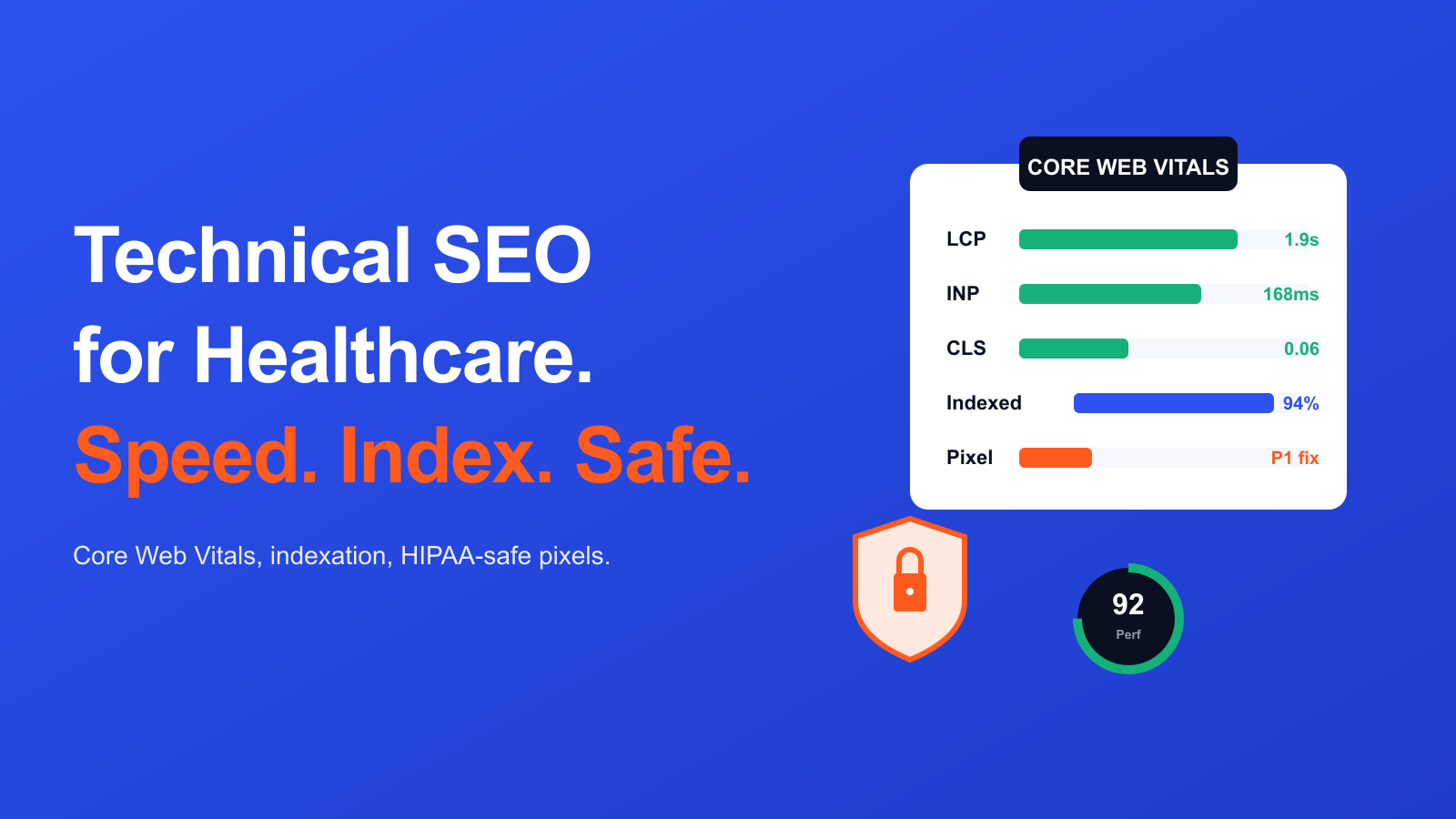
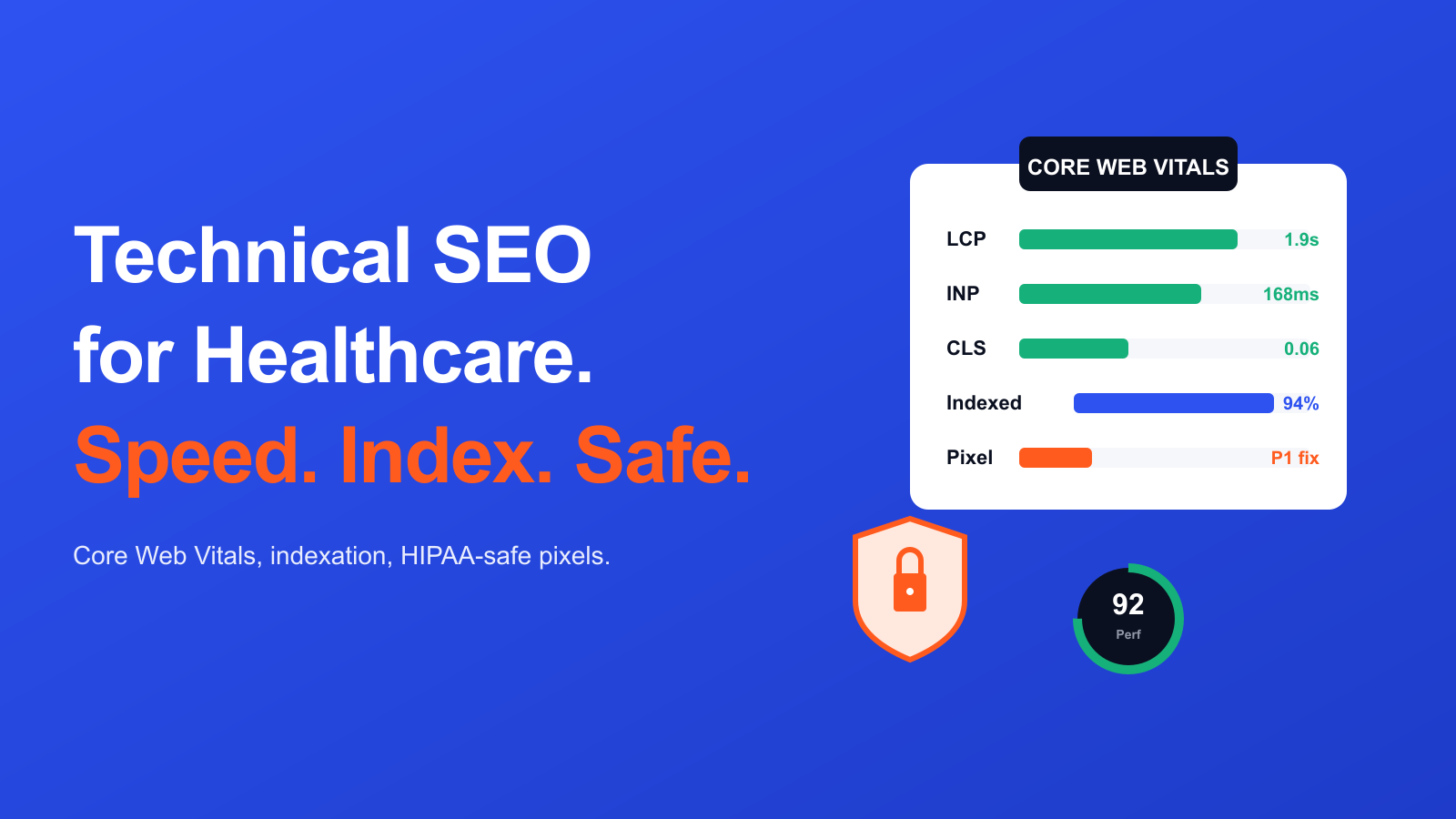
- Technical SEO for healthcare is the site-level engineering layer that gates every content, local, and authority ranking. Fix it first, and everything else compounds 2 to 4 times faster.
- HIPAA-safe server-side tracking overrides every other technical priority. Client-side pixels on booking or appointment confirmation pages carry OCR enforcement risk and a 14-day fix window.
- Core Web Vitals ranking signal reads Chrome UX Report field data, not Lighthouse lab scores. Every second past a 2.5 second LCP on the booking flow cuts conversion 7 to 12 percent.
- Multi-location healthcare networks lose 30 to 60 percent of their non-brand ranking base to indexation and orphaned page problems that a single sitemap and canonical rebuild solves.
- Canadian Orthodontic Partners grew booked consults 97 percent and paid media conversion 105 percent across 65 clinics after a coordinated technical foundation reset, not from new campaigns.
Technical SEO for healthcare is the layer of the SEO program most vendors skip and most Google Search results reward. A healthcare site can publish 400 pages of patient education, land a strong writer, and rank nowhere if the sitemap is broken, the pixels transmit PHI to Meta, and the LCP on the booking flow sits at 5.1 seconds on a Pixel 6a. Content sits on top of the technical stack. When the stack is wrong, the content compounds nothing.
This guide walks the technical SEO checklist we run on every multi-location healthcare engagement, from an 8-provider psychiatric practice to a 400-clinic veterinary network. It reads through the lens of a real remediation: Canadian Orthodontic Partners, a 65-clinic orthodontic network across 8 provinces, rewired their technical foundation and unlocked a 105% gain in paid media conversion rate on top of the SEO reset. The technical layer moved first. Everything else compounded off it.
What technical SEO for healthcare actually covers
Technical SEO for healthcare is the site-level engineering work that makes a medical practice’s pages fast, crawlable, indexable, safe to track, and legible to Google’s healthcare-aware ranking systems. It is not schema tags in isolation. It is not Core Web Vitals in isolation. It is the sequence of crawl budget, indexation, rendering speed, HIPAA-safe measurement, and structured data working as one stack. When one layer breaks, the rest earns less. Healthcare sites carry two extra layers a generalist SEO team never touches: HIPAA-covered tracking, and Google’s Your Money or Your Life (YMYL) ranking treatment that leans on visible authorship and organizational schema.
Most healthcare sites we onboard fail at the technical layer before content is ever written. A mental-health practice with 42 provider pages runs 27 with duplicate title tags. A dermatology group with 14 locations has 11 GBPs and 6 location pages, none of them cross-linked. A physical therapy chain lands a booking flow with an LCP of 4.8 seconds on 4G because the hero image is a 2.4 MB PNG. None of those are content problems. All three block ranking. Fix the technical stack, and the same site copy climbs. Skip the technical stack, and no volume of writing rescues the ranking.
| Technical layer | What Google reads | Common healthcare finding | Fix window |
|---|---|---|---|
| Speed and Core Web Vitals | Real-user LCP, INP, CLS from Chrome UX Report | Booking-page LCP over 4 seconds on mobile | Weeks 1-4 |
| Indexation and crawl | Sitemap, robots.txt, canonicals, coverage report | 60 percent of location pages orphaned from internal linking | Weeks 2-3 |
| HIPAA-safe tracking | Nothing directly, but tracking mistakes trigger enforcement risk | Client-side Meta Pixel on appointment confirmation page | Days 1-14 |
| Structured data | MedicalBusiness, Physician, Article, FAQPage schema | No MedicalBusiness schema on any location page | Weeks 2-6 |
| HTTPS and security posture | TLS version, HSTS header, mixed-content warnings | Patient portal loaded over http subdomain, browser warnings | Days 1-7 |
| Rendering and JavaScript | Rendered DOM after Googlebot executes the page | Doctor bios loaded via client-side React, invisible to crawler | Weeks 3-6 |
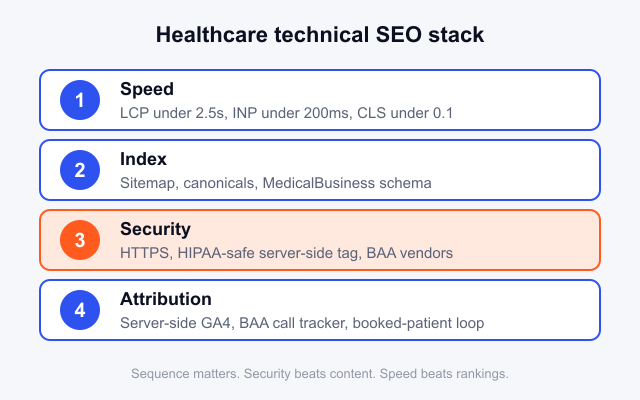
Read the table as a sequence, not a menu. The HIPAA-safe tracking layer moves first because a client-side pixel exposure is the only technical SEO finding on a healthcare site that carries an Office for Civil Rights letter as its worst case. Every other layer is ranking work. If the tracking layer is not safe by day 14, every technical improvement below it compounds legal exposure alongside the ranking gain.
Speed. Core Web Vitals on a booking-first mobile site
Core Web Vitals sit at the top of the ranking-side technical stack because they map directly to booking rate. Google’s page-experience threshold treats Largest Contentful Paint above 2.5 seconds as a signal that hurts rankings on mobile, and every second past that threshold cuts booking conversion by 7 to 12 percent on the healthcare sites we measure. The booking flow is the highest-value page on the site. If the booking flow LCP is 4.5 seconds and the practice runs $18,000 a month in paid patient acquisition, the practice pays for the traffic and loses the conversion. Speed is a revenue line, not a technical vanity metric. For dental practices specifically, see the complete dental website optimization guide on what moves the needle first.
We run Core Web Vitals against real-device data, not lab averages. Chrome UX Report data over the last 28 days is the number Google actually uses. Lab tools like Lighthouse and PageSpeed Insights are useful for finding the fix, but the ranking signal reads the real-user field data. A site that scores 96 in the lab and 42 in the field is failing. The audit pulls both, matches the gap, and fixes the field number. Booking pages, service pages, location pages, and the homepage all get their own targets: LCP under 2.5s, INP under 200ms, CLS under 0.1. Anything else is a P2 or higher fix.
The healthcare-specific speed patterns cluster into four fixes. Hero images shot in-clinic and served uncompressed sit at 1.5-3.5 MB; converting to WebP with responsive srcset drops them to 90-180 KB and recovers 900ms to 1.8s of LCP. Third-party scripts (review widgets, chat bots, patient-portal SSO, analytics fallbacks) load render-blocking on every page; deferring them saves 400ms to 900ms of INP. Custom fonts loaded from three vendors add 300-600ms of render delay; self-hosting the primary font and dropping the rest recovers it. And carousel-based practice hero sections cause CLS spikes that fail the 0.1 threshold; replacing them with static hero blocks fixes CLS without touching layout. Our healthcare website design team delivers the speed rebuild as a two-to-four-week engagement on most WordPress sites.
Indexation. Sitemap, canonicals, and crawl budget for multi-location practices
Multi-location healthcare sites break indexation more often than any other vertical we work with. A 20-clinic group with 20 location pages, 40 service pages, and 60 provider bios generates 120 URLs that all need to reach Google’s index cleanly. The sites we onboard land in the 40-70% indexation range against submitted URLs, meaning Google has 30-60% of the site simply missing from its map. That gap is not a “Google will get to it” problem. It is a technical failure that blocks the entire non-brand ranking base.
The audit pulls the sitemap, compares it to Search Console coverage, and lists every URL that shows up in one and not the other. The three common failure patterns: sitemaps auto-generated by a Yoast or Rank Math install that dropped the location or provider CPTs; canonical tags on location pages pointing back to the corporate homepage instead of self-referencing (kills every location’s ranking in one line); and orphaned pages that exist in the sitemap but have zero internal links pointing at them, which Google treats as low-value. Each pattern gets a scoped fix: rebuild the sitemap to include every ranking-relevant CPT, self-reference the canonicals, and add cross-links between the corporate site, the location hub, and each location page.
Crawl budget is the other side of the indexation coin. A hospital system’s 800-page site with 2,400 URLs (thanks to faceted search on the physician-finder tool) will burn Googlebot’s crawl budget on parameter combinations no patient searches for. The fix set: disallow the faceted parameters in robots.txt, block the physician-finder search results from indexing at all, and let the canonical physician bio pages take the ranking load. That’s five hours of technical work that unlocks 6 to 12 months of missing rankings. Practices past 10 clinics should treat sitemap and crawl-budget hygiene as month-one work, not month-nine work. The healthcare SEO pillar guide covers where indexation sits inside the broader strategy.
HIPAA-safe tracking. The layer that overrides every other priority
Healthcare technical SEO carries one non-negotiable that pure SEO teams get wrong: patient identifiers cannot leave the browser and land inside Meta, LinkedIn, TikTok, or any third-party analytics vendor without a signed Business Associate Agreement. The HHS Office for Civil Rights published guidance in December 2022 (refreshed in 2024) making it explicit that client-side pixels on booking pages, appointment confirmation pages, and patient portal logins constitute impermissible PHI disclosure. That guidance now covers every Meta Pixel, LinkedIn Insight Tag, TikTok Pixel, and Google Analytics client-side install on a healthcare page. The technical SEO audit reads every ranking page and every conversion page for third-party script exposure. Findings on this layer are P1 with a 14-day fix window.
The remediation stack is standardized. Move all conversion tracking behind a server-side tag manager the practice owns, hosted on a subdomain. Sign a BAA with every vendor that touches identified patient data, including the call tracker, the analytics provider, and any CRM syncing appointment status. Hash patient identifiers (email, phone, name) with SHA-256 client-side before they leave the browser. And build the routing so a booking-confirmation event fires the practice’s own conversion event to Google Ads and Meta Ads by hashed match, never transmitting the patient’s identity in the clear. That server-side rebuild also recovers 200-500ms of INP because client-side pixels stop firing on every page load.
Practices that ignore this layer keep shipping “successful” campaigns for 12 months and inherit an OCR investigation in month 13. Every enforcement letter published since 2023 traces back to the same technical failure: a booking-confirmation page fired a client-side Meta Pixel. The fix is not optional. Our healthcare website maintenance team runs the server-side tag build as a scoped two-week project with the BAAs signed inside week one.
Structured data. MedicalBusiness, Physician, and the schema stack that helps
Schema.org gives healthcare sites a set of specialized types that generalist SEO teams often skip. MedicalBusiness (with a specialty subtype like Dentist, Optometrist, Physiotherapy, or Psychiatric) tells Google what kind of practice the location is, which insurance plans it accepts, its NPI number if a single-provider location, and its parent organization if part of a network. Physician schema on each provider bio ties the physician to their license, education, hospital affiliations, and specialties. Article schema on blog posts opens the door to author-linked ranking signals. FAQPage schema on FAQ blocks feeds People Also Ask and AI Overviews. All four types show up in Google’s healthcare rich results, and none of them show up automatically. The audit checks which pages carry which schema, and the fix ticket writes the missing markup for the templates that lack it.
The most common schema gap on healthcare sites is Physician schema tied to the actual physician. A provider bio that reads well to a human but carries no schema fails to signal expertise to Google’s YMYL rater layer. Adding Physician schema with sameAs links to the physician’s LinkedIn, Doximity, Healthgrades, and state board licensing page ties the person to their real-world credentials. That single change strengthens the perceived expertise of every clinical page the physician authored or reviewed. The second most common gap is MedicalBusiness schema without a departments array on group-practice sites, meaning Google has no way to distinguish the sports medicine practice from the primary care practice inside the same organization.
Schema also unlocks the rendering path for structured content Google reuses in AI Overviews. A dermatology practice that publishes a page on “eczema treatment options” with MedicalCondition schema, treatment-specific FAQPage schema, and Article schema pinned to a licensed dermatologist reviewer has a real path to a citation inside an AI answer. A page with no schema and the same body copy does not. Structured data is now part of ranking, not just rich results. The healthcare SEO audit guide walks the priority stack that surfaces schema gaps during the discovery phase.
Not-secure sites. HTTPS, HSTS, and the browser-warning cost
Every browser now flags http subdomains as “Not Secure” in the address bar. That warning costs healthcare practices patients before they finish reading the page. The audit checks every subdomain (patient portal, appointment scheduler, telehealth login, physician finder, blog) for HTTPS coverage, a valid TLS 1.2 or higher certificate, HSTS headers with a reasonable max-age, and zero mixed-content warnings from http-linked assets on https pages. A patient portal loaded over http on a healthcare site is a compound problem: it fails the browser trust test, it fails the ranking signal, and it fails the compliance test on any state that adopts stricter data-security rules.
The fix set is short and safe. Move every subdomain to HTTPS with a wildcard or SAN certificate covering the practice domain and every subdomain. Add a Strict-Transport-Security response header with max-age of at least 31536000 (one year). Fix every mixed-content asset by rewriting http:// asset URLs to https:// or protocol-relative //. And redirect http requests to https at the server level, not via JavaScript. That last one matters because Googlebot follows server redirects but skips JavaScript redirects on some passes. A single-day security posture upgrade removes one of the fastest patient-attrition signals on the site. Dental practices that want this layer handled by managed infrastructure should read the dental website hosting guide before choosing a plan.
Rendering. JavaScript SPAs, React practice sites, and what Googlebot sees
Healthcare sites that rebuild on React, Vue, or a headless CMS often go live without checking what Googlebot actually renders. The pattern: a physician bio page fetches physician data via client-side JavaScript after the initial HTML loads. In the browser, everything shows up. In Googlebot’s rendering pass, the physician’s name, credentials, and specialties may or may not make it into the rendered DOM depending on how long the JavaScript takes to execute. A page that renders correctly for a patient can still index blank to Google. That’s an indexation failure disguised as a design decision.
The technical SEO audit uses Google’s URL Inspection tool against every unique template on the site: homepage, service page, location page, provider bio, blog post, booking flow. If the rendered HTML from Google’s live test is missing content that shows up in the browser, that template needs server-side rendering or static generation. Frameworks like Next.js and Nuxt make SSR the default. Older React installs need a migration or a prerendering service. Either way, the fix is real work, not a config flag. Sites past this failure often gain 30-60% of their non-brand ranking base back inside 90 days once the rendered DOM matches the browser DOM.
The rendering audit also catches the inverse pattern. A site that renders correctly for Googlebot but delivers heavy JavaScript to the patient (2.4 MB of React bundles for a marketing page) has a speed problem on top of the rendering problem. Code-splitting the bundle so patient-facing routes load only the JavaScript they need cuts INP and TTI by 40-70 percent on average. Rendering and speed are two lenses on the same underlying discipline: send Google what it can read, and send the patient what actually renders fast.
Multi-location networks. The 65-clinic story that reset an entire network
Canadian Orthodontic Partners came to us in 2023 as Canada’s largest orthodontic network with 65-plus locations across 8 provinces, operating a house-of-brands model with centralized marketing, HR, and administrative support. The technical foundation across the network was uncoordinated. Every clinic had its own site, its own GBP, its own analytics install, and none of them talked to each other cleanly. Booking pages loaded slow. Location schema was missing on more than half the network. Pixels on appointment confirmation pages were client-side on 20-plus clinic sites. Paid media conversion rate was flat because the tracking layer failed the campaigns before the ad copy ever got a fair test.
The remediation ran the same P1-through-P4 stack a single-location practice would run, scaled 65 times. Week one moved every clinic to a server-side tag manager on a shared subdomain, with BAAs signed by the network with the ad platforms and analytics vendors. Weeks two through six rebuilt Core Web Vitals across the network templates: hero image compression, font self-hosting, deferred third-party scripts, and static hero sections that killed the CLS spikes. Weeks four through eight added MedicalBusiness schema per clinic with the specialty subtype, Physician schema per orthodontist, and a location-hub page that cross-linked the network cleanly. Search Console coverage moved from 58 percent indexed to 94 percent inside 90 days.
The compounding gain showed up in the paid media numbers. Booked consults grew 97 percent year over year. Cost per consult dropped 58 percent because the tracking layer finally reported the right conversions to the ad platforms without exposing PHI. Paid media conversion rate rose 105 percent, doubling the network’s efficiency at scale. None of that came from writing more content or launching new campaigns. It came from a technical foundation reset that let the existing campaigns work correctly. That’s the pattern most multi-location healthcare groups miss: fix the technical layer once, and every campaign on top of it earns more without any additional spend.
The technical SEO reporting layer the practice actually reads
The technical SEO deliverable is a scoped monthly report that ties each layer to a leading indicator the practice can watch without a developer’s help. Core Web Vitals passing rate per template. Search Console coverage as a percentage of submitted URLs. Schema validity across the site templates. HTTPS coverage and mixed-content warnings. Server-side tag manager coverage on booking-critical pages. And the outcome number, always: booked patients from organic search, split by new patient versus established patient, split by location for multi-location groups. A technical SEO report that shows only “site health score improved” without those numbers is a status update, not a program measurement.
| Technical KPI | Month 3 target | Month 6 target | Month 12 target |
|---|---|---|---|
| Core Web Vitals passing rate | Homepage and booking flow passing | Every service and location template passing | Site-wide passing, 90-day rolling stability |
| Search Console coverage | 75 percent of submitted URLs indexed | 90 percent indexed, all P1 templates present | 95 percent+ indexed, indexation lag under 14 days |
| Schema validity | MedicalBusiness on every location page | Physician schema on every provider bio | Full stack: FAQPage, Article, MedicalBusiness, Physician |
| Server-side tracking coverage | All booking and confirmation pages | All identified-patient pages | Full site, BAAs signed with every vendor |
| Non-brand booked patients from organic | Baseline set, month-over-month tracking live | Non-brand organic bookings up 20-40 percent | Non-brand organic bookings up 60-140 percent |
The reporting table is the same one the practice takes with them at the end of an engagement. It is not proprietary. It is a checkable plan the practice team runs against any future vendor. Technical SEO for healthcare is not a black box. It is a sequence of measurable improvements that compound if run in order.
Common technical SEO mistakes healthcare practices keep making
Every practice we’ve onboarded has committed at least one of these. Recognizing them saves the next year of remediation.
- Treating technical SEO as one-time. A technical audit run at kickoff decays as the site changes. Every plugin update, every content change, every developer touch can regress a Core Web Vitals gain or break a canonical. Quarterly delta audits catch the regression inside 90 days.
- Fixing speed before fixing tracking. A fast page that exposes PHI is a compliance risk moving faster. The tracking layer overrides every other priority. Fix the pixels first, then chase the LCP.
- Rebuilding on a JavaScript framework without an SSR plan. A React or Vue rebuild that goes live with client-side rendering only will bury 30-60 percent of the site from Google. Server-side rendering or static generation is not optional on a ranking-first healthcare site.
- Adding schema without validating it. A MedicalBusiness block with malformed properties earns nothing. Every schema block gets tested through Google’s Rich Results Test and Schema.org’s validator before it lands.
- Ignoring the difference between lab and field Core Web Vitals. A 96 Lighthouse score with a 42 field score means real patients see a slow site. Google reads the field number for ranking. Fix the field score.
- Skipping Structured Data on multi-location templates. A location template rendered 65 times without MedicalBusiness schema loses 65 chances at a local ranking signal. Schema goes on the template, not the individual page, so it scales cleanly.
- Running technical SEO without a redirect map at redesign time. A healthcare site that redesigns without a URL-level redirect map routinely loses 20-40 percent of organic sessions for 4-6 months. The pre-launch redirect audit is a one-week project that saves six months of recovery work.
The pattern under every mistake: technical SEO gets treated as a checklist instead of a running program. A healthcare site changes every quarter. The technical work has to change with it. Practices that run a quarterly delta audit plus an annual full audit stay ahead of drift. Practices that audit once at kickoff and never again quietly lose 15-30 percent of their non-brand organic sessions inside the first year post-launch.
Where technical SEO sits inside the wider healthcare SEO program
Technical SEO for healthcare is layer one of a four-layer program. Layer one is technical. Layer two is on-page and content, including YMYL bylines, reviewer chains, and depth per condition and service page. Layer three is local, including per-location GBP work, review velocity, and citation set consistency. Layer four is authority, including digital PR, physician thought leadership, and reviewer author pages. Layers two through four compound at 2 to 4 times the rate on a clean technical foundation compared with a broken one. The sequencing rule is fixed: technical first, then content, then local, then authority.
A practice that skips layer one and starts at layer two by publishing more content is the pattern most generalist marketing agencies push. It moves opens and impressions. It rarely moves bookings, because the technical foundation gates every ranking. A practice that starts at layer one and moves through the stack in order sees non-brand organic bookings grow 60 to 140 percent inside 12 months on average. That is the discipline the practice hires the program for. The healthcare SEO services team delivers the technical layer as month-one work on every retainer, and layers two through four compound off it starting in month two.
Frequently asked questions about technical SEO for healthcare
What is technical SEO for healthcare?
Technical SEO for healthcare is the site-level engineering work that makes a medical practice’s pages fast, crawlable, indexable, safe to track under HIPAA, and legible to Google’s healthcare-aware ranking systems. It covers Core Web Vitals, sitemap and canonical hygiene, HIPAA-safe server-side tracking, MedicalBusiness and Physician schema, HTTPS and security posture, and JavaScript rendering. Technical SEO for healthcare sits under content and local work in the program stack, and every other layer earns more when it runs first. The audit runs against every unique template on the site, not the individual pages, so the fix scales cleanly across a multi-location group.
How is technical SEO for healthcare different from regular technical SEO?
Technical SEO for healthcare adds two layers a regular technical SEO program never touches: HIPAA-safe tracking and YMYL structured data. Client-side pixels on booking pages, appointment confirmations, and patient portals count as impermissible PHI disclosure under HHS Office for Civil Rights guidance published in December 2022 and refreshed in 2024. Every healthcare technical SEO audit reads for that exposure and moves the fix to a 14-day P1 ticket. On top of that, healthcare content falls under Google’s Your Money or Your Life ranking treatment, which leans on Physician schema, MedicalBusiness schema, and visible author-reviewer chains. A generalist technical SEO program that skips both layers will underperform on any healthcare ranking.
How much does technical SEO for healthcare cost?
Technical SEO for healthcare runs $2,500 to $6,500 as a one-time audit for a single-location practice, $6,500 to $18,000 for a multi-location group of 2 to 10 clinics, and $18,000 to $45,000 for a regional network of 10 to 30 clinics. Ongoing technical SEO inside a healthcare SEO retainer runs $599 to $3,500 per month depending on scope. The retainer covers quarterly delta audits, Core Web Vitals monitoring, schema updates, indexation hygiene, and server-side tracking maintenance. A one-time audit that never gets re-run decays inside two quarters, so most practices past two locations pick the retainer path.
What are the most common technical SEO issues on healthcare websites?
The four most common technical SEO issues we find on healthcare sites are client-side pixels on booking or appointment confirmation pages, booking-flow Largest Contentful Paint above 2.5 seconds on mobile, missing MedicalBusiness schema on location pages, and 30 to 60 percent of location or provider pages orphaned from internal linking. Each one blocks ranking and revenue independently. Combined, they explain 70 to 85 percent of the non-brand ranking gap we measure on healthcare sites at kickoff. Fixing the four in sequence inside the first 90 days is the standard remediation path on every healthcare technical SEO engagement.
Is mobile-friendly SEO for healthcare providers still a ranking factor in 2026?
Yes. Google’s mobile-first indexing means the mobile version of a healthcare site is the version that ranks, and mobile Core Web Vitals directly feed the ranking signal. A healthcare site that renders well on desktop but poorly on mobile ranks off the mobile numbers. Booking flows, appointment forms, and location pages need to work cleanly on a Pixel 6a or an iPhone 12 running on 4G, not a MacBook on office WiFi. The audit runs against real-device mobile emulation and against Chrome UX Report field data before it signs off on a template. Mobile-friendly SEO for healthcare providers is not a checkbox. It is a set of measurable field numbers the site has to hit.
Does not-secure website SEO affect healthcare rankings?
Yes, and it affects patient trust before it affects rankings. Every current browser flags http subdomains as “Not Secure” in the address bar. A healthcare site with a patient portal on http loses patients at the browser-warning step before they see the login form. Google has treated HTTPS as a ranking factor since 2014, and the signal has strengthened over time. The audit checks every subdomain on the healthcare site for HTTPS coverage, a valid TLS certificate at 1.2 or higher, HSTS response headers, and zero mixed-content warnings. Fixing the security posture is a one-day project on most infrastructure and removes both the ranking hit and the patient-trust hit.
{
“@context”: “https://schema.org”,
“@type”: “FAQPage”,
“mainEntity”: [
{
“@type”: “Question”,
“name”: “What is technical SEO for healthcare?”,
“acceptedAnswer”: {
“@type”: “Answer”,
“text”: “Technical SEO for healthcare is the site-level engineering work that makes a medical practice’s pages fast, crawlable, indexable, safe to track under HIPAA, and legible to Google’s healthcare-aware ranking systems. It covers Core Web Vitals, sitemap and canonical hygiene, HIPAA-safe server-side tracking, MedicalBusiness and Physician schema, HTTPS and security posture, and JavaScript rendering. Technical SEO for healthcare sits under content and local work in the program stack, and every other layer earns more when it runs first. The audit runs against every unique template on the site, not the individual pages, so the fix scales cleanly across a multi-location group.”
}
},
{
“@type”: “Question”,
“name”: “How is technical SEO for healthcare different from regular technical SEO?”,
“acceptedAnswer”: {
“@type”: “Answer”,
“text”: “Technical SEO for healthcare adds two layers a regular technical SEO program never touches: HIPAA-safe tracking and YMYL structured data. Client-side pixels on booking pages, appointment confirmations, and patient portals count as impermissible PHI disclosure under HHS Office for Civil Rights guidance published in December 2022 and refreshed in 2024. Every healthcare technical SEO audit reads for that exposure and moves the fix to a 14-day P1 ticket. On top of that, healthcare content falls under Google’s Your Money or Your Life ranking treatment, which leans on Physician schema, MedicalBusiness schema, and visible author-reviewer chains. A generalist technical SEO program that skips both layers will underperform on any healthcare ranking.”
}
},
{
“@type”: “Question”,
“name”: “How much does technical SEO for healthcare cost?”,
“acceptedAnswer”: {
“@type”: “Answer”,
“text”: “Technical SEO for healthcare runs $2,500 to $6,500 as a one-time audit for a single-location practice, $6,500 to $18,000 for a multi-location group of 2 to 10 clinics, and $18,000 to $45,000 for a regional network of 10 to 30 clinics. Ongoing technical SEO inside a healthcare SEO retainer runs $599 to $3,500 per month depending on scope. The retainer covers quarterly delta audits, Core Web Vitals monitoring, schema updates, indexation hygiene, and server-side tracking maintenance. A one-time audit that never gets re-run decays inside two quarters, so most practices past two locations pick the retainer path.”
}
},
{
“@type”: “Question”,
“name”: “What are the most common technical SEO issues on healthcare websites?”,
“acceptedAnswer”: {
“@type”: “Answer”,
“text”: “The four most common technical SEO issues we find on healthcare sites are client-side pixels on booking or appointment confirmation pages, booking-flow Largest Contentful Paint above 2.5 seconds on mobile, missing MedicalBusiness schema on location pages, and 30 to 60 percent of location or provider pages orphaned from internal linking. Each one blocks ranking and revenue independently. Combined, they explain 70 to 85 percent of the non-brand ranking gap we measure on healthcare sites at kickoff. Fixing the four in sequence inside the first 90 days is the standard remediation path on every healthcare technical SEO engagement.”
}
},
{
“@type”: “Question”,
“name”: “Is mobile-friendly SEO for healthcare providers still a ranking factor in 2026?”,
“acceptedAnswer”: {
“@type”: “Answer”,
“text”: “Yes. Google’s mobile-first indexing means the mobile version of a healthcare site is the version that ranks, and mobile Core Web Vitals directly feed the ranking signal. A healthcare site that renders well on desktop but poorly on mobile ranks off the mobile numbers. Booking flows, appointment forms, and location pages need to work cleanly on a Pixel 6a or an iPhone 12 running on 4G, not a MacBook on office WiFi. The audit runs against real-device mobile emulation and against Chrome UX Report field data before it signs off on a template. Mobile-friendly SEO for healthcare providers is not a checkbox. It is a set of measurable field numbers the site has to hit.”
}
},
{
“@type”: “Question”,
“name”: “Does not-secure website SEO affect healthcare rankings?”,
“acceptedAnswer”: {
“@type”: “Answer”,
“text”: “Yes, and it affects patient trust before it affects rankings. Every current browser flags http subdomains as ‘Not Secure’ in the address bar. A healthcare site with a patient portal on http loses patients at the browser-warning step before they see the login form. Google has treated HTTPS as a ranking factor since 2014, and the signal has strengthened over time. The audit checks every subdomain on the healthcare site for HTTPS coverage, a valid TLS certificate at 1.2 or higher, HSTS response headers, and zero mixed-content warnings. Fixing the security posture is a one-day project on most infrastructure and removes both the ranking hit and the patient-trust hit.”
}
}
]
}
Running a technical SEO reset on a multi-location healthcare site this quarter? Talk to our healthcare marketing team about a scoped foundation audit that comes with a 90-day fix schedule your team can act on before next renewal.
Book your free 30-minute strategy call.
No spam, no sales rep. We use your email to schedule your call with a senior strategist. That is it.