
Website maintenance for chiropractors is a short monthly checklist that keeps your booking rate from drifting down over time. No heroics, no full-time developer, no vendor jargon. Just 8 items you tick on the first Tuesday of every month so the site stays fast, secure, and pointed at the booking flow. This guide walks each item, prices every tier honestly, shows what breaks when the checklist gets skipped, and helps you decide whether the practice runs it in-house or hands it to an outside provider.
The short version. It covers speed audits, security patches, plugin updates, backup verification, uptime monitoring, booking form tests, analytics review, and a 404 sweep. Working time runs 2 to 4 hours a month. Outside providers charge $60 to $300 a month for the same scope. Skip it and the practice pays for a full redesign inside 18 months once drift stacks up.
I’ve run this checklist on chiropractor websites for 9 years. The lesson. Practices that book maintenance on a recurring calendar keep every rebuild gain. Practices that treat it as optional lose 20 to 30% of booking rate inside a year. The work is boring. The math is not.
What Website Maintenance for Chiropractors Covers
Website maintenance for chiropractors runs 8 recurring tasks that keep a well-built site from quietly decaying. Each item on the list either protects the site’s booking rate or reduces the practice’s exposure to security and uptime risk. Practices that run the checklist every month hold their booking-rate gains for years. Practices that skip it watch those gains erode inside a 12-month window.
The 8 recurring tasks
WordPress core, theme, and plugin updates. Security patches and vulnerability scans. Backup verification, not just backup existence. Uptime monitoring and downtime response. Speed audits against Lighthouse and Core Web Vitals. Booking form tests on iOS Safari and Android Chrome. Analytics dashboard review against the baseline. Broken link and 404 sweep across the top pages.
What sits outside maintenance
Content updates, new blog posts, new service page copy, SEO work, and paid campaigns all sit outside maintenance scope. Those are growth projects. Maintenance is the boring work that keeps growth projects from getting wiped out by drift. Confusing the two is why so many practices pay a maintenance provider for work that wasn’t scoped and skip the core maintenance itself. Clarify the boundary in writing before you sign any retainer. That one hour of upfront clarity saves months of scope arguments in year 1.
Monthly Website Maintenance for Chiropractors Checklist
Print this checklist and run it the first Tuesday of every month at the same hour. 2 to 4 hours end to end for a single-location site. Each item lands in the 15 to 30 minute range once the order stays consistent month over month. Rhythm is what keeps maintenance sustainable across a full calendar year.

- Update WordPress core, theme, and plugins in a staging environment first. Push to production after a manual smoke test.
- Verify the last 3 daily backups restore cleanly. Existence is not verification.
- Run Lighthouse on the homepage and top 3 service pages. Log the scores in a shared sheet.
- Test the booking form and callback form on a real iPhone and a real Android. Not just desktop, not just an emulator.
- Check the uptime report for the past 30 days. Note every incident and its root cause.
- Sweep for 404s and broken outbound links using Screaming Frog or a plugin like Broken Link Checker.
- Review the analytics dashboard for booking rate, bounce rate, and top traffic sources.
- Rotate any expiring SSL, license, or API keys before they fail silently.
Why staging matters for updates
WordPress plugin updates conflict about 8 to 12% of the time on a moderately customized chiropractor website. Not the site breaking outright. A subtle bug appearing somewhere. Running updates on staging first catches bugs before patients try to book. No staging? Use a maintenance-mode plugin and update during the practice’s lowest-traffic hour.
Why backup verification is the real gate
A backup that exists but doesn’t restore produces false confidence. Once a month, take the most recent backup, restore it into staging, and verify the site works. That 20-minute test saves the practice from the day the site crashes and the backup turns out corrupted. See WordPress’s official backup documentation.
How Page Speed Impacts Chiropractor Website Performance
Page speed impacts chiropractor website booking rate more than any single design element. Google’s Core Web Vitals research shows 32% of mobile visitors bounce past 3 seconds of load time. Every second above the 2.5-second mark costs the practice measurable bookings. Speed drift is the quiet erosion that happens when a site loses its edge over months of plugin creep, uncompressed images, and stacked tracking pixels nobody audits.
Where speed drifts first on a chiropractor website
Most speed drift on a chiropractor website comes from 3 sources. New images uploaded full-size. New plugins added for one feature and never removed. Tracking pixels stacked from 3 ad platforms and never audited. Each adds 300 to 800 milliseconds to first paint. Together they push a 2-second site to 5 seconds inside a year.
The monthly speed audit that catches drift
Once a month, run Lighthouse on the homepage and top 3 service pages. Compare against last month. If any page moved 10% slower, find the change. This 15-minute test catches drift in month 1 instead of month 12. Log the numbers in a shared sheet. See Google’s Core Web Vitals guide for current thresholds.
What Website Maintenance for Chiropractors Costs
Website maintenance for chiropractors falls between $60 and $300 a month by scope and tier. Solo providers price at $60 to $120 for hosting plus updates. Boutique agencies with a chiropractic focus price at $180 to $300 for the full checklist plus reporting. In-house handling costs about $50 in tools plus 3 hours of office manager time.
| Tier | Monthly cost | What is included | Best fit |
|---|---|---|---|
| DIY with tools | $50 to $80 | Hosting, backup tool, uptime monitor | Marketing lead in house |
| Solo provider | $60 to $120 | Hosting, updates, basic monitoring | Solo practice, tight budget |
| Boutique agency | $180 to $300 | Full checklist, monthly report | Growing single or multi-location |
| Enterprise | $500 plus | SLA, dedicated engineer | DSO or franchise group |
Redefine Web maintenance plans land at $199, $299, and $499 a month. The $199 tier covers hosting, updates, and backups for a single-location practice. The $299 tier adds the full monthly checklist plus a written report. The $499 tier adds multi-location coverage and priority downtime response.
Where the ROI usually lands
A $299 maintenance retainer that prevents one 6-hour downtime event pays for itself many times over. At a $2,400 patient LTV, 6 hours of downtime during business hours costs $600 to $1,200 in lost bookings. That is 2 to 4 months of maintenance recovered in one avoided incident. See our chiropractor website cost guide for total-ownership context.
Where practices try to save and should not
The most common cut is dropping the maintenance retainer to save $200 a month. Then a plugin conflict takes the booking form offline Monday morning. 12 hours of lost bookings runs $800 to $2,000 in patient value. Pay the $299 and keep the site working.
Chiropractor Website Maintenance Security Basics
Security is where maintenance stops being optional and starts protecting the practice from real liability. A hacked chiropractor website exposes patient data, triggers HIPAA notification obligations when protected health information touched the site, and can knock the site offline for days. Every hacked chiropractic site we’ve cleaned up traced back to the same short list of preventable failures. A monthly checklist plus a $75-a-year security plugin closes every one of them.
The 4 security musts
SSL certificate that auto-renews. Strong admin passwords with two-factor authentication. Weekly vulnerability scans through a plugin like Wordfence or Sucuri. Backup off-site and separate from the hosting provider. Skip any one of these and the site is one bad Tuesday away from a headline. Every hacked chiropractic site we have cleaned up was missing at least 2 of the 4.
What HIPAA covers on the site
HIPAA compliance on a chiropractor website applies wherever protected health information is captured. Usually the booking form, callback form, patient portal link, and any embedded booking widget. If patients enter symptoms or insurance details, the form provider needs a business associate agreement. See HHS HIPAA covered entities guidance for scope.
Real Numbers From a Chiropractor Business Website Under Maintenance
Pain Cure Clinic, a chiropractic care provider we work with, moved to a full monthly maintenance cadence right after their site rebuild wrapped. The 24 months after show what an on-schedule cadence buys a chiropractor business website. Patient appointments grew 205%, organic traffic 289%, and Google reviews 162% to a 4.9-star average. The rebuild plus SEO plus PPC drove those gains. Maintenance is why the gains held.
What the monthly maintenance covered
Monthly WordPress core, theme, and plugin updates on staging first. Weekly vulnerability scans. Daily off-site backups with monthly restore tests. Uptime monitoring with SMS alerts. Monthly Lighthouse audits. Booking form tests on both iOS and Android. Analytics review against the baseline. Total working time was about 3 hours a month at the provider level.
The 24-month result at Pain Cure Clinic
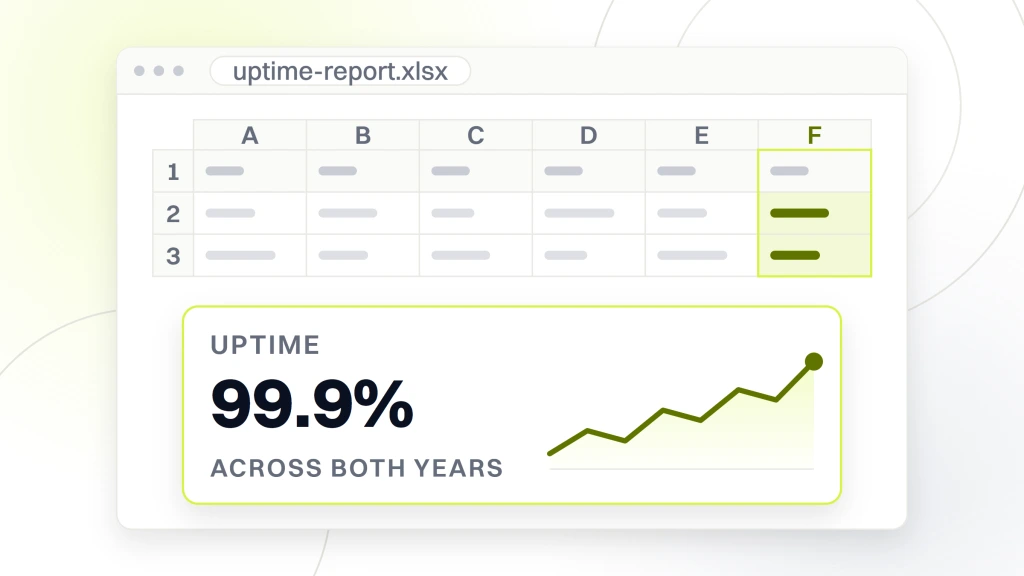
Uptime held at 99.9% across both years. Site speed stayed under 2 seconds mobile every month. Zero security incidents. Patient appointments averaged 122 monthly versus 40 before the rebuild, and that 205% delta didn’t erode. Reviews climbed 162% to a 4.9-star average. Every quarterly review confirmed the site was at or above the rebuild baseline.
What the comparable unmaintained site experienced
A comparable single-location practice that skipped maintenance saw uptime drop to 96% inside 8 months, one plugin conflict that took the booking form offline for 14 hours during a Monday intake window, and Lighthouse mobile drift from 88 to 62. Booking rate followed down 20%. Roughly 10 patients a month lost to preventable drift.
6 Mistakes in Chiropractor Website Maintenance
Most maintenance failures are structural, not technical. The practice skipped the recurring calendar entry, or the provider quietly stopped and assumed nobody would check. In short, here are the 6 failure modes we see most when a new client shows up with a broken, slow, or hacked site.
- Auto-updating everything without staging. A single conflicting plugin can break the booking form at 3 AM on a Sunday.
- Skipping backup verification when backups appear to exist. A backup that hasn’t restored is not a backup you can trust.
- Ignoring plugin deprecation notices for months. Deprecated plugins are the top vector for site compromise.
- Letting SSL certificates expire when auto-renew fails silently. An expired SSL kills every booking form for the day.
- Adding a new plugin every time the practice manager sees a feature ad. Plugin creep is how a fast site becomes slow.
- Assuming the hosting provider managed service covers full maintenance. Managed hosting covers the server, not the plugins.
The auto-update trap
Auto-updating every plugin sounds convenient until one breaks the booking form at 3 AM Sunday. The Monday intake team notices only after the third patient calls. Auto-updates belong on staging first, then production after a manual smoke test. That workflow adds 5 minutes and prevents most incident-response overhead.
The managed hosting assumption
Managed WordPress hosting covers server-side updates and basic security. It doesn’t cover plugin updates, form testing, analytics review, or booking flow verification. Practices that assume otherwise find the gap the day something breaks. Read the scope statement and fill the gap with DIY or an outside provider.
Chiropractor Website Maintenance DIY vs Outsourced
DIY works when a marketing lead or office manager is comfortable inside WordPress admin. Outsourced works when nobody wants to open the admin panel. Both paths are legitimate. The failure mode to avoid is picking DIY without naming a specific person and calendar block, then hoping the checklist runs itself.
When DIY makes sense
DIY works when the practice has an in-house marketing lead who owns 4 to 6 hours a month. Cost is $50 to $80 in tools plus internal time. The lead needs comfort with WordPress admin, plugin updates, and basic troubleshooting. If nobody fits that description, DIY fails inside 3 months. Pick outsourced instead of pretending someone has time.
When outsourced makes sense
Outsourced makes sense for single-location practices without a marketing lead, multi-location groups where centralized ownership beats per-location DIY, and any practice where a booking-flow outage costs meaningful revenue. Cost is $199 to $499 a month at Redefine Web tiers. The provider owns the checklist, sends a monthly report, and takes SMS alerts on downtime. See our chiropractor marketing services for the full stack. Retainer starts at $1,499 a month for growth work above the maintenance line.
Annual Audit That Catches What Monthly Maintenance Misses
Monthly maintenance keeps the site healthy at a week-to-week timescale. An annual audit catches the slow drift that monthly checks are not designed to see. Once a year, block a half day for a bigger sweep. That sweep covers content refresh, service page rewrites, brand consistency across pages, and a fresh look at whether the site still matches the practice current offer, provider roster, and pricing.
Content freshness against the current practice
Practices change offerings faster than websites reflect them. A new provider joined mid-year. A service was added. Pricing changed on a package. Once a year, walk through every page and check whether the copy still matches the current practice. That single review usually surfaces 2 to 5 outdated items that would embarrass the practice if a patient noticed.
Photo refresh cadence
Real practice photos read as authentic for about 3 years before they start to feel dated. Once a year, look at the photos with fresh eyes. If the receptionist in the hero photo left the practice last summer, that is a signal it is time to book another session. A $400 to $1,200 local photographer session every 18 to 24 months keeps the visual layer honest and prevents the site from looking frozen in time.
Full UX audit against the 7 booking-rate habits
Once a year, score your site against the 7 booking-rate habits. Speed, hero focus, real photos, reviews above the fold, sticky booking, header phone, one-condition-per-page. Standards drift. What passed last year may not pass this year. Pick the 2 lowest items and fix them in the following quarter. See best websites for chiropractors for the deeper scoring rubric.
Tools for Website Maintenance for Chiropractors
A short stack of tools covers most of the website maintenance for chiropractors checklist without adding a full software line to the budget. 2 of the tools are free at the tier a single-location practice needs. 3 cost under $150 combined per month at their paid tier. Every tool on this list ties back to a specific line on the monthly checklist and removes the need to run that task by hand.
UpdraftPlus or Duplicator for backups
Both plugins handle scheduled backups to off-site storage like Google Drive, Dropbox, or Amazon S3. Free tiers cover a single-site practice. Paid tiers start around $70 a year and add restore automation. Whichever you pick, do a manual restore test once a month. A backup you have not verified is a backup you cannot count on when the site crashes.
Wordfence or Sucuri for security
Both plugins cover firewall, malware scanning, and login protection for WordPress. Free tiers cover a single-location practice. Wordfence Premium adds real-time IP blacklists at $119 a year. Sucuri Platform includes malware removal service starting at $200 a year. For most single-location chiropractic sites, the free tier plus strict admin passwords is enough.
UptimeRobot for monitoring
UptimeRobot pings the site every 5 minutes and sends SMS or email alerts when it is down. Free tier covers 50 monitors, which is enough for the homepage, top 3 service pages, and the booking form endpoint. Paid tier at $84 a year adds 1-minute ping intervals and SSL expiration monitoring. Either tier catches downtime before the practice manager finds out from a patient.
Make website maintenance for chiropractors work for your practice
Website maintenance for chiropractors is unglamorous work, cheap on the invoice, and worth every hour on the calendar. Set a recurring monthly entry, run the 8-item checklist in the same order, and let the site keep booking patients while nearby practices drift back to slow, broken, and off-brand. When the practice is ready to hand the checklist off, our chiropractor marketing team runs maintenance plans at $199, $299, and $499 a month. See chiropractor website design and chiropractor business website examples for the sibling walk-throughs.