Pay monthly ecommerce website design is a different conversation than pay monthly brochure sites. An ecommerce store has a checkout, a product catalog, third-party integrations, and a payment processor that expects the site to run 24/7 across a Black Friday spike. Any monthly plan that treats an ecommerce build like a brochure site with a shopping cart bolted on is going to fail your store by month four.
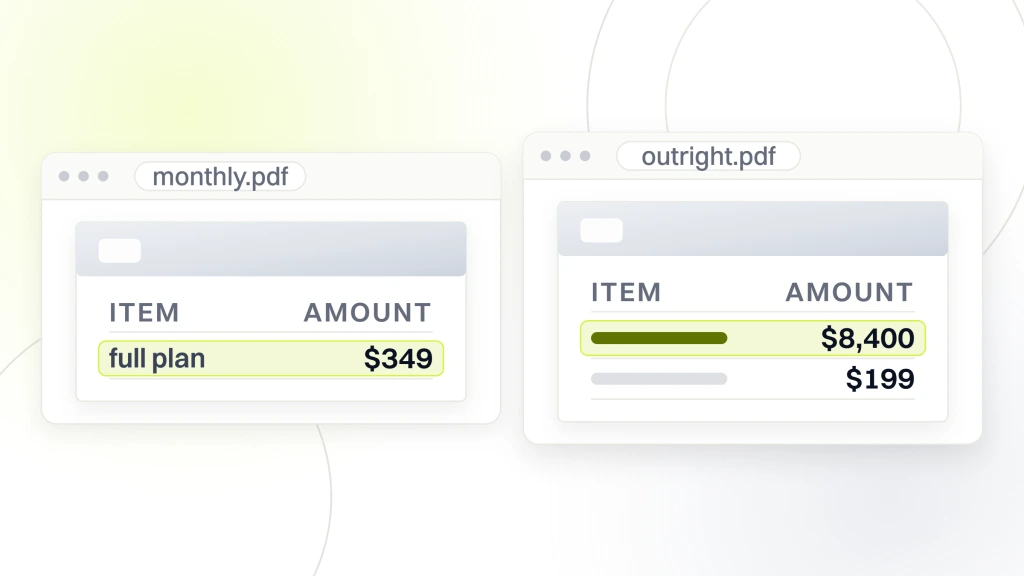
You are looking at monthly ecommerce options since the outright Shopify or WooCommerce build you were quoted was $8,400 upfront plus separate hosting, plus separate app subscriptions, plus a maintenance retainer that started at $200 a month. This guide is the honest breakdown of what monthly ecommerce plans include, where the traps hide, when a fixed build makes more sense, and the six contract clauses every DTC or B2B store owner should read before signing. Read straight through in nine minutes.
What Pay Monthly Ecommerce Website Design Actually Covers
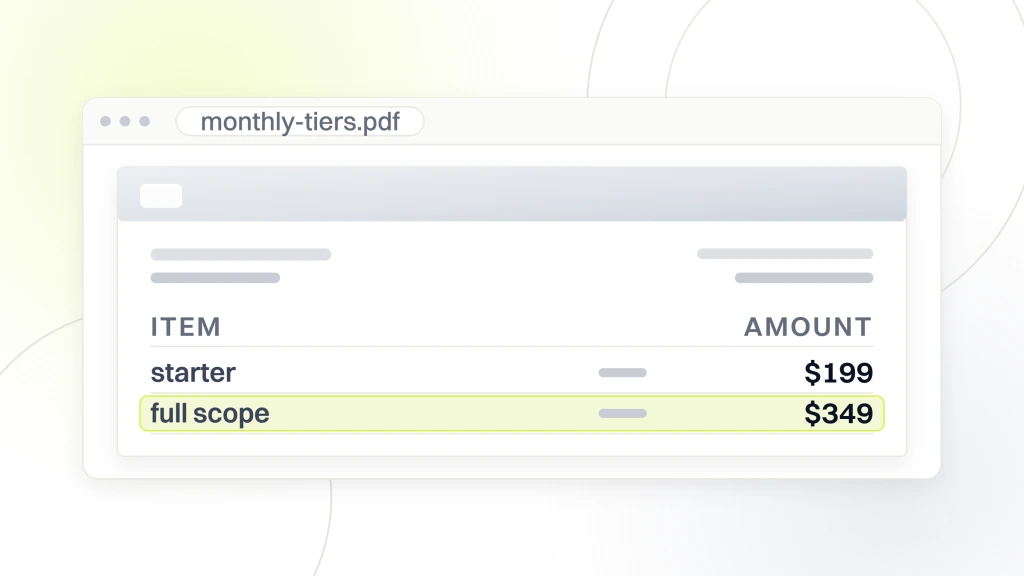
Pay monthly ecommerce website design is a subscription that folds the store build, hosting, SSL, uptime monitoring, app-stack setup, and ongoing edits into one fixed monthly fee. On our own tiers, that fee lands at $199 or $349 a month depending on catalog size and how much conversion work sits inside the retainer. The store lives on Shopify or WooCommerce with ecommerce web design and development folded into the retainer, the vendor owns the delivery calendar, and you own the domain, the customer list, and the Stripe account from day one.
The $199 tier adds abandoned cart flows, cart upsells, and one A/B test per quarter. The $349 tier covers a WooCommerce or larger Shopify store with quarterly category page rebuilds, checkout tests, and app-stack maintenance baked in. Compare that against a one-time build plus a $199 or $299 a month maintenance retainer, and the math usually falls in favor of monthly for stores under $3M in revenue.
The core stack every fair plan includes
A fair monthly ecommerce plan covers Shopify or WooCommerce hosting on a named region, an SSL certificate, daily backups, DDoS protection, uptime monitoring against the checkout URL, and a defined edit pool inside the retainer. It covers the app subscription pass-through math up front so you know exactly which apps the vendor pays for and which land on your card. Klaviyo, ReCharge, and Yotpo are common pass-through items.
What the tiers actually differ on
Tiers scale on three axes. First, catalog size and app-stack complexity. Second, the size of the edit pool inside the retainer (2 hours a month at $99, 6 hours at $199, 12 hours at $349 on our tiers). Third, the volume of conversion work the vendor commits to per quarter. Higher tiers front-load real testing on product pages, category pages, and checkout flows instead of billing that work as a fresh line item every quarter.
When a Fixed-Price Ecommerce Build Beats a Monthly Ecommerce Website
A fixed-price ecommerce build makes more sense in three specific scenarios. Match one of them, buy outright. Match none of them, monthly is the right choice for your store. The real key is honest self-assessment before signing anything, not preference or a reflex against recurring subscription bills on the P and L.
You have an in-house ecommerce team
If your team includes a real developer, a marketing lead who owns the Shopify admin, and an ops lead who can run the shipping and inventory app stack, buy outright. Your team absorbs the ongoing work inside their existing hours. The vendor’s monthly plan value drops sharply once the labor you would have paid for is already sitting in payroll. A one-time $8,400 build plus a light $199 a month maintenance retainer often beats a $349 a month full plan on total cost.
Your catalog is fixed and small
Under 30 SKUs, a stable catalog that will not change scope for 3 years, and a single-line business (one product category, one buyer persona), an outright build works. The vendor’s monthly edit pool is overkill given a store that does not need weekly changes. A one-time build plus a light maintenance retainer beats a full monthly plan, and the fixed-price ecommerce path we run at the small-catalog end covers exactly this shape of store.
Your revenue supports the capital outlay
Ecommerce stores with $3M or more in annual revenue and a healthy cash position often prefer the outright path with an internal team. At that scale, the friction cost of managing a $349 monthly retainer alongside a full-time ecommerce manager is more than the savings. Big stores buy outright and hire in-house. Smaller stores go monthly and let the vendor absorb the change one page at a time.
Pay Monthly Ecommerce Website Pricing Tiers Explained
Fair monthly ecommerce pricing on honest plans sits between $199 and $349 a month. Anything under $199 skips real hosting, ownership, or uptime, and reads as a lead-gen product for a rebuild later. Anything over $500 on a small-to-mid store usually pads the monthly with agency-of-record work you do not need yet.
The $199 a month tier
The $199 a month tier is the honest starting point for a store already doing $30K to $150K a month in revenue. Shopify or WooCommerce, up to 200 SKUs, a 6-hour edit pool, cart upsells and cross-sells in the first 30 days, and one product page or category page A/B test per quarter. This is the tier most growing DTC brands land on inside a monthly plan.
The $349 a month tier
The $349 a month tier is the full-scope monthly plan. Larger catalogs, multiple sales channels, wholesale portals on WooCommerce, quarterly checkout tests, and full app-stack maintenance inside the retainer. Good fit for stores between $150K and $250K a month in revenue where a full-time ecommerce hire is still 6 to 12 months away.
A Real Client Story on a Monthly Ecommerce Website
RAFZ Cirkulära Interiörer is a Swedish ecommerce brand selling eco-friendly repainted interior products on WooCommerce. Their old plugin-heavy store loaded in over 15 seconds and drove frequent cart abandonment. We rebuilt the store on a lightweight custom WooCommerce theme, cut server requests by 82 percent, and integrated a place2place API for automatic product listings. The rebuild moved fully loaded page time from 15+ seconds to 2 seconds, and conversion rate went up 28 percent after launch.
Why the monthly-plan shape mattered
RAFZ did not need a one-time rebuild and then radio silence. The store needed a repaint feature, a redesigned homepage that inspired shoppers, and an API integration with place2place that expanded reach over time. Every one of those items fits inside a monthly retainer, not a fresh $4,800 quote each quarter. That is the shape of a monthly plan when the vendor takes the store seriously.
The numbers on the rebuild
Load time dropped from 15+ seconds to 2 seconds. Server requests fell 82 percent. Conversion rate climbed 28 percent post-launch. All three numbers came from the same rebuild, not three separate projects. A store on a monthly plan can compound gains like that when the vendor owns the roadmap and the store owner is not paying a fresh quote every time a page needs work.
The ecommerce pattern that repeats
Ecommerce stores hit the same wall on a short timeline. A store launched in 2022 usually needs a checkout redesign by 2024, a mobile-first refresh by 2025, and new product category pages every 6 to 12 months. A monthly plan absorbs those changes. A fixed build stalls until the owner can budget a fresh redesign. That is the shape of most compounded ecommerce revenue growth stories we see across the portfolio.
Red Flags on Monthly Ecommerce Websites
Every monthly ecommerce website carries a specific set of risks a brochure plan does not. Payment processing routes, customer data handling, and checkout uptime all sit on top of the base plan. If the vendor is quiet on any of the six patterns below, that silence is a signal.
- The vendor uses their own Stripe or PayPal account and passes payments to you weekly.
- The vendor cannot name the host or platform region (US-East, EU-West, Sydney).
- The customer data export clause is missing or vague on format and timing.
- The uptime SLA is missing or set at 99 percent with no remedy for misses.
- The app subscription pass-through is not explained (Klaviyo, ReCharge, Yotpo billing).
- The catalog upload limit is set below your actual SKU count without an overage rate.
The intermediary payments trap
Some cheap monthly ecommerce plans use their own Stripe account and pay out to you weekly. That structure holds your revenue on the vendor’s balance sheet for 3 to 7 days before it lands. If the vendor has cash-flow trouble, that money is at real risk. Fair vendors always let you connect your own Stripe or PayPal account so the money lands direct. If the vendor’s model requires an intermediary account, ask why. There is usually no good reason.
The data export clause
Customer emails, order history, and product data are your assets. The contract should include a specific clause requiring the vendor to export all of it to CSV or JSON inside 30 days of a cancellation request. If the clause is missing, the vendor legally has no obligation to hand over the data at exit. That is how ecommerce stores get trapped even when the code is technically portable.
The uptime silence
A brochure site can be down for two hours without meaningful business impact. An ecommerce store cannot. A missing SLA on an ecommerce plan is the vendor telling you they will not stand behind uptime. See web.dev on Core Web Vitals for the performance benchmarks any live ecommerce store should hit as a baseline. If the vendor cannot commit to those in writing, that plan is not built for ecommerce.
Conversion Work Inside a Monthly Ecommerce Website
Design gets the buyer to the product page. Conversion work gets the buyer through checkout. Fair monthly ecommerce plans in the $199 to $349 band include real conversion work as part of the monthly retainer, not as a fresh line item every quarter. Here is what that looks like on a working store.
Abandoned cart automation
Every fair ecommerce plan sets up abandoned cart recovery on day one. Klaviyo or Shopify’s native email flow, three-step sequence, first email at 1 hour, second at 24 hours, third at 72 hours. That single automation recovers 8 to 14 percent of abandoned checkouts across most DTC stores we run. Not included on your plan? The vendor is skipping a channel that pays for the monthly retainer by itself.
Upsells and cross-sells at cart
Cart upsells and cross-sells add 5 to 12 percent to average order value on most stores. Apps like Bold Upsell, ReConvert, and In Cart Upsell handle the mechanics. The vendor’s job is to pick the right products, write the offers, and A/B test the placements across a quarter. Real vendors report those A/B test results on the quarterly call. Fake vendors say the upsells are running and never share numbers.
Product page and category page tests
Product pages usually convert at 2 to 4 percent on a DTC store. Category pages send buyers to the product page at 30 to 50 percent. Every quarter, the vendor should run at least one product page test (image order, review placement, CTA copy) and one category page test (filter order, product grid density, sort default). A store that never sees those tests is a store leaving 10 to 20 percent conversion on the table. Read HubSpot on conversion rate optimization for the base playbook. Then compare against our full-scope Web Design and Development Services for how conversion work fits into a broader monthly plan.
Contract Clauses Every Store Owner Should Read First
Six contract clauses decide whether a monthly ecommerce plan is worth signing. Skip these in the sales call and you find them on a legal review 60 days after the store is live, which is 60 days too late. Read them in this order, on the same day.
The ownership and asset clause
Who owns the domain, the theme files, the customer list, the Stripe account, and the product photos at any point in the term. Fair contracts hand you all five on day one, and hand the theme files at the end of the initial term. If the clause is written as a monthly license on the theme, the store rebuilds on exit. Get that in writing before the deposit.
The cancellation and export clause
Fair terms give 30 days notice on either side after the initial 12-month term, and a full CSV or JSON export of customers, orders, and products inside 30 days of cancellation. Anything longer than 60 days notice is a lock-in dressed as a courtesy. Anything vaguer than a named export format is a data trap.
The scope creep clause
Every plan has an edit pool inside the retainer and an hourly rate above it. The scope creep clause tells you when the vendor charges outside the pool, at what rate, and with how much notice. Honest vendors publish that rate on the contract page. Vendors who bury the rate inside a sales email are setting up the surprise invoice already.
The Final Answer on Pay Monthly Ecommerce Website Design
A monthly ecommerce plan is worth it for most growing DTC and B2B stores under $3M in annual revenue. Above $3M, an in-house team usually beats the monthly plan on total cost and control. Match the plan to the store, not to whichever number looks smaller on the sales page. Our own monthly ecommerce tiers land at $199 and $349 a month, with a maintenance retainer path at $199, $299, or $499 a month for owners who bought outright and want the ongoing work covered.
Where monthly wins for ecommerce
Monthly wins when the store is a live revenue channel that needs weekly attention, quarterly redesigns, and app-stack maintenance. That describes 80 percent of growing DTC and B2B stores. It wins since the friction of managing an ecommerce site outside a plan costs more than $349 a month in lost sales and support latency. If you are still weighing the base question, our post on whether you have to pay monthly for a website covers the fundamentals.
Where outright wins for ecommerce
Outright wins when you have an in-house ecommerce team, a small stable catalog, or the revenue to run the store as its own function. A one-time build with a light maintenance retainer beats a full monthly plan in those three scenarios. Cross-check any monthly quote against a fixed alternative like our Pay Monthly Websites | $0 Upfront, From $199/mo option before signing.
The middle path most stores land on
Most DTC and B2B stores we quote end up on a monthly plan in the $199 to $349 band with a 12-month initial term, then continue year after year given a store that stays maintained without a fresh capital outlay. That pattern holds when the contract is fair and the vendor is honest about hosting, ownership, and support response times. Our related read on risks of pay monthly website services for small businesses covers the same math from a general small business angle.
The honest verdict on pay monthly ecommerce website design is boring. Worth it when the contract is fair, the vendor is honest about hosting and data ownership, and the plan matches the store’s actual scale. A trap when the contract hides lock-ins, ownership is muddy, and the pricing headline hides upsells. Read the paperwork. Ask the hard questions. And walk from any vendor who gets defensive about basic accountability on a sales call.