Ecommerce web design and development gets scoped as two proposals from two teams, and that split is why 40 percent of new DTC storefronts miss their launch window by six weeks or more. The designer hands off Figma files that the developer cannot build against the client’s shopify web development agency tier. The developer writes theme code the designer never approves at the browser level. QA finds 60 issues the day before soft launch. Nobody owns the integration between Klaviyo, ShipStation, and the ERP. The store goes live with a homepage nobody signed off on and a checkout that breaks on Safari mobile. That’s the split-scope tax, and it’s avoidable.
This guide covers ecommerce web design and development as one bundled scope the way our ecommerce website design services team runs it. Shopify Plus versus custom builds. Headless and composable stacks. The integration list every DTC store actually needs. QA and deployment steps that keep the launch date honest. Real pricing for the design plus development scope in 2026.
Headless and composable ecommerce web design and development stacks
Headless is one of the three ecommerce web design and development patterns founders pick from in 2026. Headless commerce splits the storefront from the commerce engine. The Shopify or Commercetools backend runs orders, inventory, and checkout. A separate Next.js, Nuxt, or Astro front-end renders the pages. Composable adds a third layer where each capability (search, PDP, content, checkout) is a swappable service. That flexibility earns real ROI on stores that outgrow theme constraints, and it’s dead weight on stores that haven’t.
The headless build stack in 2026
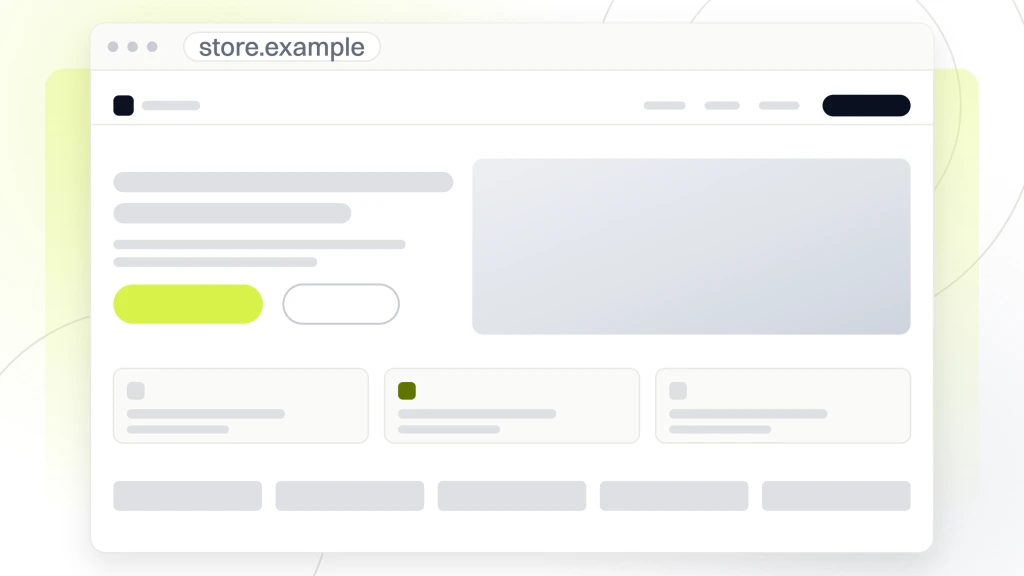
A typical headless build in 2026 pairs Shopify Plus (backend) with Next.js on Vercel (front-end), Contentful or Sanity (CMS), Algolia (search), and Klaviyo (email). The front-end pulls product data via Shopify Storefront API and CMS content via CMS API, renders the pages at build time or on demand, and posts back through Shopify Checkout. Total build time runs 16 to 28 weeks for a mid-catalog DTC store.
Initial cost lands $120k to $350k. Monthly platform fees run $2,000 to $5,000 across the stack. The wins are page speed (LCP under 1.5 seconds on well-tuned Vercel deploys), design freedom (any Figma design ports cleanly), and staged rollouts (individual pages migrate first before the whole store). The Google Web Vitals documentation pairs cleanly with a headless architecture, and that’s for one reason. The front-end team owns performance end to end.
Composable isn’t always the answer
Composable makes sense at $30M-plus revenue where the store needs to swap the search engine (Algolia to Elastic to a custom vector search) without rewriting the front-end. Below that revenue, composable adds three layers of API contract to a stack that could have launched as one theme. Founders who go composable too early spend the first year debugging middleware and the second year hiring platform engineers they can’t afford.
Composable is right when the store has three or more product taxonomies, multiple CMSs feeding one storefront, or a global operation across 5-plus regions with distinct tax logic. Otherwise Shopify Plus with the standard theme or a lean headless setup wins.
Integrations every ecommerce website development scope owns
Ecommerce website development is 40 percent theme code and 60 percent integrations. The store connects to email, SMS, shipping, reviews, analytics, ad platforms, an ERP or 3PL, and often a warehouse management system. Every integration is a place the store breaks in production. A bundled ecommerce web design and development scope owns those integrations by name, not by hand-waving.
The integration checklist bundled with the store
- Email flows in Klaviyo or Attentive, wired to Shopify customer, cart, and order events.
- SMS in Attentive or Postscript, with double-opt-in compliance for TCPA.
- Reviews via Judge.me, Okendo, or Loox, injected into PDP schema for review rich snippets.
- Shipping via ShipStation or EasyShip, connected to Shopify fulfillment webhooks.
- 3PL or warehouse via ShipHero, ShipMonk, or a direct EDI connection to the warehouse management system.
- ERP via NetSuite, Cin7, or Brightpearl for larger stores with real inventory operations.
- Analytics via GA4 with server-side conversion tracking, plus Shopify Analytics native.
- Ad platform pixels for Meta CAPI, TikTok Events API, Google Ads Enhanced Conversions, dedup on every one.
Which integrations break most in production
Three integrations break most often. Meta CAPI dedup fails when the browser pixel and server pixel send different event IDs, doubling attribution and killing bidding. ShipStation order sync fails, so Shopify tags don’t carry into ShipStation without a specific tag mapping. Klaviyo abandoned cart flows fire on the wrong trigger, and the reason is the theme didn’t fire the correct add-to-cart Shopify web pixel event.
Each of these is a two-hour fix if the dev team owns the integration during build. Each becomes a two-week fire drill if the store treats integrations as post-launch work. Our post on ecommerce website maintenance services covers the retainer scope that catches those regressions before they bill real orders.
QA and testing inside ecommerce web design and development
QA is where every under-scoped ecommerce web design and development build gets exposed. Most agencies budget 5 to 8 percent of the build for testing. Real QA needs 15 to 20 percent. That gap is why so many DTC storefronts launch with a broken cart on Safari mobile or a checkout that fails PayPal Express on Android.
The QA checklist across four surfaces
Every build gets QA across four surfaces before launch. Browser matrix (Chrome, Safari, Firefox, Edge, plus mobile Safari and mobile Chrome). Device matrix (iPhone 13 and 15, iPad, three Android phones covering Samsung, Pixel, and OnePlus). Payment matrix (Shop Pay, Apple Pay, Google Pay, PayPal Express, credit card, plus Klarna or Afterpay). Integration matrix (Klaviyo receives every event, ShipStation receives every order, GA4 receives every conversion).
Skipping any one of the four is where post-launch bugs live. The Baymard Institute has documented mobile checkout usability failures that show up in Safari mobile more than any other combination, so it earns extra QA time. A test slate that runs the four matrices takes 40 to 60 hours on a mid-sized DTC store and catches 90 percent of launch-day bugs before they hit real shoppers.
Load testing before big launches
Stores launching with a marketing push (email blast, influencer campaign, TV ad) need synthetic load tests that model 10-plus times average traffic before the marketing goes out. K6 or Artillery scripts hit checkout, PDP, and cart at 500 to 5,000 concurrent virtual users, then measure response time and error rate. Shopify Plus absorbs almost any traffic spike, so the failure point is usually a third-party app or the Klaviyo webhook queue backing up. Load tests catch those bottlenecks before the store loses orders. A single load test session runs $2,000 to $5,000 and saves stores five-figure launch losses when the numbers spike hard on day one.
Deployment and launch inside ecommerce web design and development
Deployment is where the ecommerce web design and development build meets reality. A good deployment plan looks boring on paper and holds up on the day. A bad deployment plan has 12 people in a Slack channel at 2 AM chasing a DNS record and a cart bug at the same time. The difference is a written launch checklist and a rehearsal.
The launch checklist that keeps the date honest
- Staging environment mirrors production, populated with real product data and a copy of the DNS records.
- DNS TTL dropped to 300 seconds 48 hours before cutover.
- Full 301 redirect map from every old URL to the new URL, tested against a live crawler.
- Product data migration signed off by the merchandising team (SKU count, variant count, image count match).
- Payment testing with real transactions of $1 on every payment method, refunded after confirmation.
- GA4, ad pixels, and Klaviyo firing tested against a live cart-to-checkout event chain.
- Rollback plan documented with the exact DNS entry to revert to and the person authorized to make the call.
Post-launch stabilization isn’t optional
The 30 days after launch are where the real bugs surface. A dev on call for 30 days at 25 percent capacity catches every one of them. Cutting stabilization to save $5k on the contract is where founders lose $50k in Q1 revenue when a checkout regression sits undiagnosed for two weeks. Every ecommerce web design and development build our team runs includes a 30-day stabilization block with a written escalation path, and that block is one of the reasons launched stores stay launched.
How long does ecommerce web design and development take for a DTC store
Ecommerce web design and development for a mid-sized DTC store runs 12 to 20 weeks on Shopify Plus with a bundled scope. Custom stacks run 26 to 52 weeks. Headless lands in the middle at 16 to 28 weeks. Every timeline assumes the team signs off design in one week.
The four-phase timeline breakdown
Phase one (discovery, IA, wireframes) runs three to four weeks. Phase two (visual design, design system, top ten templates) runs four to six weeks. Phase three (front-end code, integrations, back-end wiring) runs six to eight weeks on Shopify Plus and 12 to 24 weeks on custom or headless. Phase four (QA, staging, launch, stabilization) runs three to four weeks.
Founders who insist on a six-week total timeline usually get a theme skin with three integrations, and the store loses money on every gap in the scope. Real bundled ecommerce web design and development on Shopify Plus lives in the 12 to 20 week window, and any proposal much shorter than that is either cutting a phase or hiding it.
What kills timelines in practice
Timelines slip on three predictable causes. Design signoff drags past two weeks when the founder wants to sit with the mocks over a weekend and forgets to come back for ten days. Product data lands late from the merchandising team, so nobody wrote the SKU import schema. Integrations require credentials from a third party (an ERP vendor, a shipping provider) that take three weeks to arrive. All three cost real calendar time. Bundled scopes with a project manager who owns those blockers keep timelines honest. Split scopes with two agencies and no PM slip on every one of them.
Cost of ecommerce website development and web design services in 2026
Bundled ecommerce website development and web design services for a mid-sized DTC store cost $40k to $180k on Shopify Plus, $120k to $350k on headless, and $180k to $600k on custom. Splitting design and dev across two agencies adds 15 to 25 percent in coordination overhead and change orders. That premium buys nothing the store can use.
Every founder eventually receives a proposal that reads “Enterprise Ecommerce Solution starting at $500,000” from an agency in a WeWork with a stock photo of a boardroom on the About page. The line item titled “Blockchain-Ready Architecture Consultation” runs $45,000 and includes a discovery workshop hosted on a beanbag. Somewhere in the world right now, a boutique consultancy is preparing a proposal that starts with “Digital Transformation Journey” and ends with a $12,000 monthly retainer for a Slack channel that gets one reply per week.
Where the money actually goes
On a $90k Shopify Plus bundled build, the money splits roughly like this. Discovery and IA takes $8k. Visual design and design system takes $18k. Front-end theme code takes $28k. Integrations (Klaviyo, ShipStation, GA4, ad pixels, reviews) take $14k. QA takes $10k. Deployment and 30-day stabilization takes $12k.
Bundled scopes carry lower coordination overhead. The strategy lead, the designer, the developer, and the QA tester sit inside one agency and one Slack channel. Split scopes tax the founder 15 to 25 percent for the same output, and the tax scales with build complexity. Redefine Web’s own small-brand tier for DTC web design starts at $2,500, mid tier at $4,500, and premium at $7,500, so founders shopping a template-first launch have a clean entry point before the $40k Plus bracket.
Custom builds and enterprise scopes
Founders past $10M in annual revenue often need a custom build that starts at $18k and scales into six figures based on catalog size, integration depth, and design complexity. Custom is right when the storefront needs UX patterns no theme supports, or when the brand runs three or more languages against a shared PIM. Below that revenue bar, custom is an expensive way to reinvent what a well-tuned Shopify Plus theme already ships.
Ongoing retainer scope after launch
Post-launch, most DTC stores run a monthly retainer with the build agency for continued design tests, integration updates, and performance work. Redefine Web’s maintenance tiers land at $199, $299, and $499 per month depending on volume, and larger stores step up to a $1,499 to $3,999 monthly retainer for ongoing dev and design capacity. That capacity covers seasonal template updates, new integration wiring, and CVR test cadence. Stores that skip the retainer usually accumulate 3 to 6 months of design debt and then pay for a mid-year sprint at higher hourly rates.
A real DTC store that launched bundled ecommerce web design and development
One of our DTC ecommerce clients, RAFZ Cirkulära Interiörer, came in with a plugin-heavy WooCommerce build that took over 15 seconds to fully load on mobile. Two proposals had already scoped the rebuild as separate design and development contracts. The founder’s problem wasn’t the proposals; it was the coordination overhead between the two teams that would have blown the launch window and added 20 percent to the cost. Our team took the bundled scope and shipped a lightweight custom theme against one Figma system and one integration list, using patterns from our ecommerce web design examples for DTC brands.
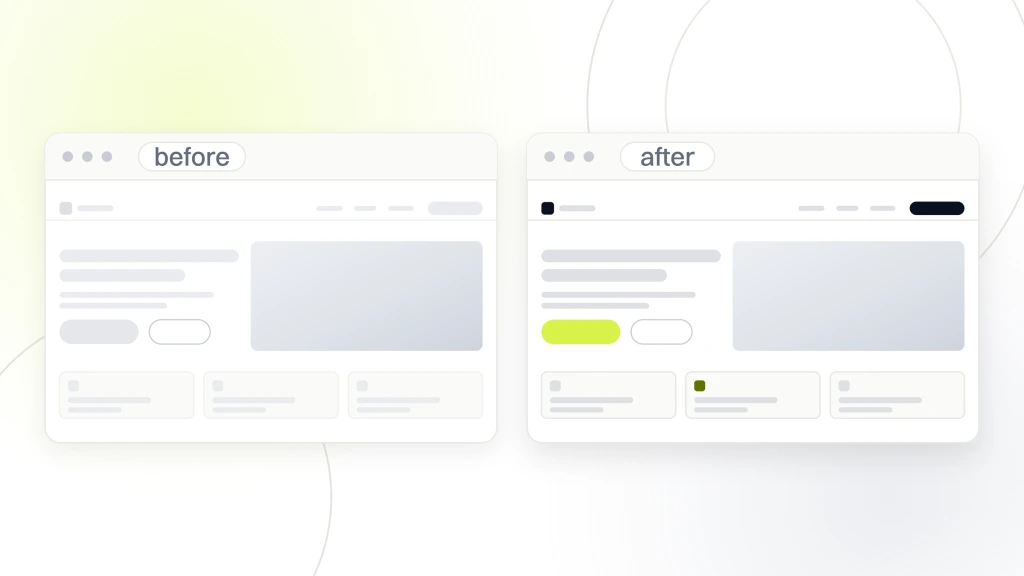
The build stack landed on Shopify Plus with a lightly headless PDP for configurable product tiles. Discovery ran three weeks including interviews with the merchandising team. Design system ran five weeks with six components (nav, PLP tile, PDP hero, cart drawer, checkout, review block) and every state pre-built. Front-end theme code ran seven weeks. Integrations covered Klaviyo, ShipStation, Yotpo reviews, GA4 with server-side dedup, and Meta CAPI. QA ran three weeks across the browser, device, payment, and integration matrices. Deployment happened on a Wednesday morning with the DNS cutover behind a two-hour rehearsal the previous Sunday.
Post-launch, RAFZ boosted its conversion rate 28 percent, dropped fully-loaded page time from over 15 seconds to 2 seconds, and cut server requests 82 percent. That combination is the pattern every DTC rebuild aims for. Split scopes would have delivered the same features six months later and 20 percent over budget. Bundled scope was the reason the numbers landed on the deadline they landed on. Our deeper post on wordpress ecommerce website development covers the WooCommerce version of the same bundled approach for stores that pick that platform instead.
Choosing an ecommerce web design development company that delivers
An ecommerce web design development company that delivers on time and on scope has three visible traits in the sales conversation. One dedicated project manager per build, a written 12-16 week timeline with weekly milestones, and a portfolio that shows five or more live DTC stores you can visit today. Agencies that dodge any one of those three are the ones that slip the deadline.
Questions that reveal the agency early
Ask five questions on the first call. Who is the project manager assigned to my build, and what other builds are they running concurrently? How many hours of QA are budgeted, and what browsers and devices are on the matrix? Which integrations are in scope, and which cost extra as change orders? What is the rollback plan if launch day breaks the store? How does the 30-day stabilization block work, and who is on call?
Agencies that answer with clarity have built dozens of stores. Agencies that hand-wave are pitching a Figma file and calling it a build. That’s the fastest read on a proposal you’ll get.
Case study references that hold up
Any agency worth signing has three live case studies with real DTC store URLs, actual revenue numbers (or at least directional percentages), and a founder reference willing to take a 15-minute call. Anonymized results don’t count. Screenshots don’t count. A store URL and a real person on the phone is the standard. Founders can pressure-test the pattern against Baymard’s checkout usability database before signing anything.
Where ecommerce web design and development fits the growth stack
Ecommerce web design and development sits at the base of the growth stack. Paid media, SEO, email, and content all rely on a store that converts the traffic they send. Founders who fix the build first make every downstream marketing dollar 20 to 40 percent more efficient. Founders who patch the store during an ad run pay CAC against an underperforming funnel and blame the ad platform.
If the store is on legacy Magento, an outdated Shopify theme, or a homegrown PHP stack more than four years old, the bundled rebuild is the highest-ROI investment on the roadmap. Every quarter of delay costs 5 to 10 percent of the growth the store could have captured. Our ecommerce marketing agency team runs both the build and the growth work under one roof, and that’s why our bundled scope beats split proposals on both timeline and post-launch numbers.
The rest of the growth stack sits alongside the ecommerce web design and development bundle. Paid media pointed at a converting store. SEO on category and product pages that treats them as landing pages. Email flows that catch the shopper who bounced. Reviews collection that populates the trust signals section. Every tactic works better when the store’s build isn’t fighting it. The ecommerce web design and development bundle in this piece is the scope a founder can sign for a mid-sized DTC store in 2026 without a rebuild every 18 months. Reference the Shopify Plus documentation on checkout extensibility when the team scopes checkout customization, and lean on the Smashing Magazine work on ecommerce UX for the design side.
A bundled design plus development scope reads differently once the brand crosses the bespoke threshold. Our post on custom ecommerce web design services covers the custom versus template decision, the seven-phase scope, and where the bespoke premium actually earns back over 18 to 24 months.
Lock in the bundled ecommerce web design and development scope
The founders who launch on time in 2026 are the ones who pick one agency, one PM, one integration list, and one QA plan. Everything else is a coordination tax the store pays out of Q1 revenue. Pick the bundle, sign the 12 to 20 week timeline, and hold the launch date honest with the checklist above. That’s the shortest path from a legacy store to a build that supports the next three years of growth.