
Optometrist website design cost in 2026 sits in four honest bands from $2,000 to $25,000, and every band is right for a specific practice size. Most vendors quote the license fee only, then let you find out about hosting, plugins, copy, photography, and integration on your own budget. You want the fully-loaded annual number, not the sticker price on page one of the proposal.
You’ll get the four honest optometrist website design cost bands, the hidden line items in each one, ROI math on booked exams and payback windows by tier, the top 5 website design companies for optometrists to shortlist or avoid, and a Vision Express example where our SEO plus PPC plus web design work grew bookings 62% and organic traffic 135.9% in 6 months. Read straight through in about 10 minutes and match the right budget to your growth stage.
Optometrist website design cost breaks into 4 honest bands
The number sorts into 4 honest bands in 2026. Under $2,000 for a template with a color swap. $3,500 to $8,000 for a template with real copy. $8,000 to $18,000 for a semi-custom design with real strategy and CRO. $20,000 and up for a fully custom build with photography and a launch plan. Every band is honest for a specific practice fit. The mismatch shows up when a $2,800 vendor promises $15,000 outcomes.
The right band depends on practice size, growth plan, and traffic scale. A solo rural practice at 20 exams a week does not need a $20,000 build. A three-location chain running $6,000 a month in Google Ads can’t survive on a $2,800 template. Match the build spend to the growth stage. Overspending on a stable solo practice is wasted capital. Underspending on a growth-mode chain is wasted revenue. The math on each band is different, and the ROI math is what tells you which one is honest for you.
| Band | Price | Best fit | Payback |
|---|---|---|---|
| Template with color swap | Under $2,000 | Rural solo, no growth | 12-24 months |
| Template with real copy | $3,500-$8,000 | Solo urban, stable book | 6-12 months |
| Semi-custom design | $8,000-$18,000 | Two-provider, growth mode | 4-6 months |
| Fully custom build | $20,000+ | Multi-location chain | 3-5 months |
Band 1 under $2,000
Under $2,000 gets you a WordPress template with a color swap, vendor-supplied copy, and a stock hero image. Time-to-launch runs 3 to 4 weeks. You get a functioning site that captures basic inbound leads. You don’t get real strategy, real conversion optimization, or real photography. This band is honest only for rural solo practices with a stable book of insurance-driven appointments and no plans to grow. For any practice targeting growth, this band is a cost sink that produces a site you’ll replace inside 24 months.
Band 2 at $3,500 to $8,000
$3,500 to $8,000 gets you a template with real copywriting, one round of design customization, and a professional scheduler integration. Time-to-launch runs 4 to 6 weeks. This band suits solo urban practices with a stable book who want a professional site without the custom price tag. Paid-traffic conversion lands at 6 to 10 percent. Organic conversion lands at 3 to 5 percent. Fine for stable practices. Not enough for growth-mode practices doing $2,000+ per month in Google Ads. Our own SMB tier at $2,500 lives at the low end of this band and is right for a first professional site.
Band 3 at $8,000 to $18,000
$8,000 to $18,000 buys a semi-custom design with real strategy, page-level CRO, real photography, and integrated scheduler plus PMS wiring. Time-to-launch runs 6 to 10 weeks. This band suits two-provider practices and growth-mode solos with $2,000+ in monthly ad spend. Paid conversion lands at 12 to 18 percent. Organic conversion lands at 6 to 10 percent. Our own SMB builds at $2,500 to $7,500 sit well below the industry mid-band and pair with a growth retainer for practices that want the same math without the $12,000 sticker.
Band 4 at $20,000 and up
$20,000 and up buys a fully custom build with location custom post types, per-location NAP schema, service-by-location taxonomy, and templated landing pages that pull the right doctor bios and reviews for every clinic. Time-to-launch runs 10 to 14 weeks. This band suits multi-location chains and DSO-backed practices with 3 or more offices and $6,000+ in monthly ad spend. Custom builds from $18K+ are the honest floor once you cross that threshold, and payback still lands inside 5 months on incremental exam volume.
Hidden costs on optometrist website design cost quotes
Every quote for a practice website has line items missing that you’ll discover in year 1. Hosting runs $12 to $199 per month by tier. Domain and SSL run $20 to $200 per year. Premium plugins for forms, backups, and security add $150 to $600 per year. Stock photography runs $80 to $400, or a real photographer for practice photos runs $400 to $900. Copywriting handled by a separate writer adds $600 to $3,000. Scheduler integration setup runs $200 to $600 one-time. Content updates after launch run $80 to $150 per hour.
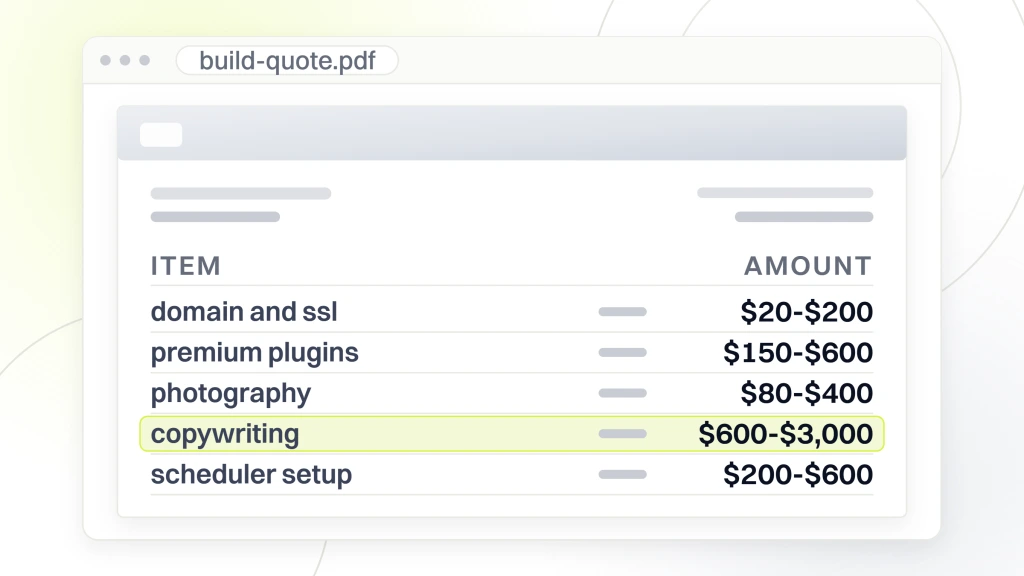
Add all 7 hidden costs to a $2,800 template quote and the fully-loaded first-year number lands between $4,600 and $9,400. Add them to a $12,000 semi-custom quote and the first-year number lands between $14,000 and $18,000. Vendors quoting the build fee alone are hiding the rest for you to discover later. Ask for the fully-loaded annual number in writing, including year-2 renewal and support terms. Real quotes list every line. Bad quotes hide the extras.
- Managed WordPress hosting at $59 to $199 per month by traffic tier
- Premium plugin licenses at $150 to $600 per year for forms, backups, security
- Domain registration and SSL at $20 to $200 per year
- Stock photography license at $80 to $400, or a real photographer at $400 to $900
- Copywriting for 6 service pages plus homepage at $600 to $2,400
- Scheduler integration setup at $200 to $600 one-time
- Ongoing content updates at $80 to $150 per hour, or a monthly retainer
Hosting and infrastructure costs
Shared WordPress hosting on Bluehost or Hostgator runs $12 to $25 per month and produces mid-50s mobile PageSpeed scores that hurt organic ranking and paid Quality Score. Managed WordPress hosting on Kinsta, WPEngine, or Rocket.net runs $59 to $199 per month and produces 85 to 95 mobile PageSpeed scores out of the box. The math on the upgrade is straightforward. Every 10-point PageSpeed gain moves conversion rate 1 to 3 percent. A practice booking $30,000 per month gets back the $150 monthly hosting premium in the first two extra exams. Our own maintenance plans bundle hosting at $199, $299, and $499 per month, so the line item stops being a surprise.
Premium plugin costs
The plugin stack behind a working optometry site includes a forms plugin at $59 to $299, a backup plugin at $99 to $199, a security plugin at $99 to $299, an SEO plugin (RankMath is free, Yoast Pro is $99), a caching plugin at $59 to $99, and a scheduler integration at $120 to $300 by system. Bundled together, annual plugin fees run $500 to $1,200 per year on a well-built site. Vendors who skip premium plugins to lower the quote launch sites that fail security scans, run without backups, and score 40 on mobile PageSpeed.
ROI math on the build spend
Every website spend decision comes down to ROI math on booked exams. A well-designed optometry site converts paid traffic at 12 to 18 percent and organic traffic at 6 to 10 percent. A poorly-designed site converts paid at 3 to 5 percent and organic at 1 to 2 percent. Same clicks, same offer, same practice, one design decision, roughly 3x the booked exams. That multiplier is the entire case for spending real money on the site.
Run the math for a practice booking 40 exams a month at $185 average revenue per exam. That’s $7,400 per month, or $88,800 per year in exam revenue. Push conversion from 3 percent to 12 percent through a $12,000 rebuild and the practice books 160 exams a month instead of 40. That’s $29,600 per month, or $355,200 per year. The rebuild pays back in the first month of extra exam revenue. ROI on the rebuild runs about 30x in year 1. That’s why every practice we audit at 3 percent conversion is losing money staying on a bad site.
Payback window by band
Payback on a template build under $2,000 runs 12 to 24 months since the conversion multiplier is small. Payback on a $3,500 to $8,000 template with real copy runs 6 to 12 months. Payback on an $8,000 to $18,000 semi-custom design runs 4 to 6 months. Payback on a $20,000+ custom build runs 3 to 5 months. The counter-intuitive result is that the higher band pays back faster since the design multiplier compounds. Under-spending stretches payback. Right-sizing shortens it.
Revenue multiplier effect
The revenue multiplier on a rebuilt site compounds since every marketing channel drops traffic on the site. SEO drives it. Google Ads drives it. Referrals research on it. Every marketing dollar bottlenecks through a booking form or phone number in the page structure. Fix the site and every dollar spent on SEO, ads, and social starts producing 2 to 4 times more booked exams on the same monthly spend. That compounding is what makes the site the highest-return marketing investment in the first 90 days of any retainer.
Top 5 website design companies for optometrists (and how to evaluate them)
The top 5 website design companies for optometrists split into two categories. Vertical specialists that only serve medical and optometry practices, and general agencies that have launched 20+ optometry sites. Both categories produce good sites when the pricing band fits the practice size. The wrong pick is a generalist agency running its first optometry site, or a marketing agency selling web design as an add-on to a paid ads retainer.
- Vertical specialists like Officite, PatientPop, and Solutionreach for medical-only builds
- Independent agencies that have launched 20+ optometry sites in the past 24 months
- Freelance WordPress developers with a documented optometry portfolio
- Full-service marketing agencies that deliver web plus SEO plus PPC on retainer
- Custom-code shops for enterprise multi-location chains at $30,000+
How to evaluate any vendor
Ask for 3 live URLs of optometry sites the vendor has launched in the past 24 months. Load each on a phone during morning commute. Time the Largest Contentful Paint. Count how many clicks it takes to reach the Book button. If any of the 3 URLs fails the on-the-phone tests, walk away. Ask for a case study with real numbers on booked-exam growth, not vanity traffic metrics. Ask for the fully-loaded annual quote in writing including hosting, plugins, and support. Vendors who can’t produce all 3 artifacts inside 48 hours are not the right partner.
Red flags on a bad quote
A quote that lists only the build fee, with no hosting, plugins, copy, or scheduler integration, is hiding the real cost. A quote promising a 2-week WordPress launch is skipping strategy or QA. A quote guaranteeing a specific ranking position is a scam. A quote requiring a 5-year contract locks you into a vendor before the site launches. A quote that includes proprietary page builders like Divi or Elementor without warning you about migration cost is optimizing for the vendor’s build speed. Any of those 5 red flags is a walk-away signal.
Vision Express case study on the payback math
Vision Express is an independent optometry practice known for premium patient care and specialty services like vision therapy, dry eye treatment, and specialty contact lenses. They were competing against corporate chains on local search, and their site could not communicate the value that made their practice different. Without proper tracking, they couldn’t measure what worked. The math for staying on the old site no longer worked. The math for a rebuild had become obvious.
We built a semi-custom WordPress rebuild in the $8,000 to $18,000 band, then paired it with local SEO, GBP optimization, and high-intent paid ads on premium services. Real copy on vision therapy, dry-eye, and contact-lens pages, each optimized for intent. Location-based SEO with geo-modified content and local backlinks. Online booking tools with clear CTAs. Within 6 months, appointment bookings climbed 62%. Organic traffic climbed 135.9%. Overall practice growth came in at 71%. Those numbers came from the full Vision Express engagement covering SEO, PPC, and web design.
The payback numbers
The headline result on Vision Express was +71% practice growth in 6 months, driven by a 135.9% jump in organic traffic and a 62% gain in appointment bookings. The site rebuild kicked off the program, then local SEO and high-intent paid ads compounded on top. In short, the rebuild wasn’t a marketing expense. It was a revenue investment with a defined payback window and a compounding multiplier on every other marketing dollar. Budget it that way and the math becomes obvious.
Lessons on cost
Two lessons from Vision Express apply to any independent optometry practice. First, a cheap template can be the right call when the practice is stable and growth is flat. It becomes the wrong call the moment growth kicks in and the template hits the wall. Match the band to the growth stage, not the founding budget. Second, the rebuild is not a marketing expense. It is a revenue investment with a defined payback window and a compounding multiplier on every other marketing dollar. Budget it that way and the ROI runs itself.
Optometrist website templates vs custom cost comparison
Optometrist website templates run $49 to $399 for the license fee alone, plus $2,400 to $6,800 in first-year all-in costs including hosting, plugins, copy, photography, and integrations. Custom builds run $8,000 to $25,000 in first-year all-in costs. The gap looks large until you factor in the conversion multiplier. Templates convert paid traffic at 6 to 10 percent. Custom builds convert paid traffic at 12 to 18 percent. On a $4,000 monthly ad spend, that gap is worth $2,000 to $4,000 per month in extra booked exams, or $24,000 to $48,000 per year.
The cost delta between a template and a custom build pays back inside 4 to 6 months on any practice spending $2,000+ per month on Google Ads. Below that ad spend, templates are the honest pick since the extra conversion gain doesn’t clear the extra cost. Above that ad spend, custom is the honest pick since the extra conversion gain compounds every month the site is live. Right-sizing to the practice’s ad spend and organic traffic volume produces the right band on its own.
Template first-year cost
Template license at $199. Managed hosting at $60 per month for the first year, $720. Premium plugins at $500 per year. Real copywriting for 6 pages at $1,800. Practice photography at $600. Scheduler integration setup at $400. Domain and SSL at $80 per year. Total first-year all-in cost on a good template build lands at $4,300. Vendors quoting less are hiding line items. Vendors quoting more than $6,800 for a template are overcharging. Real pricing sits in the middle of this range for solo and two-provider practices.
Custom first-year cost
Semi-custom design fee at $10,000. Managed hosting at $120 per month for the first year, $1,440. Premium plugins at $800 per year. Real copywriting for 8 pages at $2,400. Practice photography at $900. Scheduler integration and PMS integration setup at $1,200. Domain and SSL at $80 per year. Total first-year all-in cost on a semi-custom build lands at $16,820. That is the honest number for the $8,000 to $18,000 band. Vendors quoting the $10,000 build fee alone are missing $6,800 in support costs the practice pays anyway.
Optometrist website design cost by practice size
Practice size drives the right band more reliably than any other input. Solo rural at 15 to 25 exams a week sits comfortably in band 1 or 2 at $2,000 to $6,000 all-in. Solo urban at 30 to 50 exams a week sits in band 2 or 3 at $5,000 to $12,000. Two-provider practices at 50 to 100 exams a week sit in band 3 at $10,000 to $16,000. Multi-location chains sit in band 4 at $20,000+.
Match the band to the practice’s traffic volume and the math holds every time. Under 400 sessions a month means the site is a static brochure, and a template handles that traffic fine. Between 400 and 1,600 sessions a month means the site is a real conversion engine, and semi-custom design pays back on the multiplier. Above 2,000 sessions a month with multiple traffic sources means the site is a growth asset, and custom builds win on personalization, tracking, and per-ad-group landing pages that templates can’t produce.
Solo practice cost planning
A solo optometrist doing 30 exams a week with a stable book of insurance-driven appointments needs a functional site, not a growth engine. Budget $4,000 to $6,000 all-in for year 1 on a good template with real copy, real photography, and a scheduler integration. That produces a site that converts organic traffic at 5 to 8 percent and paid traffic at 8 to 12 percent, plenty for the practice’s growth trajectory. Overspending on custom at this stage is capital better spent on clinical equipment or staffing.
Multi-location practice cost planning
A three-location practice can’t survive on a template since templates assume one location, one phone, one address. Budget $18,000 to $30,000 all-in for a custom build that handles location custom post types, per-location NAP schema, service-by-location taxonomy, and templated pages that pull the correct doctor bios and reviews per location. That structure takes 10 to 14 weeks to build and pays back on local map pack rankings inside 6 months. Anything less at three-location scale is a wasted year on a platform that can’t compete for local search.
Contract terms that shift the fully-loaded price
The contract between the practice and the vendor affects the fully-loaded price as much as the base build fee. Standard contract terms include payment schedule, ownership of the domain and hosting account, revision rounds included, support window after launch, and renewal terms in year 2. Miss any of these 5 and the vendor holds negotiating power that costs the practice thousands over the life of the site.
Payment schedule should split 40 percent at kickoff, 30 percent at design approval, and 30 percent at launch. Vendors demanding full payment upfront have no accountability once the check clears. Domain and hosting ownership should list the practice as account holder from day 1, not the vendor. Two to 3 revision rounds should be included, with hourly billing beyond that. Support window after launch should include 60 days minimum for bug fixes. Renewal terms in year 2 should cap increases at 10 percent. Any contract term outside these guardrails is a red flag worth negotiating before you sign.
Payment schedule structure
The 40-30-30 payment schedule protects both practice and vendor. The vendor gets working capital at kickoff to cover initial design and copywriting labor. The practice holds 60 percent of the budget until the site actually launches and passes QA. Any vendor demanding 50 percent or more upfront is signaling cash flow issues, or a lack of confidence in delivery. Any vendor accepting only 10 percent upfront usually charges higher overall to cover the risk of payment default. The 40-30-30 split is the market standard for a reason.
Ownership and renewal terms
The practice should own the domain, the hosting account, the WordPress admin credentials, and the site content from day 1. Contract clauses that transfer these assets to the vendor create hostage situations if the relationship sours. Renewal terms should cap year-2 increases at 10 percent and require 60 days written notice before non-renewal. Vendors requiring multi-year contracts with automatic renewal clauses are locking in future revenue at the practice’s expense. Read every renewal clause before signing and negotiate any auto-renewal that runs past 12 months.
Annual maintenance costs after launch
The spend does not end at launch. Year 2 and beyond includes hosting, plugin renewals, security updates, content updates, and periodic design refreshes. Budgeting the annual number correctly prevents the second-year surprise that hits practices whose vendor sold the initial build without disclosing the ongoing spend.
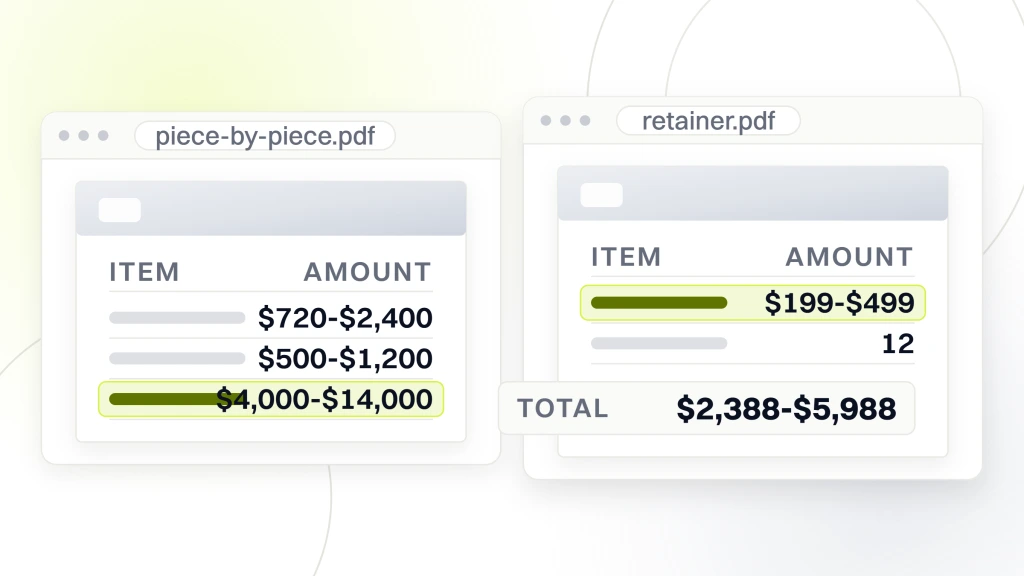
Managed hosting runs $720 to $2,400 per year. Plugin renewals run $500 to $1,200 per year. Domain and SSL runs $80 to $200 per year. WordPress core and plugin updates take 2 to 4 hours per month at $80 to $150 per hour, or $2,400 to $7,200 per year if outsourced. Content updates for new promotions, provider changes, or seasonal offers take 4 to 8 hours per month, or $4,000 to $14,000 per year. Bundle those 5 into a monthly retainer at $199 to $499 per month and the annual all-in maintenance cost lands at $2,388 to $5,988. Redefine Web maintenance plans sit in that range at $199, $299, and $499 per month.
Retainer vs hourly
A fixed monthly retainer at $199 to $499 covers the same scope of work that runs $6,000 to $14,400 per year on hourly billing. Retainers force the vendor to cap the scope inside the monthly fee. Hourly billing incentivizes the vendor to log every 15 minutes. Practices that outsource maintenance almost always come out ahead on a retainer once the site is past month 6. Below month 6, hourly can work if the vendor is honest about capping hours. Above month 6, retainer wins on both cost and predictability.
In-house vs agency
Handling maintenance in-house through a receptionist or office manager trained on WordPress runs $0 in dollar cost and 4 to 8 hours per month in staff time. That trade is honest when the receptionist has the time and the practice has no growth plans requiring new page builds or ad landing pages. Once the site starts scaling with new services, new locations, or paid landing pages, agency maintenance becomes the honest pick since the staff hours needed exceed what any front-desk role can absorb without hurting patient service.
Where to start on planning the build spend
Start with an honest audit of your current site and your growth plan. Answer 3 questions. What is your monthly exam volume right now. What is your ad spend right now. What is your 24-month growth plan. Those 3 answers narrow the honest band on their own. Under 40 exams a week with no ad spend and no growth plan is band 2 territory at $3,500 to $8,000. Growth mode with $2,000+ monthly ad spend is band 3 territory at $8,000 to $18,000. Multi-location chains are band 4 territory at $20,000+.
Ready to size the right build for your practice. Our Optometrist website design services engagement runs the semi-custom rebuild in the $8,000 to $18,000 band. For the retainer that maintains the site and layers SEO on top, our Optometrist marketing retainer is the plan. Pair the build with our SEO services and our PPC services for the full stack. For the maintenance plan after launch, our Maintenance services covers the ongoing work. For an outside reference on typical website design pricing benchmarks, see the Kinsta website cost guide, the WP Rocket page speed guide, and the web.dev Core Web Vitals reference.