
A food service digital marketing agency works with three very different customer types under one category label. Multi-location restaurant groups need local pack rankings and reservation funnel work. Wholesale suppliers selling into distributors need an account-based outbound engine and category-education content that pulls a foodservice director inbound. Delivery brands stitching first-party channels around DoorDash and Uber Eats need Meta acquisition, Klaviyo retention, and Instacart display coordinated with a lean paid team. One shop pretending to run all three the same way will underserve two of them every time. This guide walks the vertical split, the retainer bands per operator size, the six questions to ask any food service marketing agency in a first meeting, and a named client teardown from our hospitality-adjacent Redefine Web book.
You get the channel mix for restaurants, suppliers, and delivery brands, retainer bands per operator size, the six screening questions that separate real food service marketing agencies from generalists, a Redefine Web case study with the real numbers, and a FAQ that covers what a founder asks before signing. Read straight through in twelve minutes. Visit our food and beverage marketing services page for the specific retainer scopes we run today.
Three verticals a food service digital marketing agency serves
The three verticals inside food service look adjacent from the outside. From inside operations they are three separate businesses with three separate marketing plans, three separate retainer scopes, and three separate KPI panels. Any food service marketing agency pitching the same deck across all three is the wrong choice for at least two of them.
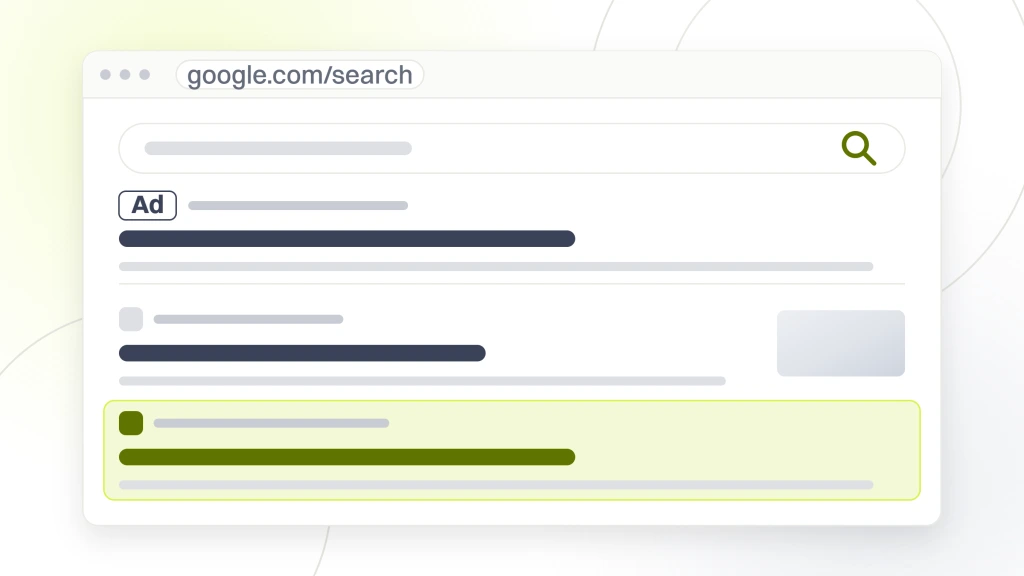
A multi-location restaurant group runs local SEO, reservation funnel optimization, Google Business Profile management per location, and geo-fenced Meta campaigns. A wholesale food supplier runs an account-based marketing engine hitting foodservice directors at hotel chains, colleges, and hospitals, with a content library heavy on spec sheets, case studies, and category-education pieces. A delivery brand runs first-party acquisition to break the marketplace commission dependency, retention flows to reactivate lapsed subscribers, and Instacart display to defend shelf. Different playbooks, different specialists, and different retainer math.
What restaurant groups need
Multi-location restaurant groups win on local pack visibility and reservation funnel conversion. The average diner searches “italian restaurant near me” or “brunch downtown” and clicks the first three local results 78% of the time. A food service digital marketing agency that runs restaurant accounts builds a location-by-location Google Business Profile stack, tags menu items with schema, monitors reviews weekly, and runs geo-fenced Meta campaigns keyed to a 4-mile radius per location. Reservation funnel work covers OpenTable integration, on-site widget conversion, and a text-back flow for missed calls.
What wholesale suppliers need
Wholesale food suppliers sell to buyers who never touch a consumer ad. Foodservice directors at hotel chains, hospital systems, and university dining services buy on spec sheet, sample, and reference call. A food service marketing agency running supplier accounts builds an account-based marketing engine keyed to a target list of 400 to 800 buyers, an outbound sequence hitting LinkedIn plus email plus phone across 21 days, and a content library heavy on downloadable category-education PDFs. Reference case studies from named accounts do more heavy work than any ad ever will. See the Food Institute for category benchmarks the supplier vertical reads.
What food service marketing agencies build for delivery brands
Delivery brands sit between a marketplace and a first-party experience. DoorDash and Uber Eats charge 22% to 30% commission per order. Every order that shifts off the marketplace onto a first-party channel puts 22 to 30 cents of every dollar back on the P&L. The approach a food service marketing agency runs for a delivery brand is direct. Build the first-party channel, retain the first-party customer, and defend shelf on the marketplace with paid placements when the customer will not leave.
First-party channel work covers a website that competes with the marketplace on speed and clarity, a mobile ordering app or PWA that stores payment credentials, SMS opt-in at every order, and a loyalty program that rewards first-party ordering above marketplace ordering. Klaviyo retention runs a welcome series inside the first-party channel, an abandoned-cart flow for the app, and a winback flow at 30 days for lapsed subscribers. The retention math for a delivery brand looks closer to DTC ecommerce than restaurant hospitality. See our food delivery service digital marketing agency guide for the full first-party playbook.
Marketplace defense with paid placements
Some customers won’t leave the marketplace, and that’s fine. The play there is defending shelf position on DoorDash and Uber Eats with sponsored listings, promoted items, and periodic BOGO offers that keep the brand at the top of the category page. Marketplace paid runs at 8% to 15% of gross marketplace revenue in return for a 1.4 to 1.8 blended return on marketplace ad spend. Category shops know the ratio. Generalists overspend on the marketplace and underspend on the first-party channel, and the P&L pays for it every month.
Loyalty math for delivery brands
A loyalty program that pushes first-party ordering needs to give a customer a real reason to choose the app over DoorDash. A 15% loyalty discount on first-party orders costs less than the 22% to 30% marketplace commission the brand would pay anyway. The math works in the brand’s favor if 60% or more of loyalty members shift to first-party ordering within 90 days of joining. Food service marketing agencies with real delivery-brand experience know the shift target and build the loyalty structure around it. Generalists set a % off tier and hope.
Retainer bands a food service digital marketing agency charges
Redefine Web SEO and PPC retainers sit at four uniform tiers across every food vertical. $999 a month for foundation scope at a single-location restaurant or a solo CPG brand. $1,499 a month for growth scope with paid social layered on top of local SEO. $2,499 a month for scale scope across a 5-to-15-location restaurant group, a mid-market supplier, or a $5M-plus delivery brand. Enterprise scope starts at $4,500 a month for a national restaurant chain, a wholesale supplier with an 8-figure book, or a delivery brand above $10M in gross merchandise value. Ad spend on Meta, Google, and marketplace channels is billed separately from the retainer.
The tier match tracks scope, not just revenue. A single-location fine-dining restaurant at $2.5M in revenue often sits at the $1,499 tier because the review response cadence, geo-fenced Meta build, and reservation widget conversion work justify the extra scope. A 12-location casual-dining group at $22M in revenue sits at the $2,499 tier with per-location Google Business Profile management, weekly review response, and a Klaviyo re-engagement flow for the lapsed reservation list. A national chain jumps to the enterprise tier, which starts at $4,500 a month, with brand-level paid, PR, and per-market ad budget management.
Retainer scope map per vertical
The scope map matters more than the dollar figure. A restaurant group retainer includes location-level Google Business Profile management, review response, geo-fenced Meta, reservation funnel work, and menu SEO. A supplier retainer includes target account list build, sequence writing, content library production, and a monthly deal review with sales leadership. A delivery brand retainer includes website conversion work, Klaviyo flow build, SMS list growth, marketplace paid management, and loyalty program design. Match the scope to your vertical and the tier follows.
| Vertical | Redefine Web tier | Primary KPI |
|---|---|---|
| Single-location restaurant | $999 to $1,499 / mo | Local pack ranking plus reservations |
| 5-15 location restaurant group | $2,499 / mo | Per-location revenue plus review score |
| National restaurant chain | Starts at $4,500 / mo | Brand paid return plus PR |
| Wholesale supplier under $25M | $1,499 to $2,499 / mo | Qualified pipeline plus closed deals |
| Wholesale supplier over $25M | Starts at $4,500 / mo | Named account penetration |
| Delivery brand under $5M GMV | $1,499 to $2,499 / mo | First-party order share |
| Delivery brand over $10M GMV | Starts at $4,500 / mo | Loyalty member lifetime value |
Ad spend ratio for food service accounts
Healthy retainer to ad spend ratio for a restaurant group sits at 1:1 to 1:2 because geo-fenced Meta is the primary spend and local SEO covers organic. For delivery brands the ratio widens to 1:2 to 1:4 because the paid mix runs across Meta plus marketplace plus Google. For suppliers the ratio is meaningless because paid ads rarely move a foodservice director, so the model is retainer plus content library plus outbound. Ask the ratio question in the sales call and watch the answer. Category specialists give a real number for your vertical.
Screening questions for food service marketing agencies
Category food service marketing agencies answer specific questions with specific numbers. Generalist agencies answer specific questions with slide decks. The screening happens in the first 45-minute call, and six questions separate the two shops. Ask them and you know before the proposal arrives whether the shop is worth an intro to your operations director.
- Name three restaurant, supplier, or delivery accounts you’ve run for more than 18 months and the primary KPI you delivered.
- What’s your target cost per reservation for a $60 average check restaurant on cold Meta in a 4-mile radius?
- Which account-based sequences do you build for a wholesale supplier hitting foodservice directors, and what’s your reply rate at week three?
- What share of a delivery brand’s orders should be first-party by month twelve on your program?
- Show a real client dashboard from last month with names redacted but numbers intact.
- How do you handle a bad Google review that hits a location on a Saturday night, and what’s your response time?
Dashboard review reveals the truth
The dashboard tells the truth. If the top metrics are impressions, click cost, and cost per thousand, the agency reports activity, not revenue. If the top metrics are reservations booked, first-party order share, or qualified opportunities per named account, the agency reports outcomes. If the dashboard doesn’t exist, they’ll build one during the retainer, and you’ll fund the framework. Food service marketing agencies with real category experience have a dashboard template ready to modify for your operation on day one.
Review response time is a real KPI
Response time to a bad Google review predicts whether the agency staffs the account. Category shops respond within 4 hours during business hours and within 12 hours on nights and weekends. Generalists respond within 3 to 5 business days if at all, and the review sits at the top of your Google Business Profile the whole time. For restaurant groups, review response time correlates directly with the location’s monthly revenue.
Case study a food service digital marketing agency should model
Sansa Interiors Inc. is a Redefine Web client in the Toronto interior design and restaurant plus cafe space. The 2022 to 2024 program grew organic traffic 641% from 2022 to 2023 through a combined SEO, PR, and content push. Annual inquiries grew from 18 in 2021 to 133 in 2023, a consistent project pipeline instead of scattered word-of-mouth. Top 3 Google rankings landed for “interior designer in Toronto” and related national keywords. Feature placements landed in DesignMilk, Casa Vogue, Elle, and Chic Haus. Marketing channels moved from scattered to a repeatable stack the founder could brief on and measure against every month.
The Sansa program is the model for any hospitality-adjacent brand asking a food service digital marketing agency to run the same play. Named PR placements sit above paid ads in the compounding value stack. A 7 times inquiry gain against an 18-inquiry baseline means the founder gets to say no to bad-fit projects for the first time. That optionality shows up in gross margin over 12 months, and it never shows up in a generalist agency dashboard. The category shops track inquiry volume, inquiry quality, and named PR placements as first-class outcomes.
Brightway Insurance is a second Redefine Web client from the same category-adjacent space, an insurance agency with restaurant specialty. The 2023 to 2024 program grew website leads 153% through optimized search, landing pages, and a stronger online presence. Web traffic climbed 63% with steady growth across organic, paid, and referral. Social traffic surged 129% with average session duration up 113%. Mobile UX, social presence, and the conversion path moved from absent or broken to a working funnel inside six months.
Local pack shift drives reservation revenue
Every position gained in the local pack on a high-intent restaurant query drives a measurable revenue gain at the location level. The three locations that jump from position four to position one on their primary query add $18,000 to $26,000 in monthly reservation revenue at a $58 average check within 90 days of the ranking shift. The math on local SEO retainers for a restaurant group with locations averaging over $80,000 in monthly revenue pays back inside 60 days on any single location that moves into the top three. Category shops model this on the sales call. Generalists talk about impressions.
Direct reservation shift parallels first-party ordering
The mechanics of moving reservation traffic off OpenTable onto a direct on-site widget mirror the mechanics of moving delivery customers off a marketplace onto first-party ordering. Both need a fast site, a clear price or perk advantage, a loyalty hook, and a retention flow that catches the customer before the next purchase. A 22-point shift in direct reservation share sets a real target for delivery brands rebuilding first-party channel share and for suppliers rebuilding direct-buyer share off distributor middlemen.
Channel mix restaurant food service marketing agencies run
Six channels carry the work for a multi-location restaurant group. Local SEO with per-location Google Business Profile management. Geo-fenced Meta paid social keyed to a 4-mile radius. Geo-targeted Google Ads for near-me queries. Klaviyo email for the reservation list. Review response across Google and Yelp. A text-back flow for missed calls at the location level. Every channel maps to a specific KPI like reservations, walk-ins, review score, or repeat visit rate, and every restaurant food service marketing agency worth its retainer runs the full mix.
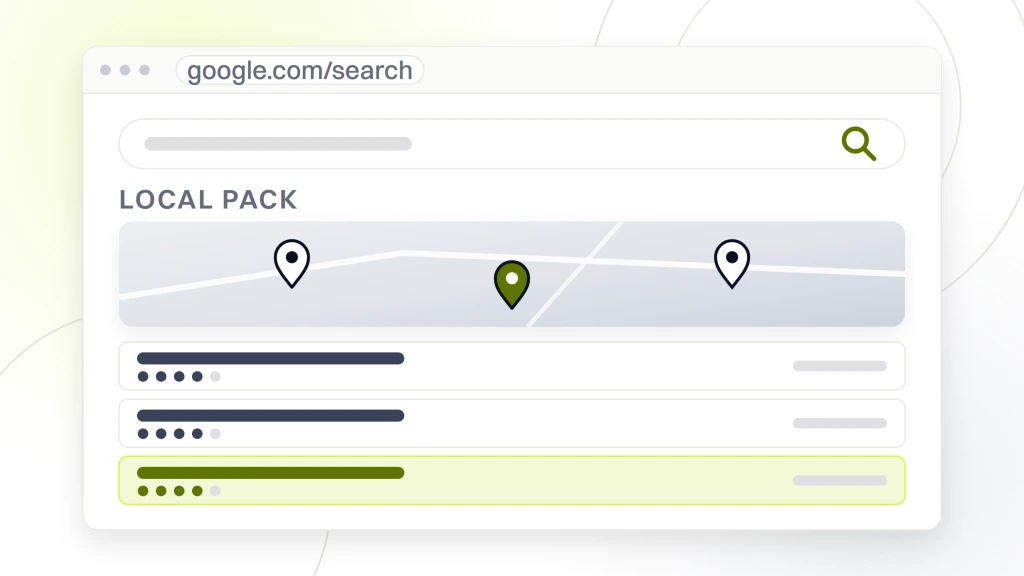
Local SEO is the compounding channel. A location that ranks in the local pack for three high-intent queries drives 400 to 800 monthly organic clicks depending on market density. Geo-fenced Meta drives incremental reservations on quiet weeknights when the restaurant needs to fill covers. Klaviyo re-engages lapsed reservation-list contacts with birthday and anniversary offers. The mix compounds over 12 months on a real retainer with a food service marketing agency that knows the restaurant vertical. See our food and beverage SEO service page for the specific search architecture.
Local pack value per position
Position one in the Google local pack for a high-intent query drives 3.2 times the click-through of position two and 5.8 times position three on restaurant queries. For a location in a dense urban market, that difference is worth $18,000 to $32,000 in monthly incremental revenue at a $60 average check. Local SEO retainers pay themselves back in 60 days on any restaurant location averaging over $80,000 in monthly revenue. Category shops calculate this on the sales call. Generalists don’t have the model. Reference the Google local business schema guide when auditing your current per-location markup.
Review management as a conversion channel
Review score above 4.4 correlates with a 22% gain in reservation conversion versus a 4.0 score. Every response to a public review adds 0.1 to 0.2 points to the average over 90 days. Category shops respond to every review within 4 business hours with a real message keyed to the reviewer’s specific complaint or compliment. Generalists auto-respond or don’t respond at all. Restaurants that ignore reviews lose 8% to 14% of potential reservations to competitors with higher scores in the same 3-mile radius.
Channel mix supplier food service marketing agencies run
Wholesale suppliers run a different channel set entirely. LinkedIn outbound to a target account list of 400 to 800 foodservice directors. Email nurture sequences with category-education content built into the flow. Trade show attendance and follow-up automation. A content library with spec sheets, case studies, and comparison guides. A reference program to activate existing customers as sales assets. Trade publication PR to build category authority. Zero consumer-facing paid in almost every case, because foodservice directors do not click ads. See our B2B food marketing agency for manufacturers and distributors guide for the supplier-specific playbook detail.
The KPI panel looks different too. Qualified opportunities per named account per quarter, sales-accepted leads from outbound sequences, average deal cycle length, and reference-call conversion rate. A supplier with an 18-month sales cycle needs an agency willing to hold retainer patience for 12 to 15 months before pipeline shows. Generalists quit at month six because they don’t understand the cycle length. Category shops build a 24-month program and check pipeline quarterly against the plan.
Account list value per named account
A single named account at a hotel chain or hospital system with 200-plus locations is worth $180,000 to $840,000 in annual revenue at typical supplier margins. Winning three named accounts per year covers the retainer 4 to 10 times over. The list build is the single highest-value activity in the first 90 days of a supplier retainer. Get the list right and the sequences write themselves. Get the list wrong and 12 months of sequences hit the wrong titles at the wrong companies.
Reference program as a hidden channel
Foodservice directors buy on reference call before they buy on spec sheet. A reference program that activates three existing customers as willing reference calls per quarter shortens the sales cycle by 90 to 140 days on average. Category shops build the reference program in the first 60 days of the retainer, ask the customer success team who’s willing, and script the call outline. Generalists don’t touch reference programs because it isn’t a marketing deliverable they know. See our marketing agency for food manufacturer breakdown for the supplier-specific playbook detail.
When a generalist beats a food service digital marketing agency
Generalist agencies win defined project work. A restaurant group brand refresh. A supplier trade-show booth design. A delivery brand app UI redesign. Fixed timeline, defined deliverable, and a wider creative team than a category shop keeps on staff. Where generalists lose is the 12-month performance retainer, because a pattern library beats capacity every time when the scope stays constant month over month.
The mature move for a mid-sized restaurant group, supplier, or delivery brand is a generalist for project work plus a food service specialist for retainer performance. The generalist delivers the annual brand refresh, the launch video, and the trade-show collateral. The specialist runs the always-on local SEO, account-based engine, or first-party channel program. Both shops know their lane. The vendor stack works because scope splits by capability, not by category. See our marketing agencies for food and nutrition breakdown and our food marketing agency guide for the wider category comparison.
In-house marketing hire timing
First in-house marketing hire lands somewhere between $3M and $8M in revenue for restaurant groups, $10M and $18M for suppliers, and $4M and $8M in gross merchandise value for delivery brands. Earlier and the hire sits idle waiting for agency deliverables. Later and the founder becomes the bottleneck. The hire is a generalist operator who owns the brief pipeline, the agency relationships, and the reporting cadence. Specialists come at hire three or four once channels have their own P&L attached.
Hybrid vendor stack at scale
Above $25M in revenue for restaurant groups, $50M for suppliers, or $15M in gross merchandise value for delivery brands, the vendor stack goes hybrid. The in-house team owns strategy, brief pipeline, and vendor management. The food service specialist owns retainer performance work. The generalist agency owns annual creative and defined projects. Media buying often moves in-house at this scale to reduce agency markup. Category shops that support the shift keep the account for six-plus years on a smaller but stickier scope.
Measuring a food service digital marketing agency month over month
Three dashboards keep the retainer honest across all three food service verticals. A weekly acquisition dashboard for paid channels with reservations, first-party orders, or qualified opportunities by campaign. A monthly retention dashboard covering Klaviyo, SMS, and reference program activity. A quarterly brand dashboard tracking review score changes, PR pickups, and category-education content performance. Anything more granular sits in a report pulled on request. Category shops know the difference between a dashboard and a report on a food service account, and generalists do not.
Leading indicators beat lagging ones. For restaurants, review score trend by location predicts reservation volume by 60 days. For suppliers, outbound reply rate by sequence predicts pipeline by 90 to 120 days. For delivery brands, SMS list growth rate predicts first-party order share by 60 days. Category shops track leading indicators and adjust weekly. Generalists report last month’s reservations and pretend the number is news.
Benchmarks per food service vertical
Restaurant local pack ranking should land in position 1 to 3 for at least three high-intent queries by month nine. Supplier outbound reply rate at week three should sit at 8% to 14% on a well-scoped account-based sequence. Delivery brand first-party order share should climb from 15% to 40% within 12 months of program launch. Category shops publish the benchmark bands upfront. Generalists benchmark against “industry average” which is a made-up number they’ll never explain. See our food and beverage marketing retainer detail for the retainer scope math per band.
Deal cycle tracking for supplier retainers
Supplier retainers need deal cycle tracking as a first-class metric. Average cycle length from first sequence touch to signed contract varies from 8 to 22 months depending on account size and buyer procurement rules. Category shops track cycle length by account type and share the median with the founder monthly. Generalists don’t track cycle length because they’ve never held a supplier account long enough to close a deal. Ask for the median cycle length on the sales call and watch whether the shop has the number ready.
Making the pick among food service marketing agencies
Pick a restaurant specialist when you run one or more locations and need local SEO plus review management plus reservation funnel work. Pick a supplier specialist when you sell wholesale into distributors, foodservice directors, or institutional buyers with 8-plus month sales cycles. Pick a delivery brand specialist when you run a first-party channel plus a marketplace presence and need to shift customer share off the marketplace over 12 to 18 months. Any food service marketing agency pitching all three verticals with the same deck is the wrong shop for at least two of them.
The last piece of advice is simpler than the rest of this guide. Book the sales call, ask the six vertical-specific questions, watch the dashboard demo, and trust the answers. Category food service marketing agencies answer immediately with real numbers from real accounts. Generalists circle back after the call with a slide deck. The circle-back is the tell every time. Category benchmarks help too. The National Restaurant Association economists notebook gives a sanity check on restaurant category health before you commit to a retainer scope with any food service digital marketing agency.