Dental SEO tips only earn their name when they move calls, not audit-deck slides. This one shifts the map pack, pulls the right procedure queries, and builds organic traffic that shows up on the P&L inside 90 days. If you have read a dozen dental SEO tips lists this year, you already know the theory. What most practices actually need is the short list of moves in the order they compound.
The playbook runs on the same stack we use for our own dental clients. You get a Google Business Profile plan, on-page rewrites for procedure pages, a link plan that avoids junk directories, a Google-compliant review workflow, and a named case study with real client numbers.
Dental SEO tips for winning the map pack
Dental SEO tips start with the map pack because that is where the highest-intent patients live. A patient searching for a dentist near them is ready to book this week. Google ranks the three-listing map pack on relevance, distance, and prominence. Distance is fixed. Relevance and prominence are the two levers you control, and both respond to work inside 8 weeks.
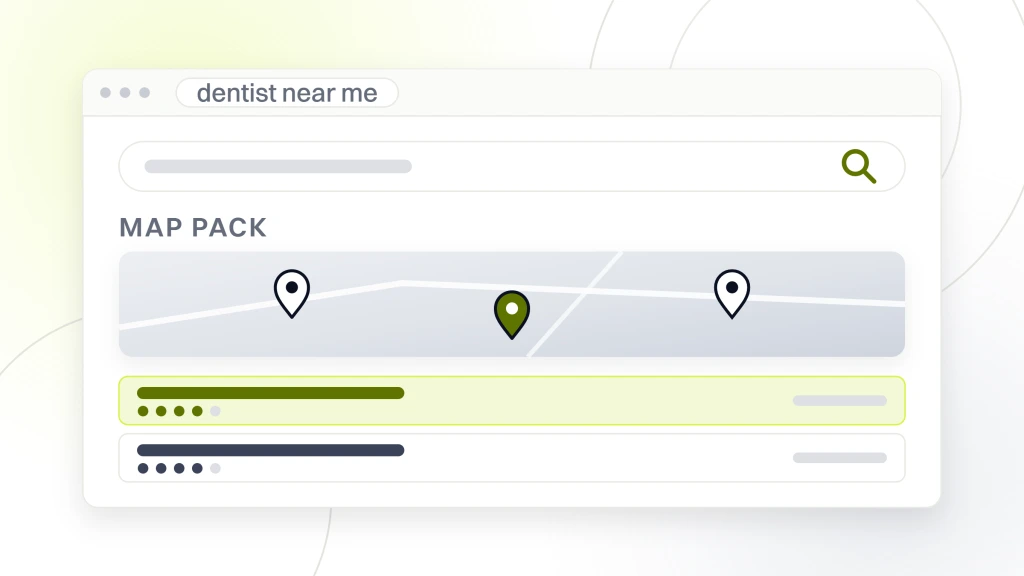
If your office sits in a competitive zip code and keeps landing outside the top three, relevance or prominence is losing. We have watched practices climb from position 8 to position 2 by fixing categories, adding 40 real photos on a schedule, and running a review cadence for 90 days.
Get your Google Business Profile categories right
Your primary category is the single biggest map pack lever. If you run a general practice, pick Dentist. If your revenue leans cosmetic or implants, keep Dentist as primary and add Cosmetic Dentist and Dental Implants Periodontist as secondaries. Skip categories you do not actually serve. Google reads the primary category as your strongest signal and the secondaries as topical breadth. Watch competitors in your zip code to see which categories the map pack rewards locally.
Add photos on a schedule, not once
Practices that upload 3 to 5 new photos every week outperform practices that dumped 40 photos on day one and never returned. Google reads new photos as an active-listing signal. Add exterior shots, interior shots, team candids, before-and-after shots with patient consent, and equipment photos. Skip the stock. Skip the logo. Real photos of your real practice climb the map pack. Our google business profile for dentists post covers the full setup.
On-page dental SEO tips that still move rankings
On-page dental SEO matters more the moment the map pack fight gets crowded. A practice with weak on-page can still land in the map pack if the Google Business Profile is strong, but that same practice will never rank for procedure queries like cosmetic dentist, implant dentist, or Invisalign provider in the blue links. Those queries go to whoever wrote the best procedure page, and the gap is usually 15 to 40 ranking positions.
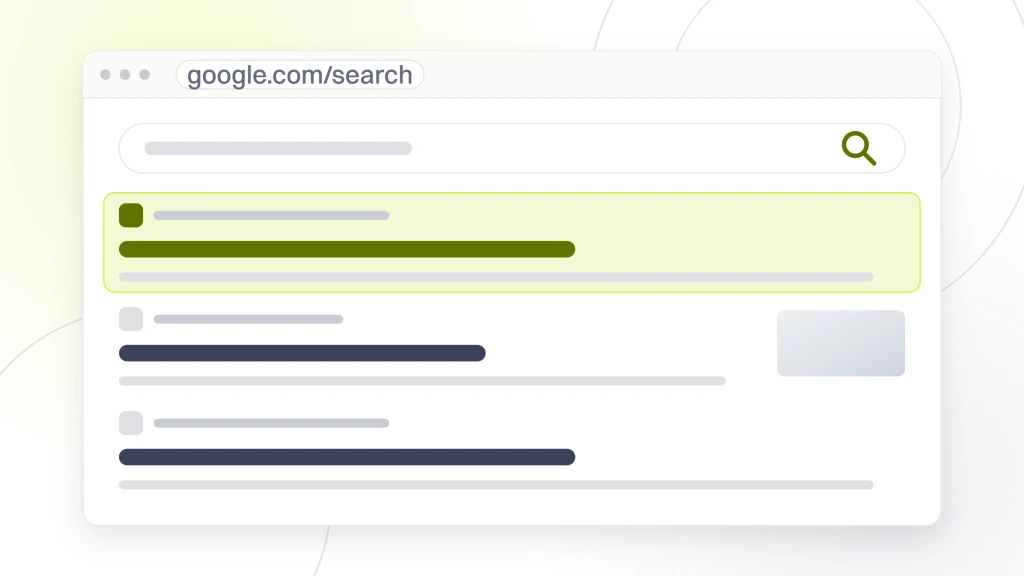
Your homepage is not a procedure page. If you want to rank for Invisalign, you need an Invisalign page that runs 900 to 1,400 words, answers the top 6 patient questions, includes before-and-after photos with consent, carries schema, and links to your booking page in three places. That single page will outrank 40 shallow blog posts on the same topic, and it holds ranking for years without heavy maintenance.
Build one strong page per procedure
Pick your top 6 procedures by revenue. Build one dedicated page for each. Include the procedure name in the H1, the URL, the first sentence, and one H2. Add a candidacy section, a how-the-procedure-works section, a cost range section, a recovery section, and a FAQ block. Add before-and-after photos with patient consent. Link to your booking flow in three places. That page becomes the ranking asset for that procedure and holds position for years.
Internal linking earns half your ranking
Every procedure page needs at least 3 internal links pointing to it from other pages on your site. Your homepage should link to the top 3 revenue procedures in the top navigation. Blog posts about a topic should link to the matching procedure page inside the first 200 words. Team bios should link to procedures the specific dentist performs. Skip this and your best pages sit orphaned.
Keyword dental SEO tips that avoid wasted effort
The best dental SEO tips on keywords tell you to stop chasing volume and start chasing intent. A patient typing dentist near me is buying. A patient typing what causes tooth sensitivity is researching. Both matter, but they belong on different pages and get measured on different numbers. The mistake we see most often is practices spending 40 hours writing blog content around research keywords because the volume numbers look big, then wondering why the blog does not book patients.
Research content builds authority. Booking content books patients. You need both, but you need to know which is which and staff each one differently. Confuse the two and the whole content plan under-performs against effort spent.
Split keywords into intent buckets
Group target keywords into three buckets. Booking intent covers queries like dentist near me, emergency dentist open now, and best cosmetic dentist in your city. Research intent covers queries like what causes tooth pain, is Invisalign worth it, and how much does a crown cost. Local awareness covers queries like family dentist, pediatric dentist, and cosmetic dentist plus city name. Booking intent belongs on procedure and service pages. Research goes to blog posts. Local awareness stays on the homepage and location pages. Our dental seo keywords post covers the mapping.
Long-tail queries win faster
Ranking for dentist takes years. Ranking for gentle pediatric dentist accepting new patients in your zip code takes weeks. Long-tail queries carry less competition, more specific intent, and higher conversion rates. Build content around the questions patients ask on the phone. Your front desk is a keyword goldmine. Ask them what patients call about, write those questions into H2s, and answer them in 60-word paragraphs.
Content dental SEO tips for the topics patients actually search
Content SEO for dental offices runs on two tracks. Track one is the procedure and service pages that book patients. Track two is the blog that answers patient questions before they book. Both need to sound like a dentist wrote them. Google measures content quality through helpful content signals and E-E-A-T, which stands for experience, expertise, authoritativeness, and trust. For a dental practice, that translates into bylines from a licensed dentist, real photos of the practice, patient testimonials that pass consent review, and specific case examples.
Generic content built by a keyword-first process gets outranked every year by content that carries a dentist’s voice. Two years ago a keyword-stuffed post could still rank. In 2026, that same post gets buried on page 4 while a shorter post with a real byline climbs to page 1.
Byline your dentist on every clinical post
Every clinical blog post should carry a byline with the dentist’s full name, credentials, and short bio. Link the byline to a fully built author page with photo, credentials, and a list of posts they authored. That page carries schema for the Person type. Practices that byline a real dentist rank measurably better on health queries than practices that use a generic author or the practice name as the byline.
Build topical clusters instead of scattered posts
Instead of writing 12 unrelated blog posts, pick 3 topics that map to revenue. Cosmetic dentistry. Family dentistry. Emergency dentistry. Write a pillar post on each, then 4 to 6 supporting posts that link back to the pillar. Google reads that as topical authority. A practice with three well-built clusters outranks a practice with 40 random posts. Our dental seo content marketing post covers cluster planning.
Technical dental SEO tips that stop quiet ranking losses
Technical dental SEO is the boring layer that quietly drops rankings when it goes wrong. A slow page, a broken canonical, a duplicated title tag, or a schema error can each cost 15 to 40% of a page’s ranking potential. You do not need a full technical audit every month. You need a short list of checks every quarter that catches drift before it becomes a ranking collapse.
Start with page speed. Run your top 5 pages through Google PageSpeed Insights and target a Largest Contentful Paint under 2.5 seconds on mobile. Check your schema through Google’s rich results test. Confirm your XML sitemap lists your top pages. Confirm Google Search Console is not reporting new coverage errors. That is 30 minutes of work every 90 days. Reference the Google Search Central documentation when a check flags something unfamiliar.
Schema markup that dentists need
Add LocalBusiness schema on every page. Add Dentist schema on the homepage and every service page. Add FAQ schema on posts that answer common questions. Add Person schema on team bios. Add Review schema on the testimonials page. If you run on WordPress and use Rank Math or Yoast, most of this is a settings-panel task rather than a code job.
Page speed that keeps you in the map pack
A page with poor Core Web Vitals loses about 10 to 20% of ranking on competitive queries. The three metrics are Largest Contentful Paint, Interaction to Next Paint, and Cumulative Layout Shift. For a dental site, target LCP under 2.5 seconds, INP under 200 milliseconds, and CLS under 0.1. Compress images to WebP, defer non-critical JavaScript, and put the hero image in the initial HTML. The web.dev Core Web Vitals guide has the current thresholds.
Review dental SEO tips that survive Google’s policy
Reviews are a top-5 ranking factor for the map pack and a top-3 conversion factor for anyone landing on your site. A practice with 180 Google reviews at 4.8 stars beats a practice with 40 reviews at 4.9 stars, all else equal. Google’s review policy bans incentivized reviews, gated review workflows, and review gating in any form. You cannot pay for a review. You cannot promise a discount for one. You cannot pre-screen unhappy patients into a private feedback form while sending happy patients to Google.
Every one of those tactics gets reviews stripped and listings suspended when Google catches on. What you can do is ask every patient, on a schedule, using a template that meets policy. Set up an automated SMS-plus-email request that goes out 2 hours after every appointment. Reply to every review within 48 hours, positive or negative. That workflow generates 10 to 30 new reviews per month for a mid-size practice and stays Google-compliant.
Responding to negative reviews without making it worse
Every negative review needs a response, and the response is read by 10 to 40 future patients for every 1 person who reads the original review. Keep it short. Acknowledge the concern without confirming any patient details, since HIPAA still applies. Offer to talk offline. Do not defend, argue, or blame. A well-handled response improves conversion because it shows patients how the practice handles friction. Our dental review generation post carries the full templates.
Link building dental SEO tips that avoid junk directories
Link building for a dental practice is a slow, referral-style process. You are not chasing 200 links a month. You are chasing 4 to 8 real links a quarter from sites that would send you a real patient. Every one of those beats 200 spam directory links, and the spam links can hurt you if a manual action lands on your domain.
Start with the free links every practice qualifies for. State dental association member directory. Local chamber of commerce. County health department resource pages. Local charity boards you support. School and university health services pages if you accept student patients. That process gets a practice to a solid link profile inside 6 months. Then you graduate to earned links from local press and community events.
Earned links from local press and community
Sponsor a youth sports team. Speak at a local school career day. Host a free oral health checkup at a community event. Donate services to a nonprofit. Each creates a natural, local link back to your site from a source Google values. Get 4 of those a year and your local link profile carries you into the map pack. Our link building for dental websites post covers the safe tactics.
A real dental SEO case study with named clients
Smile Design Dentistry, a 50-plus-office dental service organization headquartered in Dade City FL, worked with Redefine Web to restructure paid and organic across the whole network. Cost per call dropped 30% across the network. PPC conversion rate climbed 20%. All 50-plus locations went live with unified per-location tracking and paid social running full-funnel, and the organic wins tracked closely with the paid restructure because the landing pages, review workflow, and Google Business Profile fixes carried straight into local search ranking.
iSmile Dental Spa, a premium single-location practice in Carmichael CA, followed a different curve. The practice scaled from 1 to 2 new digital patients per month to 12 to 14 by ranking 75 keywords on page 1 in 6 months and layering Google Ads on top. Patient volume grew 900%. Marketing ROI hit 500% over the multi-year program. VP Dental, a 20-plus-year practice led by Dr. Valerie Preston, doubled new monthly patients and added $8,100 in monthly recurring revenue once web and SEO ran under one measured strategy instead of two disconnected vendors. Delicate Dental Group, a scratch practice launch, built 700-plus Google reviews from zero in months and grew map pack calls 280% by making review count the moat. North County Dental Care in Vista CA drove 1,000% patient growth and 500% ROI from 2021 to 2024 with the same stack, layering local SEO, Google Business Profile ads, and service pages on a rebuilt mobile-first site. Every one of those wins ran on the same playbook, applied to a different practice shape.
Dental SEO tips packaged as a monthly cadence
SEO for dental offices only compounds when it runs on a cadence. One-time audits do not move rankings. Monthly work does. Below is the cadence we run for our own dental clients, in the order that produces the fastest ranking gains. You do not need to run all of it in-house. You do need someone who owns the checklist and reports the numbers every month. Skip a month and you feel it in the map pack within 60 days.
The cadence rebalances the practice against local competition and refreshes the signals Google reads as active. It also surfaces small drifts before they turn into a ranking collapse. The whole cadence runs in 12 to 20 hours if a single owner runs it.
- Update Google Business Profile with 3 to 5 new photos and 1 new post
- Publish 1 new blog post targeting a research-intent keyword
- Update 1 procedure page with new content, photos, or FAQ items
- Run a citation audit on 20 directory sites and fix any mismatches
- Send review requests to every completed patient from the prior month
- Respond to every review, positive or negative, inside 48 hours
- Check Google Search Console for coverage errors and manual actions
- Report calls, form fills, and top ranking movements to leadership
Reporting that leadership actually reads
Leadership does not care about rank tracking screenshots. Leadership cares about calls, form fills, new patient appointments, and revenue. Set up a monthly one-page report with those four numbers, plus a note on what changed and what is planned next month. That report gets read. A 40-page rank report does not. Compliance guidance from the ADA practice management resources reinforces the outcomes-first reporting model.
Dental SEO mistakes that quietly erase your gains
Some of the most common dental SEO mistakes actively work against rankings. Fixing them is cheaper and faster than adding new content. The three we see most often are duplicate location pages, keyword-stuffed service pages, and any form of review gating. Each one gets fixed inside 30 days and the ranking benefit is usually visible in 60.
A multi-location practice with 4 nearly-identical location pages loses 30 to 50% of map pack ranking across the group. Each page needs unique intro, staff bios, parking directions, testimonials, and photos. Templates that swap only the address get treated as thin content. Rewrite each to 500 to 900 words specific to that office. A service page that repeats dental implants 47 times reads as spam. Rewrite in the voice of your best-explaining dentist.
Scaling dental SEO tips across a group practice
If you run more than one location, dental SEO stops being a single-office task and becomes a systems task. The wins scale, but so do the errors. A single mistake in a template can propagate across 40 locations and cost 6 months of ranking recovery. The core pattern is centralized systems with local content. Central design system for websites. Central Google Business Profile management. Central citation cleanup. Central review workflow. Local content on every location page.
Groups that centralize everything, including content, lose 12 to 18% of organic visibility over 24 months. Group-level reports also mask per-location problems, so the weak market gets ignored until it drops out of the map pack entirely. Every monthly report needs a per-location breakdown of calls, form fills, ranking, and review count. Our multi-location dental seo post covers the group patterns in depth.
Wrapping up the dental SEO tips checklist
The best dental SEO tips are the ones you actually run. Pick 3 to 5 from the list above that match where your practice is weakest right now. Run them for 90 days. Measure calls, form fills, and map pack ranking. Then pick the next 3 to 5. Inside 12 months your practice will look and rank differently. If you want the whole system run for you by a team that has done it for practices from single-office to 50-plus locations, our dental SEO services page covers what a full engagement includes. Either way, the practice that wins the local search fight shows up, on schedule, every month, without skipping the boring parts.