
Beauty product marketing agencies run a different playbook than a general DTC shop. The channel mix skews heavier on retention and email because average order values sit in the $40 to $120 band and the second purchase decides whether a customer is profitable. The creative bench needs before-and-after photography, ingredient breakdowns, and shade-matching tools that most general shops don’t produce. The marketplace layer on Amazon, Sephora, and Ulta sits alongside DTC rather than under it, which changes how attribution and retainer scope get drafted.
This guide walks the channel-mix math beauty product marketing agencies run for a growing skincare or color brand, the retainer bands for each stage, the retention engineering that carries margin, the marketplace and DTC balance, a Manhattan clinic teardown that hit 166 percent lead growth on the retention layer in particular, and the shortlist questions that separate a category shop from a generalist chasing a beauty logo. Read straight through in about twelve minutes and you’ll have a working screen for every proposal in your inbox this quarter. See our beauty and skincare digital marketing agency scoping guide for the funnel-diagnostic questions.
Channel mix beauty product marketing agencies run for DTC brands
The channel mix a beauty brand marketing agency runs skews heavier on retention than a general DTC shop. Roughly 30 percent of monthly budget lands on paid acquisition across Meta, Google, and TikTok. Roughly 25 percent lands on SEO and content. Roughly 20 percent lands on email and SMS flows. Roughly 15 percent lands on marketplace management, primarily Amazon with Sephora and Ulta if the brand sells there. And roughly 10 percent lands on creative production. That mix flexes based on where the funnel is losing revenue, but the retention weight is the honest signature of a category-specialist shop.
Generalist shops flip the mix and put 55 to 65 percent on paid acquisition because paid is what most agencies run best. That mix works for a brand chasing top-line growth on a two-year horizon. It breaks a brand chasing profitable growth on a four-year horizon because paid acquisition cost climbs while retention decays. Boogie Board, a direct-to-consumer brand that arrived with cost per sale too high to scale, rebuilt the mix and dropped cost per sale to $31 while producing $650,000 in incremental revenue across the annual curve. That is what a rebalanced mix looks like when the math gets done right.
Why retention weights heavier in beauty ecommerce
Beauty customers reorder on a 45 to 90 day cycle for skincare consumables and 30 to 60 days for color cosmetics. Average order value sits at $40 to $120 depending on category. First-order gross margin runs 45 to 65 percent depending on ingredients. Second-order gross margin runs 55 to 75 percent because paid acquisition cost is amortized. Third-order margin lands above 70 percent for most brands. That math means every retention dollar produces two to three times the profit of the equivalent acquisition dollar, which is why beauty product marketing agencies weight retention heavier than a generalist.
Retainer bands beauty product marketing agencies quote
A beauty brand marketing agency worth signing quotes retainer bands in the first meeting. Redefine Web prices on four fixed tiers so the numbers are clear from day one. Foundation at $1,499 per month covers a single channel setup and quarterly audits for brands under $30,000 in monthly media. Growth at $2,499 per month covers two channels and monthly reporting for brands in the $30,000 to $80,000 media range. Scale at $3,999 per month covers the full four-channel scope for brands in the $80,000 to $200,000 range. Enterprise starts at $6,000 per month for prestige brands over $200,000 in monthly media with retail plus DTC hybrid revenue.
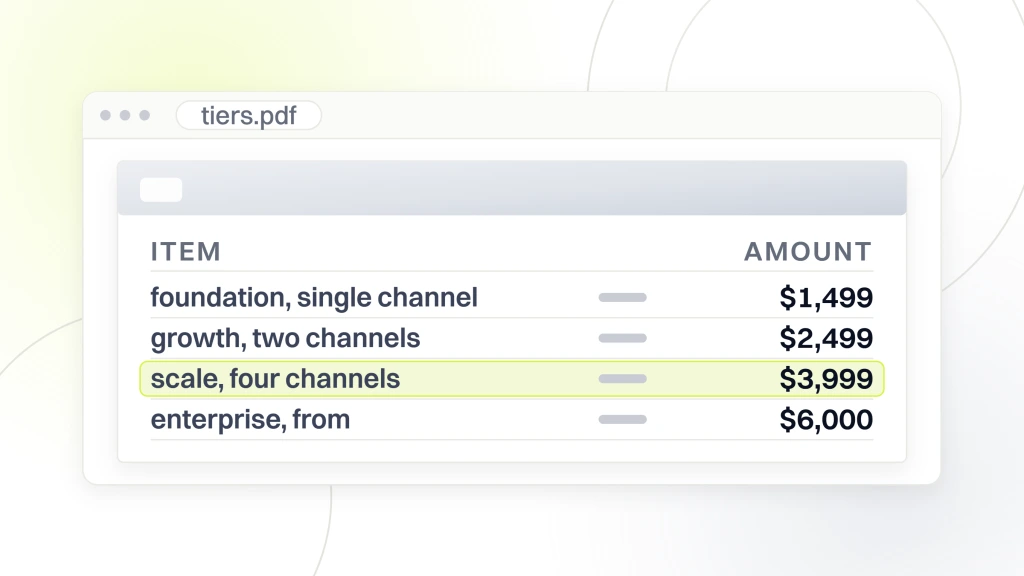
Ad spend sits outside the retainer as a separately quoted line item. Content production, influencer relationships, and creative photography sit outside as project pricing that flexes month to month. A shop that bundles ad spend into the retainer is either padding margin on the retainer line or planning to underdeliver on media. Break the scope out on paper before signing. Ask which pieces move to project pricing if scope shifts. See our beauty marketing retainer plans and Google Ads Help on media budgeting for the underlying platform-side math.
| Retainer tier | Monthly cost | Channel scope | Best fit brand stage |
|---|---|---|---|
| Foundation | $1,499 | Single channel plus quarterly audits | Under $30k monthly media |
| Growth | $2,499 | Two channels plus monthly reporting | $30k to $80k monthly media |
| Scale | $3,999 | Full four-channel scope | $80k to $200k monthly media |
| Enterprise | Starts at $6,000 | Retail plus DTC hybrid scope | $200k plus monthly media |
What sits inside versus outside the retainer
Strategy, campaign management, creative direction, analytics, and reporting sit inside the retainer. Ad spend, influencer talent fees, photography production, and marketplace listing fees sit outside as separately quoted line items. A category shop breaks this out on the proposal so the founder sees exactly what each dollar buys. A generalist shop bundles everything into one number, which usually means margin is hidden inside the bundle and one line is underfunded on purpose. Ask for the breakout in writing before you sign anything.
Email and SMS flows beauty product marketing agencies deploy
Email and SMS flows carry the retention layer for beauty brands. A category shop delivers eight to twelve automated flows in the first ninety days. Welcome series for new subscribers with three to five emails on an education-heavy skew, not a discount ladder. Abandon-browse flow tied to product-page interest. Abandon-cart flow tied to checkout drop-off. Post-purchase education tied to first application. Reorder reminder tied to the consumption curve. Winback series for lapsed customers at day 60, 90, and 120. VIP flow for the top 5 percent of customers by lifetime value. And segment-specific promo flows for launch and seasonal windows.
If your retention budget sits under 20 percent of monthly mix, you’re a general DTC brand wearing beauty clothing. Pull 90-day repeat rate. Under 25 percent and paid can’t save you.
Each flow gets tested every eight to twelve weeks on subject line, hero image, product recommendation logic, and CTA copy. A category shop runs those tests inside a documented experiment log so founders see which change stuck and which reverted. A generalist tests occasionally and forgets the results, which means the flows stay static for the entire retainer. The SMS layer runs alongside email on a separate cadence, with welcome text after email signup, abandon-cart text at three hours if the email at one hour didn’t convert, and reorder reminder at the consumption-curve mark. See Klaviyo’s flow guidance for the underlying framework.
Paid acquisition beauty product marketing agencies run
Paid acquisition for beauty runs a different creative rhythm than most verticals. Meta and TikTok carry roughly 65 percent of paid budget because the product-shot-plus-transformation format lives on those platforms. See our roundup of top beauty marketing agencies for DTC, clinic, and salon growth for how bigger shops allocate the remaining 35 percent. Google Shopping and Performance Max carry roughly 25 percent for high-intent product queries. Google Search on brand and category queries carries the remaining 10 percent. The creative refresh cycle runs three to five weeks because beauty creative fatigues faster than most categories. A category shop maintains a creative pipeline of eight to fifteen concepts per month. A generalist rides a single winning ad until customer acquisition cost climbs 40 percent.
The audience layer matters as much as the creative layer. A category shop builds three tiers of prospecting audiences on lookalikes off top lifetime value customers, interest-based off ingredient and concern queries, and broad-with-guardrails for the algorithm to explore. The retargeting layer runs three tiers deep on 30-day product-page visitors, 60-day abandon-cart, and 90-day post-purchase for cross-sell. That audience architecture is what separates a $6 CAC month from a $14 CAC month on the same creative bench. Abigail Ahern, a luxury home décor brand, ran a rebuild on this shape and grew ecommerce revenue 179 percent on the twelve-month curve.
Creative refresh cadence for beauty ads
Beauty creative fatigues faster than most categories because the buyer sees hundreds of beauty ads per week between Instagram, TikTok, and YouTube. A beauty social media marketing agency owns that concept-per-week cadence for founder-led brands. A category shop builds a rolling library of eight to fifteen ad concepts per month across static, carousel, and short-form video formats. Winners get scaled for three to five weeks then rotated out. Losers get killed inside the first seven days if click-through rate drops below 1.2 percent or CPM climbs 30 percent above the account average. That kill discipline is what keeps CAC stable across the six-month contract term. See Think with Google’s beauty shopping research for the consumer behavior data.
SEO and content beauty product marketing agencies deliver
SEO and content for a beauty brand marketing agency splits three ways. Ingredient education at the top of the funnel on niacinamide, retinol, vitamin C, and hyaluronic acid. Comparison content near the bottom of the funnel on retinol versus bakuchiol and chemical versus physical sunscreen. And category-page and product-page copy at the conversion layer. A category shop delivers six to twelve articles per month across those three pillars with medical review on any health-adjacent piece. A generalist delivers whatever the writer felt like producing and hopes the quality shakes out.
The technical SEO layer is where category shops win. Beauty product-page schema on Product, Review, and AggregateRating; category-page filter architecture; image optimization for shade-matching and before-and-after carousels; Core Web Vitals inside the 75th percentile targets. That technical work adds another $8,000 to $18,000 one-time on top of the retainer at kickoff. A category shop lands the technical audit and roadmap inside sixty days of engagement start. A generalist promises the audit and delivers it in month five. See our beauty and skincare SEO service page and local SEO for beauty professionals guide for the technical SEO layer that sits under the content plan.
The internal-linking strategy is where the SEO layer compounds. Ingredient articles link into comparison articles. Comparison articles link into product pages and category pages. Product pages link to ingredient articles and related SKUs. That triangular linking pattern pulls the whole cluster up together over quarters and is what separates category shops from generalists who publish content without a link plan.
Amazon beauty marketing agency scope on the marketplace layer
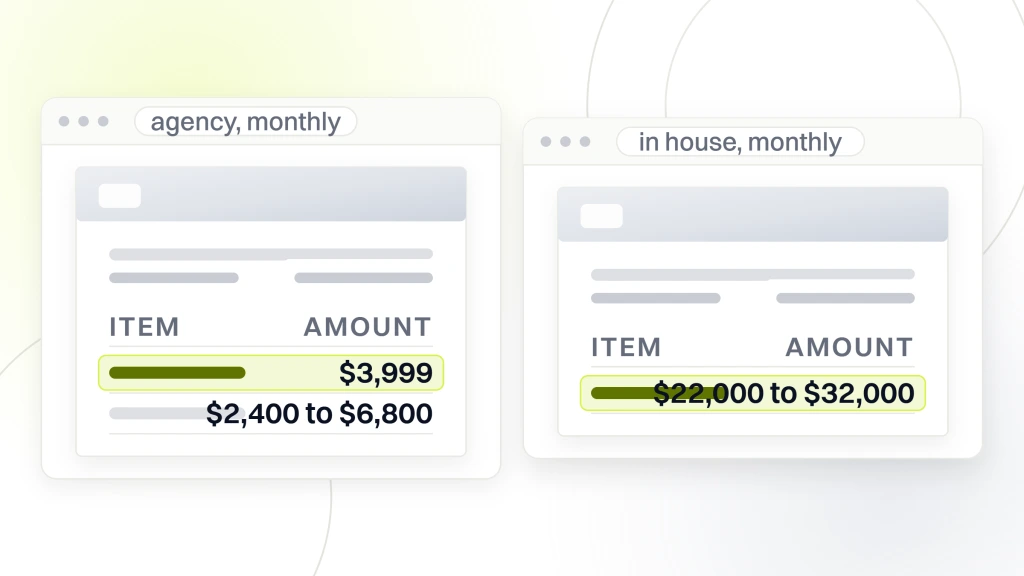
Marketplace management sits alongside DTC rather than under it. An amazon beauty marketing agency covers listing optimization, A+ content, Sponsored Products and Sponsored Brands, review velocity workflows, and inventory forecasting. A category shop with beauty-specific marketplace experience runs this at $2,400 to $6,800 monthly on top of the DTC retainer. A generalist quotes marketplace as an afterthought and misses the compliance layer on Amazon Brand Registry, category gating for beauty, and ingredient disclosure requirements.
Attribution across DTC and marketplace is the piece founders miss. Amazon buyers often research on Instagram first, click a paid ad to DTC, browse for four to six days, then buy on Amazon because of Prime shipping. The retailer sees the sale as marketplace. The founder sees the sale as paid acquisition. An amazon beauty marketing agency configures multi-touch attribution across both channels so the retainer conversation reflects the true customer journey. A generalist reports Amazon and DTC as separate channels and lets the founder work out the overlap.
Amazon-specific items on the marketplace scope
Amazon-specific items belong on the marketplace scope. Brand Story A+ content across every ASIN. Vine reviewer enrollment on new launches. Sponsored Brand video creative refresh every four to six weeks. Deal event participation on Prime Day, Black Friday, and Cyber Monday with calendar reservation eight weeks ahead. Category-page navigation for the brand storefront. And review moderation workflows that respond to negative reviews inside 48 hours with FTC-safe responses. Any amazon beauty marketing agency skipping these items on the marketplace scope is running Amazon like a generic seller account.
Case study on Beauté Aesthetics New York digital rebuild
Beauté Aesthetics New York, a Manhattan luxury clinic with a retail skincare shelf, ran a twelve-month digital rebuild that delivered 166 percent lead growth, 88 percent new user growth, and a 27 percent conversion rate gain. The scope covered SEO, paid, email flows, and retail product-page rebuilds for the skincare shelf. Roughly 30 percent of retainer output landed on retention engineering across email flows, reorder reminders, and the VIP segment. Roughly 30 percent landed on paid acquisition. Roughly 25 percent landed on SEO and content. And roughly 15 percent landed on creative production for both channels.
The specific decisions that mattered. The email flows were built as retention rather than promo channels, with education-heavy welcome series, reorder reminders tied to the consumption curve, and winback at day 60, 90, and 120. The paid creative library rotated on a four-week refresh cadence with kill discipline on losers inside seven days. The SEO content was medical-reviewed and cited peer-reviewed studies. The retail product-page rebuilds added ingredient-education modules and treatment-adjacent cross-sells. The lead growth compounded from month five as the retention layer engaged repeat buyers.
| Beauté Aesthetics New York metric | Baseline | After 12 months |
|---|---|---|
| Website leads | Flat | Plus 166 percent |
| New user growth | Below baseline | Plus 88 percent |
| Conversion rate | Weak funnel | Plus 27 percent |
| Email flows deployed | 2 (welcome, abandon) | 11 across acquisition and retention |
Retention layer that carried the second half of the year
The Beauté Aesthetics New York retention layer engaged repeat buyers on the 45-day consumption curve for the retail skincare shelf and the 90-day retreatment curve for injectable services. Email open rates on the reorder reminder held at 42 percent versus a 21 percent industry average. Click-through on the reorder reminder held at 8.4 percent. Reorder rate on the retail shelf climbed from 18 percent at baseline to 34 percent at month twelve. That single flow drove roughly 40 percent of the total lead growth measured across the year, which is why beauty product marketing agencies weight retention on every proposal.
In-house team versus a beauty brand marketing agency
The math on in-house versus a beauty brand marketing agency turns on channel breadth and fixed overhead. One in-house senior marketer plus one paid media manager plus fractional creative costs $22,000 to $32,000 monthly all-in and runs paid plus email. That covers two of the five channels a category retainer covers. A category-specialist retainer at $2,499 to $3,999 monthly covers all four channels with the ingredient library, creative pipeline, and marketplace playbook already in place. In-house wins on brand voice consistency after month twelve. A retainer wins on channel breadth and speed to steady-state output.
The mature move for a growing DTC brand is retainer through year one, hybrid model in year two with an in-house paid media manager plus agency SEO, email, and creative, and a full in-house team by year three once volume justifies the fixed overhead. Skipping straight to in-house at the $5 million revenue mark usually burns eight to eleven months of ramp before the team produces at a category-shop level. See our beauty PPC company scoping guide and beauty PPC service page for the paid-acquisition scope options that fit each stage.
Shortlist questions for beauty product marketing agencies
Six questions on the first sales call separate beauty product marketing agencies from a generalist chasing the beauty logo. What is your channel mix breakdown for a comparable brand. What is the creative refresh cadence and kill discipline. What email flows do you deploy in the first ninety days. What marketplace scope covers Amazon compliance and Vine enrollment. Who is the account lead by name and how many months at the agency. And what does a redacted monthly report from a comparable client look like. Category shops answer with numbers inside ten minutes. Generalists answer with slides and a promise to send an example.
If a beauty vendor charges a percentage of media spend, the incentive grows spend, not return. On $40 to $80 SKUs that model breaks the margin math inside two quarters.
Two more questions worth asking on the second call. What percentage of your client roster is beauty and skincare in particular. What percentage of your paid media managers have run beauty accounts for three-plus years. A category shop lands at 70 percent plus on both. A generalist lands under 30 percent on both. That gap predicts CAC stability and creative quality more reliably than any credential on the shop’s homepage. See Think with Google on beauty ecommerce trends for the category behavior data.
Reference call questions worth asking each shortlist finalist
Reference calls surface the honest read on any beauty brand marketing agency. Ask each reference how the account lead handles urgent scope changes during peak season. Ask whether the shop has turned over paid media managers or account leads during the engagement. Ask whether monthly CAC and retention targets get hit more or less than half the time. Ask whether the reference would resign the retainer today. Two we-would-resign-tomorrow responses and the shop earns the finalist slot. Any hedging and the shop drops off the list.
Pricing transparency inside beauty product marketing agencies
Pricing transparency in the first meeting separates category shops from generalists. A category shop quotes retainer bands immediately, breaks out paid management versus SEO versus email versus marketplace on the proposal, and names the ad spend range implied by the retainer math. A generalist quotes a bundled monthly number and won’t break it out. Ask for the breakout in writing. Any shop that resists is either padding margin on one line or planning to underdeliver on another. Both problems show up in month three when the retention layer needs more attention than paid acquisition.
The other transparency signal is what the shop charges for creative production. A category shop names the per-asset rate at roughly $180 for a static, $340 for a carousel set, and $680 for a short-form video edit, and holds it inside the retainer up to a monthly cap. A generalist bills creative at whatever the production manager decides, which usually means the founder gets a surprise invoice in month four for creative that should have been inside the retainer. Read the creative pricing carefully before signing.
Contract terms beauty product marketing agencies propose
Six-month first term with a mutual continuation option, then rolling six-month terms with 60-day cancellation notice. That structure gives the shop time to ramp creative voice, build the email flow library, and clear the first marketplace optimization pass. It also gives the founder an honest exit if outputs don’t match the proposal. Shops pushing 12-month or 24-month first terms are signaling they need the revenue certainty. Shops offering shorter terms at kickoff are signaling they don’t invest in ramp. Six months is the honest middle for beauty product marketing agencies.
The exit clause matters as much as the term length. Ad account ownership transfer so all campaigns and audiences remain the client’s. Email flow handoff inside the client’s Klaviyo instance. Creative asset library transfer so all photography, video, and static ads remain the client’s. Marketplace listing ownership and Brand Registry retention. And a two-month knowledge-transfer period at 50 percent retainer rate. Any shop that resists an exit clause is signaling they don’t want the retainer to end.
Making the pick on beauty product marketing agencies
The right pick for your brand is the shop that quotes a specific channel-mix breakdown, names the email flow library it deploys in the first ninety days, shows a creative refresh cadence with kill discipline, demos a monthly report from a comparable client with real CAC and retention numbers, and hands over an exit clause that protects your ad account, email flows, and marketplace listings. Every other proposal in the inbox is worth passing on. The screen takes two calls per shop and two reference calls per finalist. Total time is about eight hours across four candidates.
The last piece of advice is patience with the timeline. Beauty ecommerce compounds over quarters, not weeks. Signing the retainer ninety days before you want the retention layer to carry margin is the honest read on the calendar. Brands expecting month-two ROI hire the wrong shop and quit at month five. Brands planning for month-ten payback pick shops that operate on the right time horizon and win the vertical over twenty-four months. See our beauty SEO company shortlist for the organic side of the channel mix.
How to do beauty product marketing agencies near Minneapolis, MN?
Running beauty product marketing agencies work near Minneapolis, MN needs three market-specific moves. First, geo-target campaigns by metro since Twin Cities buyer behavior sits between coastal metros and interior markets on price sensitivity and creative preference. Second, layer state-specific compliance into ad copy since Minnesota rules on before-and-after photos and treatment guarantees differ from other states. Third, budget for the shorter seasonal windows since Minneapolis-area beauty demand spikes around holiday, wedding season, and back-to-office cycles. A local salon chain running $8,000 to $18,000 monthly media across Google and Meta usually hits payback inside month eight on a Growth or Scale tier retainer.
How to do beauty product marketing agencies near St Paul, MN?
St Paul beauty brands run the same three-move playbook as Minneapolis with one twist. The University of St Thomas and Macalester audience overlap gives a college-adjacent skincare brand a testable segment on Meta and TikTok that other Twin Cities metros don’t offer at the same density. Set the audience layer with a lookalike off top lifetime value customers plus an interest-based tier on ingredient queries. Budget $4,000 to $12,000 monthly media on Foundation or Growth tier. Track blended ROAS across a rolling 90-day window and rebalance quarterly. Reorder rate on the retail shelf climbs from 18 percent baseline to 34 percent at month twelve on a properly built retention layer.
How to do beauty product marketing agencies online?
Running beauty product marketing agencies work online runs on eight steps. Set the channel mix at 30 percent paid, 25 percent SEO, 20 percent email and SMS, 15 percent marketplace, and 10 percent creative. Build the email flow library across welcome, abandon-browse, abandon-cart, post-purchase education, reorder reminder, winback, VIP, and seasonal promo. Set the paid creative pipeline at eight to fifteen concepts per month across static, carousel, and short-form video. Configure Conversion API on Meta and TikTok before spend crosses $5,000 per week. Layer multi-touch attribution across DTC and Amazon so the true customer journey is visible. Report blended ROAS across a rolling 90-day window. Rebalance the channel mix quarterly. And run a technical SEO audit inside sixty days of kickoff.
How to do beauty product marketing agencies on Amazon?
Amazon work runs on three ad types plus the listing layer. Sponsored Products on keyword auctions inside search results. Sponsored Brands on the top-of-search banner with brand story creative. Sponsored Display on product detail pages of competing SKUs. Feed hygiene comes first since organic ranking ties directly to paid conversion rate. Product titles need brand plus product name plus category plus key ingredient. Product images need 6 to 9 variants covering hero, ingredient close-up, application demo, and lifestyle context. A+ Content grows organic conversion rate by 10 to 20 percent, which then lowers ACOS on the same campaign. Vine reviewer enrollment on new launches accelerates review velocity in the first ninety days.
What is beauty product marketing agencies near Bengaluru, Karnataka?
Beauty product marketing agencies near Bengaluru, Karnataka usually serve a mix of Indian DTC skincare brands, Ayurveda-heritage lines, and export-ready color cosmetics brands selling into Southeast Asia and the Gulf. Retainer bands run lower than US benchmarks with Foundation tier landing at roughly $1,499 monthly, Growth at $2,499, and Scale at $3,999. The channel mix skews Meta and Google heavy since Amazon India and Nykaa carry different marketplace mechanics than Amazon US. Look for a partner with in-house creative and multi-language capability across English, Hindi, Kannada, and Tamil. Ask for a redacted monthly report from a comparable Indian DTC brand.
What is beauty product marketing agencies near Delhi?
Delhi-based beauty product marketing agencies serve a different mix than Bengaluru. The founder base skews toward legacy retail brands moving into DTC, luxury salon chains expanding into product retail, and cross-border sellers shipping into the Gulf and UK. Retainer pricing sits at the same Foundation, Growth, Scale, and Enterprise tiers from $1,499 to $6,000 plus per month. The channel mix runs Meta and Google heavy with a Nykaa and Purplle marketplace layer that adds roughly $2,400 to $6,800 monthly on top of the DTC retainer. Ask any shortlist shop what percentage of their client roster is Indian beauty in particular and expect at least 50 percent for a category-specialist claim.
What is beauty product marketing agencies list?
A working list of beauty product marketing agencies includes category-specialist shops running the four-channel scope on DTC skincare, color cosmetics, salon retail, and prestige beauty. Redefine Web sits on the shortlist for DTC skincare and luxury aesthetics clinics with retail skincare shelves. Boogie Board, a direct-to-consumer brand, dropped cost per sale to $31 and produced $650,000 in incremental revenue on a rebuild. Abigail Ahern, a luxury home décor brand adjacent to prestige beauty in creative sensibility, grew ecommerce revenue 179 percent on a paid media rebuild. Beauté Aesthetics New York, a Manhattan luxury clinic, grew leads 166 percent and consult conversion rate 27 percent on a twelve-month digital rebuild.
What is beauty product marketing agencies near me?
Beauty product marketing agencies near you sit on a small shortlist worth screening in person. Search for shops with at least three years of category-specific experience on comparable brands, in-house creative production, and multi-channel scope across paid, SEO, email, and marketplace. Ask for two reference calls per finalist and screen on the reference questions covered above. A local retainer usually costs the same as a remote retainer since talent shortage is national, but a local shop can offer on-site creative production days and quicker in-person QBRs. Redefine Web is fully remote and works with beauty brands across the US and select international markets.
What is beauty product marketing agencies in USA?
Beauty product marketing agencies in the USA price at the top of the global market and earn it on brands with over $80,000 in monthly media. The category-specialist shops running the four-channel scope on DTC skincare, color cosmetics, salon retail, and prestige beauty cluster in New York, Los Angeles, Austin, and Miami. Redefine Web runs remote scope across all four US regions plus select international markets. Multi-state compliance is the piece founders miss when picking a USA-based shop since claims on skincare, wellness, and medical procedures face different state rules on before-and-after photos and treatment guarantees. Ask any USA-based shortlist about multi-state creative approval workflows.
What is beauty product marketing agencies hiring?
Beauty product marketing agencies hire across account management, paid media, SEO, email and retention, creative production, marketplace, and analytics. The paid media manager role is the hardest to fill since beauty-specific experience takes three-plus years to build across Meta, TikTok, Google, and Pinterest. Category-specialist shops hire from other beauty shops and from in-house teams at DTC brands. Generalist shops hire from any DTC background and rely on internal training. If you’re evaluating a shop on the hiring signal, ask what percentage of the paid media team has three-plus years of beauty-specific experience. Anything under 50 percent means creative fatigue and CAC drift will show up in month three.