Dental competitor analysis is the workflow that separates practices that grow from practices that guess. When you know which keywords the office two miles down the road ranks for, which ads they run on a Tuesday night, and which review lines they use to win first-time patients, you can beat them on the pieces that matter without doubling the budget. This guide walks the SEO pass, the ads pass, the review pass, and the local map pack audit a solo practice can run in one afternoon. Every finding maps to a specific action for your growth plan. Redefine Web runs this workflow across dental offices from single locations to 50+ location groups, and the same five levers show up every time. You will finish the read with a real workbook, not a theory piece.
You do not need a $10,000 competitor intelligence platform to run a useful dentist competitor research pass. Free and $99 tools cover 80% of what an enterprise stack surfaces, and the workflow below runs on that budget with room to spare. In short, a working dental competitor analysis is closer to a checklist than a subscription. Read the sections in order, pull the numbers into a shared workbook, and pick the top three gaps for your next 90 days.
The SEO audit pass on competing dental practices
The SEO pass inside a dental competitor analysis maps the pages, keywords, backlinks, and technical baseline that carry a rival practice’s organic ranking. Roughly 60% of the gap you can close inside 90 days sits inside this pass, so that’s why SEO decisions compound. A page you publish today keeps working for years. This step of the dental competitive analysis view starts here because search results are the most stable trust signal a practice controls.
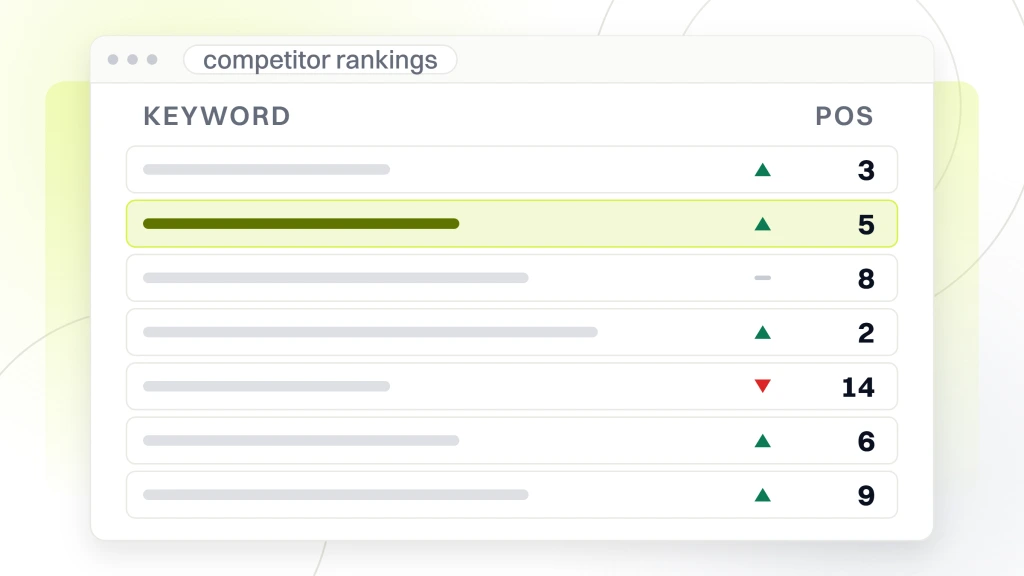
Keyword and page inventory (dental market research)
Run each competitor URL through Google Search Console for your own baseline, then a paid tool such as Ahrefs Lite, Semrush Business Trial, or SE Ranking for the competitor keyword list. Export the top 200 organic keywords per rival. Sort by traffic volume and by ranking position. The keywords they rank on page 1 while you sit on page 3 are your fastest wins for the next 90 days. That dental market research feeds every downstream decision, from service page priorities to blog topics to ad copy testing.
Content depth and page count
Count each competitor’s service pages, location pages, and blog posts. Practices that rank consistently tend to run 12 to 24 service pages and 40+ blog posts. Practices that do not rank tend to run 6 service pages and 4 blog posts. The gap in inventory usually explains most of the ranking gap. Building 6 new service pages closes half the difference in a quarter. Track word count per page too. Rivals sitting on 1,500-word service pages routinely beat 300-word thin pages for the same query. Depth matters more than volume.
Backlink profile and citations
Pull each competitor’s referring domains inside Ahrefs or Moz. Sort by domain rating. Strip the spam. What remains is a menu of publications, chambers, sponsorships, dental associations, and directories you can pursue for your own practice. Most practices share 40% to 70% of their citation profile with rivals because the local ecosystem is shared. The unique 30% to 60% is what you are chasing. Our dental seo audit covers the technical pass on your own site while you are at it. Start with the top 20 referring domains per competitor and work down.
The ads teardown inside a dentist competitor research workflow
A dentist competitor research pass on paid ads shows you which offers convert, which angles win the click, and which landing pages hold up under real traffic. Free tools cover most of what you need. Paid intelligence tools add depth on the historical creative library but rarely change the strategic action a small practice takes this month. Screenshot everything. Screenshots turn a one-time dental competitor analysis into a living reference the front desk and marketing team both open weekly.
Google Ads Transparency Center
Google’s Ads Transparency Center lets you search a practice by advertiser name or URL and see every ad they have run in the last 12 months. Filter by format. Screenshot the top 5 highest-frequency ads per competitor. Those are the ads that survived internal budget review. They are working. Anything they stopped running is the ad that did not. Note the recurring hooks. New-patient specials, whitening promotions, Invisalign case counts, sedation reassurance. Those hooks are the offers your local market responds to.
Meta Ad Library for Facebook and Instagram
Meta’s Ad Library shows every active Facebook and Instagram ad each competitor runs. Save the ads with the longest run time because those are the winners. Note the offer, the hook, the video length, and the landing page. Look for patterns across 3 to 5 rivals. When 4 out of 5 rivals push whitening specials in the same 30-day window, you are seeing a seasonal demand pattern, not one office’s guess. Add that pattern to your own quarterly plan. The dentist competitor research workflow gets sharper every time you spot a shared angle.
Landing page destination review
Click every competitor ad. Where does it land? Do they use a real landing page or their home page? Are they capturing calls, forms, or chat? What is the hero offer? What proof do they show? Practices that run ads to their home page are usually leaving 30 to 50% of paid conversion on the table. When your competitor does that, take the win by running your ads to a dedicated page. Our dental ppc landing pages covers what a page that converts looks like. Match every ad hook to a matching page headline. Mismatches cost patients.
The review and reputation comparison that drives close rate
Reviews decide who gets picked the moment a searcher lands on the map pack. A practice with 1,240 reviews at 4.9 stars closes a first-time visitor at roughly triple the rate of a practice with 87 reviews at 4.6 stars, even when the second practice ranks a slot higher. Review count and rating gap are the fastest levers inside a dental competitor analysis for moving new-patient volume in a quarter. This section runs in every dental competitor analysis pass, no exceptions.
Volume, cadence, recency
Count each competitor’s Google review total. Note the cadence over the last 90 days (how many reviews per month) and the recency (when was the last one posted). A competitor sitting at 800 reviews with 3 new reviews per month is beatable inside a year. A competitor at 400 reviews adding 40 per month is compounding fast and needs a real response. Recency signals an active workflow, not a legacy count. Any rival whose last review sits older than 30 days is running an idle profile you can pass with 4 solid months of front-desk work.
Review content patterns
Read the last 30 reviews per competitor. Note the names of the doctors, the hygienists, and the front-desk staff patients cite. Note the treatments mentioned most (implants, veneers, cleanings, emergency). Those are the treatments patients naturally rebook and refer for. When your competitor’s reviews mention emergency service constantly, they own that lane locally. Decide whether to compete or concede on it. In brief, review content tells you which service line the local market rewards. Your response is to lean into the treatments your patients already love or claim the lane your competitors ignore.
Response tone and speed
Read the practice’s responses to negative reviews. A competitor that responds within 48 hours with a professional, non-defensive tone signals a mature reputation workflow. A rival with 12 unanswered 1-star reviews from six months ago has a visible gap you can beat without changing your service. Response rate is a leading indicator of local reputation growth. See our dental review generation for the request workflow to run in parallel. Reply within 24 hours to every review, positive or negative. Speed alone shifts perception on the map pack.
The local map pack audit nobody runs
The map pack is the first surface 70% of local searchers see for high-intent dental queries. A dental competitor analysis without a map pack audit misses the highest-volume conversion window in the practice’s local search footprint. This local map pack audit section runs fast and pays back disproportionately. Give it 90 minutes per rival and you will pull actions worth months of retainer work.
Google Business Profile completeness
Open each competitor’s Google Business Profile. Note category, secondary categories, hours, description, services list, attributes, photo count, Q and A, posts, and messaging status. Score them 0 to 10 on completeness. Most practices score 5 to 7. Practices that score 9 or 10 tend to occupy the top of the map pack. Your fastest gain is closing the completeness gap on your own profile before touching anything else. Every empty field is a signal Google reads as a weaker match, so the dental competitor analysis scorecard starts at the profile itself.
Photo strategy on the profile
Practices at the top of the map pack tend to run 60 to 150 photos with 3 to 8 new photos added per month. Practices that ranked well 3 years ago and dropped tend to have 40 stale photos from a 2021 shoot. Photo recency and variety feed the profile’s engagement signal. Your practice adding one interior photo per week for a quarter closes visible gaps against competitors sitting still. Include team headshots, treatment rooms, exterior signage, and short procedure clips. Real variety beats stock every time.
Q and A content and posts cadence
Most practices ignore the Q and A section entirely, leaving competitor questions and answers to sit visible on the profile for months. Read every competitor’s Q and A. Note the questions patients ask most (insurance accepted, new patient specials, sedation options). Answer the same questions on your own profile first, with the correct answers for your practice. Posts cadence (weekly is the working baseline) signals an active profile. Two competitors with the same review count often diverge on Q and A completeness and posts cadence, and that split alone can decide who ranks first.
The tools that power a real dental competitor analysis
The tool stack for a working dental competitor analysis runs $99 to $499 a month when you buy nothing new for the practice and $0 when you use the free tools already available. Vendor pitches for $2,000 a month competitor intelligence platforms rarely change the action you take with the output. Buy the tools that surface data you will act on this quarter.
Free tools that cover the baseline
Google Search Console for your own site, Google Business Profile Insights, Google Ads Transparency Center, Meta Ad Library, Google Maps in incognito, PageSpeed Insights, Chrome DevTools, and Wappalyzer for tech-stack detection. This free stack covers roughly 70% of the workflow above and costs $0. Practices that skip it usually pay for tools that surface a fraction of the same data. Set a Sunday-evening calendar block to run through 3 tools per week and the routine becomes muscle memory.
Paid tools that add real depth
Ahrefs Lite at $129 a month adds competitor backlinks and keyword rank tracking. Semrush Business Trial covers similar ground plus their historical ads database. SE Ranking at $65 a month covers smaller markets well. BrightLocal at $49 a month covers citations and local rank tracking. Pick one paid stack, not four. Rotate quarterly when budget is a concern. A single paid tool plus the free stack is enough to run a full dental competitor analysis and outmatch 90% of local rivals.
Tools you do not need
Enterprise competitor intelligence platforms billing $1,800+ a month rarely produce insights a solo practice acts on. Custom crawlers, agency-only dashboards, and paid Facebook audience tools all fall into the same bucket. Buy the tools that surface actions your team runs this month. Everything else is a slide-deck expense. Our dental marketing tools covers the daily-driver stack in more detail. When a vendor cannot show you a specific action from a specific report, walk.
Benchmarks that tell you where you stand
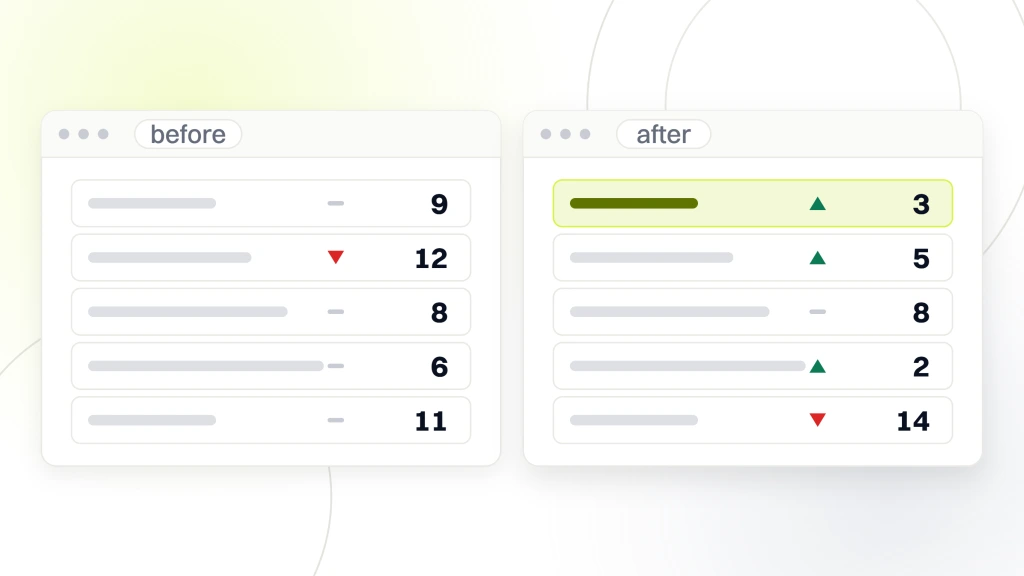
Working benchmarks make a dental competitor analysis useful instead of academic. The table below tracks the median values we see across dental practices in the 5-mile-urban to 25-mile-rural range. Read the row that matches your market and compare against your practice.
| Metric | Solo practice | 3 location group | DSO (10+ locations) |
|---|---|---|---|
| Google reviews (median) | 320 | 780 per location | 1,050 per location |
| Star rating (median) | 4.7 | 4.7 | 4.6 |
| Service pages on site | 10 | 16 | 24 |
| Blog posts published (last 12 months) | 6 | 18 | 42 |
| Top 3 organic rankings (local keywords) | 8 | 22 | 65 |
| Google Ads live campaigns | 2 | 4 | 8 |
| Meta ads live (last 30 days) | 3 | 7 | 18 |
| GBP photos added (last 90 days) | 8 | 22 | 60 |
Use the benchmarks as a target, not a verdict. A solo practice with 180 reviews and 4 blog posts is not out of the game. A solo practice with 180 reviews and 4 blog posts that ignores both for another year is out of the game. The benchmark row for your practice size is the shape of the win, and moving one metric per month against it is enough to shift ranking, traffic, and new-patient volume over a rolling four-quarter window. Practices that miss on multiple benchmarks usually miss because they cannot decide which lever to pull first. Pick reviews when your rating is above 4.6. Pick service pages when your rating is at parity. Pick ads when your organic gap is more than 40 rankings. One lever per quarter builds momentum that compounds through the year.
Case study VP Dental turning a competitive analysis into 100% patient growth
VP Dental, led by Dr. Valerie Preston, is a 20+ year practice offering general and cosmetic dentistry. Before Redefine Web ran the competitor pass, VP Dental’s website and SEO were handled by separate vendors, rankings dropped sharply outside a small radius, and cosmetic case volume was flat. The dental competitor analysis pointed at two very specific gaps.
What the audit surfaced
Two nearby practices held top 3 rankings for cosmetic dentistry and veneers city name searches while VP Dental sat on page 2. Both rivals ran a dedicated cosmetic dentistry landing page tied to targeted Google Maps SEO. VP Dental had a single generic services page covering everything. On reviews, one competitor added 22 new Google reviews per quarter. VP Dental added 6. Two gaps, both measured, both fixable inside a quarter.
What we changed based on the findings
We unified the website and SEO under one team, rebuilt the cosmetic dentistry page with real photography and case examples, and launched a targeted Google Maps SEO campaign matching the competitor coverage. On reviews, we deployed an SMS request workflow the front desk ran after every high-satisfaction visit. The competitor benchmark set the ceiling. We built to meet it, one lever at a time, on a 90-day rhythm.
The numbers that moved
New monthly patients climbed 100% inside 12 months. Search impressions grew 776%. Recurring monthly revenue tied to the new-patient inflow added $8,100. The competitor pass did not do the work on its own. It pointed at the exact two levers that mattered so the work went in the right place first. Full write-up sits under our dental marketing.
Turning the analysis into a 90 day plan
The output of a dental competitor analysis is only useful when it becomes a plan the practice runs on the calendar. A 90-day plan built around 3 focused levers beats a 12-month plan with 14 workstreams that all stall out by week 6. Pick the top three gaps from the audit and build the plan around them. Write the plan on one page. When it does not fit on one page, it is not a plan, it is a wish list.
Days 1 to 30 the fast wins
Close the Google Business Profile completeness gap. Publish 2 to 4 service pages your competitor ranks for and you do not. Deploy the SMS review request workflow. Fix on-page title tags and meta descriptions where the audit flagged them thin. These moves take days to execute and start compounding inside a month. Front-load the wins that ride on existing content instead of waiting for new writing. Momentum matters more than perfection in the first month of any dental competitor analysis rollout.
Days 31 to 60 the content and ads pass
Publish 4 to 8 blog posts targeting the keyword gaps the competitor pass surfaced. Launch or restructure Google Ads to match the winning ad angles you screenshotted from the transparency center. Replace generic ad landing pages with dedicated conversion pages. Add 20 new photos to the GBP. Answer every Q and A on your own profile. In brief, month 2 is where the new production shows up. Book the writing and creative resources at the start of the month, not the end.
Days 61 to 90 measurement and iteration
Track rank movement on the target keywords. Track review count and rating shift. Track ad conversion rate on the new landing pages. Reallocate budget toward whatever moved fastest. Re-run the competitor pass at day 90 to see what your competitors changed in response. The plan resets from that point. See our dental marketing plan for the recurring cadence. The teams that hit their targets are the teams that measure weekly, not quarterly.
How often to re-run a dental competitor analysis
Competitor movement in dental markets is slower than in ecommerce but faster than in enterprise B2B. Practices that re-run the dental competitor analysis every 90 days keep pace with the market. Practices that re-run once a year usually get surprised. The rhythm matters more than the depth of any single pass.
Quarterly cadence for growth-mode practices
Practices actively growing new-patient volume should re-run the SEO and reviews pass every quarter. The ads pass runs monthly because Meta and Google Ads change fastest. GBP audit runs quarterly. Backlink pass runs semi-annually. Time-box the quarterly review at 6 hours total across the team. A pass that stretches to 20 hours across two weeks stops feeling like a workflow and starts feeling like a distraction, so keep it tight.
Trigger events that force a re-run
A new competitor opens inside your service area. A rival rebrands or relaunches their website. A DSO acquires a competitor and folds it into a group brand. Your organic traffic drops 20% or more month over month. Any single trigger justifies a fresh dental competitor analysis outside the quarterly cadence, so that’s why the market baseline just shifted. Keep the trigger list posted where the marketing lead sees it weekly.
Documenting changes over time
Keep every quarter’s output in one shared workbook. The delta between quarters is where the story lives. Practices that document 4 to 6 quarters of competitor data usually spot a pattern a single audit misses (a rival’s declining review cadence, a competitor’s abandoned service category, an emerging DSO consolidation). The pattern is your competitive edge over the next year. Our dental seo services bakes competitor tracking into the retainer so the workbook stays current.
Lock your next quarter around a real dental competitor analysis
Once the competitor pass is done, the plan writes itself. Pick the three gaps that matter most to your practice’s next quarter. Build the pages, deploy the workflow, launch the campaigns. Re-run the pass in 90 days. The compounding starts in the second cycle, and by the fourth cycle most practices have moved past the competitors they started tracking. When you want a partner to run the pass with you, book a call and we will walk your local market together.