You want to know which DSO dental companies are buying practices this year, at what size, and in what regions. This article is that map. About 60 platforms buy at a scale that matters to a solo owner, another 340 emerging players are single-state or under 15 offices, and the numbers move every quarter with new closings. Use this piece as your reference before the first inbound call, not after.
Every DSO on this list runs a slightly different playbook. Some pay in cash and pull you into a network brand. Others buy 60% and keep you as a partner on the equity. Read the shape before you read the check size. The right platform for your practice is the one whose model matches your exit timeline and your appetite for post-close operational rhythm. Do not sort your bidder list by headline price alone. Sort by fit, then by price, then by second-bite math.
How many DSO dental companies actually exist in 2026
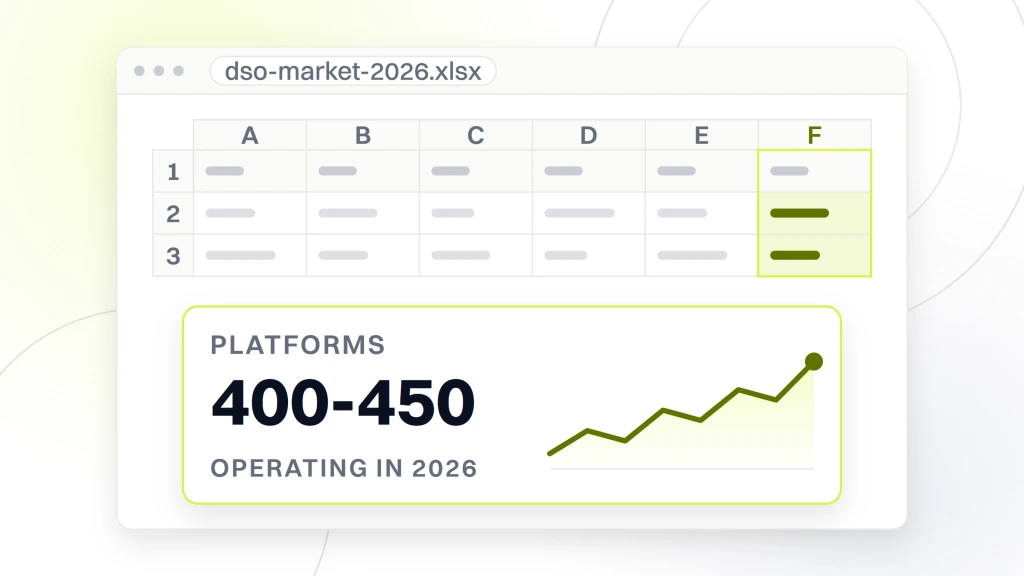
About 400 to 450 dental support organizations operate across the United States in 2026. Only 60 have the size and capital to matter to a mid-sized solo owner going to market. The rest are emerging platforms or single-office rollups that will not show up in your final bidder mix. Those numbers are the whole answer to the count question.
Platform DSOs versus emerging DSOs
A platform DSO is a fully-formed rollup with institutional capital, a full C-suite, and a track record of transactions. Heartland, Aspen, and Pacific Dental Services fit here. An emerging DSO is a 5 to 40 office platform that has raised its first institutional round in the last 24 months. Emerging DSOs pay slightly lower multiples and give you a bigger operating role and equity slice. Half of them fail to reach their next transaction, and the other half deliver outsized second-bite returns.
How the market consolidates each year
Roughly 300 to 400 practices affiliate with a DSO each year in the United States. That number has held steady since 2022 even against higher interest rates. The concentration is heavier than the count suggests. About 30% of those affiliations flow to the top ten platforms. Another 40% flow to regional DSOs of 30 to 100 offices. The remaining 30% lands with emerging DSOs and pure specialty rollups. That distribution tells you where to expect your buyers to come from.
The affiliation pace is slower than the trade press suggests and faster than most solo owners feel it. If you practice in a metro of 400,000 people, one to three of your dentist neighbors likely affiliated with a DSO in the last 12 months. Ask around. The stories you hear are your best local data on how the current cohort of buyers is behaving in your specific market.
Top general practice DSO dental companies
The top general practice platforms own the biggest office counts and run the strongest capital markets stories. If your practice does $1.5M or more in collections, at least three of these names will show up in your bidder mix. Together the five leaders support more than 5,600 offices in 2026, and the top 10 support roughly 7,800.
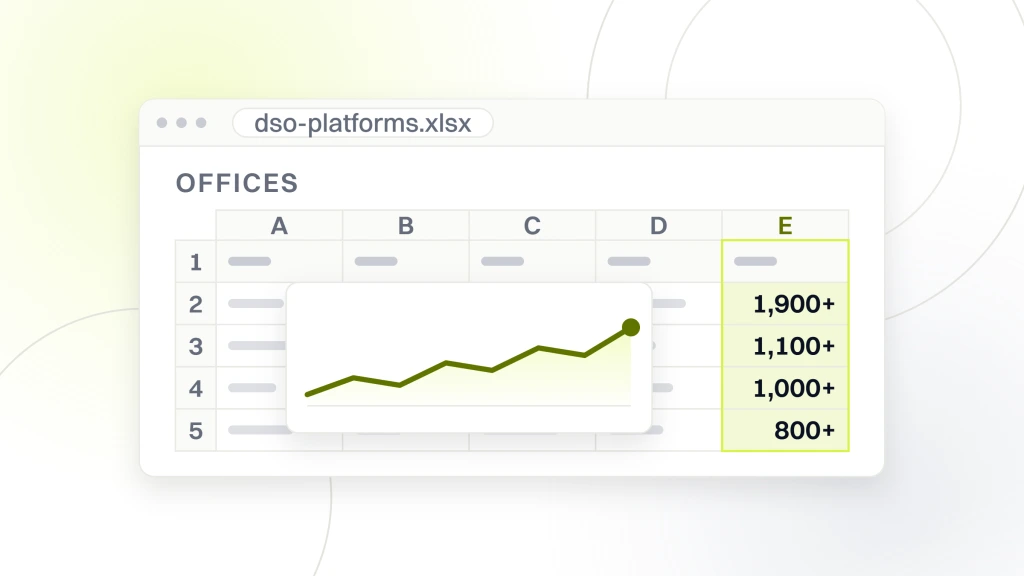
| Platform | Office count (approx) | Primary sponsor | Model |
|---|---|---|---|
| Heartland Dental | 1,900+ | KKR | Employed provider network |
| Aspen Dental | 1,100+ | Leonard Green and Ares | Single-brand employed network |
| PDS Health (Pacific Dental) | 1,000+ | Dentist-owned | Owner-doctor partnership |
| MB2 Dental | 800+ | Warburg Pincus and KKR | Doctor partnership |
| Smile Brands | 600+ | Gryphon Investors | Multi-brand employed and partnership |
| Sonrava Health | ~600 | New Mountain | Multi-brand employed |
| Dental Care Alliance | ~400 | Mubadala Capital | Multi-brand partnership |
| Great Expressions | ~250 | Roark Capital | Multi-brand employed |
Heartland Dental
Heartland is the largest DSO in the country by office count. Founded in Effingham, Illinois in 1997, the platform now runs 1,900-plus offices across 39 states plus DC. KKR is the majority owner after a 2018 recap. Heartland runs a fully centralized ops model. Sellers become employed providers under the local brand, which stays the same in most markets. Deals close in 90 days and rollover equity is usually 15% to 25% of total consideration.
Aspen Dental
Aspen is the single-brand play. Every location wears the Aspen sign. The platform buys de novo locations more often than practice affiliations, so if you get an Aspen call, expect a fully centralized offer with less local autonomy than Heartland. Leonard Green and Ares own the majority. Aspen runs specialty adjuncts through Motto (aligners) and Aspen One (dental hygiene). The pitch is scale and capital access. The trade is brand conversion.
Pacific Dental Services (PDS Health)
PDS Health, formerly branded Pacific Dental Services, is the dentist-owned outlier at the top of the pyramid. Founder Steve Thorne still holds the majority. PDS runs an owner-doctor partnership model where every location has a resident owner with a real equity slice in the local practice. If you want to stay in operations post-close with actual local ownership, PDS is the tier-one platform to talk to. The trade is a longer sale cycle and a stricter clinical protocol at the local level.
Smile Brands, MB2, and Dental Care Alliance
Smile Brands and Dental Care Alliance both run the multi-brand playbook. Local names stay intact. The platform runs central shared services in the background. Gryphon Investors owns Smile Brands and Mubadala Capital owns most of Dental Care Alliance. MB2 Dental runs a doctor partnership model that has drawn Warburg Pincus, KKR, and Charlesbank onto the cap table. All three are strong choices for sellers who want to preserve their community brand, and all three pay in the same 6.5 to 8x range for practices at scale.
Regional DSO dental companies to know
Regional DSOs run 20 to 100 offices concentrated in one state or two adjacent states. Regional buyers often pay as much as national platforms when they see real market density gains against their existing offices. For instance, a Tampa practice inside Smile Design Dentistry’s operating footprint gets a stronger regional bid than a random national inbound. If you sit inside a specific metro, one of these names is probably already looking at your market.
- Smile Design Dentistry. 50-plus offices concentrated in Central Florida and Tampa Bay.
- Deca Dental. 90-plus offices across Texas, Oklahoma, and the Southwest.
- North American Dental Group. 200-plus offices across the Northeast and Midwest.
- US Oral Surgery Management. 240-plus offices, oral surgery focus, national footprint.
- Espire Dental. 30-plus offices concentrated in Colorado and Kansas.
- ProSmile. 80-plus offices concentrated in New Jersey, New York, and Pennsylvania.
- Coast Dental. 90-plus offices across Florida and Georgia.
- Rock Dental Brands. 100-plus offices across Arkansas, Missouri, Oklahoma, and Kansas.
Why regional DSO dental groups sometimes outbid nationals
A regional DSO sees your practice as a strategic add-on to their existing operating footprint. The national platform sees you as one of 40 deals in an annual pipeline. That difference in strategic value can put an extra half turn of EBITDA on the regional bid. That means the regional buyer is more likely to keep your brand, keep your staff, and integrate slowly. If community continuity matters to you, run at least one regional bidder in every process.
The risk profile of a regional DSO
The regional platform has less capital cushion than a national. If interest rates spike or a big payer contract renegotiates against them, a regional DSO can stall or fail before your second bite arrives. That risk is real. Balance it against the higher cash-at-close and the better local integration by asking the sponsor for the last four quarters of same-store sales data and the debt covenant test. If they hesitate, treat the answer as noise and downgrade the bid.
Specialty DSO dental list, orthodontics endo pediatrics oral surgery
Specialty DSOs run separate rollups from the general practice platforms. They pay higher multiples since specialty practices carry higher EBITDA margins, and the referral economics support more concentrated ownership. The specialty DSO dental list is short but active, and each rollup below has closed at least six practice affiliations in the last 12 months.
Orthodontic DSOs
Smile Doctors runs 550-plus orthodontic offices under one platform, the biggest ortho-only rollup in the country. OrthoDent, Orthodontic Partners, and PepperPointe Orthodontic Partners round out the tier-one orthodontic buyers. Multiples in ortho run 9 to 12 times EBITDA at scale, higher than general practice. Compensation post-close is often lower as a percent of collections since the specialty economics let the platform absorb more overhead.
Endodontic DSOs
Specialized Dental Partners is the largest multi-specialty rollup with a heavy endo focus. US Endo Partners runs 100-plus endo-only offices. Both platforms buy at 8 to 10 times EBITDA for practices above $1.5M in collections. Endo owners often prefer these platforms over general DSOs since the operating team understands endodontic case flow, insurance dynamics, and referrer relationships in ways a generalist platform does not.
Pediatric and oral surgery platforms
On the pediatric side, Big Smiles, Kids Dental Brands, and Cherry Tree Dental Studios are the platforms actively buying. On the oral surgery side, US Oral Surgery Management (USOSM), Beacon Oral Specialists, and Max Surgical Specialty Management (recently spun from MB2) run active pipelines. Oral surgery multiples reach 10 to 14 times EBITDA at scale, the highest in the dental market.
How DSO dental companies actually run a purchase
Every DSO acquisition runs on a 90 to 120 day arc. The buyer spends the first 30 days on financial diligence, the next 30 on operational and clinical diligence, and the last 30 to 60 on documentation and closing. That is the pattern. Sellers who prep in advance close on price. Sellers who scramble get chipped in the final two weeks.
The LOI stage, week zero to week two
The letter of intent lands after the DSO reviews your P&L, tax returns for three years, and a basic profile of the practice. LOIs from the top ten platforms are usually 4 to 6 pages with a term sheet attached. Do not sign the exclusivity clause until you have run the LOI past a dental transaction attorney. Exclusivity locks you out of other bidders for 60 to 90 days, so if you sign with the first bidder, you lose your negotiating power on price.
Diligence stage, week two to week eight
Financial diligence pulls every invoice, payer contract, staff W2, vendor agreement, and lease. Clinical diligence includes a chart review on 40 to 100 files, a site visit, and interviews with hygiene and front-office leads. Expect to spend 8 to 12 hours a week on diligence for four to six weeks. Practices that under-prepare get punished by the deal team, either through a price reset or through a deferred earn-out. Get your data room clean before you invite bidders in.
Closing stage, week eight to week twelve
The last stretch is documentation. The definitive purchase agreement, the employment agreement, the MSA, the transition services agreement, and the escrow instructions all get papered in parallel. Payer credentialing under the new PC ownership starts here. Real estate lease transfer or new sublease from the DSO gets executed. Closing happens on a Wednesday or Thursday in most cases so the operational transition can start on Friday and the first Monday post-close feels normal to the team.
How to choose among the DSO dental groups on your bidder list
You will end up with three to five real bidders after LOI. Ranking by headline price is the first mistake sellers make. Rank on seven criteria instead. The winner on price is rarely the winner on total value once you weight rollover, terms, and cultural fit.
- Total consideration including rollover, not just cash at close
- Management fee percentage in the MSA
- Post-close employment term length
- Non-compete radius and duration
- Track record of second-bite return for previous sellers
- Clinical autonomy at the local level
- Sponsor stability and time to next transaction
How to weight the seven criteria for your situation
Not every criterion carries the same weight. If your top goal is retirement in 24 months, rank management fee, non-compete radius, and employment term at the top. If you want to keep working for 5 to 7 years and back the sponsor’s next transaction, rank second-bite track record and sponsor stability at the top. If your family plans to stay in the community post-close, rank clinical autonomy and cultural fit above the headline number. Sellers who skip this weighting exercise sign the highest cash offer and regret it inside 18 months.
The reference call every seller should make
Before you sign, call two dentists who sold to that same DSO three to five years ago. Ask three questions. What changed that you did not expect? Would you sign the same deal again knowing what you know now? Did your second bite hit the projection you were shown at LOI? Twenty minutes of those calls tells you more than the entire DSO pitch deck. The DSO will hand you references. If they resist, treat the answer as a warning and take it off your short list.
The quality of earnings report is your negotiating document
A quality of earnings, or QoE, is a 40 to 60 page financial workup by a dental-focused accountant that documents your normalized EBITDA, adjusts for owner add-backs, and stress tests the numbers. Buyers apply their multiple to your EBITDA number. A clean QoE moves the EBITDA base up by 10% to 20%. On a practice bought at 7x, that is $600K to $1.4M in extra sale price. Skip the QoE and the DSO’s diligence team writes their own numbers, and their numbers will not be as generous.
Case study, Smile Design Dentistry inside the DSO market
Smile Design Dentistry, founded in 2004 with its first office in Dade City, Florida, has grown into one of the most recognized regional platforms in Central Florida and Tampa Bay. The platform now runs more than 50 locations across cosmetic, emergency, preventive, and specialty care. When our team engaged with the group, they had strong offline reputation but were fighting to scale digital marketing cleanly across every location.
The problems were operational. Campaigns were poorly segmented, ad spend was inflated, tracking was thin, and paid social was barely used as a channel. We restructured the PPC accounts by funnel stage and geography, built landing pages for each service line and market, and layered full-funnel paid social on top. Cost per call fell 30% across the network over a 12-month curve. PPC conversion rate grew 20% year over year. The platform kept 50-plus locations live and reporting on one dashboard, which was the piece operations had been missing.
A similar pattern held for North County Dental Care, a family practice in Vista, CA that we worked with from 2021 to 2024. Three years of consistent search and paid work grew patient volume 1,000%, from 1 to 2 new patients a month to 12 to 16. Both stories share the same lesson. Clean tracking beats showy tactics for dental patients, and consistent execution over multi-year windows compounds harder than any single campaign push.
What the numbers taught the DSO ops team
The bigger lesson from the Smile Design work was operational discipline, not marketing tactics. Every location had different phone systems, different tracking, and different creative variations. Unifying those into one funnel took three months. Once the funnel was unified, adding new offices to the marketing dashboard took a week per location instead of a month. That is the shape of value multi-office DSOs get from centralized marketing when the operations team executes cleanly.
What a solo practice can take from the Smile Design story
If you are a solo owner reading this, the takeaway is not that DSOs are magic. It is that operational discipline beats operational sprawl. Clean tracking, clean funnels, and clean reporting move the needle for patients whether you affiliate with a DSO or stay independent. Do that work before you go to market and your practice prices at a higher multiple. Do it after affiliation and the DSO takes the credit.
Where to check the current dental DSO list yourself
Public data on dental DSO companies sits in three places. The ADA Health Policy Institute at ada.org/resources/research/health-policy-institute publishes annual practice ownership trend data. Group Dentistry Now at groupdentistrynow.com tracks platform transactions in near real time with enough color to sort real deals from press releases. Dental Economics at dentaleconomics.com runs regular pieces on DSO market structure and dentist compensation trends. Cross-referencing all three gives you a cleaner picture than any single source.
Broker lists for dental DSO companies and why they matter
Dental transaction brokers publish their own DSO buyer lists internally. When you engage a broker, ask for the shortlist they would run for your specific practice profile. That list is more actionable than a public directory since it reflects who is actively buying practices of your size, in your metro, right now. A good broker updates the list weekly based on live conversations with DSO business development teams.
How to cross-check any dental DSO list before you trust it
Public lists get stale fast since DSO transactions close every week. Cross-check any list against three sources. First, verify office count on the platform’s own website, which every DSO keeps current. Second, check the last 12 months of press releases on Group Dentistry Now for platform-specific transactions. Third, ask two dentists you trust who sold in the last 24 months who called them and who they took seriously.
The cross-check takes an afternoon. It saves you weeks of talking to the wrong buyer for your size or metro. A platform that owns 30 offices does not care about a $900K practice. A platform that owns 400 offices does not chase a $4M oral surgery practice at market. Match your practice profile to the platform’s active deal size before you take the intro call.
One tell every DSO pitch shares
Every DSO business development team has the same slide in their deck. It says something like “we support your practice so you can focus on dentistry.” Every one of them believes the slide, and every seller believes it for the first six months. The strongest platforms are the ones that admit the operational load upfront during LOI, not the ones that oversell the pitch and hand you off to a business development associate after the first call.
During your reference calls, the sellers who signed with strong platforms use phrases like “it is a real job” and “the ops calls are not optional.” The sellers who signed with the platforms that oversold use phrases like “I did not realize.” Sort your bidders by which category their references fall into. The other tell is how much time the CEO or head of practice growth spends with you during LOI. A CEO who calls at week three of diligence is a load-bearing signal that post-close support is real.
Working with a marketing partner as you evaluate DSOs
Your marketing partner earns their fee at the LOI table. A practice with 18 months of documented month-over-month new patient growth, clean call tracking, and a documented cost per new patient prices at a higher multiple than a practice with none of that. That difference is real dollars in your pocket at close. If you plan to talk to platform buyers in the next 12 to 24 months, get the marketing house in order first.
Our team runs both sides of that work. For a multi-office DSO already scaling patient acquisition across a network, our DSO Dental Marketing for Multi-Location Groups covers the full playbook. For solo owners cleaning up the funnel before an LOI hits, our Dental Marketing Agency pages walk through the acquisition math one practice at a time, and the Dental Marketing Retainer starts at $1,499 a month. Related reads include our dso dental model breakdown and our dental service organization primer.
Pre-LOI checklist that grows your multiple
Get consistent 22% net income margins with documented add-backs. Install call tracking on every marketing channel. Segment new patient reporting by referral source. Clean up your fee schedule and drop legacy PPO contracts under 45% write-off. Move to a modern PMS so due diligence data pulls fast. Get a quality of earnings from a dental-focused accountant. Each of these grows the multiple by a quarter to a half turn on the same practice. Together they can be worth $600K to $1.4M on a $2M practice.
Post-LOI discipline that gets you to close
Once the LOI is signed and diligence starts, the two things sellers underestimate are data room prep and clinical staffing continuity. A messy data room slows diligence and gives the buyer room to reprice. Staff turnover during diligence signals cultural risk and gets punished in escrow. Freeze both. Keep your team fully staffed through close, and have every document requested in advance sitting in the data room from day one. Sellers who do these two things close on price. Sellers who do not get chipped in the last two weeks.
How the 2026 DSO dental companies market differs from 2022
Two things changed between the 2022 peak and the 2026 DSO dental companies market. Debt got more expensive, so sponsors underwrite with less debt and multiples compressed by roughly half a turn. New emerging DSO formation slowed to its lowest pace since 2019. The market is smaller, tighter, and more disciplined than it was three years ago.
The result is a market where surviving platforms are stronger operators, deals close on tighter valuations, and rollover equity carries more of your total consideration. Fewer new platforms launched in 2024 and 2025 than in any prior year since 2019, and that discipline shows up in how bidder mixes are structured across every mid-market process. About 16.1% of US dentists are now DSO-affiliated, and that share rises above 1 in 4 among dentists less than 10 years out of school.
What that means for your sale price
On a $2M collections practice with clean EBITDA at $650K, expect a 2026 headline offer of $4.2M to $4.9M compared to a 2022 offer of $4.7M to $5.4M for the same practice. Rollover equity replaces some of the missing cash. Expect 20% to 30% of consideration in rollover rather than 10% to 15% in 2022. That is more exposure to the sponsor’s next transaction and more discipline needed on which platform you back.
Payer mix pressure across the industry
Delta, Cigna, and MetLife all tightened fee schedules for group practices in 2025. That squeezes the group buying story every DSO tells during the pitch. Real fee schedule uplift for group DSOs in 2026 is 1% to 3%, not the 5% to 8% number that showed up in older decks. Ask directly what fee schedule uplift the DSO has secured in your metro, in the last 12 months, in writing. Vague answers signal weak payer teams.
Labor and supply costs matter more than they used to
Hygienist wages climbed 12% to 18% in most metros over the last three years and dental assistant wages moved 10% to 14%. Supply costs stayed stubborn on implants, aligners, and imaging film. Every DSO on your bidder list has felt this squeeze. Ask them how they held EBITDA margin against those cost lines. A platform that has real answers on labor retention, referral bonuses, and centralized purchasing runs a tighter operation than one that hand-waves through the question. Fold that answer into your scoring. The strongest platforms track hygienist turnover monthly and share the number without hesitation. If a business development lead does not know their own turnover, treat the whole EBITDA story as directional at best.
A final read on the current DSO dental companies map
Sixty platforms buy at meaningful scale. Ten of those platforms dominate the general practice segment. Another ten dominate the specialty segments. Regional DSOs fill the gaps in specific metros. Emerging DSOs sit at the bottom of the pyramid with more risk and more upside. Pick your bidder mix from across those tiers, not from one row of the same size.
Your one-sentence plan
Talk to three national platforms, two regional DSOs, and one emerging DSO if you can find one that matches your specialty and metro. Compare on total consideration, not cash at close. Verify the second-bite story with three reference calls before you sign. That plan runs in 90 days and produces the strongest possible offer for your practice.
If you are not selling
Say you have no interest in a DSO exit. Still, understand the market. Your neighbors are being called every quarter. Your associates hear about DSO opportunities in dental school. Your referring specialists are getting recruited to specialty platforms. Knowing the current buyer map protects your own practice from surprises and gives you sharper conversations with your team, your associates, and your own family about long-term ownership.