You want a healthcare website redesign guide that walks the real sequence, not a pitch deck of mood boards. This one does. In the next 12 minutes you’ll get the planning steps that catch buried compliance work, the information architecture that survives migration, the content sequencing that protects organic patient traffic, and the QA checklist that catches the 12 items every practice forgets on launch day. You’ll walk into your next scoping call with a working plan.
The short version. A functional redesign runs 12 to 20 weeks for a single-location practice and 20 to 32 weeks for a multi-location group. Three phases decide the outcome. Planning (weeks 1 to 4), rebuild (weeks 5 to 14), and launch plus stabilization (weeks 15 to 20). Cut the planning phase and you’ll pay for the shortcuts in month three. Cut the stabilization phase and you’ll bleed organic patient traffic for six months. Practices that hold this sequence land inside 15% of the pre-launch organic baseline by week two after go-live.
A real healthcare website redesign project
Pelvic Rehabilitation Medicine, a 14-location pelvic pain specialty group, ran the full sequence and reset the strategic ceiling on the practice. Here’s what the project produced across organic traffic, keyword growth, and patient community engagement in the six months after launch.
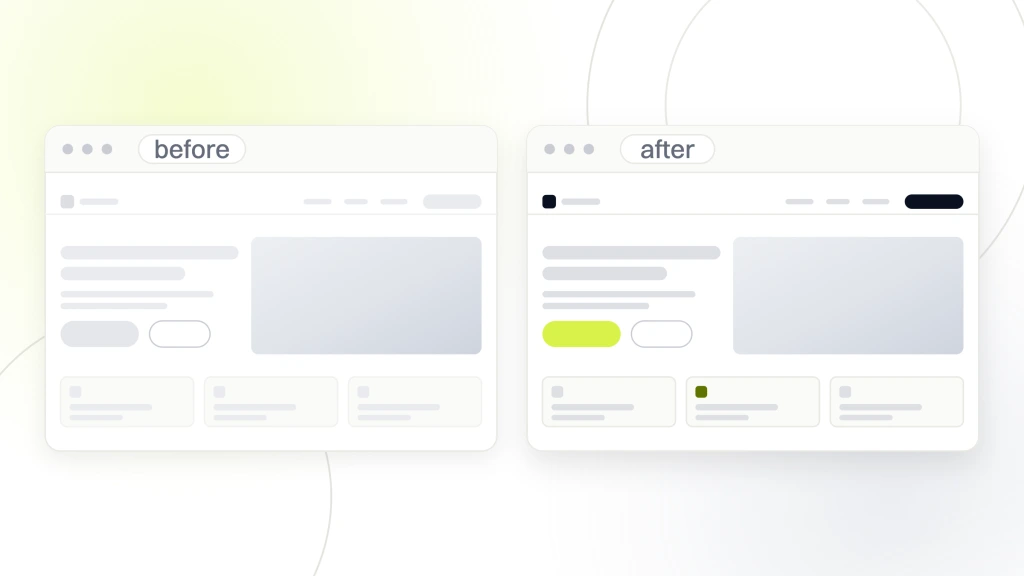
Where the practice started
The old site had scalability limits baked in. Landing pages overlapped without a clear parent. No hub existed for patient support or community. Organic keyword rankings held flat even with 14 locations of clinical volume feeding the brand. The practice needed a plan that scaled with the footprint, not one that refreshed the visual style.
What the healthcare website redesigning work delivered
A scalable information architecture that mapped 14 locations into a clean hierarchy. Content consolidation folded overlapping service pages into authoritative parents. A patient community platform gave pelvic pain and endometriosis patients a dedicated support hub. Technical SEO work repaired years of crawl and indexing drift. Every layer moved together, not in isolated releases.
What the numbers did
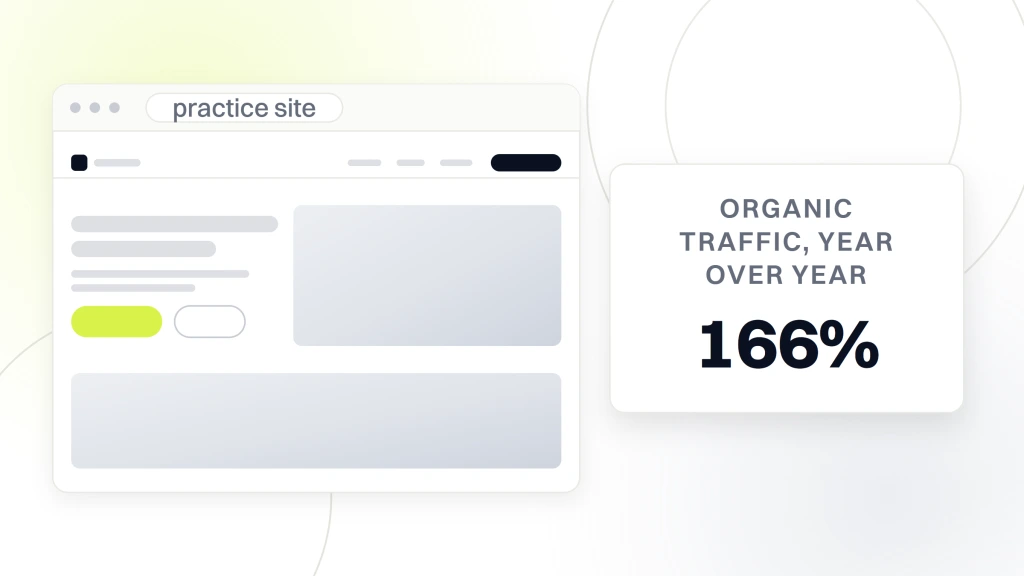
Organic keyword rankings grew 174% year over year. Organic traffic climbed 166% as SEO and UX gains compounded. The patient community launched at 100% of planned scope. The project paid for itself inside eight months and kept compounding.
Weeks 1 to 4. The planning phase that catches compliance
The four-week planning phase is the cheapest place to catch every problem the launch would expose. Content audit, URL map, vendor scoping, HIPAA review, and analytics inventory all live here. Skip any one and week 15 turns into a rebuild. Hold the phase and every downstream week costs 30 to 50% less.
Run the content audit first
Export every URL on the current site into a spreadsheet with pageviews, entrances, and organic keyword count from the last 12 months. Tag each URL as keep, rewrite, merge, or sunset. Most practices find that 30 to 45% of pages can be sunset without touching a ranking. Another 20% consolidate cleanly into a stronger parent page. The audit is your migration roadmap and your redirect map at once.
Scope the vendor before design starts
Pick an agency with healthcare website design work already delivered in your vertical, not a generalist. Ask for the redirect matrix from their last three healthcare launches. Ask how they handle HIPAA-adjacent tracking pixels. If the answers sound generic, keep shopping. See Healthcare Website Design Services for the vendor scorecard we use on every practice build.
Pull compliance into week two, not week 14
Compliance review deferred until the design is locked is how a hero form breaks cookie consent rules three days before launch. Give the compliance officer the plan, the mockups, and the tracking list in week two. Fixing a consent banner in wireframe stage is a 20-minute change. Fixing it three days out is a rebuild.
Information architecture that survives migration
Information architecture is where a healthcare website redesign turns from a design brief into a system. The IA is a tree of parent pages, service pages, location pages, provider bios, and patient resources, mapped one to one to the old URL structure so every ranking page has a landing spot. Get this right and migration is calm. Get it wrong and you’ll spend six weeks patching redirects while organic traffic slides.
Map every ranking URL to a target
Pull the top 500 organic URLs from Search Console. Every one gets a target on the new site, mapped by the content lead, not the developer. Redirects are 301, one to one, and tested against a staging URL before launch. When two old URLs merge into one, the merged target inherits the deeper of the two pieces, not the shallower.
Preserve the H1, meta, and schema on every kept page
The three fastest ways to nuke a ranking. Rewriting the H1 on a page that ranks position 3, dropping the meta description Google was pulling, and stripping FAQ or LocalBusiness schema off a template. Preserve all three on any page holding rank. Improve them only after the new site holds baseline for 30 days.
Location pages get their own subtree
Multi-location practices need a clean location hierarchy. State page, city page, individual location page, each with unique on-page content and a distinct GBP link. A dental group in Cleveland with 14 locations lost 40% of local pack visibility for eight weeks after collapsing every location into one template with a store locator. The IA cost that decision more than any design choice.
Healthcare website relaunch preparation steps
Treat these healthcare website relaunch preparation steps as the pre-flight checklist most practices skip. Launch day feels dull when the prep was right. Launch day feels catastrophic when the prep was wrong. Every step below closes a specific failure mode we’ve watched crush practices in the first week after go-live. Every step is boring. Every step is required.
- 301 redirect map finalized, tested on staging, and loaded server-side before DNS switches.
- XML sitemap regenerated and submitted to Google Search Console inside 24 hours of launch.
- Robots.txt updated to allow crawl of the new URL patterns and block staging paths.
- Analytics tags, Google Ads conversion tags, and call tracking numbers verified firing on the new pages.
- Schema markup validated with Google Rich Results Test on every template page.
- Contact forms tested end to end from user submission to inbox notification.
- Patient portal deep links checked and updated where the old URL patterns broke.
Staging environment sign-off
Every redesign needs a full staging environment with a locked review URL and a sign-off document. Practice owner, marketing lead, and compliance officer all sign off before the DNS switches. Skipping sign-off is how you launch a site where the phone number in the header goes to a disconnected line for eight days before anyone notices.
Redirect stress test the day before
Load the top 100 old URLs into a spreadsheet. Test each one against the staging environment. Confirm each returns a 301 to the intended new URL. Practices that skip this step launch with 40 broken redirects that take two weeks to fix while organic traffic slides.
HIPAA-adjacent tracking audit
Every tracking pixel, retargeting tag, and third-party embed gets a HIPAA review before launch. Any pixel that could fire on a URL containing PHI needs a filter or full removal. Meta and Google Ads pixels have both triggered breach notifications for healthcare providers in the last three years. Two hours of audit prevents six figures of penalty exposure.
Healthcare website usability testing before launch
Healthcare website usability testing is the last gate before launch. Practices routinely skip it. The build team already tested internally and the site works fine on the marketing lead’s laptop. Real users on real phones with real intent break sites in ways no one on the build team can predict. Put the site in front of prospective patients before you go live. Every time.
The plan on Monday. Run a 12-participant usability study by Friday with in-depth interviews, eye-tracking, and a full report. The plan on Friday. Watch three real prospective patients try to book on a Pixel phone while the marketing lead takes notes. Most practices skip both plans and launch anyway. The three-patient version takes an hour and catches 80% of what the 12-participant study would find.
The 5-second first impression test
Show three prospective patients the homepage for five seconds. Close the browser. Ask what the practice does, where it is, and what the first action a patient would take. If any of the three can’t answer confidently, the homepage isn’t ready. This test costs nothing and catches homepage problems that survive every stakeholder review meeting.
The booking flow test
Watch three real prospective patients try to book on their phone. Not on your laptop. Their phone, whatever it is. Time how long it takes from homepage to booking confirmation. Count how many times they get confused. If any of the three abandons before completing the booking, the flow isn’t ready. Fix it before launch, not after. See Nielsen Norman Group’s guide on thinking-aloud usability testing for the protocol we use with practice-side testers.
Accessibility validation on real assistive tech
Run the site through a screen reader like NVDA or VoiceOver. Walk the top 20 pages using keyboard only. Every interactive element needs a visible focus state and a logical tab order. Practices that skip this step launch sites that fail ADA compliance and end up defending demand letters at 12 months post-launch. The screen reader pass takes two hours and saves the legal exposure entirely. See Core Web Vitals for the technical performance layer that pairs with accessibility.
Launch day and the first 30 days post-launch
Launch day takes about six hours of focused attention when the prep was right. The first 30 days after launch are where the project either compounds or bleeds. Every practice we’ve worked with that hit the 30-day review with clean logs and steady traffic saw the redesign pay off inside four months. Every practice that skipped the review learned about drift six months later, once bookings had already sagged.
Day 1 through day 7
Monitor Google Search Console for crawl errors, 404 spikes, and coverage warnings twice a day. Watch Analytics for traffic patterns that mirror the pre-launch baseline inside 15%. Confirm call tracking so the phone still rings and every call attributes correctly. Any anomaly gets triaged the same day. Waiting a week to investigate a coverage error is how a 4% traffic dip becomes a 30% one.
Day 8 through day 30
Weekly check-ins on organic traffic, indexation status, and top-page rankings. Push the sitemap resubmission if any core pages are still not indexed by day 14. Watch for stray old URLs still crawling and add them to the redirect map. By day 30 the new site should be indexed, ranking inside 10% of the pre-launch baseline, and stable enough for you to move focus back to growth work. For the maintenance layer that follows, see the Maintenance Checklist.
Where healthcare website redesign projects fail
Every failed project we’ve audited traces back to one of six specific mistakes. Not bad design. Not bad providers. Not bad luck. Six sequencing mistakes that compound if you don’t catch them in the plan. Each one has ambushed a practice we know, and each one is preventable when the planning phase gets its four weeks of unglamorous work.
- Design signed off before the content strategy and URL map close.
- Launch scheduled the same week as a paid campaign push.
- Compliance review deferred until week 14 when there’s no time to fix findings.
- Analytics migration tacked on the day before launch as an afterthought.
- Redirects tested only in QA, never against the live top-100 URL list.
- Post-launch monitoring assumed instead of scheduled.
The paid-campaign collision
Never schedule the redesign the same week as a major paid campaign push. Every metric you’d use to diagnose the launch gets muddled by the campaign, and every metric you’d use to read the campaign gets muddled by the launch. Space them at least three weeks apart. Practices that fire both together spend eight weeks arguing about attribution instead of doing the work that fixes the traffic pattern. See Security Features for the tracking configuration that keeps both measurable.
The compliance ambush
Compliance pulled in at week 14, when the design is locked and content is written, is how you find out a hero form breaks cookie consent rules three days before launch. Pull the compliance officer into week two. Hand them the plan and the mockups. Give them time to flag issues while the fix is a design tweak instead of a rebuild. See our Healthcare SEO Audit for the parallel audit that runs before launch on every redesign we handle.
Healthcare website redesign summary for practice leaders
You have a working plan now. Every phase above protects ranking equity. The order is planning, IA, content, QA, launch, stabilization. Preserve URLs, alt text, schema, and content depth. Test on real devices with real users. Space the launch three weeks from any paid campaign shift. Watch dashboards daily for the first week and weekly for the first month. Hold this sequence and your next redesign lands inside 15% of baseline by week two.
When to bring in a partner
Solo practices with a marketing lead can run this playbook in-house if the lead has 20 hours a week. Multi-location groups almost always want a partner. The coordination surface area outgrows what one lead can hold. When you’re ready to run this across the whole practice, our Healthcare Marketing Hub covers the full stack, with retainer starting at $1,499 a month. For the copy layer that pairs with the redesign, see Healthcare Website Copywriting.