Dentures marketing is the local SEO, paid search, and call handling system that books full, partial, and implant-retained denture patients at a cost of $95 to $170 per case, using a small stack of channels most dental agencies underuse. A single full-denture case runs $1,400 to $3,200. Implant-retained overdentures run $4,000 to $9,000. Denture patients also refer siblings, spouses, and neighbors inside the same year, so every win compounds.
Most agencies miss this segment since they treat dentures as an afterthought inside a generic dental account. Win the local map pack and you own denture queries for years. Tighten the phone script and the same denture leads produce twice the closed cases. That is the whole game.
This guide is the honest dentures marketing plan for filling the schedule from the map pack, paid search, and the referral network. You get the local SEO stack, the offer structure that respects the patient, a call-handling script built to convert qualified denture leads, and a real case study from a 20-year Vista, California practice that grew patient volume 1,000% on this exact model. Read straight through in about eleven minutes.
Denture leads and call handling that closes patients
Denture leads live and die on the phone. Full-denture patients skew older, more cautious, and easy to lose to a rushed front-desk voice. A warm, patient dentures marketing script closes far more qualified denture leads than a rushed one. The gap is not the offer or the price. It is the human on the other end.
The script that works has four beats. Greeting with practice name and first name of the person answering. Confirmation of the denture type the patient is calling about. Two clarifying questions about current dentures and timeline. A same-week appointment offer with the treatment coordinator, not the doctor. Practices that train the front desk on this script see appointment show rate climb from 55 to 78% and booked-to-treated conversion climb from 35 to 62%.
Call tracking setup for denture campaigns
Every denture campaign gets a dedicated tracked number. Google Search number. LSA number. Meta number. Organic number. Practices that track by channel see clearly which channel produces booked treatments, not just booked appointments. That data holds the account structure honest. Practices that route every call through a single number cannot tell which channel to double down on and which to pause. Our dental marketing tools post covers the tracking stack.
Same-day response time that saves denture leads
Denture leads that go unanswered for 24 hours lose 45 to 65% of their conversion potential. Older patients call two or three practices in a single afternoon and book with whichever answers first. Any denture form-fill needs a same-day callback inside 2 hours during business hours. Any voicemail needs a callback attempt inside 30 minutes. Practices that hit these response times see booked-appointment rates climb 25 to 40% on the exact same denture leads.
Dentures advertising and offers that respect the patient
Denture patients over 60 have watched decades of predatory dentures advertising. They can smell a manipulative offer from the first line of ad copy. The offers that convert best are transparent, specific, and priced fairly. Free denture consultation. Free replacement fitting for existing dentures. Complimentary financing consultation with a treatment coordinator. Nothing that feels like bait.
Avoid three common offer patterns that hurt more than help. Dentures starting at $399 attracts price shoppers who never book. Two-for-one offers on partial dentures confuse the patient about what the package includes. Free implant consultations for overdenture cases sound too good and trigger skepticism. Practices that drop these three offer patterns see qualified-lead rate climb 30 to 55% without changing spend. Our converting dental ppc ads post has the fuller offer framework.
Financing messaging that opens the case
State the monthly payment on a $2,800 case explicitly on the page. As low as $95 per month with approved financing opens a conversation that a fair price on dentures does not. Practices that surface the monthly payment on the landing page and in the ad extension see click-through rate climb 22 to 38% and phone volume climb 30 to 50%. The math is the same for the patient. The framing changes the emotional response.
Insurance messaging that opens the door
Many first-time denture patients are on Medicare or private supplemental plans that partially cover dentures. Listing the specific plans you accept with logos above the fold answers the money question before the patient has to ask. Practices that show 8 to 12 recognizable insurance logos see form-fill conversion climb 20 to 35% versus practices that hide insurance behind a we accept most plans line. The Medicare coverage page on dental services is worth linking to in your patient education content so it settles a common question.
Dentures marketing website design that older patients trust
Older patients scan websites differently than younger ones. Font sizes above 18 pixels for body copy. Line heights at 1.6 or higher for reading comfort. High-contrast color palettes. Simple navigation with 4 to 6 items. Practices that respect these accessibility patterns see bounce rate drop from 62% to 38% on denture landing pages. That single accessibility pass produces more booked patients than any creative tweak.
The section pattern that converts denture traffic runs six blocks. Above the fold, headline plus a three-field form, click-to-call, review count with star rating, and a real photo of the practice team. Section two, denture types comparison table with prices. Section three, financing block with monthly payment math. Section four, real patient testimonials with first names and denture type. Section five, insurance strip. Section six, doctor bios with credentials. Our dental website design guide has the full section stack.
Real patient photography for denture pages
Stock photos of models with fake smiles rank last in trust signals for denture patients. Real photos of the practice team, the treatment room, and 3 to 6 patients with signed releases carry the page. Older patients spot fake stock in a heartbeat and click away. A local photographer for a 3-hour shoot produces the assets for $600 to $1,200, and those photos carry the page for 3 to 5 years.
Accessibility choices that matter for older users
Font size at 18 pixels or higher, line height at 1.6 or higher, color contrast at 7 to 1 minimum, and touch targets at 44 pixels or larger. These are not decorations. They are conversion elements. Older patients on smartphones bounce from pages that fail any of these. Practices that pass all four see form-fill conversion climb 20 to 40% on the same paid traffic. Free accessibility audits from tools like WAVE from WebAIM catch most of these issues in an afternoon.
Denture patient review strategy that lifts rankings
Denture patients write among the warmest reviews in dentistry when asked correctly. A patient who has waited 20 years for a comfortable smile writes with real emotion. That kind of review moves nervous denture shoppers into calling. Practices that build a systematic denture review workflow produce 30 to 60% of new denture patients from those reviews inside a year.
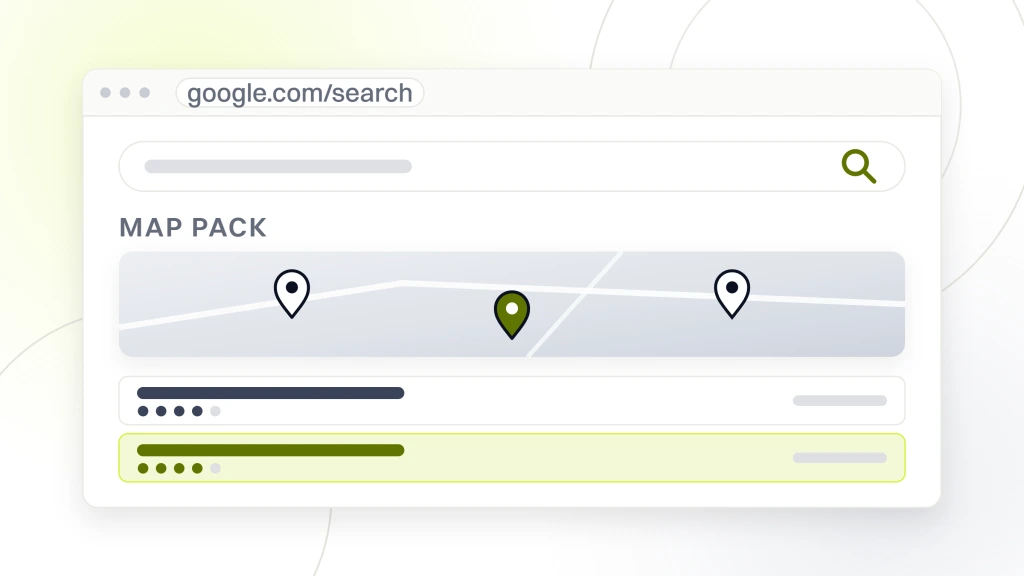
The workflow that produces denture-specific reviews has three steps. First, the treatment coordinator delivers the final denture set with a printed take-home folder that includes a QR code to leave a Google review. Second, a text with the review link goes out 48 hours after delivery, timed with the patient’s first meal in the new dentures. Third, at the 30-day check-up, the front desk mentions the review with a warm question about how the dentures are performing. Practices that run this workflow see 5 to 12 fresh denture-specific reviews per month.
Review timing that captures the emotion
Ask for the review during the emotional window that follows the first meal or the first smile in the mirror at home. That window closes inside 72 hours. Practices that ask at the delivery appointment miss the window since the patient has not yet lived with the dentures. Practices that ask at the 30-day follow-up catch some but miss the peak emotion. The 48-hour after-delivery text captures the peak. Our dental reputation management post covers the review reply framework.
Featured reviews on the denture page
Feature 4 to 6 denture-specific reviews on the dentures service page. Pick reviews that name the specific denture type, the age of the patient, and the emotional outcome. Reviews that mention 20 years of avoidance, family reactions, or eating specific foods again produce more calls than reviews that only mention the doctor’s kindness. Practices that feature emotion-first reviews see call volume from the page climb 20 to 35%.
Case study, North County Dental Care, 1,000% patient growth
North County Dental Care is a Vista, California practice of more than 20 years that came to us with 1 to 2 new patients per month, a site that did not work on phones, and no top-10 rankings. We rebuilt the site on HTTPS with service pages built to convert, cleaned up local listings, and ran Google Business Profile ads and local video.
From 2021 to 2024, new patient volume climbed to 12 to 16 per month. Website traffic grew 385%. Marketing ROI hit 500%. The practice grew patient volume 1,000% by combining local SEO, Google Business Profile ads, and video on a rebuilt site. A denture practice can run the same base and point it at denture searches. Read the full case study on our dental marketing hub.
Dentures marketing mistakes that waste budget
Six mistakes repeat across almost every denture practice we audit. Fixing them costs less than a month of paid spend and produces 25 to 60% more booked patients inside a quarter. Read the list. Check your own practice against it this week.
- Broad-match Google Ads targeting that burns budget on dental cleaning searches
- Single generic dentures page for all four denture types, killing landing page relevance
- Denture prices hidden behind a call for pricing line that older patients skip
- Review generation with a single ask at delivery, missing the 48-hour emotional window
- Stock photography on denture pages instead of real patients with signed releases
- Front desk voicemail that goes unanswered for 24 hours and loses the older patient to a competitor
The single-page-to-four-page fix
Split the single dentures page into four dedicated pages, one for full dentures, one for partial dentures, one for implant overdentures, and one for denture repair. Give each page its own headline, price range, set of reviews, and click-to-call. Practices that make this split see paid conversion rate climb 40 to 80% inside 30 days since ad copy and landing page finally match search intent. It is a one-week rebuild for a permanent conversion gain.
The phone response fix that costs nothing
Train the front desk to call every voicemail back inside 30 minutes and every form-fill back inside 2 hours during business hours. Add an evening voicemail rotation for after-hours calls. Practices that make this change see booked-appointment rates climb 25 to 40% on the exact same denture leads with zero added ad spend. This is the highest-return operational fix in dentures marketing.
Dentures marketing plan for a general practice
A general dental practice that wants to add 15 to 30 denture cases per month should invest $2,400 to $4,800 across paid Search, LSAs, Meta, and a local SEO retainer. Below the floor, the plan produces sporadic denture leads without a compounding base. Above the ceiling without treatment capacity, the practice books cases the lab and the doctor cannot deliver on schedule.
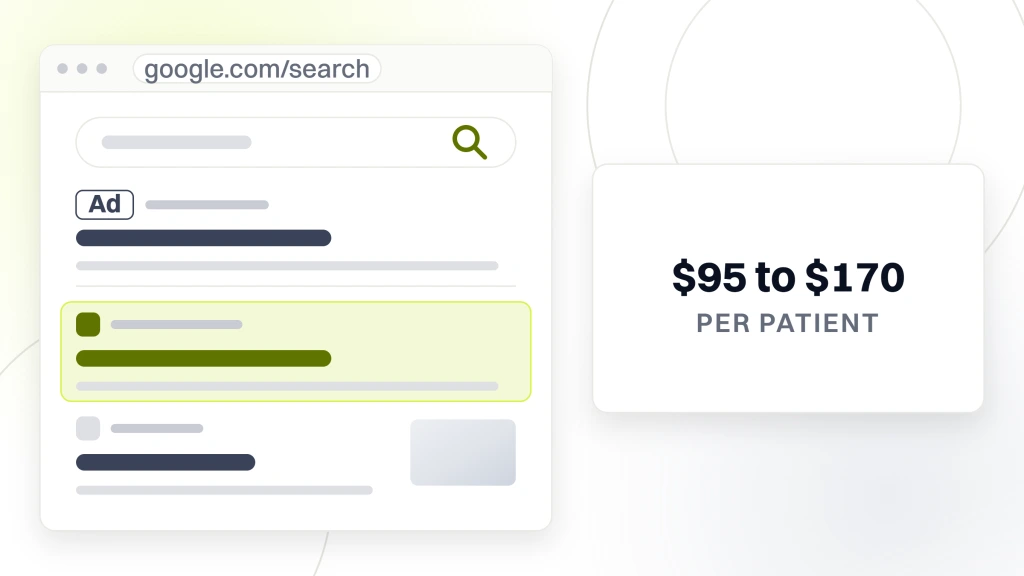
The mix that produces 15 to 30 monthly denture cases has four inputs. Google Search plus LSAs at $1,400 to $2,600 producing 10 to 20 booked patients. Meta at $600 to $1,400 producing 4 to 8 booked patients. Local SEO retainer at $599 to $1,600 producing 5 to 12 organic bookings from the map pack. Review workflow automation at $89 to $199 monthly producing the fresh reviews that hold the ranking. Blended cost per denture patient runs $95 to $170. Our dental marketing plan post has the fuller template.
Budget phasing across the first 90 days
Days 1 to 30 spend $1,000 to $1,600 on foundation. GBP setup, denture landing pages, review workflow deployment, negative keyword research. Days 31 to 60 spend $2,600 to $3,600 with paid Search and Meta live but not yet fully optimized. Days 61 to 90 hit full budget of $2,400 to $4,800 with all four channels active and weekly optimization. Practices that phase this way hit 15 to 30 monthly denture cases by month 4 or 5.
KPIs that matter for denture leads and cases
Track four numbers weekly. Denture cases booked, cost per denture case, review count added tied to denture delivery appointments, and phone response rate inside target windows. Ignore vanity metrics. Practices that hold denture bookings above 15 per month and phone response above 85% for four consecutive quarters see denture revenue grow 30 to 55% year over year. Our dental marketing roi post breaks down the reporting framework.
Picking a dentures marketing agency that knows the segment
Not every dental agency understands dentures. Most run the same general dentistry playbook and produce leads that turn into cleanings, not denture cases. A dentures-capable agency runs three things differently. Landing page strategy split by denture type. Negative keyword discipline on Google Ads. Review workflow tied to delivery appointments. Vague answers on those three questions mean the generalist approach is running the account.
Ask five questions before signing with any agency for dentures marketing. How do you split landing pages by denture type. What is your negative keyword list philosophy. How do you tie review generation to the denture delivery workflow. What is your target cost per denture patient. What is your monthly reporting cadence and what numbers lead. Vague or generic answers on any of the five mean the agency will run a general dentistry program and blame the vertical when it flops. Our dental marketing hub covers the wider agency-selection framework.
In-house versus agency for dentures advertising
Single-location practices below $80,000 monthly production usually cannot fund a real agency retainer. Handle GBP setup, denture landing pages, and review workflow in-house with a $299 monthly software stack plus 3 to 5 hours per week of practice manager time. Above $120,000 monthly, an agency retainer of $1,800 to $3,600 monthly becomes cheaper than the equivalent in-house hours. Above $250,000 monthly with multiple locations, an agency retainer stops being optional since the operational complexity exceeds any single manager’s bandwidth.
A monthly reporting cadence that respects the numbers
Monthly agency reporting should lead with denture cases booked and cost per denture case, followed by phone response rate and review count added. Every other number is context. Impressions, click-through rate, and cost per click matter only inside the story of how they moved those four leading numbers. Ask for the four numbers first every month. Backup research from the CDC oral health resources gives you a citation trail for the patient education you build around the campaigns.
Start your dentures marketing this quarter
Dentures marketing rewards practices that pick a small number of channels, run them cleanly, and answer the phone with warmth. Fix your denture landing pages first. Set up call tracking by channel. Train the front desk on the four-beat script. Launch the 48-hour review text. Then layer paid Search and LSAs on top. That order books more denture patients in the first 90 days than any big-budget rebuild that skips the operational fixes.