You lose 22 to 38% of DTC revenue to broken handoffs between the channels a shopper touches before checkout. The buyer sees an Instagram ad on Tuesday, opens the app on Wednesday, gets an SMS on Thursday, walks into your pop-up on Saturday, and finishes the purchase on desktop Sunday night. Every touchpoint holds its own customer record, inventory feed, and definition of who this shopper is. Omnichannel ecommerce marketing is the discipline that ties those five records back into one customer, one cart, one inventory pool, and one lifetime-value number the finance team can trust. Get it right and average order value climbs 15 to 30% inside two quarters. Skip it and paid-media spend keeps chasing the same buyer across three ad accounts that don’t talk to each other. This guide walks you through the identity resolution stack, the customer data platform choices, the inventory sync pattern, and the channel playbook our ecommerce marketing agency runs on DTC accounts every week.
Identity resolution inside omnichannel ecommerce marketing
Identity resolution is the layer that says the app user, the email subscriber, the retail buyer, and the anonymous website visitor are the same person. It’s the single most important piece of infrastructure in the DTC stack. Without it, the customer record fragments into three or four ghost profiles per real buyer, and every downstream personalization play runs on wrong data.
What identity resolution actually resolves
Identity resolution stitches together four signal types. Deterministic signals like email hash, phone number, and account ID match with near-certainty. Probabilistic signals like device fingerprint, IP address, and browser cookie match at 70 to 90% confidence. First-party signals come from your own systems, including POS receipts, app installs, and checkout events. Third-party signals from ad platforms and data providers are shrinking fast as cookies deprecate and the privacy layer tightens. The right stack weighs deterministic and first-party heaviest, uses probabilistic to bridge gaps, and treats third-party as a nice-to-have that will keep degrading through 2027.
The tooling that runs identity resolution
Segment, RudderStack, and mParticle sit at the top of the identity resolution tooling tier for DTC brands at $10M to $500M yearly revenue. Below that, Shopify Audiences plus Klaviyo covers a lot of the basic identity graph for a brand under $10M. Above the $500M tier, brands move to Amperity, Twilio Segment Personas, or a custom identity graph built on Snowflake or Databricks. The right tool depends on the buyer touchpoints in the stack, not the ad-platform integrations on the vendor deck. A sibling read on marketing automation ecommerce platforms and flows covers the flow side that runs on top of the identity graph once it’s stitched.
Customer data platform choices for omnichannel ecommerce marketing
The customer data platform (CDP) is the storage and orchestration layer that sits underneath the identity graph and pushes unified customer data into every channel. Choosing the wrong CDP is a $200,000 to $800,000 mistake at mid-market scale, since ripping it out and replacing it takes 9 to 18 months. The right choice depends on scale, technical resources, and the buyer surfaces the brand actually operates.
| Brand stage | Yearly revenue | Recommended CDP | Setup time | Yearly cost |
|---|---|---|---|---|
| Early DTC | Under $3M | Klaviyo plus Shopify native | 4 to 8 weeks | $3,000 to $18,000 |
| Growth DTC | $3M to $15M | Klaviyo plus Segment | 8 to 14 weeks | $24,000 to $90,000 |
| Mid-market DTC | $15M to $80M | RudderStack or mParticle | 12 to 20 weeks | $80,000 to $220,000 |
| Scale DTC | $80M to $300M | Twilio Segment Personas or Amperity | 16 to 28 weeks | $220,000 to $520,000 |
| Enterprise DTC | Over $300M | Custom on Snowflake or Databricks | 28 to 52 weeks | $400,000 to $1,200,000 |
Cost includes seat licenses, event volume fees, and implementation partner work. Brands that skip tier planning and copy whatever CDP a bigger competitor bought usually overspend by 3 to 5 times or underscale by half, then rip and replace inside 18 months. The right pattern is to size the CDP to the current stage and the next 24 months of revenue projection, not a five-year projection.
What the CDP has to do
The CDP has to ingest event data from every buyer surface, resolve identity across those events, hold the unified customer profile with a full history, and expose that profile to activation channels via reverse ETL or direct API. It also has to pass consent flags through every downstream system so opt-outs actually stick. Skipping the consent layer is the single most common mistake and produces GDPR and CCPA fines that cost more than the whole CDP contract. Every real omnichannel stack has a working consent layer running through the CDP before the first activation campaign launches. A sibling read on ecommerce marketing dashboard attribution and reporting cadence covers the measurement layer that reads unified customer data out of the CDP.
Inventory sync across omnichannel surfaces
Real-time inventory sync is what turns the omnichannel plan from a slide into an operating reality. If the retail store sells the last size medium at 2:14 PM and the website shows it in stock until midnight, the buyer who orders online at 8 PM gets an out-of-stock cancellation email. Roughly 34% of those buyers never buy from the brand again. Inventory sync is a marketing problem, not just an operations problem, since every stockout the marketing team drives to is a paid-media dollar spent on a broken promise.
Three inventory patterns and when to run each
Single warehouse plus multi-channel is the simplest pattern. One inventory record feeds all sales surfaces via Shopify or a similar central system. It works well up to about $15M yearly revenue and 800 SKUs. Distributed inventory with virtual pooling adds warehouse-level allocation. Each SKU has a physical location plus a marketable pool number the site can promise against. It works to about $80M yearly revenue and 5,000 SKUs. Endless aisle with ship-from-store adds the retail store as a fulfillment node, so a buyer online can order a size the DC does not have but a store does. This pattern works at $80M and up. Every pattern needs a real-time sync layer running through an order management system like Fluent Commerce, ShipHero, or Shopify POS Pro, plus a safety-stock buffer per SKU that keeps oversell rates down.
What buy-online-pickup-in-store actually needs
Buy-online-pickup-in-store (BOPIS) is the highest-intent omnichannel moment. The buyer has already decided and is walking into the store to collect. On the DTC brands running it right, BOPIS orders convert at 2.3 to 3.8 times the site-average rate and drive 22 to 40% attach-rate on in-store add-ons. The mechanics need four systems working together. The site shows real-time store inventory, the checkout offers pickup, the OMS routes the order to the picking queue, and the store staff completes the pick inside a 90-minute service level. Missing the SLA collapses BOPIS repeat rates by 55%. A sibling read on ecommerce social media marketing channels and playbooks covers the discovery side that feeds shoppers into the BOPIS moment.
Messaging orchestration across email, SMS, push, and app
Messaging orchestration is the layer that decides which channel sends which message at which moment. It’s where multichannel ecommerce marketing usually collapses. Send the same abandoned-cart nudge on email plus SMS plus push at the same time, and 40 to 55% of buyers mark the brand as spam inside a week. Send them in the right sequence with the right suppression rules, and open rates and revenue-per-recipient both climb.
Channel priority rules that work
- Push first for app users. Free, instant, quiet. Use for cart, back-in-stock, and shipping updates.
- SMS second for opted-in high-intent moments. Cart abandonment, drop launches, VIP tiers. Cap at 4 to 6 sends per month per buyer.
- Email third for everything narrative, educational, or margin-thin. Welcome, browse, post-purchase, winback, replenishment.
- Retargeting ads fourth for buyers off the owned channels. Suppress buyers already engaged on email or SMS in the last 3 days.
- Direct mail fifth for VIP tier and reactivation. Print and postage cost $1.20 to $3.40 per piece and pull 2 to 6% response on top-decile buyers.
Every channel checks the CDP for the buyer’s last-touch state and skips the send if the buyer already got a related message in the suppression window. That single rule prevents 60 to 75% of the spam complaints multichannel programs generate.
Journey builders that hold the sequence
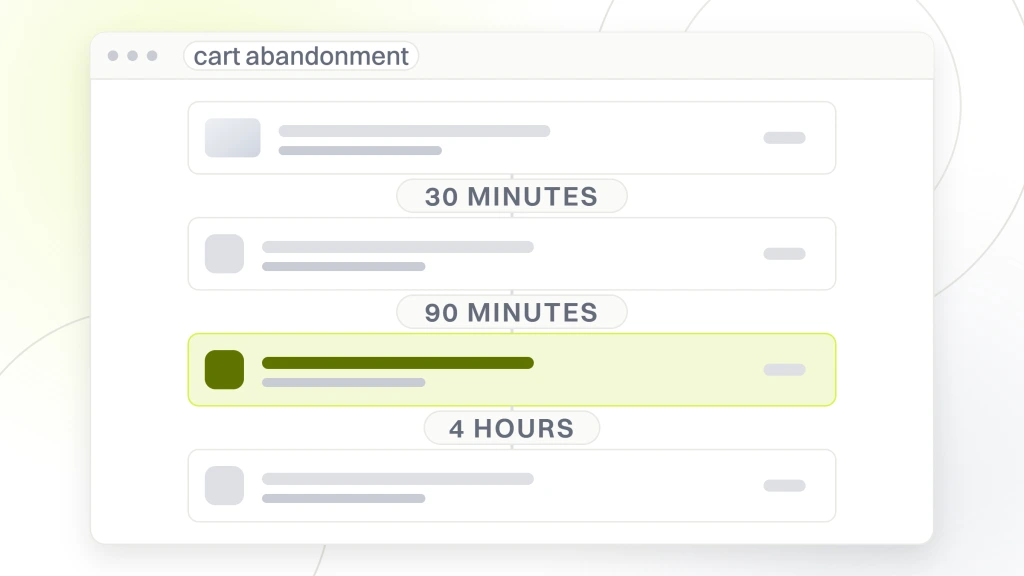
Journey builders inside Klaviyo, Braze, Iterable, or Salesforce Marketing Cloud hold the multi-channel sequence and read the CDP for the trigger events. The tool matters less than the sequence design. Build the cart abandonment flow to send push at 30 minutes, SMS at 90 minutes to buyers who did not open push, and email at 4 hours to buyers who did not engage either prior send. Add a final discount email at 24 hours. Suppress everyone who purchased in the meantime. That single flow produces 8 to 14% revenue attribution on programs we run and covers roughly one-third of automated revenue on the CDP layer.
Paid media inside omnichannel ecommerce marketing
Paid media inside an omnichannel program runs against unified customer segments piped from the CDP, not against ad-platform-native pixels alone. That single change cuts wasted spend on retargeting by 25 to 45% since the CDP knows the buyer already bought yesterday, and the ad platform pixel does not.
Audience segments piped from the CDP
Push audience segments from the CDP into every ad platform via reverse ETL. High-LTV buyers get their own prospecting look-alike source. Recent purchasers get suppressed from retargeting for 14 to 30 days depending on the product replenishment cycle. Cart abandoners flow into a 7-day retargeting audience with the specific product they left behind. Winback candidates who have not purchased in 90 to 180 days flow into a separate audience with a category-specific reactivation offer. Every audience updates hourly so the ad platform never runs against stale data. The Think with Google omnichannel shopper research covers the wider behavioral shift that makes CDP-driven audiences pay back.
Attribution windows for omnichannel
Set the attribution window to 30 to 90 days on the CDP side, not the ad-platform default of 1 or 7 days. Use a multi-touch or W-shaped model that credits the first touch, the middle touches, and the last touch. Reconcile against Shopify closed-order revenue every month. Marketing mix modeling from Recast, Rockerbox, or Prescient AI runs on top for brands over $30M yearly and gives finance a fair picture across paid, organic, and owned channels. Ecommerce multichannel marketing that measures paid media on last-click alone undercredits owned channels by 40 to 65%, which pushes the brand to overspend on retargeting and underinvest in email and SMS every single quarter.
Retail plus pop-up inside omnichannel ecommerce marketing
Physical retail and pop-up experiences are the surface most DTC brands add second, after the direct site and email. Handled right, a single flagship store or rotating pop-up program covers 8 to 25% of yearly revenue and cuts blended customer acquisition cost by 12 to 30% since the physical surface converts qualified interest at rates online can never match. Handled wrong, retail is a $180,000 to $900,000 yearly overhead that never plugs into the digital funnel.
What retail has to feed the CDP
The retail POS has to write every transaction, browse event, and product try-on back into the CDP with the customer’s email or phone attached. Shopify POS Pro, Square for Retail, or Lightspeed all handle the writeback via native integration or webhook. The staff training piece is where most brands drop the ball. If the associate does not ask for email at checkout, the CDP never learns the retail buyer exists digitally, and every $180 sale becomes a one-time transaction instead of the first touch on a $1,200 lifetime relationship. Brands that hit 70 to 85% email-capture rate at retail produce enough overlap data to run true omnichannel campaigns. Brands under 40% capture produce a fragmented dataset that reads like a two-channel program with a store attached.
Pop-ups as identity capture and demand test
Pop-ups let a DTC brand test physical retail without a 5-year lease. Run a 4 to 12-week pop-up in a category-adjacent neighborhood, capture email and SMS opt-in at the door with a $10 credit incentive, and measure the same-city online sales gain over the pop-up window and the 90 days after. Real brands see a 30 to 60% same-city online gain during a pop-up and a 12 to 25% sustained gain for 90 days after close. That data plus the retail-margin math tells the founder whether to sign a real lease or keep running pop-ups every quarter. A sibling read on email marketing for ecommerce flows campaigns and examples covers the flow side that catches the pop-up email captures.
Post-purchase and loyalty inside omnichannel ecommerce marketing
Post-purchase is where multichannel programs lose two-thirds of the lifetime value they earned during acquisition. The order confirmation email fires, the shipping notification fires, and then the brand goes silent for 60 days until the winback flow starts nagging. Omnichannel programs run a coordinated post-purchase experience that carries the buyer from unboxing to review to next purchase without any dead space.
Post-purchase sequence that works
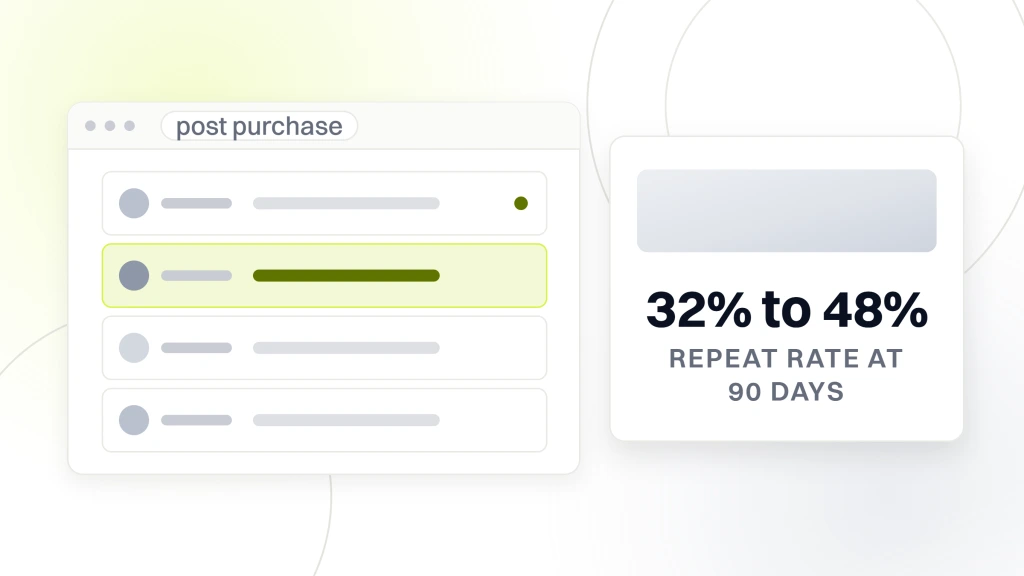
Day 0 sends the order confirmation and unboxing anticipation email. Day 2 sends a care guide or first-use content. Day 5 sends a shipping delivery follow-up with a specific ask, like rate the experience, share a photo, or refer a friend. Day 14 sends the review request tied to the specific product. Day 30 sends the replenishment or category-cross email based on the product bought. Day 60 sends the loyalty-tier update. Day 90 sends a personalized product recommendation from the CDP behavior model. Every send skips buyers who already bought again in the window. That sequence produces a 32 to 48% repeat rate at 90 days versus 14 to 22% on programs without a coordinated post-purchase flow.
Loyalty programs that unify across channels
Loyalty programs like Yotpo, Smile.io, LoyaltyLion, and Stamped work when they pull purchase data from every channel, retail included, not just the direct site. The buyer who spends $180 at the pop-up and $220 on the site the next week should see one tier-status update, not two, and the tier calculation has to combine both purchases. Loyalty programs that ignore retail transactions lose the highest-value buyers first since those buyers shop the physical surface most often. Programs that unify the buyer’s earned points across every channel keep top-decile customers at 4 to 7 times the average buyer’s yearly spend. The Content Marketing Institute omnichannel research covers the wider retention data every DTC founder should read before signing a loyalty vendor contract.
Measurement and attribution for omnichannel programs
Measurement is what tells the founder whether the omnichannel program actually earned back the CDP price tag, or whether the brand just repainted the old multichannel stack. Real measurement reads eight numbers monthly, reconciles across platforms every quarter, and updates the model every six months as buyer behavior shifts.
Eight numbers that matter
Blended return on ad spend across every paid channel divided by all paid-media revenue. Contribution margin per order after cost of goods sold, shipping, payment fees, and returns. Customer lifetime value on a 24-month window by acquisition channel. Repeat purchase rate at 30, 90, and 365 days. Cross-channel overlap rate, meaning buyers touching two or more channels in the same journey. Suppression accuracy, meaning buyers who purchased and then got retargeted anyway, ideally under 4%. Cost per new customer by channel including retention marketing amortized. Time between first touch and first purchase. Review those eight together every month and the omnichannel program stays honest against the finance number, not the platform-reported number.
Where marketing mix modeling fits
Marketing mix modeling (MMM) from Recast, Rockerbox, Prescient AI, or Measured runs on top of the CDP data and reconciles paid-platform reported revenue against Shopify closed revenue. MMM is expensive at $4,000 to $18,000 monthly, but the answer it gives is the closest thing to truth in a post-cookie world. Brands under $30M yearly can skip MMM and run cleaner multi-touch attribution inside GA4 plus reconciliation dashboards. Brands over $30M yearly should run MMM as the source of truth for channel budget decisions. A sibling read on SMS marketing for ecommerce platforms compliance and examples covers the SMS-specific attribution wrinkles the MMM has to account for.
An omnichannel ecommerce marketing program in production
Abigail Ahern, a UK luxury home décor brand running on Shopify, came to our team with a paid-media program that relied heavily on discount promotions and a fragmented customer view. The Shopify record, the Klaviyo email list, the Meta pixel audience, and the Google Ads customer match list all held different versions of the same buyers. Retargeting hit buyers who had already purchased. Winback flows fired on lapsed VIPs who had actually shopped last week in a different email address. The dashboard showed strong platform-level return on ad spend, but blended margin kept slipping since the channels double-counted each other.
Our team unified the paid and organic stack on a Segment-plus-Klaviyo identity graph. We restructured Shopping into per-collection campaigns with margin-tuned bid logic, replaced discount-led creative with premium-aligned messaging that matched the brand voice, and ran prospecting against lookalike audiences seeded from the CDP top-decile buyer segment. Retargeting suppression pulled recent purchasers out of ad audiences for 21 days. Winback flows ran off the true last-purchase date across all channels rather than the Klaviyo-only date. Cadence held at weekly reporting with monthly reconciliation against Shopify closed revenue.
Over the following 12 months, ecommerce revenue climbed 179% without a single discount banner, paid-search return on ad spend hit 1,588%, and paid-social return on ad spend hit 3,000% through the coordinated prospecting-plus-retargeting layer. Ecommerce conversion rate doubled. That’s the shape of a real omnichannel program that actually pays back the retainer.
Where omnichannel ecommerce marketing fits the broader stack
Omnichannel ecommerce marketing earns its place in the DTC stack once a brand crosses $8M to $12M in annual revenue. Below that revenue bar, the ROI on the identity graph plus CDP plus orchestration layer often does not justify the buildout cost, and the brand is better off running a tighter multichannel program on Shopify plus Klaviyo. Above that bar, every dollar of paid spend depends on the omnichannel infrastructure to earn back its return. Brands that skip the buildout and try to scale on multichannel infrastructure plateau at $20M to $40M yearly and cannot break through until they invest.
Pick the identity graph first, then the CDP, then the inventory sync, then the messaging orchestration, then the paid-media integration, then the retail plus pop-up layer, then the loyalty and post-purchase sequence. Run each layer for 90 days and measure against the eight numbers above before adding the next layer. Do those seven things across 12 to 18 months and the omnichannel program compounds into a real growth machine the CFO can trust.
Sibling reads on growth marketing for ecommerce and B2B ecommerce marketing strategies cover the testing cadence inside the omnichannel stack and the B2B adaptation for wholesale and distributor programs, and both plug into the same identity-plus-CDP infrastructure this guide describes. For teams building an AI stack on top of the frameworks above, our read on AI marketing for ecommerce tools and applications covers the tools and buildout sequence.
Start your omnichannel ecommerce marketing buildout
Our ecommerce marketing retainer tiers start at $1,499, $2,499, $3,999, and from $6,000 per month and run six months, since an omnichannel buildout needs a full quarter for the identity graph plus CDP setup and another quarter for the channel integrations to prove out against attribution. Faster than that and the data reads noisy. Slower and the program never compounds. Book a working session with our team and we’ll map your stack, size the CDP tier, and hand you the 90-day rollout plan the same week.