Should I sell my dental practice to DSO in 2026 looks nothing like the deals doctors saw in 2019 or 2021. Roll-up buyers now underwrite with tighter EBITDA add-back scrutiny, working capital pegs set closer to trailing averages, and clinical retention hurdles baked into earn-out language. The owner-doctors who net the highest post-tax proceeds arrive at the LOI stage with clean quality-of-earnings work, credentialing files organized, a real estate strategy already picked, and a personal financial plan that treats the sale as one chapter rather than the endgame. Rushing a transaction almost always trades 3 to 8 percent of purchase price for 90 days of avoided prep work.
This guide walks through adjusted EBITDA prep, multiple ranges by practice type in 2026, LOI red flags to catch before signing, quality-of-earnings diligence, rollover equity structures, tax treatment across asset and stock sales, clinical control clauses under Corporate Practice of Dentistry rules, real estate treatment strategies, associate doctor transitions, plus the North County Dental Care Vista program that grew patient volume 1,000 percent from 2021 to 2024.
Weighing the pros and cons of selling to a DSO
Before you decide whether you should sell your dental practice to DSO buyers at all, weigh the tradeoffs honestly. The decision comes down to your after-tax number, your retirement horizon, and how much clinical independence matters to you. On the positive side, DSOs typically pay 15 to 30 percent higher headline prices than individual dentist buyers, take administrative work off your plate, and give you a rollover equity kicker if the platform grows. You get one wire, one earn-out, and one contract structure across a 3 to 6 year work-back window. That predictability appeals to owner-doctors within a defined retirement timeline.
On the negative side, you become an employee of the practice you built. Production targets, protocols, and staffing decisions increasingly come from a management company you did not choose. Associate turnover in the first 12 months post-close is a common pattern. Rollover equity might triple in value or go to zero depending on the platform fund cycle. Reddit threads from actual sellers show a mix of outcomes. Some doctors are delighted with the check, others regret the loss of autonomy within 6 months. The right answer depends on your financial number, your health, your family, and how much you value clinical independence after close.
Should I sell my dental practice to DSO valuation basics for 2026
DSO buyers value your practice on adjusted EBITDA multiplied by a market multiple. Adjusted EBITDA starts with reported profit and adds back owner comp above market rate, personal expenses run through the practice, one-time costs, and non-recurring items. Buyers scrutinize every add-back and disallow the ones without documentation. A typical scrub cuts owner-claimed add-backs by 15 to 25 percent, which drops purchase price by 5 to 12 percent when applied against the multiple. Doctors who arrive at the LOI with a professional quality-of-earnings package built by a dental CPA net more than doctors who submit a spreadsheet built the week before diligence starts.
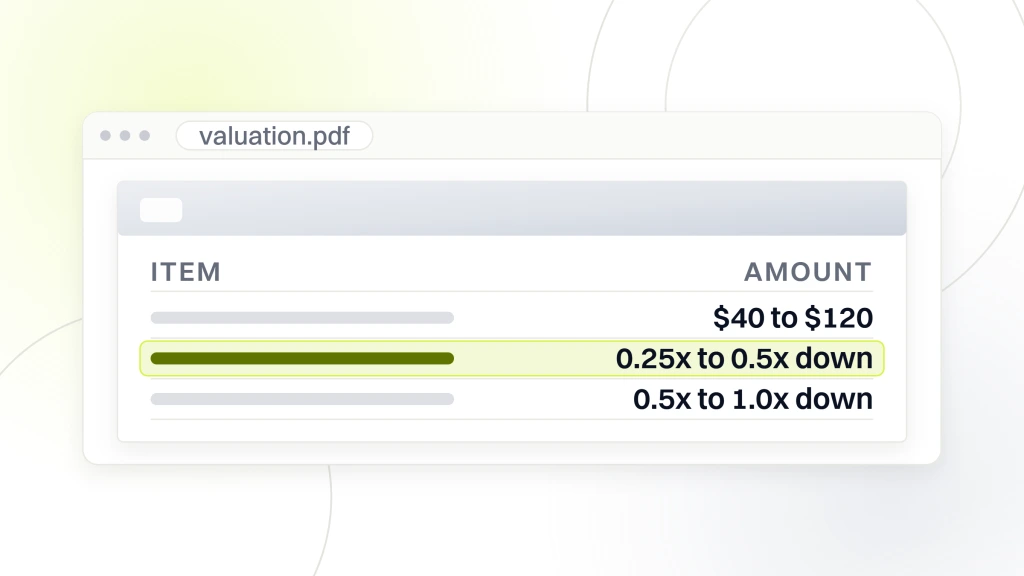
The multiple depends on practice type, size, growth trajectory, payer mix, geography, and specialty. In the trailing 24 months, growth trajectory moves multiples more than absolute practice size does. A 1.2 million collections practice growing 18 percent annually often trades higher than a 2 million collections practice flat over the same window. Practices carrying digital marketing infrastructure that produces documented cost per new patient in the $40 to $120 band trade at premium multiples versus practices with fragmented agency contracts and undocumented patient sources. Our dental SEO services cover the search side of pre-sale patient volume documentation that DSO buyers weight at LOI.
Multiple ranges by practice profile in 2026
The table below maps multiple ranges and typical deal structure across the common practice profiles selling to DSO buyers in 2026. Read it with your specific payer mix, geography, and growth trajectory in mind. Practices at the top of each range invest in clean books, add-back documentation, platform-ready operational infrastructure, and pre-market marketing modernization 12 to 24 months before going to market. Practices at the bottom of each range arrive at LOI without add-back documentation, without a real estate strategy, and without clinical staff retention planning.
| Practice profile | Adjusted EBITDA multiple | Typical rollover | Earn-out share | Diligence window |
|---|---|---|---|---|
| Solo general practice | 4.0x to 6.0x | 15% to 25% | 10% to 20% | 90 to 150 days |
| Multi-office general group (3+) | 6.0x to 10.0x | 20% to 40% | 15% to 30% | 120 to 240 days |
| Specialty (ortho, pedo, oral surgery) | 7.0x to 12.0x | 25% to 40% | 15% to 30% | 150 to 270 days |
| Regional platform (10+ offices) | 9.0x to 14.0x | 30% to 45% | 15% to 25% | 180 to 360 days |
Buyers apply small multiple adjustments for chart depth, hygiene recall percentage, and specialty procedure mix as diligence progresses. Practices with less than 55 percent hygiene recall get downgraded 0.25x to 0.5x. Practices with a heavy Medicaid mix in states with unfavorable reimbursement get downgraded 0.5x to 1.0x. Practices with implant, ortho, or oral surgery revenue mixed into a general shell trade at a blended multiple weighted toward the specialty component of the revenue stack.
Rollover equity structures explained
Rollover equity structures convert 15 to 40 percent of sale proceeds into equity units in the acquiring DSO or its parent holding company. Rollover defers tax on the rolled portion under IRS Section 351 rules and gives sellers upside if the platform hits growth targets or sells to a larger buyer at higher multiples. Rollover works best when the buyer has a clear five-year growth plan, disciplined debt levels that survive interest rate moves, and a credible exit path. It works worst when the buyer is over-levered, growing through cost cuts rather than new office additions, or heading into a difficult refinancing window at the end of the fund cycle.
Rollover terms to negotiate include voting rights (voting common outperforms non-voting on future distributions and control), tag-along and drag-along rights on subsequent transactions, put rights at defined valuations if the group underperforms, and dividend accrual on preferred rolls. According to IRS Revenue Ruling 2006-63 on tax-deferred rollovers, the rolled equity portion needs to meet control and continuity requirements to qualify for tax deferral. Skipping tax structuring at LOI stage often disqualifies the roll from deferral treatment, which shifts 20 to 40 percent of the roll value to current-year tax burden.
Hold period and liquidity
Hold period and liquidity on rollover equity typically run 4 to 7 years matching the sponsor fund cycle. Owner-doctors treating rollover as a near-term liquidity asset get frustrated when distributions run below expectations or the platform delays an exit past year 7. Treat rollover as a long-dated speculative asset. Potentially worth 1.5 to 3 times the initial roll if the group performs, potentially worth zero if the group struggles. Owner-doctors who need 100 percent liquidity at close should negotiate the roll percentage down rather than accept illiquidity they cannot tolerate across the full hold.
Should I sell my dental practice to DSO on an asset or stock sale
Tax treatment differs meaningfully between asset sales and stock sales. Asset sales dominate small and mid-market DSO transactions. Buyers want a stepped-up tax basis on acquired assets, which delivers 15 to 25 percent tax savings for the buyer over the amortization window. Stock sales appear more often on multi-office deals with LLC structures where 338(h)(10) or 336(e) elections give buyers stepped-up basis without losing stock-sale treatment for sellers. Understanding which structure the buyer will require before signing the LOI prevents surprises at the definitive document stage.
Asset sale allocations across equipment, goodwill, going-concern value, covenant not to compete, and personal goodwill drive the seller tax outcome. Higher allocations to goodwill and going-concern value translate to long-term capital gains treatment at federal rates of 15 to 20 percent plus 3.8 percent net investment income tax and applicable state tax. Higher allocations to equipment trigger depreciation recapture at ordinary income rates. Covenant-not-to-compete allocations trigger ordinary income. Personal goodwill allocations to the owner-doctor rather than the practice entity can produce meaningful tax savings when structured correctly with a dental CPA who has run this analysis on prior transactions.
State tax matters as much as federal on these transactions. California, Oregon, New York, and Minnesota assess long-term capital gains at ordinary income rates, which pushes total federal-plus-state tax on goodwill from 26 percent to as high as 42 percent for high-income sellers. Florida, Texas, Nevada, Wyoming, and South Dakota carry no state capital gains tax, which improves after-tax proceeds meaningfully for practices sold with owners residing in those states. Establishing residency 12 to 24 months before the transaction closes is one of the few legal moves that shifts total tax burden by 5 to 15 percent on a career-defining sale. The residency test the state uses to challenge the move rarely favors a last-minute relocation.
Clinical control clauses in the MSA
Clinical control clauses live inside the management services agreement between the professional corporation (still owned by the licensed dentist post-close under Corporate Practice of Dentistry rules) and the DSO management company. State CPOD rules vary meaningfully. 39 states enforce strong CPOD requiring licensed dentists to retain clinical decision authority. 11 states have weak or absent CPOD giving DSOs more direct clinical control. Doctors selling in strong CPOD states have more sway on clinical control clauses than doctors selling in weak CPOD states across the same buyer conversations.
Clinical control language to negotiate includes materials selection authority, treatment planning philosophy, hygiene recall cadence, continuing education budget authority, associate hiring input, and clinical protocol changes requiring owner-doctor consent. MSAs silent on these issues default to DSO management company authority, which frustrates doctors who assumed clinical autonomy would continue. Push these items into the MSA as explicit doctor authority rather than trusting general CPOD language to protect them across the transaction and hold period.
Standard of care disputes
Standard of care disputes between owner-doctors and DSO management can escalate quickly when the DSO pushes production targets that create pressure to diagnose treatment the doctor considers unnecessary. Owner-doctors should require the MSA to include a standard-of-care primacy clause specifying that clinical judgment on treatment planning overrides administrative pressure. Dispute resolution mechanisms should include mediation by an outside clinician before termination for cause. Owner-doctors who skip this language expose their personal license (not the DSO administrative entity license) to disciplinary board action when treatment disputes arise post-close.
Real estate treatment strategies at close
Real estate treatment strategies split three ways. Sell the practice and assign the lease to the buyer. Sell the practice and enter a sale-leaseback for practice-owned real estate. Sell the practice and retain the real estate leasing it back to the buyer under an owner-doctor lease. Each path has different tax, cash flow, and exit implications. Owner-doctors who own the real estate personally through a separate LLC often produce the strongest total economics by selling the practice and keeping real estate as a long-term income asset generating 6 to 9 percent unlevered yield on the property basis across the hold period.
Sale-leaseback structures typically produce 5 to 8 percent capitalization rates on dental office real estate depending on location, lease term, and rent coverage. Owner-doctors selling both practice and real estate in a single transaction see 100 percent liquidity at close but lose the long-term real estate income. Owner-doctors retaining the real estate see less liquidity at close but generate 15 to 25 years of triple-net rental income that includes the DSO tenant paying property tax, insurance, and maintenance. The right choice depends on personal financial planning, tax situation, and expected hold period on the real estate asset. Practices located in secondary markets with limited comparable dental office real estate benefit from retaining the property. DSO tenants sign long-term leases at above-market rents to secure the space.
North County Dental Care Vista case study
North County Dental Care, a 20-year family dental practice in Vista California, engaged Redefine Web from 2021 to 2024 on a full digital transformation program that included a secure mobile-first website rebuild, local SEO, technical SEO repair, Google Business Profile ads, and local video. Baseline new patient volume from digital ran at 1 to 2 patients per month. The practice held no top 10 search positions, and several agencies ran campaigns that did not line up.
The digital rebuild replaced scattered agency contracts with one plan. The new WordPress site was secure, fast, and built to work on phones, with service pages built to convert. Local SEO cleaned up directory listings so name, address, and phone matched everywhere. Technical work fixed broken links and added schema. Targeted Google Business Profile ads and practice-led video raised local visibility, and Google Analytics made every campaign measurable.
By 2024, North County Dental Care grew new patient volume from 1 to 2 monthly to between 12 and 16 monthly. Total patient volume grew 1,000 percent. Organic traffic climbed 385 percent, and marketing ROI hit 500 percent across the program.
The revenue trajectory and clean digital marketing infrastructure produced the type of trailing-twelve-months story DSO buyers pay premium multiples to acquire when practices eventually go to market. Buyers in 2026 pay for growth trajectory, defensible marketing spend efficiency, and platform-ready operational infrastructure rather than historical EBITDA alone.
Associate doctor transitions post-close
Associate doctor transitions post-close often break down when the DSO renegotiates associate compensation, moves associates to production-based comp with tighter overhead allocations, or changes clinical protocols the associates disagree with. Owner-doctors who invested in strong associate ties face reputational damage when associates leave in the first 6 to 12 months post-close. Building associate protection into the MSA (grandfathered comp terms, notice periods, clinical decision authority carve-outs) protects owner-doctor rapport. Associate turnover eventually occurs. Buyers who resist associate protection language usually plan to renegotiate associate comp aggressively post-close.
Retention bonus structures
Retention bonus structures for key associate doctors typically run 15 to 40 percent of annual associate compensation paid over 2 to 4 years post-close conditional on staying with the practice. Buyers fund retention bonuses through the purchase price allocation rather than treating them as ongoing operating cost. Owner-doctors negotiating retention bonuses into the LOI protect associate rapport and reduce associate departure risk during the transition window. Retention bonuses under 15 percent of associate compensation rarely retain talent when the associate has other options. Bonuses above 40 percent start pressuring purchase price allocations the buyer resists across most negotiation rounds.
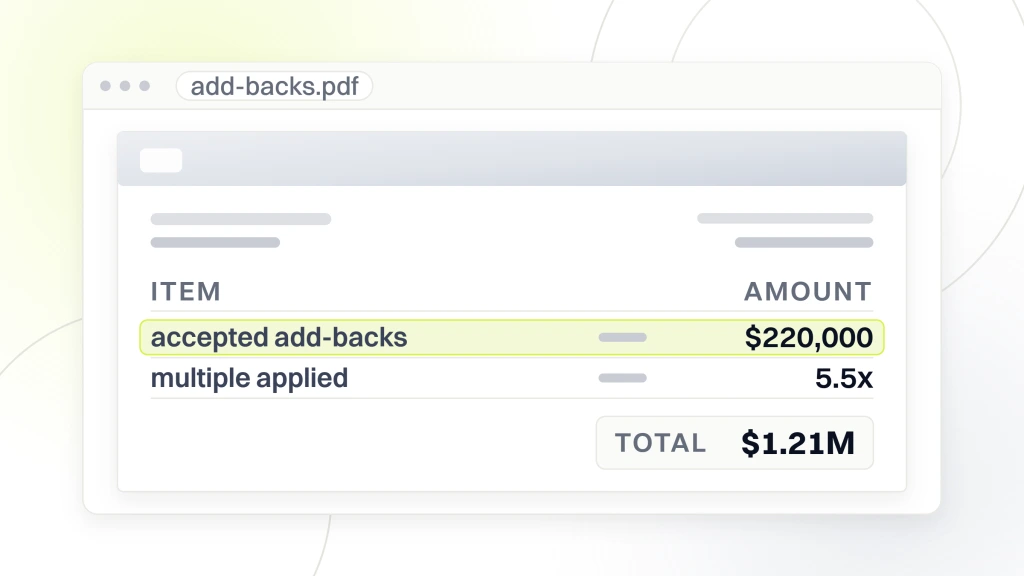
During a mid-transaction call, an owner-doctor asked whether he could just accept the buyer LOI number and skip the 40-hour add-back documentation project his accountant had proposed. We walked him through the math. 40 hours of documentation produced $220,000 of accepted add-backs, which at his 5.5 times multiple translated to 1.21 million dollars of purchase price. That works out to about $30,000 per hour of preparation labor. Selling to a DSO in a rush usually costs 3 to 8 percent of purchase price, which sounds abstract until the wire transfer that funds retirement lands.
Non-compete carveouts to negotiate
Non-compete terms typically run 2 to 5 years post-close across a defined geographic radius. Reasonable radius for solo urban practices runs 5 to 10 miles. Multi-office group non-competes may span 15 to 25 miles or entire metro areas. Non-competes that extend past 5 years or across state lines usually face enforceability challenges but still burden owner-doctors during the enforcement period. Owner-doctors planning to continue clinical work post-close should carve out specific practice locations, specialty limitations, or hospital affiliations they want to preserve before signing the LOI.
Non-compete carveouts to negotiate include hospital-based dentistry (oral surgery affiliations, hospital operating room privileges), community clinics and free care work (charitable dental work), academic appointments at dental schools, expert witness work in dental malpractice cases, and consulting to dental technology or dental service companies. Buyers usually accept these carveouts. They do not compete with the practice commercial activity. Failing to carve out these activities can create employment or income restrictions the owner-doctor never anticipated during negotiations. Enforceability of non-competes varies dramatically by state. California and North Dakota broadly refuse to enforce dental non-competes. Florida, Texas, and New York enforce reasonable dental non-competes but reserve judicial modification power. According to our dental PPC services work with practices post-close, non-compete radius often gets tested when the seller opens a new practice at the edge of the restricted zone, which produces expensive litigation neither side wanted at deal close.
Alternatives to selling to a DSO
Not every practice sale needs to go to a DSO. Individual dentist buyers pay 15 to 30 percent lower headline prices but preserve clinical autonomy and community ties. Internal transitions to a partner or associate typically span 3 to 7 years and produce cleaner post-sale relationships, plus lower legal fees. Direct private equity sales resemble DSO deals in structure but skip the platform layer. Small doctor-owned groups let you cash out partial equity and keep control across a shared back office. Each alternative has different tax, timing, and lifestyle tradeoffs.
Match the path to your financial number and retirement timeline. If your after-tax number from a DSO sale funds retirement with margin to spare, take the higher headline and the earn-out risk. If it does not, an internal transition often produces a better long-term outcome. You keep control over the wind-down pace and the ongoing income stream. If you value clinical independence above all else and can wait 3 to 5 years, run the practice hard, build the trailing story, and revisit the market once multiples firm up.
Start your DSO sale preparation now
Should I sell my dental practice to DSO outcomes track back to seven decisions. Build adjusted EBITDA documentation 12 to 24 months before market. Position the right practice type honestly. Negotiate LOI red flags before signing rather than trying to fix them in definitive documents. Prepare quality-of-earnings materials proactively. Structure rollover equity with transparency from the buyer. Get clinical control clauses into the MSA rather than trusting default CPOD language. Plan tax structure with a dental transaction CPA before LOI. Every one of these decisions moves the net post-tax outcome by 3 to 15 percent, which compounds meaningfully across a career-defining transaction.
The North County Dental Care Vista program that produced 1,000 percent patient volume growth and 12 to 16 monthly new patients is the type of trailing performance that shifts DSO buyer conversations from bottom-of-band pricing to top-of-band pricing. According to Dental Economics research on what DSO buyers really want, growth trajectory and platform-ready operational infrastructure now weight buyer underwriting harder than historical EBITDA alone.
Owner-doctors approaching a sale process in the next 24 to 36 months benefit from starting add-back documentation, tax structure planning, real estate strategy, and pre-market marketing modernization now rather than waiting for the LOI to arrive. The doctors who net the highest post-tax proceeds treat the sale as a 3-year project rather than a 6-month event. Our dental marketing agency partners with practices preparing for sale on the marketing modernization side, coordinated with the transaction CPA and dental transaction attorney handling the LOI, MSA, and definitive documents through close. Dental marketing retainers start at $1,499/mo per office and scale with office count.