
What does DSO mean in dental practice ownership. A DSO, short for Dental Service Organization, is a company that runs the business side of one or more offices, and a licensed dentist keeps the clinical side. The three letters describe a legal structure, not a brand. Every group shares the same core split. Business functions live with the parent, chairside judgment stays with the dentist. What varies is how much of the profit the parent keeps, how much local say the dentist holds onto, and how the two sides tie together through a Management Services Agreement.
Most dentists land on this page asking what does DSO mean in dental for one of three reasons. A broker floated a number. A friend just sold. An associate offer letter used the acronym and skipped the definition. This guide walks through what DSO stands for dental owners and buyers, the two-entity structure, the contract that ties it together, and the money and lifestyle tradeoffs for you as a seller, an associate, or a partner-track dentist. Ten minutes now spares you weeks of second-guessing when a real offer lands.
What does DSO stand for dental owners hear at the closing table
DSO stands for Dental Service Organization, sometimes called a Dental Support Organization. Both terms point to the same setup, and both are the answer when someone asks what does DSO mean in dental. A parent company holds ownership of the physical office, equipment, staffing, and back-office systems. A separate professional entity, owned by licensed dentists, holds the clinical license and delivers care. The two entities sign a Management Services Agreement that spells out fees, service scope, and control. This split exists so the DSO can operate at scale in states that require dentists to own the practice of dentistry.
The DSO acronym for dental first appeared in the 1970s and hit real scale in the 2010s when private-equity capital started rolling up practices. According to the American Dental Association’s Health Policy Institute, more than 10% of US dentists were affiliated with a DSO-supported practice in 2019, and that share sits above 13% today. Younger dentists lean in faster. Roughly 20% of dentists under 34 practice inside a DSO, versus 10% of dentists over 50. The DSO acronym in dental now shows up in almost every associate contract and every practice-sale conversation.
What DSO stands for dental sellers actually experience
Picture two companies stapled together by a contract. The parent DSO owns the equipment, the lease, the marketing budget, and every non-clinical employee at the front desk. The clinical PC, owned by a dentist, employs the clinicians and holds the license to practice dentistry in that state. When sellers ask what does DSO stand for dental deals, that two-entity split is the honest answer, since it defines every dollar in the offer. The MSA between them decides what the DSO does, what it charges, and how disputes get resolved. Read that agreement line by line before signing.
The seller economics when DSO stands for dental practice acquisition
When DSO stands for dental practice acquisition on your side of the table, the trade looks simple on the surface for a selling dentist. The buyer pays 5.5 to 8.5 times EBITDA in a cash-plus-equity package, holds you on a 3 to 7 year employment contract at 25% to 33% of your own collections, and keeps the rest of the profit through a management fee. A large lump sum arrives at close. Ongoing take-home drops to a smaller share of collections for the length of the contract. The math either works for your goals or it does not, and running the numbers out five years matters more than the headline multiple on page one of the pitch deck.
The lump sum has real weight. Valuations from active DSO buyers in 2025 and 2026 have run 5.5 to 8.5 times EBITDA in strong markets, which is roughly 2 to 3 times what a peer-to-peer dentist buyer would pay for the same practice. On a $600,000 EBITDA practice the offer band lands at $3.3 to $5.1 million. Cash at close typically runs 65% to 80%. The remainder is rollover equity that pays at the next capital event and rides the ups and downs of the DSO parent’s balance sheet in the meantime.
Compensation after close
Post-close comp lands at 25% to 33% of your collections for the length of the employment contract, which runs 3 to 7 years depending on platform. Most contracts include a production clawback. Drop below 90% to 95% of pre-close production and part of the sale price gets clawed back at the anniversary. Read the clawback language line by line. It is the single most important sentence in the deal after the purchase price itself.
Rollover equity value depends on the DSO parent
Rollover equity is stock in the DSO parent, not cash in your bank. It pays out at the next capital event, which can be another private-equity recap, a strategic sale, or an IPO. On a healthy DSO, rollover equity can 2 to 3x inside 4 to 6 years. On a stressed DSO, it can drop to pennies. Ask the parent for audited financials, debt-to-EBITDA ratio, and growth trajectory. Anything above 5x debt-to-EBITDA is a caution flag worth discussing with healthcare counsel before you sign.
How centralization answers what does DSO mean in dental day-to-day
When a dentist asks what does DSO mean in dental Monday-to-Friday, the answer sits in the daily schedule. Look at the daily schedule inside a DSO practice and the picture gets clearer. The central team picks scheduling software, lab partners, materials budget, and marketing plan. The dentist picks treatment plan and technique. Fewer hats to wear, less say on small choices, more focus on chairside work. Some dentists trade the loss of small daily authority for the relief of not owning the operations. Others miss the control by month four. Career stage and personality both weigh in on how that trade lands.
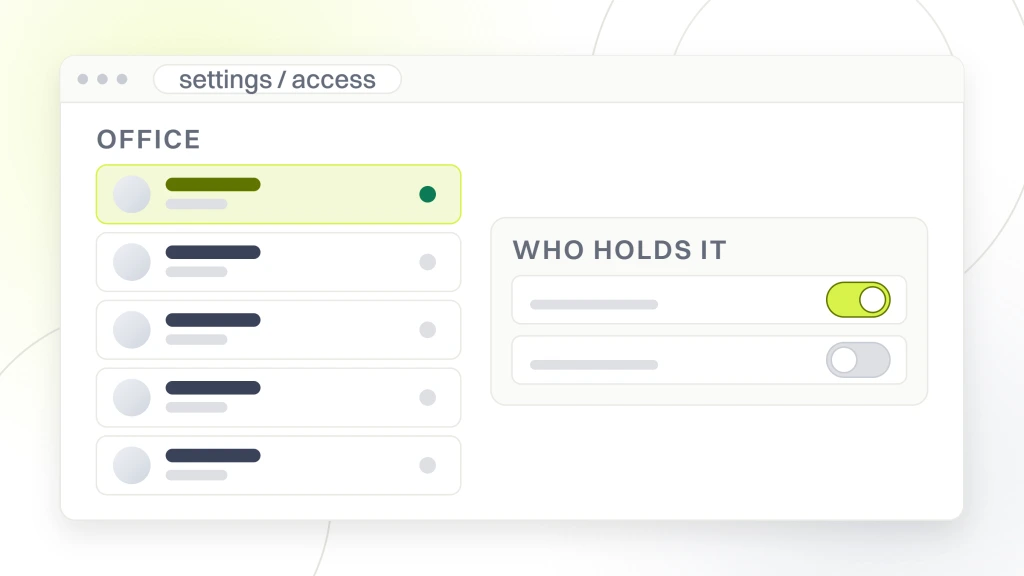
Production quotas exist at almost every DSO but usually run softer than industry rumor suggests. Most groups enforce a monthly collections floor at 90% to 110% of the trailing 12-month average. Miss it twice and a coaching conversation follows. Miss it four times and a regional director gets involved. That is structural pressure rather than case-by-case pressure. Reputable DSOs would rather lose a dentist quietly than take on the legal risk of aggressive treatment planning driven by a quota.
Staffing after a DSO acquisition
Front desk staff and hygienists usually stay through a 6 to 12 month transition. HR moves to the DSO. Benefits often improve on health insurance and 401k, yet flatten on holiday pay. The office team lead often leaves inside 18 months once the DSO installs a regional operations manager. Practices with tenured teams handle this transition better when the seller-dentist stays visibly engaged for the first 90 days after close and personally walks the team through the change.
Clinical autonomy that survives
Reputable DSOs preserve authority on diagnosis, treatment planning, case selection, and case refusal. The two-entity legal structure requires it. Where DSOs push is on protocol standardization, preferred lab, and materials formulary. If your identity is tied to a specific composite brand or crown-prep protocol, negotiate those exceptions into the MSA before signing. After close, changing the formulary is an uphill battle you rarely win.
What patients notice when DSO stands for dental office ownership change
When DSO stands for dental office ownership change at your local practice, most patients never register that anything changed. The office keeps its name. The dentist stays for the length of the seller contract. The front desk faces stay for 6 to 18 months. Scheduling gets smoother, recall texts get more automated, and the website looks a touch cleaner. Long-tenured patients might notice a slightly different room layout or a new hygienist rotation, but the fundamental sense of visiting the same practice usually holds through the first 24 months.
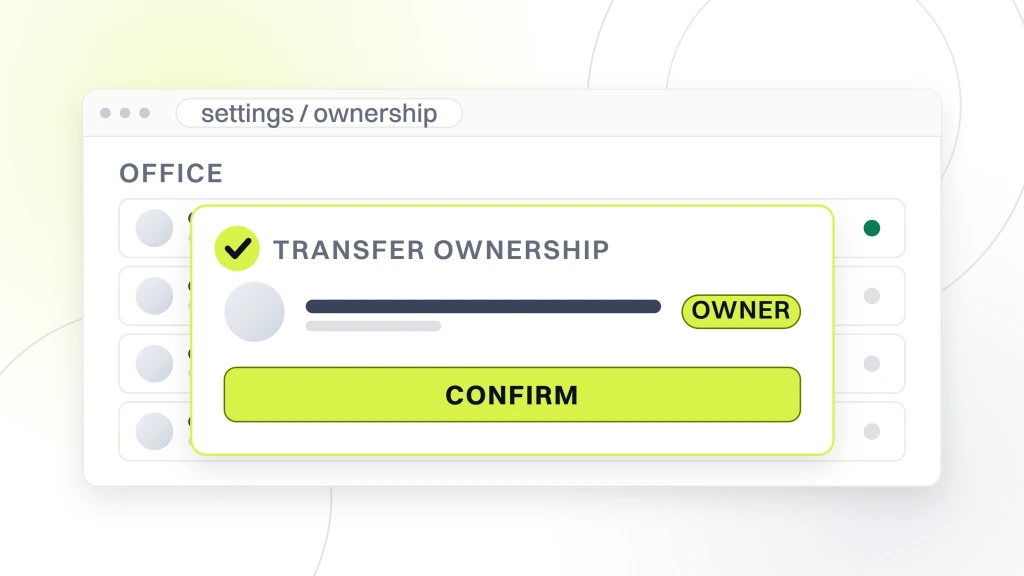
Attrition rates run 8% to 18% in the first 24 months after acquisition, mostly patients tied personally to the previous owner-dentist rather than to the practice itself. Patients notice a shift in PPO insurance mix, a slightly different treatment plan approach, or a longer wait for specialty referrals. Quality of care tracks the individual dentist more than the ownership structure. A strong dentist inside a DSO office delivers strong care. A mediocre dentist inside an independent office delivers mediocre care.
Insurance and billing shifts
Inside 6 to 24 months of acquisition, PPO participation lists often change. The DSO renegotiates central contracts and drops plans that pay below their reimbursement target. Patients on dropped plans get 30 to 90 days notice. Billing statements usually move to a central address, which occasionally confuses long-tenured patients. If your usual office suddenly stops taking your plan, that timing is often the giveaway that ownership shifted at some point in the prior year.
Quality depends on volume per operatory
Academic research on DSO quality outcomes runs mixed and depends heavily on which metric you weigh. Patient satisfaction scores in DSO offices track closely with independent offices when case volume per operatory is held constant. Overloaded offices deliver worse care regardless of ownership structure. If your dentist stays and their schedule stays reasonable, your experience stays the same. If the schedule stretches noticeably after acquisition, that is the signal to watch and the reason to raise it directly with your clinician.
Joining a DSO as an associate, what the DSO acronym for dental hires means
For an associate weighing an offer, the DSO acronym for dental hires means employment inside a corporate group. the DSO reads as an employer with structure. You get W-2 comp, health benefits, malpractice coverage, and often a $10,000 to $40,000 signing bonus. Compensation runs 25% to 32% of your own collections against a $9,000 to $14,000 monthly minimum. The floor gives a young dentist runway to build a schedule. The upside above the floor rewards the associates who move volume without cutting corners on case quality.
Some DSOs offer a partnership track after 3 to 5 years with an equity buy-in of $75,000 to $250,000, which can be a real path to ownership if the DSO grows well. Associate life inside a DSO trades ownership for focus on chairside work. You do not read insurance contracts, hire hygienists, or negotiate lease renewals. The tradeoff is that office culture is set by the DSO and small daily choices reflect central preferences rather than yours.
Questions before signing as an associate
Ask about production expectations by month for the first 12 months. Ask about the collections floor and any ceiling on comp. Ask who chooses your schedule and case mix. Ask what happens to your patient panel if you leave. Ask about the equity buy-in track, its timing, and historical returns to date. Ask to speak with two current associates and one former associate off-site, without a recruiter in the room.
Red flags in an associate offer
Watch for aggressive daily production quotas, mandatory upsell scripts at treatment consult, and non-competes covering a 25-mile radius for 3 or more years. Watch for comp structures that pay on collections but not on adjustments or write-offs. Watch for signing bonuses with 3-year full-clawback windows, which restrict your movement without formally saying so. Any single item can show up in an otherwise-fine offer. Three of these together is a signal to keep interviewing.
Marketing changes when DSO stands for dental parent company
Once DSO stands for dental parent company at a former solo practice, marketing changes faster than almost any other function after a DSO acquisition. A central team owns the website, the Google Business Profile, the ad accounts, and the review workflow. Consistency goes up and spend efficiency usually goes up. Local voice usually goes down until the DSO learns to protect it deliberately. The best groups treat the acquired brand as an asset worth preserving. The weaker groups paint every office the same color and watch organic visibility drift for a year before anyone escalates.
Smile Design Dentistry, a 50-plus location DSO across Central Florida and Tampa Bay, worked with Redefine Web to restructure PPC accounts, add full-funnel paid social, and build a separate landing page for each location. Cost per call dropped 30% and PPC conversion rate climbed 20%, at scale across the network. Similar centralized patterns show up across the industry, and our DSO Dental Marketing for Multi-Location Groups covers the rollout in depth.
- Central website with location-specific landing pages
- Standardized Google Business Profile categories across every office
- Central review workflow with per-office rating dashboards
- Regional Google Ads accounts with shared negative keyword lists
- Consolidated call tracking with per-location routing
- Shared creative library with per-location swap-in for hero images
- Central compliance review on any promotional offer
Preserving local voice in a corporate template
The strongest DSO marketing teams keep local voice inside the template. Location pages carry the practice manager’s photo, the tenured hygienists’ names, and the office’s real phone number. Reviews get responded to in the voice of the location, not corporate. Practices that lose local voice under a corporate template also lose 12% to 18% of organic search visibility inside 24 months. Reference material from Think with Google on local search behavior backs up the ranking impact.
Reputation management at scale
Reputation management inside a DSO is a scale problem, not a technique problem. You cannot hand-write responses to 6,000 reviews per month across 400 locations without templates. Templates work when they stay within 2 to 3 sentence variations and get edited per-location for tone. The strongest DSOs run a hybrid with human review on any 1 or 2-star reply and template on the 4 and 5-star acknowledgments. Our Dental SEO Services Built for Local Map Dominance covers how reputation ties into map-pack visibility, and the ADA News archive tracks reputation posture across DSOs.
Four questions that answer what does DSO mean in dental for you
Every DSO conversation, whether it is a sale, an associate offer, or a partnership discussion, keeps coming back to four questions. Answering them cleanly is the difference between a deal you feel good about in year three and a deal you regret in year two. Get plain answers before the paperwork lands, not after.
These four questions come from the pattern we hear on discovery calls with dentists at every stage of the DSO conversation. The questions are simple. Honest answers take work to get. Ask anyway. Our dental marketing agency engagement often starts with the marketing side of these operational questions.
- What is the total cash-plus-equity value, and what percentage is cash at close
- What is the employment contract term, comp rate, and clawback trigger
- What clinical autonomy survives, and which protocols are non-negotiable
- What is the DSO parent’s growth trajectory, debt load, and recap timeline
Cash versus rollover equity, the DSO acronym dental sellers watch closest
Cash at close is what most sellers who ask about the DSO acronym dental buyers use really care about. It pays off debt, funds retirement, or buys back time. Rollover equity might pay at the next recap, or it might not. A 70-30 cash-to-equity split is common. An 85-15 split is safer when you have low confidence in the DSO’s trajectory. A 55-45 split has more upside and more risk. Match the split to your risk tolerance, not to the broker’s script or the pitch deck’s assumed exit timeline.
Contract clarity on day-to-day
The employment contract that starts on day one governs your next 3 to 7 years. It should specify comp rate, minimum production, clawback threshold, vacation and CE days, coverage for maternity or medical leave, and complaint-handling process. If any are vague, they get interpreted in the DSO’s favor when the interpretation matters. Push for specificity. The specificity is where the deal genuinely gets fair.
How platform scale changes what does DSO mean in dental practice for you
Scale changes almost everything about how a DSO feels day to day. Emerging DSOs run 3 to 25 offices. Mid-market groups run 25 to 150 offices. Mega DSOs run 150 to 1,200 offices. The daily experience varies enormously between them, and the questions worth asking about a 4-office group differ from the questions worth asking about a 700-office group. Match the size of the platform to the level of autonomy and stability you want in the next chapter.
Emerging DSOs, at the 3 to 25 office band, usually offer more clinical flexibility, a longer runway on rollover equity, and a smaller upfront multiple. Mid-market DSOs, 25 to 150 offices, offer stronger multiples, some standardization pressure, and a shorter path to the next-recap capital event. Mega DSOs, 150 offices and up, offer the highest multiples, the most standardization, and the most predictable operational systems. Our Dental Website Design That Books More New Patients covers how each band approaches its web presence.
Emerging DSOs and the DSO acronym in dental hiring at small platforms
The DSO acronym in dental hiring at emerging platforms means something different than at mega groups. An emerging DSO in the 3 to 25 office range often feels closer to a partnership than a corporate role. The founder-dentist still practices. Decisions flow through fewer layers. Purchase multiples land lower, at 4.5 to 6.5x EBITDA, but the rollover equity often gets a bigger runway since the DSO is early in its growth cycle. If you value being in the room where decisions get made, this band deserves a serious look before you sign with anyone larger.
Mega DSOs
Mega DSOs run corporate-style operations. HR, billing, marketing, and IT sit centralized. Decisions above a threshold go to a regional director. Purchase multiples land higher, at 6.5 to 8.5x EBITDA, but the daily experience is more standardized and clinical flexibility gets negotiated up-front. Rollover equity usually has a nearer-term liquidity event, often inside 3 to 4 years, though the platform size caps the return per share. This is the band dominating industry news coverage.
Making the DSO decision on your terms
What does DSO mean in dental at the end of ten minutes of reading. DSO is short for Dental Service Organization, and it describes a structure that separates business from clinical, moves the business to a central parent, and shares the resulting profit through a defined agreement. Whether the structure is right for you depends on career stage, risk tolerance, and appetite for operations. There is no universally correct answer. Any broker or consultant who says the DSO acronym for dental has one right meaning for every dentist is selling a product.
If you are actively weighing a DSO decision, the four questions above are the fastest way to see whether the deal is fair. The tradeoffs are real, the money math is real, and the day-to-day changes are real. The strongest decisions we see are the ones made by dentists who did the homework, hired the right healthcare counsel, and treated the process as a career decision rather than a purchase.