
Link Building for Dental Websites That Wins Without Spam
- Real earned links beat spam-directory volume for dental ranking.
- Every practice qualifies for 20 to 40 free baseline links.
- Community sponsorships and press coverage build the strongest links.
- Cap exact-match anchor text at 5 percent of your profile.
- Run the quarterly cadence and disavow spam links every 6 months.
- Why link building for dental websites still matters in 2026
- Free baseline of link building for dental websites
- Backlinks for dental websites earned through community work
- Dental website link building through local press
- Content-earned backlinks for dental practice sites
- Outreach in link building for dental websites that avoids the spam trap
- Backlink vendors and shortcuts to say no to
- Anchor text strategy for link building for dental websites
- Cleaning up existing spam links with disavow
- A real dental case study on link mix
- A 12-month cadence for dental website link building
- Multi-location dental link building patterns
- Wrapping up dental website link building
Link building for dental websites is the SEO layer most practices ignore until their competitor’s map pack ranking pulls ahead and stays there. Then a broker calls, offers 50 links a month for $500, and the practice signs up because the retainer looks cheap. Six months later the domain is either flat or penalized, and the practice starts over. This guide is the alternative: the honest patterns that work in dental, the earned links that actually rank, and the shortcut vendors you should stop taking calls from.
You get the free citation baseline every practice qualifies for, the earned link tactics that generate 4 to 8 real links per quarter, the outreach templates our team uses on live dental accounts, the monthly cadence that keeps the profile clean, and a red flag list for vendors. Read straight through, work the checklist, and inside 12 months your backlink profile will actually look like a real practice’s, not a spam target.

Why link building for dental websites still matters in 2026
Link building for dental websites is still a top-5 ranking factor for competitive dental queries and a top-3 authority signal for local search. Practices with clean, relevant, local backlink profiles rank better than practices without them. The mistake is confusing volume with value.
A dental practice with 40 real links from a state dental association, local chamber, county health department, community sponsorships, and local news coverage will outrank a competitor with 300 links from spam directories and PBN networks. Google’s spam signals have gotten good enough that low-quality link volume actively hurts you. What you want is a small pile of authoritative, topical, local links that read like a real practice’s community footprint.
What Google actually reads from a backlink
Google reads several signals from every backlink to your site. Domain authority of the linking site. Topical relevance to dentistry or local business. Geographic proximity to your practice. Anchor text used in the link. Position of the link on the page. Whether the link is followed or nofollowed. Whether the surrounding content is human-written or machine-generated. All of those combine into a single quality score, and the highest-quality links move rankings measurably while the lowest-quality links get ignored or actively hurt.
Link value decays without recent activity
A backlink earned in 2018 from a great source still carries some weight in 2026, but the practice that only earned links in 2018 and stopped is losing ground to competitors who kept earning. Google reads link velocity as an activity signal. A profile that grows by 1 to 3 quality links per month reads as a real business staying active. A profile that grows 0 links per month reads as a dormant business. Consistent slow earning beats occasional bursts every time.
Free baseline of link building for dental websites
Every dental practice qualifies for a baseline of 20 to 40 free, real, relevant backlinks that require no outreach, no payment, and no favor asks. This baseline alone gets a new practice to a competitive backlink profile inside 90 days. Most practices skip it because it feels too easy to be worth doing. It moves rankings.
Start with the professional associations you already pay dues to, the local business organizations you already qualify for, and the government and health department resource pages that list dental practices in your zip code. Every one of those is a real link from a real site, and Google’s algorithm reads them as legitimate business signals. Skip these and your competitor who did them starts with a 30-point lead.
Dental association member directories
Your state dental association member directory is a strong dental-topical link that most practices already qualify for through their membership dues. The American Dental Association national directory. The state association directory. Regional and county dental society directories. Some specialty association directories if you are a member of the Academy of General Dentistry, the American Academy of Cosmetic Dentistry, or an implant or orthodontic body. Each one takes 15 minutes to update your listing, and each one delivers a real dental-topical link. Our dental citations post covers the citation side of this.
Local chamber and business associations
Your local chamber of commerce membership includes a directory listing on the chamber website. Every local Better Business Bureau listing carries a link. Rotary Club, Kiwanis, Lions Club, and similar civic groups that your dentists or team belong to often have member directories. Chamber-adjacent business improvement districts sometimes maintain neighborhood business listings. All of these are local-topical links that also feed local relevance signals to your Google Business Profile.
Backlinks for dental websites earned through community work
Backlinks for dental websites earned through community work are the strongest links a practice can build, because they are natural, local, and topically relevant. This is where a link-building strategy stops being an SEO task and starts being a community engagement task, and that shift is what makes the resulting links so hard to fake and so valuable.
The pattern is simple. Your practice does community work. The organizer covers the event or program on their website. They mention your practice by name and link back to your site. That link is topically local, from a domain with real trust, in the context of a story that Google reads as a legitimate community signal. Four of these a year and your local link profile carries you past most competitors.
Sponsoring local events, teams, and nonprofits
Sponsor a youth soccer team. Sponsor a local charity 5K. Sponsor a middle school science fair. Sponsor a community festival. Each sponsorship typically comes with a website listing and a link back to your practice from the organizer’s site. The sponsorship cost is usually $250 to $2,500 depending on the event size, and the link is a real earned link from a local source that Google trusts. That is a fraction of what a broker charges for a spam link that hurts your ranking.
Free clinical services and education
Host a free oral health screening day at your practice, at a school, or at a community center. Speak at a local career day about dentistry as a profession. Provide free dental education modules to schools, retirement communities, or nonprofits serving underserved populations. Each of these creates a story worth linking to, and the organizer or partner typically links back to your practice from their coverage. Four of these a year is a comfortable rhythm for most practices.
Ask your local Chamber, state dental association, and the school your hygienist attended. Real links your competitor can't buy. Log in and email today.
Dental website link building through local press
Dental website link building through local press coverage sits at the top of the earned link hierarchy. Local news sites carry high domain authority, real editorial trust, and geographic relevance. A single local news mention with a link often outperforms 40 lower-tier links combined. Most practices skip press because they think they need a PR agency and a scandal. Neither is true.
What you need is a real story worth covering. Practice milestones like opening a second location or 25 years in business. Community involvement like sponsoring a program that helped 300 kids. Health information tied to a local trend like a rise in vaping-related dental issues among teens in your area. A new dentist joining the practice with a story worth telling. Each of these is a legitimate local story, and local reporters need local stories.
Local press outreach that works
Build a list of 5 to 10 local reporters and editors who cover business, health, or community stories in your metro. Follow them on LinkedIn. Read their recent stories. When you have a real story worth covering, email a short pitch, 3 sentences maximum, with the story hook, the local angle, and the offer to make a dentist available for comment. Follow up once after a week. Do not spam. Most reporters respond to about 20 percent of well-written local pitches, and every response has a chance of becoming a link.
Expert commentary through source platforms
Platforms like Qwoted, Connectively, and similar reporter-source matchmaking services list 20 to 50 dental-related requests per month. National reporters often need a licensed dentist to comment on health trends, wellness stories, or product safety topics. Respond fast, keep the comment to 60 to 100 words, cite your credentials, and offer more detail on request. Answered pitches that get published typically come with a byline link back to your practice site, often from a top-tier publication. Two of these a quarter is a strong pace.
Content-earned backlinks for dental practice sites
Content-earned backlinks in link building for dental websites come from publishing something worth linking to. This is the slowest link-building layer but the most defensive. Once you own a piece of definitive content on a topic in your niche, other sites cite it as a reference for years. Those citations become links, and those links compound.
The content that earns links is not generic blog fluff. It is specific, data-backed, expert-authored, and answers a question that other people in your industry want to reference. A dentist-authored guide to interpreting cost-of-treatment ranges in your metro. A local guide to which insurance plans are accepted at which dental groups. A photo-heavy walkthrough of what to expect at an implant consultation. Each of these has real value to a broader audience and each attracts links naturally over time.
Original data content that gets cited
Original data content is the strongest link magnet. Survey your patients on a real question relevant to dentistry. Publish the results with your methodology. Local media, health writers, and industry blogs cite original surveys because they need data and rarely conduct it themselves. A single well-designed patient survey on a topic like dental anxiety, cost transparency, or teledentistry adoption can earn 10 to 30 citations over 2 years. Our dental content marketing covers content strategy in depth.
Definitive guides on high-question topics
Build one definitive guide per year on a topic your practice specializes in. Not a 600-word blog post. A 3,000 to 5,000 word guide with real photos, real case examples with consent, dentist-authored commentary, and answers to every question a patient could have. That guide becomes the reference for the topic in your metro and attracts links from local health blogs, patient advocacy sites, and even competitor practices citing you as a source when a patient asks a question outside their specialty.
Outreach in link building for dental websites that avoids the spam trap
Cold outreach for dental link building can work if you approach it as relationship building, not as a mail merge campaign. The pattern that works is short, specific, personal emails to a small number of relevant sites. The pattern that fails is templated emails at scale offering guest posts or link exchanges. The difference is measurable.
Every outreach email should reference something specific about the recipient’s site, offer something specific the recipient would care about, and skip the ask on the first message. Real outreach at 20 emails a month with a 15 percent response rate outperforms spam outreach at 500 emails a month with a 1 percent response rate, and it does not put your domain in a spam signal cluster with the other practices sending the same template.
Outreach templates that get responses
Open with a specific reference to a recent article or resource on their site. Explain who you are in 1 sentence. Offer something concrete: a data point, a photo, a quote, a related resource, or a case example. Ask nothing on the first message. About 15 to 25 percent of well-written first emails get a reply. Follow up with the ask on the reply. This is slower than templated outreach but produces the links that actually rank.
Tracking outreach without a spam-signal profile
Track outreach in a spreadsheet with columns for site, contact, initial reach date, follow-up date, response, and link status. Keep total outreach volume under 50 emails per month per domain. Higher volumes trigger spam filters and get your domain flagged. Use your practice email domain, not a marketing email domain, so replies read as legitimate practice communication. Skip mass outreach tools that inject tracking pixels, since those pixels sometimes trigger spam filters at the recipient side.
Backlink vendors and shortcuts to say no to
Vendor red flags in link building for dental websites are consistent, and every one of them protects your domain from a manual action that would cost 3 to 12 months of ranking recovery. If a vendor pitches you and any one of these red flags is present, the sale is not worth the risk regardless of price.
Manual actions are the Google penalty tier that requires human review and manual reconsideration to clear. They come from unnatural link patterns, and once your domain has one, ranking recovery takes months and often requires disavowing hundreds of links. Some domains never fully recover. Avoiding the manual action is dramatically cheaper than fixing one.
Vendor red flags to walk away from
- Promises of a specific number of links per month at a low price
- Refusal to share the exact list of sites they will place your link on
- Sample links from irrelevant industries or foreign-language sites
- Guaranteed domain authority thresholds like “DA 40 plus links only”
- Guest post networks with the same author byline across 200 sites
- Private blog network language, PBN offers, or “aged domain” networks
- Any link exchange or reciprocal linking scheme
- Vendors who cannot show you organic Google traffic on their own site
Tactics to avoid even when free
Comment spam, forum profile links, wiki spam, and cheap directory submissions are free but actively hurt your profile in 2026. Google reads them as spam signals, and the presence of a lot of low-quality links in your profile makes it harder for the high-quality links to move your ranking. Free is not the same as safe. If a link source would embarrass you when your Google search console coverage report shows it, do not build it. If it feels like a shortcut, it probably is.
Anchor text strategy for link building for dental websites
Anchor text is the visible text of a link, and in link building for dental websites Google reads it as one signal for what the linked page is about. In the early 2010s, exact-match anchor text like best dentist in Austin was gamed relentlessly by SEO agencies. In 2026, that same anchor pattern reads as a spam signal, and over-optimized anchor profiles get filtered or penalized. Natural is the new optimal.
A healthy dental backlink profile has roughly 40 to 60 percent branded anchors that use your practice name, 15 to 25 percent generic anchors like our website or read more, 10 to 20 percent URL anchors that just show the URL, 5 to 15 percent partial-match anchors that use natural language, and only 2 to 5 percent exact-match anchors targeting a specific keyword. Any profile with more than 15 percent exact-match anchors is over-optimized and at risk.
Branded anchor dominance
The majority of your links should use your practice name as the anchor. Smiles Family Dental. Austin Smiles Family Dental. Dr Smith at Smiles Family Dental. This is what natural earned links look like. When a reporter, a community organizer, or a sponsor links to your site, they use your name. Google reads that as an unmistakable signal of a real business. Any profile without a heavy branded anchor majority does not look like a real business’s link profile.
Exact match limits
Cap exact-match keyword anchors at 5 percent of your profile. If you have 60 total backlinks, that means at most 3 should use exact-match anchors like dentist in Austin or Invisalign provider. Any more and you look manipulated. When you do use an exact-match anchor, it should be in a context that reads naturally, like a topical article on a niche site. Every other link should use branded, generic, URL, or partial-match anchors.
Cleaning up existing spam links with disavow
Cleaning up existing spam links is a defensive step in link building for dental websites, and most practices need to do it before adding new links. If a prior agency built links from PBNs, comment spam, or foreign-language directories, those links are dragging your profile down. The fix is a disavow file submitted through Google Search Console that tells Google to ignore specific URLs or domains when evaluating your site.
The disavow tool is not a magic delete button. It is a signal to Google to discount specific links. Overusing it can hurt if you disavow legitimate links by mistake. Underusing it leaves spam links dragging your profile. The right approach is a careful audit followed by a targeted disavow file that covers only the clearly-spammy links. Guidance from the Google Search Central spam quality guidelines spells out what qualifies.
Auditing your existing backlink profile
Pull your backlink profile from Google Search Console, Ahrefs, and Semrush combined for the fullest picture. Categorize every referring domain as clearly legitimate, clearly spammy, or unclear. Ignore the clearly legitimate. Disavow the clearly spammy. Investigate the unclear individually. A single 3-hour audit surfaces the disavow candidates for most practices. Multi-location groups need one audit per location because per-location link profiles can differ meaningfully.
Writing and submitting a disavow file
The disavow file is a simple text file listing one domain or URL per line, prefixed with domain: for full-domain disavows. Submit through Google Search Console. Update it every 6 to 12 months if new spam links appear. Do not resubmit a fresh file monthly. Google processes disavow files slowly, sometimes taking 30 to 90 days to reflect the change in ranking. Patience matters. Our dental seo audit post covers the full audit workflow.
A real dental case study on link mix
Smile Design Dentistry runs 50-plus offices as a mid-market DSO. Before we engaged, their link profile was uneven across locations. Some offices had solid local link footprints from earlier community work. Others had almost nothing, and a few had scattered spam links from long-ago cheap SEO vendors. The variability tracked directly to local search ranking variability across the network.
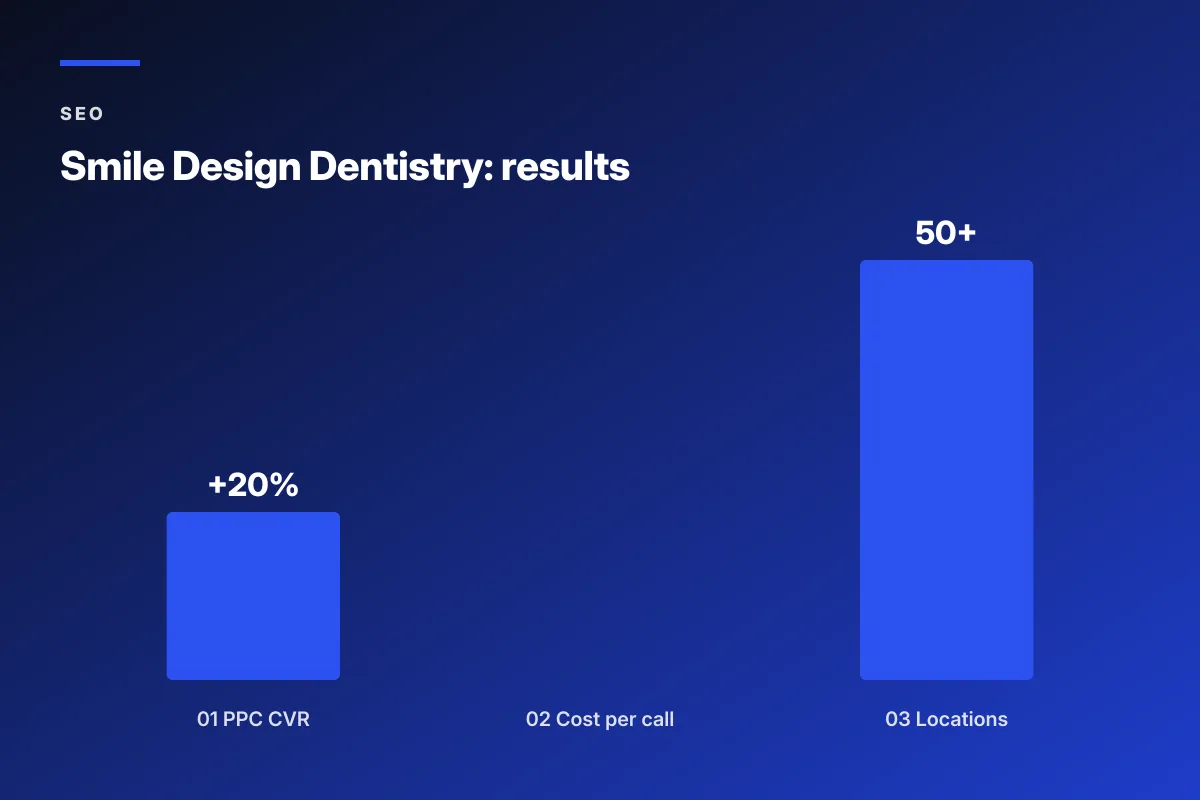
We ran a per-location audit, disavowed the spam links at the offices where they existed, and started a standardized local link earning cadence across every location. Chamber memberships, sponsorships, community events, and press outreach ran on a monthly checklist per office. Cost per call dropped 30 percent across the network as PPC and organic improved together. PPC conversion rate climbed 20 percent. Fifty-plus locations reached parity on the link-profile foundation over 18 months.
| Link source | Volume per location | Effort level |
|---|---|---|
| Professional associations | 4 to 8 | Low, membership dues |
| Chamber of commerce | 1 to 3 | Low, dues |
| Local sponsorships | 3 to 6 per year | Medium, $250 to $2,500 per event |
| Community events | 2 to 4 per year | Medium, half-day per event |
| Local press mentions | 2 to 6 per year | Medium, outreach effort |
| Content-earned links | 3 to 10 per year | High, per-guide effort |
| Expert commentary | 4 to 8 per year | Medium, source platform effort |
Every dental practice we audit has at least one link from a fake dental directory that was created in 2014, went dormant in 2018, and now shows up in the referring domain report as either dental-directory-of-the-year.info or dentistry-elite-network.biz. Nobody remembers signing up. Nobody has ever heard of anyone finding a dentist through it. It sits in the backlink profile like the office fax machine, technically still there but earning its keep by doing nothing. Disavow it and move on.
A 12-month cadence for dental website link building
The right cadence for dental website link building runs on a quarterly rhythm with monthly checkpoints. This cadence produces 15 to 40 real earned links per year for a single-location practice, which is enough to build a solid competitive profile inside 12 months and dominate the local map pack fight inside 24 months.
You do not need to run all of this yourself. You do need someone who owns the checklist and reports the numbers monthly. The single biggest predictor of link-building success in dental is whether the checklist gets worked. Practices that stop after 3 months rarely see the compounding curve. Practices that run the cadence for 12 months see rankings and calls that pay back the effort dramatically.
- Q1: Baseline the free citation and association layer for the practice
- Q1: Audit and disavow any inherited spam links from prior agencies
- Q2: Line up 4 community sponsorships or events for the calendar year
- Q2: Publish one definitive guide on a specialty topic for the practice
- Q3: Start expert commentary outreach through source platforms
- Q3: Pitch 5 local media stories tied to real practice milestones
- Q4: Refresh the disavow file if any new spam links appeared
- Q4: Review the anchor text distribution and correct any over-optimization
Reporting link building without vanity metrics
Skip the vanity metrics. Domain rating scores, total backlinks counts, and referring domain totals are indicators, not outcomes. Report on the number of new earned links per month, the geographic and topical diversity of those links, the anchor text mix, and the direct or assisted contribution to organic ranking movement on target queries. That reporting tells leadership whether the link-building program is working. A DR score climbing by 4 points does not.
Attribution from links to ranking movement
The clearest link attribution shows up when a new earned link precedes a specific query’s ranking movement by 4 to 8 weeks. If you earned a link from a local news site in March and by early May a target query moved from position 6 to position 3, the link plausibly contributed. Track link-earning dates against rank tracking dates and note the pattern. Over 12 months, the pattern is clear enough to justify budget. Our dental marketing attribution covers the tracking side of this in depth.
Multi-location dental link building patterns
Multi-location dental link building follows the same principles as single-office link building, but with more moving parts. Every office needs its own link profile because Google ranks each office locally. A group with strong national links but weak per-office local links loses on map pack queries in the underserved offices, even when the corporate parent has authority signals.
Central-corporate link building complements per-office link building but does not replace it. A group site with 200 corporate links can support 40 offices, but the offices still need their own local citations, chamber memberships, sponsorships, and community engagement. Multi-location dental SEO strategies covered elsewhere in this blog. Compliance guidance for dental marketing from the ADA News coverage and the ADA practice management resources both inform the outreach approach.
Per-office link earning
Every office in a group needs its own local chamber membership, sponsorships, community relationships, and press outreach. Templates do not work here because every metro has different local sites. What the group can standardize is the checklist, the reporting cadence, and the vendor management. The execution stays local because the links stay local.
Central corporate link building
Central corporate link building for a dental group focuses on industry associations, DSO industry press, healthcare business media, and thought leadership from group leadership. These links flow to the group corporate site and support authority signals that benefit all offices. This is a $30,000 to $150,000 per year effort for a mid-market DSO, and it complements per-office link building without replacing it.
Wrapping up dental website link building
Link building for dental websites is a patient, community-shaped effort that pays back on a 12 to 24 month curve. The practices that treat it as a spam-directory batch never see the ranking gains and often see penalties. The practices that treat it as community engagement, expert commentary, and definitive content see rankings, calls, and long-term compounding.
If you want the full checklist worked for you by a team that has done it for practices from single-office to 50-plus locations, our dental SEO services lays out what the link-building layer includes. If you want to run it in-house, use the quarterly cadence in this post and report on the numbers monthly. Either way, the practice that wins the link game is the practice that shows up in the community, on schedule, every quarter.
Frequently asked questions
How many backlinks does a dental website need to rank?
There is no fixed number, but for a single-office general practice in a competitive suburban or urban US market, a healthy backlink profile has roughly 60 to 200 quality referring domains built over 12 to 24 months. What matters more than the raw number is the mix. Real professional association links, local chamber links, community sponsorship links, local press mentions, and a small number of content-earned citations from health blogs or industry sites. Practices with 400 links from spam directories rank worse than practices with 80 links from real local sources. Chase quality and relevance, not volume.
What is the safest link building for dental websites in 2026?
The safest link building is community-shaped earned links. Sponsor local youth sports teams, community charities, school programs, and neighborhood events. Speak at local schools about dentistry as a profession. Host free oral health screening days. Join your state dental association, local chamber of commerce, and civic groups like Rotary or Kiwanis. Each of these produces natural, local, topically relevant links that Google trusts and that no manual action ever touches. Every link comes from a source the practice has a real relationship with, which is the pattern Google's spam filters trust. Boring but safe wins in link building.
Do guest posts still work for dental link building?
Guest posts on high-quality, topically relevant, editorially reviewed sites can still work, but the guest post economy is dominated by pay-for-play networks that Google reads as manipulated. If a vendor pitches you 20 guest posts a month across a network of dental-adjacent sites, that is a paid link network no matter how it is branded, and it puts your domain at manual-action risk. Legitimate guest contributions to real publications with real editorial standards still work but require pitch work, not volume. Two well-placed guest contributions a year on genuine publications outperform 40 network guest posts.
How long does dental website link building take to show results?
Individual links can influence ranking within 4 to 8 weeks of Google discovering them. Building a link profile strong enough to compete on high-value dental queries takes 12 to 24 months of consistent effort. Practices that expect ranking movement in the first 30 days after starting a link-building program are almost always sold to by vendors who plan to buy spam links. Real link building compounds slowly. The rewards last for years because the earned links keep passing authority long after they were built. Budget for at least 6 months of effort before evaluating a link-building program.
Can a dental practice recover from a link-based Google penalty?
Yes, but recovery takes 3 to 12 months and requires disciplined work. Step one is auditing the backlink profile in Google Search Console, Ahrefs, and Semrush to identify the spam links. Step two is submitting a disavow file through Search Console that discounts the spam domains. Step three, if a manual action is active, is filing a reconsideration request with Google that explains what was done to fix the profile. Step four is running clean link building going forward. Most manual actions clear within 6 months of a well-executed cleanup. During recovery, rankings on affected queries typically stay depressed.
How much should a dental practice pay for link building?
Legitimate dental link building is bundled into a broader SEO retainer, not sold as a standalone service at low prices. A dental practice paying $500 to $1,000 a month specifically for link building is almost certainly buying spam links regardless of the vendor's positioning. Legitimate link earning at the growth tier of dental SEO service ($1,500 to $3,500 per month total) includes 4 to 8 outreach touches per month, community outreach coordination, and content-earned link support. If a vendor promises specific link volumes at specific prices, that alone is a red flag worth walking away from.
Book your free 30-minute strategy call.
No spam, no sales rep. We use your email to schedule your call with a senior strategist. That is it.
More from the blog
View all articles → SEO
SEO Organic Search Engine Optimization Services That Grow Real Traffic
Read article SEO
SEO SEO for Pet Groomers That Fills the Appointment Book Weekly
Read article SEO
SEO