
A marketing agency for beauty products is the outside partner a DTC founder hires to move real SKUs off the shelf. The job spans ecommerce, retail, and marketplaces. In 2026 the line between brand marketing and product marketing is sharp. Brand work builds awareness and equity over years. Product work sells specific SKUs on specific pages at specific price points. The right partner lives in that second lane. Think product detail page (PDP) copy, ingredient claim strategy, Amazon and Sephora listings, retail sell-through analytics, and creative tuned to each hero product in the catalog.
This guide walks the working scope of a beauty product marketing partner in 2026. You’ll get product-level channel strategy, PDP discipline, ingredient claim compliance, Amazon versus Sephora math, retainer bands by catalog size, red flags in proposals, and the Beauté Aesthetics New York case study on 166% lead growth from a product-anchored content system. If you’re picking a partner in the next 60 days, this is the filter that separates a real specialist from a design shop with a beauty landing page.
You’ll see how Abigail Ahern grew ecommerce revenue 179% with SEO and paid media, and how the Boogie Board program held cost per sale at $31 across $650,000 in ad spend. Both cases pull the same product marketing playbook the top beauty brands use today. The 6-step filter at the end is the one we hand every founder who books a call, so you can walk into any agency pitch and grade it in under 20 minutes.
Monthly pricing bands for a marketing agency for beauty products
The Redefine Web model runs $1,499 to $6,000 per month across four tiers. The Foundation tier at $1,499 covers a small-catalog DTC brand (10 to 25 SKUs) with PDP audit, paid media setup, and one hero creative rotation. Growth at $2,499 fits a mid-catalog brand (25 to 80 SKUs) running full paid social plus Amazon listing optimization. Scale at $3,999 layers on retail media, Sephora and Ulta portal work, and a monthly creator seeding cohort. Enterprise starts at $6,000 for large-catalog brands (80+ SKUs) running full-service plus custom retail integrations.
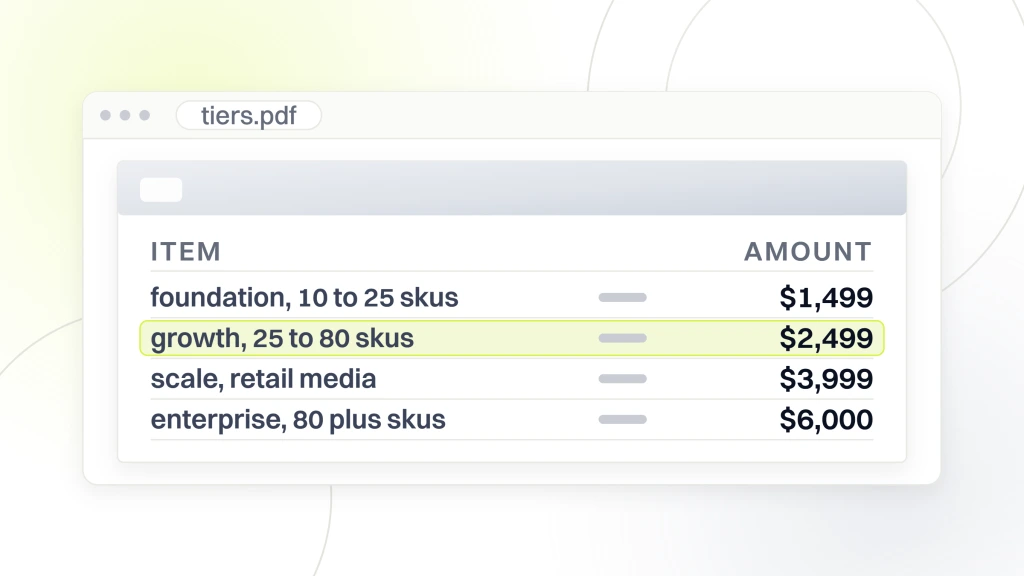
Ad spend sits outside the retainer and gets billed directly by Meta, TikTok, Google, and Amazon. The retainer covers labor. Most beauty brands run $8,000 to $60,000 per month in ad spend, so the working total lands between $9,499 and $66,000 per month depending on tier and channel mix. The math beats an in-house team by a wide margin below $6 million in annual revenue.
Retainer tiers by catalog size
| Tier | Monthly retainer | Catalog size | Channels covered |
|---|---|---|---|
| Foundation | $1,499 | 10 to 25 SKUs | Paid setup + PDP audit |
| Growth | $2,499 | 25 to 80 SKUs | Paid + PDP + Amazon |
| Scale | $3,999 | 50 to 150 SKUs | Full DTC + marketplaces + creators |
| Enterprise | Starts at $6,000 | 80+ SKUs | Full + retail media + custom |
Percent-of-sales versus flat retainer
Percent-of-sales pricing at 4% to 8% of monthly revenue fits brands past $500,000 in monthly revenue where a flat retainer no longer covers the labor. Flat retainer pricing fits brands under $500,000 monthly revenue where percent-of-sales would starve the team. Hybrid pricing (flat retainer plus performance bonus above a contribution margin target) fits brands scaling through a Series A revenue window. For a wider breakdown of ecommerce agency pricing patterns, see our guide to ecommerce marketing companies and how to evaluate them.
A marketing agency for beauty products case study from a Manhattan clinic
Beauté Aesthetics New York, a luxury beauty and aesthetics clinic in Manhattan, hired Redefine Web as an integrated marketing partner across web design, SEO, and product content coordination. The clinic ran treatment services alongside a curated line of skincare products sold through the retail floor and the site. Product pages read like a clinical brochure. Ingredient claims sat below the reviews. No measurable content engine fed the top of the funnel.
The 12-month program layered a full website rebuild, treatment-specific landing pages, product page copy refresh with structured ingredient claims, technical SEO cleanup, schema markup on every product and treatment SKU, and a targeted local creator seeding cohort of 40 New York beauty and lifestyle creators. Every workstream reported into the same weekly dashboard. Blended MER and cost per booked consultation ran as the headline numbers the founder tracked. The team held founder time under 15 hours per month.
Across 12 months, the program grew qualified leads 166%, new users 88%, and website conversion rate 27%. The integrated stack we ran for Beauté Aesthetics New York now runs inside our beauty SEO service at maintenance cadence, with the internal marketing lead operating the ongoing program. Every product page produced during the buildout became a paid social variant, an email hero image, and a schema-marked landing section on the treatment pages, compounding the initial investment across every acquisition channel the clinic runs today.
Two more beauty and ecommerce proofs on the same approach
Abigail Ahern, a home and lifestyle brand with a growing skincare-adjacent product line, ran a restructured SEO and paid media program that grew ecommerce revenue 179% over 12 months. Paid search ROAS climbed to 1,588%, more than doubling the prior year, and paid social ROAS hit 3,000% through paired retargeting and prospecting audiences. The same PDP discipline and creative rotation cadence we ran for Beauté Aesthetics carried the Abigail Ahern program.
Boogie Board, a DTC ecommerce brand with a compact catalog, held cost per sale at $31 across $650,000 in managed ad spend. Conversion rate on the refined landing pages climbed 11%. The program proved that tight PDP work and disciplined ad targeting can hold acquisition costs low even at high monthly spend. Both cases show the same pattern. Product marketing beats brand marketing when the SKUs are the growth driver.
Creative production the beauty product team owns
Creative production for beauty products is where cheap retainers usually break. A working product program needs 40 to 100 new pieces of creative per month across static ads, video ads, PDP hero images, and email hero images. Each hero SKU carries its own creative rotation independent of the brand-level rotation. Producing that volume takes a creative director, two designers, a motion designer, and a copywriter minimum. Agencies bundle this production into the retainer with shared team hours across a book of brands.
Static ads by SKU archetype
Static ads by SKU archetype run 20 to 40 new variants per month across Meta and TikTok. Hero SKUs get 8 to 12 variants apiece. Bestsellers get 4 to 6 variants apiece. Newness SKUs get 2 to 4 variants apiece. Each variant tests a different hook, benefit angle, or before-and-after comparison. Winners scale into paid budget. Losers get cut inside 500 impressions per variant. A working agency runs production through Figma templates that let a designer produce 20 variants per day at consistent brand quality.
Video ads for Meta Reels and TikTok
Video ads for beauty products run 10 to 20 new variants per month across Meta Reels and TikTok. Each variant is 9 to 30 seconds long and hooks in the first 1.5 seconds or the platform kills reach. Production runs through a motion designer using After Effects templates plus voiceover on ElevenLabs. A three-week production cycle per batch keeps the pipeline full. Agencies that produce video ads in a single shoot per quarter usually run stale creative by week six, capping ROAS at the ceiling of one hook.
Creator seeding for organic reach
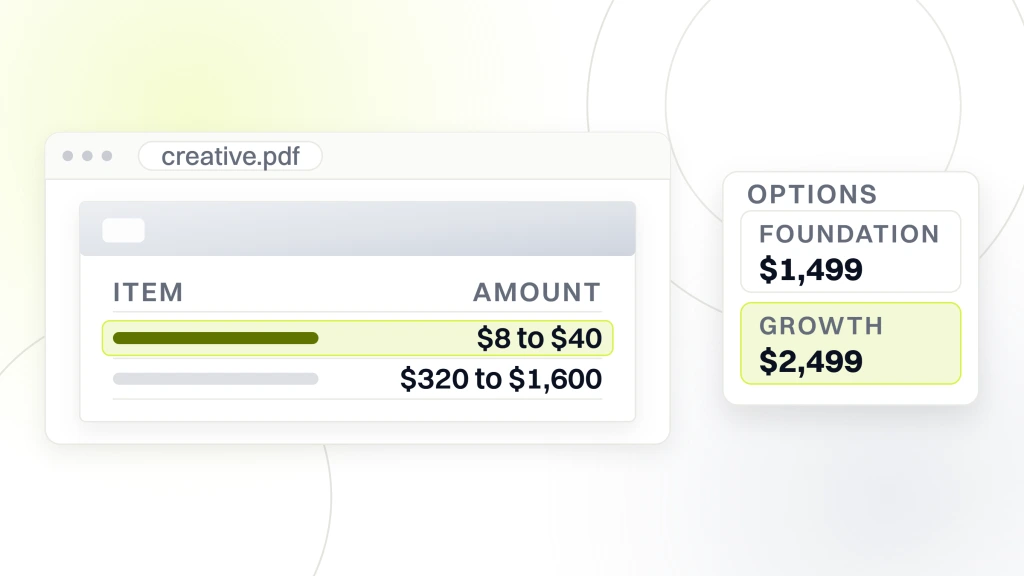
Creator seeding runs alongside paid creative in most working programs. A cohort of 20 to 60 micro-creators (5,000 to 100,000 followers) gets a free product drop each quarter tied to a specific hero SKU launch. Organic UGC (user-generated content) from that cohort becomes the raw material for the next paid ad batch. The seeding cost per creator sits at product cost only, roughly $8 to $40 per person, so a 40-creator cohort costs $320 to $1,600 per quarter in product. The paid ad conversion rate on UGC-based creative usually beats studio-produced creative by 30% to 60%. For the wider take on how influencer partnerships work in DTC, see our food influencer marketing agency guide for the pricing and workflow patterns that translate straight to beauty.
Retention marketing the beauty product team runs monthly
Retention marketing for beauty products owns the customer lifecycle after first purchase and the replenishment curve on each hero SKU. A working program runs six core flows in Klaviyo, three core flows in Attentive SMS, a loyalty program in Yotpo, and a subscription program in Recharge. Flow revenue on replenishable products (serums, cleansers, moisturizers) can hit 30% to 45% of email revenue on a mid-catalog brand once flow architecture stabilizes past month six.
Replenishment flows timed to product usage curves
Replenishment flows for beauty products need to hit exactly at the point of product depletion. A 30 ml serum used twice daily runs 45 to 60 days at 4 to 5 pumps per use. A 100 ml cleanser runs 60 to 90 days at daily use. A working agency sets Klaviyo timers on each SKU based on average consumption rate. According to Klaviyo ecommerce email benchmarks, replenishment flows sent at the correct timing produce 40% to 80% open rates and 5% to 12% conversion rates versus 15% to 25% open rate on generic campaigns.
Subscription math through Recharge
Recharge subscriptions run 15% to 30% of orders on beauty products with replenishable SKUs. Subscription customers carry 2.5x to 4x the lifetime value of one-time buyers and improve LTV to CAC ratios past month 12. A working agency builds subscription-specific flows, tunes the discount ladder to hold retention past six shipments, and monitors churn every week to catch product-fit issues before they compound across the base. Our beauty PPC service layers paid on top of the retention foundation. For a deeper walk-through of email flow architecture in DTC ecommerce, see our email marketing for ecommerce flow guide.
Red flags in a marketing agency for beauty products proposal
Every DTC beauty founder reads at least two proposals a month promising 6x ROAS at $499 per month with a full-catalog PDP refresh. The red flags below catch most of these before signing. One agency pitched a proprietary AI-driven PDP optimizer that turned out to be a Chrome extension swapping product photos with stock images from Unsplash. The Unsplash pull is not the optimizer.
- Retainer under $499 per month with a promise of full-catalog PDP work plus paid media. That budget covers 4 to 6 hours of specialist time. Real programs need 110 to 170 hours per month for catalogs past 25 SKUs.
- No mention of ingredient claim compliance in the workflow. Beauty products drift into drug claims fast, and skipping compliance triggers FDA warning letters.
- Guaranteed ROAS numbers in the first 90 days. Platform algorithms shift weekly, and no agency can guarantee ROAS on moving rails.
- No mention of Amazon or marketplace strategy at all. Amazon is 40% to 60% of channel revenue for most DTC beauty brands, and skipping it usually loses the branded search term to a reseller.
- No named PDP touch cadence per SKU. Working agencies touch each hero PDP 6 to 12 times per year. Vague answers here signal stale work.
- Case studies with generic industry benchmarks instead of named brands with specific SKU-level outcome numbers. Real product marketing produces real product-level numbers.
Green flags in a real pitch
Green flags. A written scope naming specific tools (Klaviyo, Attentive, Recharge, Amazon Ads console, Sephora retail media portal). A stated PDP touch cadence per SKU. An ingredient claim compliance workflow. At least two beauty case studies with real brand names and SKU-level outcome numbers over six months. A monthly reporting cadence with contribution margin per SKU as the headline metric. Any pitch hitting five of these six is worth a follow-up call. For a similar filter applied to fashion DTC, see our fashion marketing strategies guide.
Timeline from signed contract to compounding product sales
Beauty founders arrive with wildly different expectations on timeline for product marketing outcomes. Some expect a 5x hero SKU spike inside the first 30 days after a competitor caught a viral TikTok last quarter. Others expect nothing for six months after prior agencies failed to deliver PDP refreshes. Real timelines sit in a narrow window shaped by catalog size, ingredient story clarity, and how tightly the technical setup runs in month one across the SKUs the brand cares most about.
Month one is PDP audit and creative baseline
Month one is PDP audit and creative baseline across every hero SKU in the catalog. Every hero PDP gets a conversion rate diagnostic. The ingredient claim compliance sweep runs across every live product page. The first batch of 20 to 40 static ads and 10 to 15 video variants ships into paid rotation. No revenue improvement should be expected in month one, since platform algorithms need 14 to 21 days of clean data before Smart Performance and Advantage Plus can optimize on the new creative.
Compounding kicks in around month four
Compounding kicks in around month four. Paid campaigns exit learning phase on stable creative rotation. PDP conversion rates hit their first meaningful 30-day window on the refreshed copy and photography. Klaviyo flows produce their first full replenishment cycle on hero SKUs. Between month four and month nine, most beauty product brands see blended MER climb 30% to 60%, cost per acquisition drop 25% to 45% versus the month one baseline, and PDP conversion rate climb 20% to 40% on the hero SKUs that received a full refresh.
In-house team versus an outside beauty product partner
Every DTC founder eventually asks whether to build an in-house product marketing team or partner with an agency. The honest answer depends on annual revenue, catalog complexity, and whether the founder wants to manage a marketing hiring pipeline alongside product, ops, and finance. Below $4 million in annual revenue, an agency partnership wins on math. The total labor cost of a full-stack in-house product marketing team runs $480,000 to $900,000 per year fully loaded.
The in-house team salary math
A full-stack in-house beauty product marketing team runs seven people minimum. A growth lead, a paid media specialist, an email and SMS specialist, a designer, a motion designer, a copywriter, and an Amazon and marketplace specialist. Fully loaded salaries plus benefits plus tool licenses lands the annual cost at $480,000 to $900,000 depending on tenure and location. Below $4 million in annual revenue, that labor cost eats 12% to 22% of revenue, which usually crushes gross margin below sustainable levels.
Hybrid model for brands past $6 million
Hybrid teams win for brands past $6 million in annual revenue. Growth lead plus paid media specialist plus Amazon specialist come in-house. Creative production, PDP copy work, and creator partnerships stay with an agency partner. This split gives the founder direct control on the two channels closest to strategic decisions (paid media budget and Amazon strategy) and keeps the labor-intensive production work off the internal payroll. Most brands past $20 million eventually pull creative production in-house too, but the transition takes 18 to 24 months. Our beauty marketing retainer plans support both fractional and full-service arrangements.
Wrapping up marketing agency for beauty products selection
Picking the right partner in 2026 comes down to six things. Product-level channel discipline. PDP optimization cadence. Ingredient claim compliance workflow. Amazon and marketplace strategy. Creative production pipeline volume. Named beauty case studies with SKU-level outcome numbers over six months. Programs that run all six produce compounding revenue growth on hero SKUs, MER climbing 30% to 60% past month four, and cost per acquisition dropping 25% to 45% versus baseline. Contribution margin per SKU stays inside target bands the founder set at kickoff.
Real programs like the 12-month Beauté Aesthetics New York engagement produce 166% qualified lead growth by pairing website rebuild, SEO buildout, and product-anchored content on the same team reporting into the same weekly dashboard. If your beauty brand is picking a growth partner in the next 60 days, ask three agencies for line-item scopes with named tools, named PDP touch cadence, named ingredient claim workflow, and case studies with SKU-level numbers. Book a call and we’ll walk through the last three beauty product programs we ran end to end.