Dental new patient specials are the most common promotion in the category and the most misused. A well-designed offer pulls patients who value the provider relationship and stay for years. A poorly designed one pulls deal hunters who take the discount, skip the paid follow-up, and vanish. The gap comes down to offer structure, ad copy, front-desk qualification, and how the practice tracks retention at 6 months. This guide walks through offers that work, offers that attract the wrong lead, ad-language and compliance rules, and the retention tracking that proves each promo earned its spend. Practices that get this right see 40% to 60% higher retention at 12 months.
Redefine Web runs these programs across solo practices and multi-location groups nationwide, so the offer templates and retention benchmarks below come from live accounts, not a category page. Every example reflects what converted at the volume dental practices actually operate. If you have been running the same $19 or $29 first cleaning for years, this post gives you the swap plan and the numbers to back the change.
Dental promotions that attract the wrong lead
Dental promotions that attract the wrong lead share a pattern. They lead with a huge discount, they discount a single low-cost service instead of bundling, and they carry no natural next step. Patients respond to the deal, complete the discounted service, and vanish. That’s the shape most dental new patient specials fall into when the practice copies a competitor’s offer without checking the retention math behind it.
The dollar-cheap first cleaning
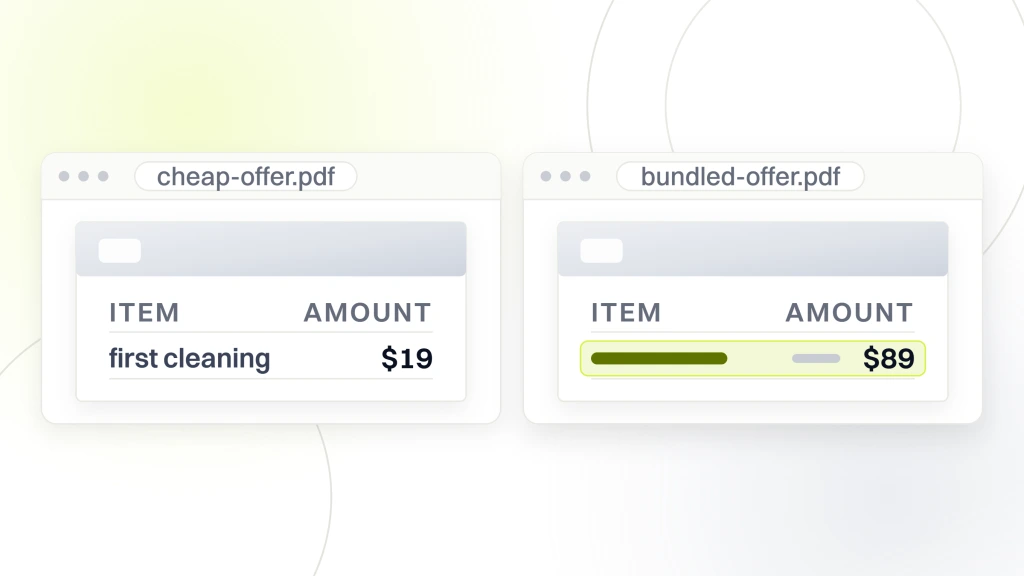
A $19 or $29 first cleaning pulls patients hunting for the cheapest cleaning in town. They took the same $19 deal at 3 other practices before yours, and they won’t book the paid follow-up. Net of marketing spend, chair time, and lab fees, the math turns negative fast, and the practice ends up funding the churn. Fewer than 15% of these patients return at 90 days.
The buy-one-get-one whitening
A buy-one-get-one whitening pulls patients who split the benefit with a friend or family member. 2 people share the cost of one treatment, neither books the follow-up, and the practice does the work twice for the price of one. Ad platforms flag these offers for review too, so launch time drags out for the wrong reason.
The free everything offer
A stack of free exam, free x-ray, free consult, free cleaning, and free follow-up call pulls anyone who understands sign-up bonuses. These patients take the value, push back in reviews on any paid recommendation, and never rebook. Practices running these offers usually spot the review pattern before they spot the retention pattern. For the reputation-management angle, see dental reputation management.
Insurance-based and uninsured tracks for dental new patient specials
A special that works in-network for insured patients rarely works for uninsured ones, and the reverse holds. Practices that run one offer for both segments usually leave a segment out. The clean pattern runs parallel offers under one campaign umbrella, and lets the landing page route by insurance status.
The insured track
Insured patients respond to language that removes friction. Copy that confirms accepted insurance plans, in-network status on the landing page, and a clear first-visit expectation works better than a discount for this segment. The offer language often skips the dollar price and focuses on booking the first appointment. New patient dental specials for the insured segment work best when the copy reads like a welcome, not a coupon.
The uninsured track
Uninsured patients respond to specific pricing. The bundled comp exam plus cleaning plus x-ray at a clear introductory price gives them a number they can plan around. Membership plan enrollment offers work well for this segment too, since they wrap ongoing care into a predictable monthly cost. Practices running an in-house membership plan report 45% to 70% higher retention on membership patients versus one-off discount patients.
Landing pages that route by insurance status
Landing pages that ask the patient whether they have insurance up front, then route them to the appropriate offer, convert 15% to 25% higher than single-offer pages that try to speak to both. The routing question is one dropdown, no friction. Front desk gets a cleaner intake because the patient has already self-identified. Take our dental ppc landing pages for the routing pattern in full.
Ad language rules for dental new patient specials
Ad platform review teams and state dental boards each set language rules that intersect with new patient specials. Practices that follow them get ads approved faster and avoid disciplinary letters. Practices that skip them end up with rejected ads and, once in a while, licensure issues that outlast the campaign. A short primer on dental ads that book real patients covers the platform-approval patterns in more detail.
Ad platform review
Meta and Google review teams flag vague pricing, misleading discounts, and free health-service framing. Copy that says free everything or 90% off will get held or rejected outright. Copy that names the service, the price, and the eligibility clearly clears review reliably. Vague copy costs the practice launch days waiting for a resubmit review, and every lost day is patient volume you already paid to build. Reviewing common dental PPC mistakes before submission cuts rejection rate in half.
State dental board language
State dental boards regulate inducement language, misleading price framing, and specific claim words. Some states prohibit free where a service is offered as a giveaway. Some states require specific disclaimers on dental promotions. Practices marketing across state lines default to the strictest applicable rule. A quick board rule check per state before launch prevents 90% of the trouble on this front.
Fine print that holds up
The fine print in every dental new patient special covers eligibility (new patients only, insurance restrictions), expiration date, exclusions (periodontal disease, endodontic conditions), and the practice’s right to refuse based on clinical judgment. Ads without fine print carry compliance risk. Ads with buried fine print in an unreadable font size are worse than no fine print. Legible, clear, on the landing page and in the ad. Take dental ads compliance for the ad-side compliance checklist.
Tracking that proves dental new patient specials work
Proving a special works takes more than a lead count in the ad platform. Retention matters. Case value matters. Referral rate matters. Practices that track only lead volume optimize for the wrong outcome and end up with 500 leads and 40 retained patients instead of 200 leads and 90 retained patients. The offer choice looks smart on paper and bad in the chart.
The tracking stack
GA4 with UTMs on every paid campaign. CallRail dynamic number insertion for phone conversion tracking. Practice management system source field capturing the campaign that produced each new patient. Retention flag on the patient record at 90 days, 180 days, and 365 days. Case value field on the patient record. That stack lets the practice see which offer produced the retained patients, not just which offer produced the calls.
The retention report
Monthly retention report by source shows which offer produced patients who came back for the paid follow-up, the second cleaning, and the treatment plan they were quoted. A discount offer that produced 40 calls but zero retained patients at 90 days is a losing offer. A bundled offer that produced 20 calls and 14 retained patients is a winning offer. The retention lens flips the offer decision on its head.
Offline conversion feedback into ad platforms
Google Ads offline conversion imports and Meta CAPI events fed with hashed retained-patient data let the paid algorithms optimize on retained patients, not raw leads. Practices running this loop see cost per retained patient drop 25% to 45% inside 90 days, since the bid algorithm learns which keywords and audiences produce patients who stay. Our dental marketing attribution covers the CAPI and offline conversion pattern in depth.
A side by side view of offer outcomes
The table below tracks typical outcomes across common dental offers for new patients. Numbers come from active accounts across single-office practices and multi-location groups. Numbers shift with local market pressure but the shape holds year over year.
| Offer format | Lead volume vs baseline | 90-day retention | 12-month lifetime value |
|---|---|---|---|
| $19 first cleaning | +180% | 12% to 22% | $120 to $260 per patient |
| Bundled comp exam plus cleaning plus x-ray at $89 | +95% | 58% to 74% | $780 to $1,400 per patient |
| Whitening add-on with paid cleaning | +42% | 62% to 78% | $920 to $1,600 per patient |
| Complimentary implant consult | +22% | 42% to 68% (case acceptance) | $3,800 to $8,500 per signed case |
| Free everything stack | +240% | 4% to 11% | $28 to $90 per patient |
| Membership plan enrollment | +18% | 72% to 88% | $1,100 to $1,900 per patient |
The table makes the retention math visible. High-volume discount offers attract patients who don’t stay. Bundled and membership offers attract fewer patients but produce lifetime value 6 to 12 times higher per patient. The practice’s marketing budget builds a bigger business over 3 years running the bundled offers, even though the raw lead count is lower on paper. Practices that report on lead count get pressured into the top row. Practices that report on 12-month lifetime value stay in the second and third rows and build a real patient base. The reporting choice is the practice’s choice, not the market’s choice. Once the practice commits to retention as the primary metric, the offer library follows and the year gets easier.
Front desk workflow for a dental new patient special
The front desk workflow decides whether a dental new patient special produces retained patients or scattered no-shows. A great ad producing a booked call converts nothing if the intake conversation is weak. Practices that invest 30 minutes documenting the workflow save hundreds of hours of ad budget over the year. That’s the highest-ROI 30 minutes in the whole promotion.
The intake script
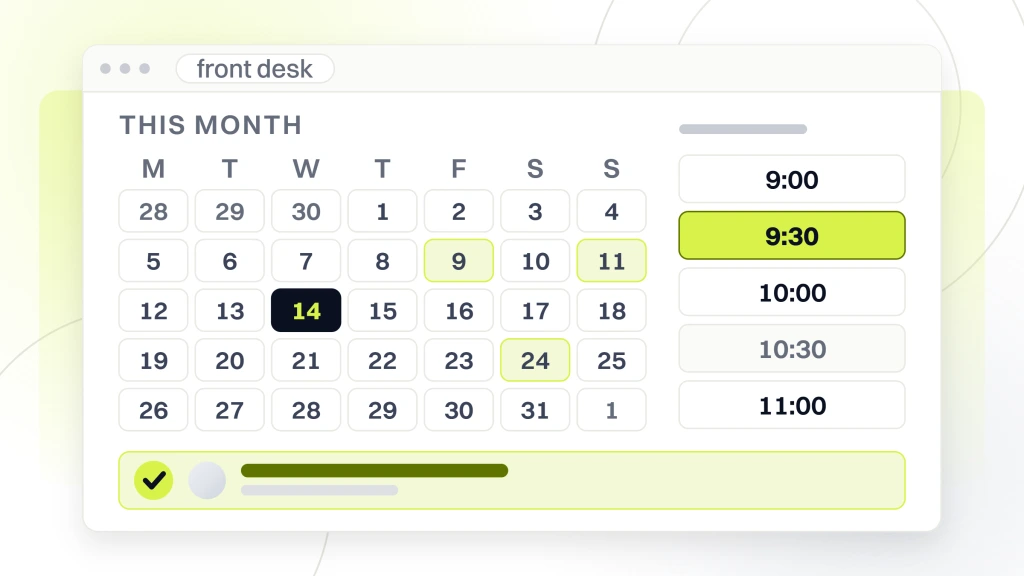
Intake script covers the offer eligibility check, insurance verification, appointment window selection, and the first-visit expectation setting. The caller who mentions the promotion gets acknowledged, qualified, and booked in one call. Front desks that make callers repeat offer details or transfer between staff lose the booking to a competitor with faster intake. Every 90 seconds of hold time costs 5% to 8% of would-be bookings.
Same-day booking targets
Aim for a 48% to 72% same-day booking rate on new patient calls. Practices at the top of that range have fast intake and open appointment blocks the front desk can offer without checking with the provider. Anything below 40% usually points to a scheduling bottleneck upstream that the campaign cannot fix on its own. Fix the bottleneck first, then scale the ad spend.
Reminder sequence
SMS and email reminders sent 48 hours and 2 hours before the appointment raise show-up rate 10% to 15%. Missing the reminder step wastes the ad budget that produced the booking in the first place. Practices that automate the reminder inside the practice management system rarely lose bookings to no-shows on new patient promotions. Our dental marketing automation covers the reminder stack.
Membership plans as an alternative to discount specials
In-house dental membership plans have become a preferred alternative to discount specials for uninsured patients. The membership wraps preventive care, discounts on treatment, and a predictable monthly fee into a package that attracts retention-oriented patients from the first call. That first call filters for the right patient before the chair ever fills.
What a membership plan usually covers
2 cleanings per year, one exam, x-rays as needed, a treatment discount of roughly 10% to 20%, and priority scheduling. Monthly fees run $29 to $59 depending on market and coverage depth. Practices that price the membership at a realistic breakeven per member attract the right patient without overpromising. Overpricing kills sign-ups; underpricing kills the margin, so the model tunes on real cost data.
Marketing the membership
Marketing a membership plan differs from marketing a first-cleaning offer. Copy focuses on predictable dental care, no surprise bills, and the ease of scheduling. The landing page needs a clear breakdown of what’s included, what’s excluded, and how enrollment works. Practices marketing memberships alongside their standard new patient offer see 25% to 40% of uninsured new patients enroll inside 90 days. Membership marketing is the quiet compounder of dental patient acquisition.
Retention on membership patients
Membership patient retention at 24 months runs 78% to 92% versus 22% to 34% for discount-cleaning patients. That gap is the entire story of why membership marketing outperforms discount marketing for uninsured segments. Practices that build a membership base of 200 to 500 patients over 3 years usually stop needing aggressive dental practice promotions altogether. Take dental marketing plan for the fuller program view.
Where dental new patient specials fit in the broader plan
New patient specials sit inside a broader plan that includes always-on SEO, always-on Google search, always-on Meta retargeting, and the 12-month seasonal campaign calendar. The offer is one lever, not the whole plan. Treat it that way and the calendar drives the offer, not the reverse.
Offer as a Q1 accelerant
The strongest use of a dental new patient special is Q1 acceleration when insurance benefits reset. A well-designed bundled offer running January through March pulls in insured and uninsured new patients at scale. The offer runs through Q1, then rotates to a seasonal cosmetic angle in Q2. Practices that run the same offer 12 months a year train the market to wait for the next promotion, and that wait costs volume. A quick dental competitor analysis at each Q rotation surfaces the offers rivals are running and where a gap exists.
Retention after the promotion converts
Retention starts on visit one. A friendly welcome flow (thank-you email, second-cleaning reminder at 6 months, personal follow-up from the treatment coordinator on any presented plan) turns the promotion patient into a retained patient. Practices without a documented retention flow lose 30% to 55% of promotion patients at 90 days regardless of how good the offer was. The offer books the visit. The flow keeps the patient.
Reporting that the practice partners will read
Monthly report ties the promotion to retained patient count at 90 days, not just lead count at 30 days. Quarterly report compares retained patient count year over year to normalize seasonal noise. Annual report ties retention to lifetime value across the promotion library. Reports that only show lead count get partners chasing bad promotions. Reports that show retention keep the plan on track. Take our dental marketing roi for the reporting framework.
Next steps for practices reworking their dental new patient specials
If your practice has been running the same $19 or $29 first-cleaning offer for years and can’t say what share of those patients came back for the paid second cleaning, a 90 minute session to redesign the offer and stand up retention tracking is the fastest way to turn ad budget into a growing patient base. Every practice eventually needs the redesign, and running it in Q4 sets Q1 up as the strongest new-patient quarter of the year. Redefine Web builds these programs end to end for dental practices nationwide, and every account owns its offer library, its ad accounts, and its tracking stack from day one.
The rebuild takes 30 days on the fast track and 60 days on the deeper version that includes membership plan setup, CAPI wiring, and a full retention flow inside the practice management system. Practices that finish the rebuild before January 1 book roughly 40% more first appointments during the benefit-reset window than practices that start the rebuild in mid-January. The calendar rewards early movers heavily. Book the session in October or November for the strongest Q1 outcome, and use December to test the new landing pages against paid traffic in a low-cost warm-up. The warm-up burns roughly $500 to $1,500 in test spend and returns clean data on click-through rate, call rate, and same-day booking rate before the real budget lands in January. That handful of test dollars often saves the campaign from an early-January stumble that eats a full month of insurance-reset volume. Practices that skip the warm-up learn the same lessons on live budget instead.