
Google reviews for dentists are the single most valuable local ranking signal a dental practice controls. Every 5-star review moves the map pack. Every response builds credibility with prospective patients. Every policy slip drops the profile a notch, sometimes silently, sometimes with a suspension notice. Practices that treat reviews as a daily habit outrank practices that treat them as a project. The gap is measurable inside 90 days and dominant inside a year.
This guide covers the rules that keep the profile safe, the tactics that grow the review count 8 to 20 per office per month, the response scripts that turn negative reviews into credibility signals, and the schema markup that pulls star ratings into organic search results. Every example runs from real dental client work. You will finish knowing how to get google reviews dental practice teams need without breaking Google terms of service or the HIPAA rules that quietly cost practices ranking and lawsuits.
Why google reviews for dentists move rankings and win new patients
Reviews matter because Google local trust layer weighs review count, review recency, and review rating on every map-pack query the profile competes for. A 4.9 with 340 reviews outranks a 5.0 with 12 reviews on identical relevance signals. New-patient searchers scan the map pack for two seconds and pick the winner.
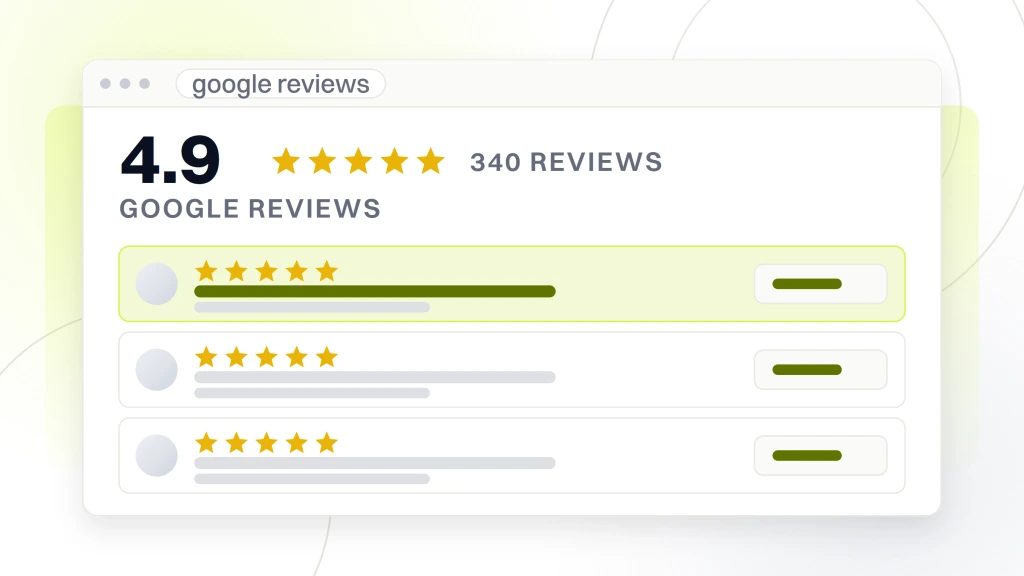
Prospective patients use volume as a proxy for trust. They read the top three reviews before they call. They notice whether the practice replies to negative reviews or ignores them. All of that filters into the decision before the phone rings. Practices with 200-plus recent dental google reviews at a 4.7-plus rating consistently outperform practices with 40 stale reviews on the same local queries. Google official review snippet documentation covers how AggregateRating markup pulls stars into organic listings, adding a second win beyond the map pack.
Three business impacts of a strong review profile
- Map-pack rank climbs as review count and recency rise, producing organic new-patient calls with no ad spend
- Organic listings show rating stars via schema, doubling click-through rate on service-page results
- Ad landing pages carrying fresh review counts convert 15 to 30 percent higher than pages with stale counts
Each of these compounds. A practice adding 15 reviews per month for 12 months has 180 more reviews than a practice reviewing ad hoc. That gap shows in the map pack inside 90 days and dominates inside a year. Reviews are the marketing input with the longest tail and the highest return per hour invested.
Google review policies dental practices must know to avoid suspension
Google review policies for dental google reviews forbid review gating, incentivized reviews, review swaps, review buying, and any pattern that manipulates the star rating. Google enforces through algorithmic detection and human review. Practices caught in violation lose reviews, get profile suspensions, or worse. Every tactic in this guide stays inside the policy line.
Five policy violations dental practices commit most often
- Review gating. Surveying patients first and routing only 5-star responses to Google
- Incentivized reviews. Offering discounts, free whitening, or gift cards in exchange for reviews
- Review swaps. Exchanging reviews with other local businesses
- Employee reviews. Asking staff to review the practice from personal accounts
- Family and friend reviews. Coordinating reviews from people who were never patients
What happens when Google detects a violation
Google flags the profile through algorithmic detection or a competitor report. Detection triggers three possible actions. Silent review removal, where the practice loses reviews and never gets notified. Review-throttling, where new reviews stop showing up for weeks. Profile suspension, where the entire Google Business Profile disappears from search until reinstated. Reinstatement takes 4 to 16 weeks and does not always succeed. Practices with 200 reviews suddenly at 60 after a silent purge usually never fully recover. Avoiding the violation in the first place is the only reliable strategy.
How to get google reviews dental practice teams close every day
The most consistent review growth comes from three moves working together. A one-click trigger in the practice management system fires the review ask automatically. An SMS-first template lands in front of the patient within 45 minutes to 3 hours of the appointment. A short in-person prompt at checkout from a trained front-desk lead pre-frames the ask so the SMS closes it. Practices running this stack land 8 to 20 new reviews per office per month with no gating and no incentive.
The one-click PMS trigger
Every modern PMS (practice management system) can fire a webhook or automation the moment an appointment status changes to complete. Wire that event to your review platform so the SMS goes out on autopilot. Manual sends fall to zero the first busy week and never recover. Automation is the difference between a review program and a review intention.
The SMS-first template
Keep the message under 160 characters. First name only. One link. No survey step in front. Example. Hi {{first_name}}, thanks for visiting {{practice_name}}. If you have 30 seconds, we would love your feedback on Google. {{review_link}} Nothing else. Every extra sentence cuts the response rate.
The in-person pre-frame
Train the checkout lead to say one sentence at the end of every satisfied visit. You will get a quick text later. If today was a good visit, a Google review means a lot to us. That single line lifts SMS response by roughly 25 to 40 percent in the practices we have measured. It is the cheapest optimization in the stack.
Responding to google reviews for dentists the right way
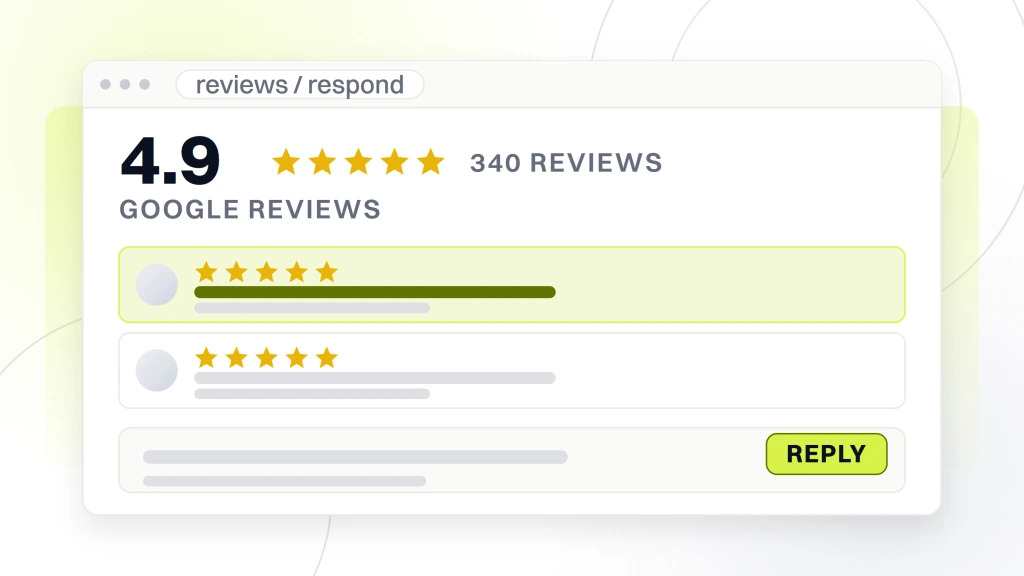
Responding to patient reviews is a two-track program. Positive reviews get a short thank-you response inside 72 hours. Negative reviews get a HIPAA-safe response inside 24 to 72 hours using one of six standard scripts. Practices that skip either track lose reputation value slowly. Practices running both tracks build credibility publicly year after year.
Positive review response template
Thank you so much for the kind words, {{first_name}}. We are grateful to have you as part of the {{practice_name}} family and look forward to seeing you at your next visit.
Keep positive-review responses under 40 words. Include the reviewer first name and the practice name. Avoid overly effusive language that reads as staged. Prospective patients scroll positive reviews looking for authenticity signals. A short, warm response passes the authenticity test. A long, gushing response fails it. Sign the response with the practice manager first name for consistency.
Negative review response boundaries
Never confirm the reviewer was a patient (HIPAA). Never argue the details. Never say our records show or as we discussed at your visit. Do apologize for the experience described, invite the reviewer to call the office directly, and sign with the practice manager name. The respond to negative reviews dentist guide covers the exact scripts for six common complaint categories. Apply the HIPAA test to every response before publication. Could an auditor read this and conclude the practice confirmed the reviewer was a patient or disclosed treatment detail.
Multi-location google reviews for dentists workflow for DSOs and groups
Multi-location dental google reviews add a coordination layer single-office practices do not face. Every office needs its own tracked review link that lands on the correct Google Business Profile. Each location gets a front-desk workflow with a monthly target. Group leadership needs a rolled-up view showing which offices are on pace.
Per-office review link mapping
Every dental Google Business Profile has a unique short review URL of the form g.page/r/[unique_id]/review. Every review request template uses the office-specific link, not the group generic link. Every automation platform stores the mapping at the location level. Practices that use one shared link end up with reviews landing on the wrong profile, or on the group parent profile that does not appear in the local map pack. The mapping is one-time setup. Skip it and every review request produces confusion downstream that takes hours to untangle per office per month.
Leadership dashboard rolled up correctly
The leadership dashboard shows reviews added this month per office, cumulative reviews per office, current average rating per office, and current map-pack position per office. Four numbers. That is the entire dashboard. Every drill-down happens per office. Groups that build 40-column dashboards nobody reads lose to groups that build 4-column dashboards leadership acts on. Smile Design Dentistry, the 50-plus location DSO on our roster, tracks these four numbers monthly per office and uses them to trigger workflow audits when any office drops below target. Copy the pattern from the dso dental marketing playbook and the multi-location dental seo guide for the SEO workflows that pair with it.
When Google will remove a dental review and how to request it correctly
Google removes a dental review when it violates the content policy. Personal attacks, off-topic content, hate speech, PHI disclosed by the reviewer publicly, and reviews from someone who was never a patient. Everything else stays permanent. Flag policy-violating reviews with clear policy citations and expect a 20 to 40 percent removal rate on flagged items.
Flag-worthy review categories
- Reviews containing patient PHI the reviewer disclosed themselves (another patient name, treatment specifics)
- Reviews from someone who was never a patient (identifiable from staff review)
- Reviews that are personal attacks on staff unrelated to the visit experience
- Reviews containing profanity, slurs, or hate speech
- Off-topic complaints about parking, neighboring businesses, or unrelated matters
- Clearly fake reviews (competitor pattern, bot pattern, coordinated group posting)
The flagging workflow
Flag policy-violating reviews through Google Business Profile Support. Cite the specific policy the review violates. Attach evidence where possible. Screenshots showing the disclosure of PHI, staff notes confirming the person was never a patient. Do not flag legitimate negative reviews as inappropriate. Google reviewers do not remove them, and repeated flagging of valid reviews damages the profile standing with the platform. Use the flag as a scalpel, not a hammer.
Flagged reviews take 3 to 14 days for Google to process. Some are removed immediately. Some sit for weeks and get denied without explanation. Do not chase every denied removal. Move on and focus energy on the negative reviews where a solid public response and internal resolution can still turn the situation into a credibility signal for prospective patients scrolling the profile.
Google reviews for dentists benchmarks and quarterly targets per office
Review benchmarks depend on practice size and volume. Single-office practices should target 8 to 15 new Google reviews per month. Multi-office groups should target 12 to 20 per office per month. Ratings should stay at 4.7-plus average. Response rates should hit 100 percent for negative reviews and 60-plus percent for positive reviews.
The performance benchmark table
| Metric | Target | Common actual | Fix if missing |
|---|---|---|---|
| New reviews per month per office | 8-20 | 1-5 | Install one-click PMS trigger + SMS templates |
| Average rating | 4.7-5.0 | 4.3-4.6 | Add reply-and-recover line + internal resolution |
| Negative review response rate | 100% | 60-80% | Set alert layer + assign single owner |
| Response published inside 72 hours | 90%+ | 40-60% | Practice manager owns workflow |
| Star rating showing in organic search | Yes | No | Add AggregateRating schema + refresh quarterly |
Track these five metrics quarterly per office. Practices on target compound reputation year after year. Practices off target keep losing to competitors with weaker services and stronger review programs. The gap is measurable in map-pack ranking and in new-patient volume. That is why review workflow deserves calendar time.
The benchmarks shift by market. A single-office practice in a low-competition suburb might hit 4.8 average with 5 reviews per month and rank position one in the map pack. A practice in a competitive urban market needs 15 reviews per month at 4.7-plus to hold the same position. Set the target based on the competitive baseline in the office actual local market, not on national averages that mask half the story. Audit competitor profiles once a quarter to keep the target honest and to spot when a nearby practice has stepped up its review program.
AggregateRating schema that pulls dental google reviews stars into organic listings
AggregateRating schema is the code snippet that tells Google your practice aggregate star rating and review count so those stars can render inside the organic listing, not just the map pack. Get it right once and it doubles click-through on the practice name and every high-intent service page (implant, Invisalign, emergency). Get it wrong and Google either ignores it or issues a manual action against the site.
The rules the schema must follow
- Star count and review count must match what shows on the live Google Business Profile at the moment the page is crawled
- Refresh the numbers quarterly at minimum. Stale schema is a spam signal and the stars stop rendering
- Attach the schema to the LocalBusiness or Dentist entity, not to a generic Organization block
- Never invent reviews or aggregate counts. Google spot-checks against the public GBP and demotes on mismatch
Practices running the schema correctly see roughly 20 to 40 percent higher CTR (click-through rate) on organic service-page listings versus the same pages without stars. That is a compounding win. The site earns more traffic per rank position, which lifts every downstream conversion metric.
Running google reviews for dentists as a retainer program
Initial setup takes 15 to 40 hours depending on practice size. Weekly maintenance runs 2 to 6 hours per office per month across review generation, response drafting, HIPAA review, schema refresh, and log maintenance. Single-office practices with a marketing lead can run it in-house once we set the workflow up. Groups over 10 offices almost always outsource for coordination consistency.
What monthly maintenance covers
Weekly review count check per office. Monthly SMS template A/B test and response-rate audit. Monthly negative-review response performance report. Quarterly schema refresh so AggregateRating stays current. Quarterly log review with pattern data. Annual training refresh for the practice manager. That is the maintenance program a Redefine Web dental marketing retainer covers from $1,499 per month. Pair it with the dental marketing hub for the full program. The google business profile for dentists guide covers the profile-level work that pairs with review management.
Why the retainer earns its line item
Practices measuring return on the retainer line item consistently rank review work as the highest-return item in the bundle. The math is direct. 12 to 20 new reviews per office per month, compounded over a year, produces a map-pack ranking that pays for the retainer several times over in organic new-patient calls alone. Every other line item plays a supporting role. Skip the review program and every other piece of the marketing stack works harder to produce fewer patients. Delicate Dental Group, a scratch practice we launched from zero, built 700-plus verified Google reviews within months, tripled Google Maps impressions, and grew Map Pack calls 280 percent using this exact workflow.
When review growth stalls and what to fix first
Sometimes the review count rises and the map-pack rank does not. That signals a different input holding the profile back. Chasing more reviews then wastes 3 to 6 months of front-desk energy for zero visibility gain. Diagnose in this order.
- Category mismatch on the profile. A general dentist tagged only Cosmetic Dentist misses head-term “dentist” queries entirely
- Weak proximity signal. A profile pinned outside the searcher radius loses to nearby offices at half the reviews
- Thin service pages. If the on-site content does not name the service and city, reviews cannot rescue the ranking
- Rate throttling. Adding 40 reviews in a week from the same IP or device pattern triggers algorithmic damping for weeks
Fix the profile fundamentals first. Add reviews at a steady 2 to 5 per week, not in bursts. Rebuild service pages with named city and service. Confirm the primary category matches the head term you want to rank for. Then the review program compounds. Skipping this diagnostic is the top reason a solid review workflow underperforms in quarter one.
Putting google reviews for dentists into a habit that runs on autopilot
You do not need every trick in this guide to see gains. You need the one-click PMS trigger, the SMS-first template, the 45-minute-to-3-hour timing, the reply-and-recover line, the negative-review response workflow, and the AggregateRating schema on the website. Those six pieces together produce 8 to 20 new Google reviews per office per month, a 4.7-plus rating, and a star rating showing in organic search results.
Where google reviews for dentists pairs with the rest of your stack
Review work compounds with everything upstream and downstream. Cleaner reviews make the Google Business Profile stronger. A stronger GBP pushes map-pack ranking up. A higher map-pack rank pulls more calls. More calls fire more review triggers. The whole loop is self-reinforcing once the workflow runs cleanly. Pair this playbook with the dental review generation guide, the respond to negative reviews dentist playbook, and the local seo for dentists hub. That combination is the quiet advantage most competitors will not build.