Dental implant Facebook ads work when the funnel handles the six weeks between first click and signed treatment plan. Miss the middle of the funnel and you generate cold leads that never book a consult. This guide walks the four-stage funnel we run on every dental implant Meta account, the exact creative that produces $180 to $340 cost per booked consult, the retargeting layer that pulls warm patients into the chair, and a real practice case where the funnel drove 22 implant cases in month three at a $4,800 monthly Meta budget. Read straight through in 12 minutes.
You’ll learn why these campaigns need a four-stage funnel instead of a single ad set, the specific creative angles that work at each stage (awareness, education, offer, retargeting), the landing page structure that closes implant consults at 22 to 28 percent, the compliance rules on before-and-after imagery and price claims, the exact benchmarks by market and competition density, the retargeting sequence that pulls back the 60 percent of consult no-shows, and the numbers from Smile Design Dentistry where implant Meta ads scale across 50-plus locations.
Why dental implant facebook ads need a full funnel
These campaigns fail as single ad sets because the implant decision takes 4 to 8 weeks from first awareness to signed treatment plan. A single ad set with a book your implant consult CTA catches only the ready-to-book minority. The much larger education audience clicks, reads, and disappears without booking.
The implant patient reads about implants, watches a video about the procedure, checks whether their insurance covers any of the cost, reads reviews, checks the doctor’s before-and-afters, and finally books a consult. That path takes weeks. Every touchpoint along the way needs a dental implant ad in front of the visitor. Miss a touchpoint and the visitor walks to a competing practice. The funnel exists to cover every touchpoint.
The implant decision timeline
The implant decision timeline runs 4 to 8 weeks on average. Week one covers awareness that a missing tooth needs treatment. Week two covers research into implant versus bridge versus denture. Weeks three to four compare local providers. Week five covers financing research. Weeks six to eight book the consult. Every stage needs matched ad creative. Miss any stage and the visitor drops out of the funnel.
Why a single ad set flops
A single ad set with a book your implant consult hook catches only the 5 to 8 percent of the audience ready to book. The other 92 to 95 percent scroll past. That single-hook approach delivers CPL of $400 to $800 per booked consult, which does not pay back on a $6,000 implant case at 28 percent close rate. Funnel-based campaigns pull that CPL to $180 to $340 and change the ROI math entirely.
Four stages of dental implants facebook ads
Four campaign stages make up a working Meta funnel for implants. Awareness targets a broad missing-tooth or bridge-comparison audience. Education targets the audience that engaged with awareness content. Offer targets the audience that watched the education content. Retargeting pulls back consultation no-shows and pre-consult drop-offs. Each stage has its own creative, budget allocation, and audience definition.
- Awareness. Short educational video on missing teeth options. Broad targeting. 30 percent of budget.
- Education. Longer video on implant procedure step-by-step. Audience is video viewers from the awareness stage. 25 percent of budget.
- Offer. Financing hook plus free consult CTA. Audience is engagers with the education stage. 30 percent of budget.
- Retargeting. Testimonial plus specific reassurance. Audience is page visitors who did not book. 15 percent of budget.
All four stages run continuously once the funnel is live. The audiences self-populate as visitors move through the stages. The whole funnel takes 4 to 6 weeks to reach steady state after launch. Before then, cost per booked consult runs 30 to 50 percent above the stable-state number. See our dental facebook ads guide for the campaign structure basics. See Meta Business Help on campaign structure.
Awareness stage creative
Awareness stage creative is a 30 to 45 second video walking through the three main options for a missing tooth (implant, bridge, denture) without pitching the practice. The video ends with see what your options are and points at a service page. That non-pitch approach gets the video watched by 4 to 6 times more viewers than a pitch video, which populates the education audience with the right people.
Offer stage creative
Offer stage creative is the financing hook plus consult CTA. $180 a month with financing. Free 30-minute consult. The offer stage runs to audiences who watched 50 percent or more of the education video. That watch-time gate qualifies the audience as ready to book, so the offer stage CPL runs $180 to $340 per consult versus $400-plus on cold audiences.
Creative angles for dental implant ads
Five creative angles work across every implant market we run. The financing angle. The one-day-implants angle. The bone-preservation angle. The comparison angle (implant vs bridge). The transformation angle with before-and-after imagery. Each angle matches a specific stage in the buyer’s mental model and produces a specific CPL on Meta.
| Angle | Best stage | CPL range | Notes |
|---|---|---|---|
| Financing ($180/mo) | Offer | $180 to $260 | Requires a real financing partner (Care Credit, Sunbit) |
| One-day implants | Education + Offer | $220 to $340 | Only for practices offering All-on-4 or same-day protocols |
| Bone preservation | Awareness + Education | $140 to $220 lead | Educational angle, longer funnel |
| Implant vs bridge | Awareness | $95 to $180 lead | Attracts research-phase audience |
| Before-and-after gallery | Retargeting | $120 to $220 | Requires signed consent on every case |
The financing angle is the highest-converting offer stage angle. It removes the number-one objection, which is cost. Practices that partner with Care Credit or Sunbit and lead with the monthly number see cost per booked consult drop 40 to 60 percent versus a lump-sum implants from $2,800 hook. See our dental marketing plan guide for the full paid stack.
The financing angle mechanics
The financing angle names a monthly payment number in the primary text and the creative. $180 a month, no down payment, apply in five minutes. That specific number filters the audience to people who can afford the monthly payment. Practices worry the low number attracts unqualified leads. In practice, the specific monthly number attracts qualified leads, since it matches the affordability profile of the patient who buys.
The one-day implants angle
The one-day implants angle works only for practices offering All-on-4, same-day extraction-and-immediate-placement, or teeth-in-a-day protocols. The angle appeals to the audience terrified of a multi-visit implant timeline. Same-day patients close at 34 to 42 percent consult-to-treatment, since the appeal of a single visit is powerful. Skip this angle if your practice does traditional two-stage implants only.
Education stage creative
Education stage creative runs 90 seconds to three minutes and covers the implant procedure step-by-step. The doctor speaks straight to camera. Extraction, healing, abutment, crown. The video answers the top implant questions a research-phase patient holds. Practices that produce the education video in-house with the treating dentist cut CPL on the downstream offer stage by 20 to 30 percent because the audience already trusts the face they’ll book with. Stock B-roll works, but branded first-person video beats it every time.
Audience layers between stages
Audience layers between stages carry the funnel math. Awareness feeds a custom audience of 25 percent video watchers. Education feeds a custom audience of 50 percent video watchers plus link clickers. Offer feeds a custom audience of landing page visitors who did not book. Retargeting feeds off page visitors who did not convert inside 21 days. Each layer runs its own frequency cap, its own creative refresh cycle, and its own exclusion list so a patient never sees an offer ad while still in the awareness set.
Landing page structure for dental implant facebook ads
Landing pages tied to these campaigns close at 22 to 28 percent when the structure matches the funnel stage that drove the click. Awareness clicks land on educational content pages. Offer clicks land on the specific offer with a booking form. Retargeting clicks land on before-and-after galleries with a soft consult CTA. Match the page to the ad stage and the close rate holds.
- Hero H1. Dental Implants from $180/mo in [City] for the offer stage, or Missing a Tooth? See Your Options for the awareness stage.
- Sub-headline. Financing, timeline, and doctor credentials in one sentence.
- Trust row. Doctor photo, years placing implants, implant certification badges.
- Form above fold. 5 fields max, preferred day picker, insurance dropdown.
- Before-and-after gallery. 8 to 12 cases with signed consent, labeled by treatment type.
- FAQ block. Cost, timeline, healing, financing, and bone graft questions.
- Video testimonial. 60-second real patient story with signed consent.
- Financing calculator. Optional. Monthly payment estimator with Care Credit or Sunbit.
Every element on the landing page matches an implant-specific objection or reassurance. Every page load time under 1.8 seconds. Every form submission fires a Google Ads conversion, a Meta pixel event (excluding patient data), and a CallRail record. See our dental ppc landing pages guide for the full CRO framework.
Hero copy on implant landing pages
Hero copy on implant landing pages names the monthly payment, the city, and the free consult offer in one line. Dental Implants from $180/mo in Vista, CA. Free 30-Minute Consult. That copy answers the first three questions before the visitor scrolls. Financing, geography, and offer. Every extra line of hero copy risks pushing the form below the fold on mobile.
Trust elements on implant pages
Trust elements for implant landing pages sit above the form. Doctor photo. Years placing implants (18 years, 4,200 implants placed). Implant certification badges (AAID, ICOI). Real patient reviews with photos. Before-and-after gallery accessible from a link in the hero row. Each trust element answers a specific implant-patient objection about competence and outcomes.
Retargeting sequence for dental implant ads
The retargeting sequence pulls back the 60 percent of implant page visitors who did not book on the first visit. The sequence runs 21 days from first visit through consult booking. Every day has a specific ad in front of the visitor answering a specific objection. Cost, timeline, healing, doctor competence, financing eligibility. That specificity pulls retargeting cost per booked consult to $120 to $220.
The sequence structure runs three ads across 21 days. Days 1 to 3 show a testimonial video from a happy patient. Days 4 to 10 show a financing FAQ with the calculator. Days 11 to 21 show the doctor’s personal message about the consult expectation. Every ad matches the objection the visitor most likely holds at that day count. See our dental remarketing ads guide.
Testimonial video creative
Testimonial video creative runs 60 seconds and features a real patient describing the before, the treatment, and the after. Signed consent on every video. The patient talks about the fear before the consult, the financing decision, and the outcome. That structure mirrors the retargeted visitor’s own mental process, so the video pulls 34 percent of the retargeting audience back to book.
Financing FAQ creative
Financing FAQ creative addresses the top three financing objections in a 45-second video. Minimum credit score, monthly payment range, and application timeline. Every FAQ answers with specific numbers, not depends on your situation. That specificity earns the click through to the financing calculator on the landing page. Practices that dodge specifics on financing lose 40 to 60 percent of the retargeting audience.
Implant Meta ad benchmarks by market and case value
Benchmarks for these campaigns sit inside a predictable range once the four-stage funnel is running. Cost per booked consult runs $180 to $340. Consult-to-treatment close rate runs 22 to 34 percent depending on financing options. Average case value runs $4,800 to $28,000 depending on single implant versus full-arch. Return on ad spend runs 12x to 30x on average across a stable funnel.
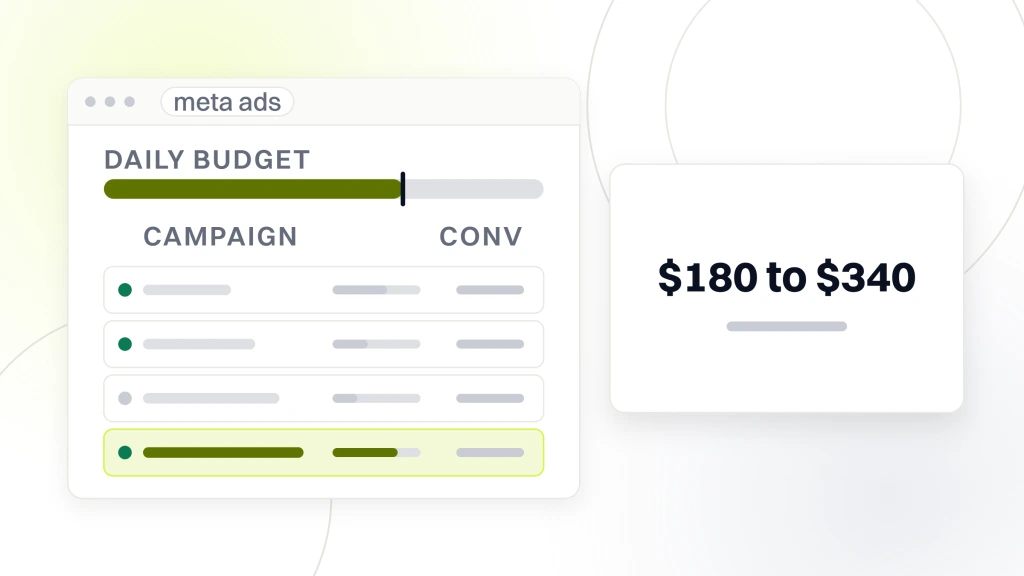
Cost per booked consult varies by market. Miami and Los Angeles run at the top of the range on account of high competition density. Sacramento, Cincinnati, and Kansas City run mid-range. Smaller cities under 200,000 population run at the low end. Match your account to the right column and set the CPL expectation from there. See our dental marketing cost guide for the full budget framework.
CPL by market density
CPL by market density on implant campaigns holds these tiers. High-competition metros run $260 to $340. Mid-density metros run $200 to $260. Smaller cities run $180 to $220. Every account we run gets a two-week baseline before we set CPL expectations, since market density varies more on implants than on general dentistry. The variance comes from how many competitors are running implant campaigns in the same radius.
Consult-to-treatment close rate
Consult-to-treatment close rate runs 22 to 34 percent on implant consults from Meta. Practices with in-house financing partners close 28 to 34 percent. Practices without financing close 22 to 26 percent. Practices with same-day CT scanning during the consult close 30 to 38 percent. The patient sees the actual bone map during the visit, which shortens the decision loop. Each operational gain moves funnel ROI in a measurable way.
Compliance rules for implant Meta ads
Paid Meta compliance runs across three layers. Meta’s dental content policy on before-and-after imagery. HIPAA on any tracking pixel. State dental board rules on implant claims and pricing. Every implant ad we push live passes through a compliance checklist before delivery starts. Miss any layer and the account risks suspension or a state board complaint.
Meta’s policy on before-and-after imagery requires signed patient consent, the words individual results may vary in the primary text, and a verified business page. The Meta pixel must not fire on the appointment confirmation URL that shows the patient’s name. State dental boards vary. Most states require the treating dentist’s license number in the ad or on the landing page. See our dental ads compliance guide.
Consent workflow for imagery
Consent workflow for before-and-after imagery runs during the treatment planning appointment. The office manager presents the release form. The patient reads and signs. The form specifies exact use cases. Facebook ads, Instagram ads, website gallery, printed collateral. Every signed release goes into the patient’s chart with a timestamp. See our dental photo consent for marketing guide for the release template.
Meta pixel exclusion rules
Meta pixel exclusion rules exist to prevent patient-identifiable data from reaching Meta. The pixel must not fire on URLs that display patient names, appointment times, or diagnosis codes. Exclude the appointment confirmation URL by URL pattern in the pixel setup. Exclude the patient portal URL too. See our HIPAA marketing compliance for dentists guide for the exact URL pattern rules.
Case study. Smile Design Dentistry implant Meta ads across 50 locations
Smile Design Dentistry is a 50-plus-location DSO offering full-arch and single implants across the southeast. When we started, implant Meta ads ran a single-hook approach with a generic book your implant consult CTA. Cost per call was inflated. Cost per booked consult ran above $500 across most locations. Lead quality was low, since the funnel had no education or retargeting layer.
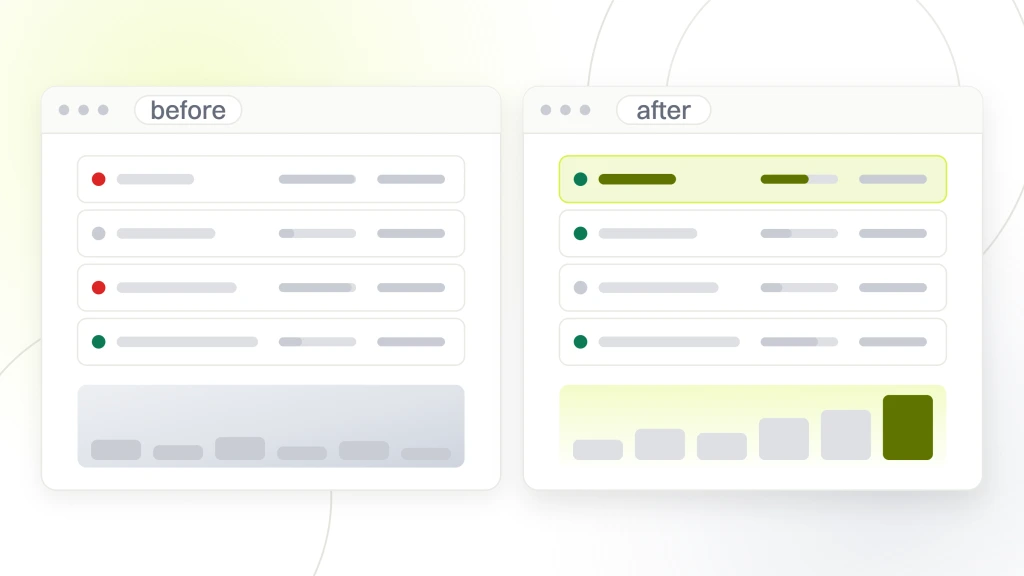
We rebuilt the account with per-location four-stage funnels, per-location financing hooks tied to each office’s Care Credit relationship, and a centralized retargeting layer serving testimonials and financing FAQ across all locations. Cost per call dropped 30 percent. PPC conversion rate climbed 20 percent. Cost per booked implant consult dropped from $500-plus to $240 to $340 depending on location density. See AAID resources for implant credentialing.
Smile Design Dentistry results
30 percent lower cost per call. 20 percent higher PPC conversion rate. 50-plus locations went live with optimized funnels. Cost per booked implant consult dropped from $500-plus to $240 to $340 across locations. Total implant case volume climbed 45 percent inside the first six months of the rebuild. The rebuild proved the four-stage funnel scales from a single practice to a 50-plus location group.
Per-location hooks that scaled
Per-location hooks matched each office’s specific offer, financing partner, and demographic. Sarasota locations led with retiree-focused messaging. Atlanta locations led with younger professional financing angles. Each location’s hook drove better performance, since the creative matched the audience. Generic DSO-wide messaging would have hit the same CPL as the original account structure.
Attribution setup that survived iOS 14.5
Attribution setup that survived iOS 14.5 pushed Meta Conversions API alongside the pixel, with server-side event dedup keyed on lead ID. Every implant lead form fired a Lead event server-side within two seconds of submit. Call tracking through CallRail sent phone conversions back through the same channel. That dual pipe recovered 22 to 30 percent of the attribution Meta lost after ATT prompts landed. Practices that ran pixel-only after iOS 14.5 saw reported CPL climb 40 percent without real spend changing.
Budget allocation across the funnel
Budget allocation across the four funnel stages holds a specific ratio for steady-state performance. Awareness at 30 percent. Education at 25 percent. Offer at 30 percent. Retargeting at 15 percent. Total monthly implant Meta budget runs $2,400 to $8,000 for solo practices and $12,000 to $60,000 for DSOs across all locations. Every allocation ratio has been tested against alternative splits over three years of implant accounts.
The 30/25/30/15 split reflects the funnel math. Awareness needs the largest allocation to feed the middle of the funnel. Retargeting needs the smallest, since the audience is smaller. Practices that over-invest in retargeting (30 to 40 percent) starve the top of the funnel and CPL climbs after week 6 as the middle audience shrinks. Hold the split.
Solo practice implant budget
Solo practice implant Meta budget runs $2,400 to $4,800 per month for a stable funnel. At $2,400 the funnel books 8 to 12 consults per month. At $4,800 the funnel books 16 to 24 consults per month. Practices over $6,000 monthly budget usually run implant plus general dentistry campaigns in parallel rather than push implants alone into diminishing returns.
DSO group implant budget
DSO group implant Meta budget runs $12,000 to $60,000 per month across 10 to 50-plus locations. Per-location allocation runs $800 to $1,500. The central retargeting layer runs 15 percent of the total. Every DSO account we run allocates budget per location by demographic profile and by local implant competition density. Uniform allocation across locations wastes 20 to 30 percent of the budget.
Common mistakes on implant Meta campaigns
Five mistakes kill implant Facebook ad ROI. Single-hook campaigns without a funnel. Broad audiences over 5 million people. Landing pages that use the practice homepage instead of an implant page. Missing before-and-after gallery on the landing page. No retargeting layer. Each of these mistakes costs 40 to 100 percent higher CPL versus a properly structured funnel.
The single-hook mistake is the most expensive. Practices skip the awareness and education stages, since those stages take longer to produce consults. In practice, skipping them makes the offer-stage CPL 3 to 5 times higher, since the audience is not pre-warmed. See our dental ppc mistakes guide and the ADA marketing resources.
The broad audience trap
Broad audiences over 5 million people waste implant budget. Meta’s algorithm delivers to the cheapest impressions inside the audience, which are rarely the highest-intent viewers. Cap awareness audiences at 800,000 to 1.5 million people within a 20-mile geo. Cap education audiences at 200,000 to 400,000 (video viewers from awareness). Cap offer audiences at 40,000 to 80,000 (education engagers). Tight audiences pull real intent.
The homepage-as-landing-page mistake
Using the practice homepage as the implant campaign landing page destroys the funnel. The homepage lists every service, buries the implant offer, and requires the visitor to click a services page before seeing the relevant content. Consult booking rate drops 60 to 80 percent versus a purpose-built implant page. Every implant campaign gets its own page.
Where to start with dental implant facebook ads
Start with the four-stage funnel structure and a $2,400 monthly test budget for 60 days. Launch the awareness stage first at 30 percent budget. Add the education stage in week two at 25 percent. Add the offer stage in week three at 30 percent. Add the retargeting stage in week four at 15 percent. By week 6 the funnel produces steady-state CPL. By week 12 the campaigns run with weekly optimization.
When you’re ready to run this alongside SEO and organic, our dental marketing for dentists covers the full stack. For related reading, see our dental implant marketing guide, our meta ads lead generation for dental practices guide, and our dental facebook ads that work guide.